*/
© Wiktor Szymanowicz/Shutterstock
As the Courts and Tribunals Bill prepares to return to Parliament for its third reading, Rehna Azim takes us back to Geoffrey Cox KC MP’s barnstorming speech in defence of jury trials – and its favourable, global reception
I’m not a criminal law practitioner. There are many, many barristers better qualified than me to write about this subject. But the current threat to jury trials is a matter which impacts us all and goes to the very core of our justice system – and our humanity. Going by the reaction to one of my posts on X (formerly Twitter), this is resonating worldwide.
Like it or not, X is where battles are won and policies reshaped. In March, when I posted an extract of the former Attorney General Sir Geoffrey Cox KC MP’s speech on jury trials in the House of Commons it drew over one million views and prompted comments from around the globe – from lawyers and non-lawyers alike – about why they should be retained.
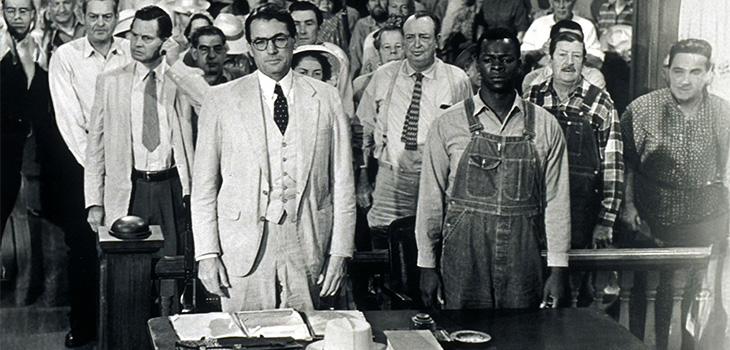
Ask 100 random people to conjure up an image of a barrister and most likely the majority will think of Gregory Peck, in a white linen suit, telling a jury that ‘our courts are the great leveller. In our courts, all men are created equal.’
Ask most barristers why they chose their career and many will, sheepishly, admit it was the same image of Atticus Finch fighting to save a man from the gallows.
Either way, the image is that of an advocate addressing a jury. Twelve men good and true. Twelve reasonable people from the Clapham Omnibus. Now, 12 people who represent the diverse community from which they come. However they are described, the point is that they are not judges.
© Globe Photos/ZUMA Press Wire/Shutterstock
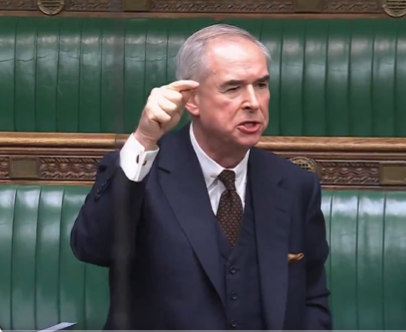
Let’s rewind to Sir Geoffrey, MP for Torridge and Tavistock, speaking in the Courts and Tribunals Bill debate on 10 March 2026. As a member of the Criminal Bar Association, who had spent 44 years at the Bar, defending and prosecuting in some of the largest (and longest) criminal trials that the country had ever seen, he began by declaring a personal interest in the topic of jury trials and whether they should be curtailed, ostensibly, to help reduce the backlog of cases in the criminal justice system.
He spoke of the admiration and, indeed, awe, that members of a jury inspire as they react ‘to circumstances of adversity and circumstances that challenge and test the very boundaries of humanity in the appalling nature of the crimes they are forced to adjudicate upon.’
There was something special, he said, about a gathering of ‘12 ordinary citizens, chosen at random and brought together into the crucible that a criminal trial produces, that strips away ideological and racial prejudice or preconception, and that causes them to focus upon a single question: is the allegation true, or is it not; and can we be sure, or is there any doubt?’ Like a lottery winner, ‘it could be you’ tasked with the responsibility of deciding the truth or otherwise of an allegation.
To the general public, this was a masterful introduction to what a jury is and how its members are – importantly – different from the professionals in the criminal justice system. By emphasising that a jury is made up of ordinary citizens, he was distinguishing them from judges.
His admiration for the capacity of non-lawyers to analyse the facts of a case and come to a decision formed a direct connection to those who might otherwise have dismissed the speech as something ‘they’ were debating which was of little importance to ‘us’.
The simplicity of the language with which he spelt out jurors’ huge responsibility and the questions they have to ask themselves was commanding. It was notable, too, for the watching layperson, how frequently (and rudely) Sir Geoffrey was interrupted and how he politely, but very firmly, asked to be allowed to continue to make his points – because ‘they were important’ to him. In doing so, he made them important for those listening too. ‘Some things have to be above politics,’ he said. ‘If there are not, we have no society to defend,’ he added, before making one of several killer points:
‘[T]he administration of justice must be a non-ideological space. Jury trial unites us all for a simple reason: it is the most powerful instrument and engine of social justice that this country has ever invented. It is a safeguard against oppression. It is a built-in defence against establishment and administrative power.'
He invoked the history of the jury trial and Britain’s creation of it to protect the ordinary man – a shield against state power. Powerful stuff.
With patient grace, but pointedly, he reminded the Lord Chancellor David Lammy that he had once argued passionately for the retention of jury trials. In response, Lammy could only squirm in his seat and giggle. The optics of that were terrible for those observing it in the House and, importantly, for those watching proceedings in the media.
In case anyone had missed the point, Sir Geoffrey added:
‘A jury trial is the most potent weapon and instrument against oppression and injustice. It serves not just those who are wealthy but those who are poor, and not just those who have a voice but those who do not. It is the 12 members of a jury who will give a hearing to people who otherwise have no hearing.’
It was a barnstorming speech which he brought to a close with these words:
‘I would submit to the House that we should pause long and hard before we encroach upon this fundamental principle. I have seen it work in practice over 40 years and, as I have said, I have never failed to be awe-inspired by the sheer quality of attention and fairness that a jury brings to its deliberations. Summary justice can never replicate that. We are about to take a step that will irretrievably damage the quality of justice in this country.’
The last line could well have been delivered by Atticus Finch himself.
Shortly after, I posted an extract from a speech by Caroline Goodwin KC who, with other leaders from the criminal Bar, addressed ministers and shared first-hand accounts of how the backlog might be managed without destroying a fundamental part of the system. That video, too, drew huge attention, with views in the hundreds of thousands.
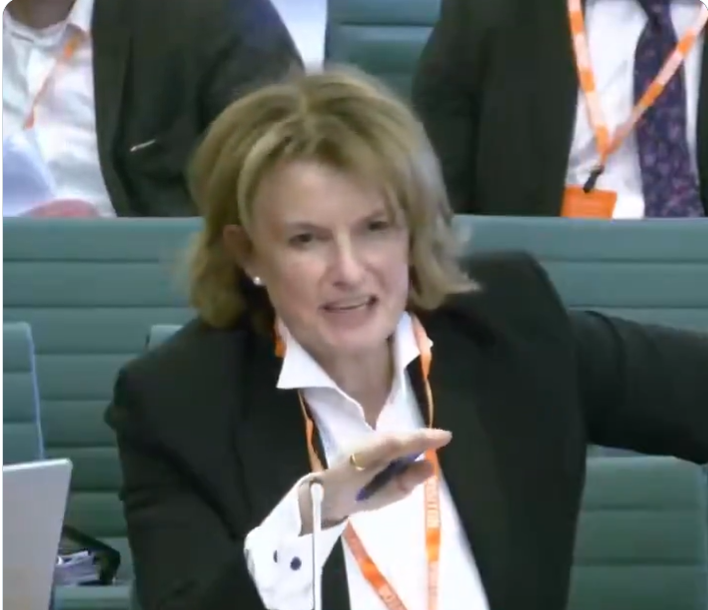
Why were so many drawn to the two posts? Great oratory is the simple answer. This level of eloquence is something that used to be common in politics but now is sadly missing outside of the courtroom. ‘A masterclass in public speaking, exceptional to listen to and watch,’ said many. Since much of the public doesn’t get to see inside a court it was an eye opener.
That Sir Geoffrey spoke without notes impressed many people. One reader said ‘we rarely witness such erudition and well-reasoned argument these days. I’m full of admiration not only for the content but also for the delivery.’ Others enthused that this was the way to use language to its maximum effect.
His speech may not have secured victory in the Commons vote but the Bill is unlikely to pass easily, if at all. There is no doubt the Bar and legal profession are galvanised. With their passionate eloquence, Sir Geoffrey and Caroline, among other great barrister speakers, are waking the public up to what may be lost.
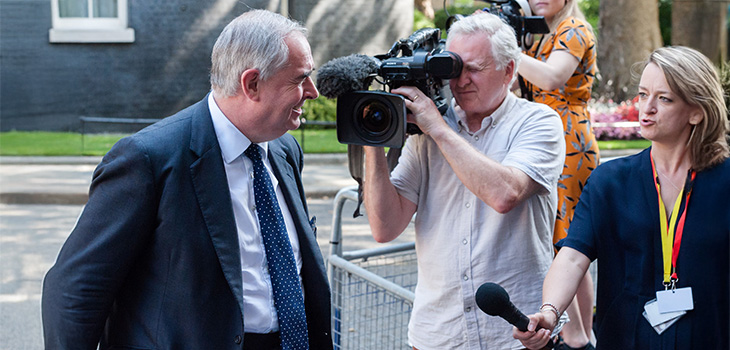
Pictured above: Geoffrey Cox KC MP in July 2019 when Attorney General, leaving 10 Downing Street after Boris Johnson's first cabinet meeting as Prime Minister; Gregory Peck as Atticus Finch and Brock Peters as Tom Robinson in To Kill a Mockingbird (1962); Cox on 10 March 2026 in the House of Commons debate on jury trials; Caroline Goodwin KC, North Eastern Circuit Leader, giving evidence on 25 March 2026 to the select committee examining the Courts and Tribunals Bill.

Rehna Azim is a family law barrister at 42 BR Barristers. She is the editor of itsalawyerslife.com and founder of The Legal Style Awards.
I’m not a criminal law practitioner. There are many, many barristers better qualified than me to write about this subject. But the current threat to jury trials is a matter which impacts us all and goes to the very core of our justice system – and our humanity. Going by the reaction to one of my posts on X (formerly Twitter), this is resonating worldwide.
Like it or not, X is where battles are won and policies reshaped. In March, when I posted an extract of the former Attorney General Sir Geoffrey Cox KC MP’s speech on jury trials in the House of Commons it drew over one million views and prompted comments from around the globe – from lawyers and non-lawyers alike – about why they should be retained.
Ask 100 random people to conjure up an image of a barrister and most likely the majority will think of Gregory Peck, in a white linen suit, telling a jury that ‘our courts are the great leveller. In our courts, all men are created equal.’
Ask most barristers why they chose their career and many will, sheepishly, admit it was the same image of Atticus Finch fighting to save a man from the gallows.
Either way, the image is that of an advocate addressing a jury. Twelve men good and true. Twelve reasonable people from the Clapham Omnibus. Now, 12 people who represent the diverse community from which they come. However they are described, the point is that they are not judges.
© Globe Photos/ZUMA Press Wire/Shutterstock
Let’s rewind to Sir Geoffrey, MP for Torridge and Tavistock, speaking in the Courts and Tribunals Bill debate on 10 March 2026. As a member of the Criminal Bar Association, who had spent 44 years at the Bar, defending and prosecuting in some of the largest (and longest) criminal trials that the country had ever seen, he began by declaring a personal interest in the topic of jury trials and whether they should be curtailed, ostensibly, to help reduce the backlog of cases in the criminal justice system.
He spoke of the admiration and, indeed, awe, that members of a jury inspire as they react ‘to circumstances of adversity and circumstances that challenge and test the very boundaries of humanity in the appalling nature of the crimes they are forced to adjudicate upon.’
There was something special, he said, about a gathering of ‘12 ordinary citizens, chosen at random and brought together into the crucible that a criminal trial produces, that strips away ideological and racial prejudice or preconception, and that causes them to focus upon a single question: is the allegation true, or is it not; and can we be sure, or is there any doubt?’ Like a lottery winner, ‘it could be you’ tasked with the responsibility of deciding the truth or otherwise of an allegation.
To the general public, this was a masterful introduction to what a jury is and how its members are – importantly – different from the professionals in the criminal justice system. By emphasising that a jury is made up of ordinary citizens, he was distinguishing them from judges.
His admiration for the capacity of non-lawyers to analyse the facts of a case and come to a decision formed a direct connection to those who might otherwise have dismissed the speech as something ‘they’ were debating which was of little importance to ‘us’.
The simplicity of the language with which he spelt out jurors’ huge responsibility and the questions they have to ask themselves was commanding. It was notable, too, for the watching layperson, how frequently (and rudely) Sir Geoffrey was interrupted and how he politely, but very firmly, asked to be allowed to continue to make his points – because ‘they were important’ to him. In doing so, he made them important for those listening too. ‘Some things have to be above politics,’ he said. ‘If there are not, we have no society to defend,’ he added, before making one of several killer points:
‘[T]he administration of justice must be a non-ideological space. Jury trial unites us all for a simple reason: it is the most powerful instrument and engine of social justice that this country has ever invented. It is a safeguard against oppression. It is a built-in defence against establishment and administrative power.'
He invoked the history of the jury trial and Britain’s creation of it to protect the ordinary man – a shield against state power. Powerful stuff.
With patient grace, but pointedly, he reminded the Lord Chancellor David Lammy that he had once argued passionately for the retention of jury trials. In response, Lammy could only squirm in his seat and giggle. The optics of that were terrible for those observing it in the House and, importantly, for those watching proceedings in the media.
In case anyone had missed the point, Sir Geoffrey added:
‘A jury trial is the most potent weapon and instrument against oppression and injustice. It serves not just those who are wealthy but those who are poor, and not just those who have a voice but those who do not. It is the 12 members of a jury who will give a hearing to people who otherwise have no hearing.’
It was a barnstorming speech which he brought to a close with these words:
‘I would submit to the House that we should pause long and hard before we encroach upon this fundamental principle. I have seen it work in practice over 40 years and, as I have said, I have never failed to be awe-inspired by the sheer quality of attention and fairness that a jury brings to its deliberations. Summary justice can never replicate that. We are about to take a step that will irretrievably damage the quality of justice in this country.’
The last line could well have been delivered by Atticus Finch himself.
Shortly after, I posted an extract from a speech by Caroline Goodwin KC who, with other leaders from the criminal Bar, addressed ministers and shared first-hand accounts of how the backlog might be managed without destroying a fundamental part of the system. That video, too, drew huge attention, with views in the hundreds of thousands.
Why were so many drawn to the two posts? Great oratory is the simple answer. This level of eloquence is something that used to be common in politics but now is sadly missing outside of the courtroom. ‘A masterclass in public speaking, exceptional to listen to and watch,’ said many. Since much of the public doesn’t get to see inside a court it was an eye opener.
That Sir Geoffrey spoke without notes impressed many people. One reader said ‘we rarely witness such erudition and well-reasoned argument these days. I’m full of admiration not only for the content but also for the delivery.’ Others enthused that this was the way to use language to its maximum effect.
His speech may not have secured victory in the Commons vote but the Bill is unlikely to pass easily, if at all. There is no doubt the Bar and legal profession are galvanised. With their passionate eloquence, Sir Geoffrey and Caroline, among other great barrister speakers, are waking the public up to what may be lost.
Pictured above: Geoffrey Cox KC MP in July 2019 when Attorney General, leaving 10 Downing Street after Boris Johnson's first cabinet meeting as Prime Minister; Gregory Peck as Atticus Finch and Brock Peters as Tom Robinson in To Kill a Mockingbird (1962); Cox on 10 March 2026 in the House of Commons debate on jury trials; Caroline Goodwin KC, North Eastern Circuit Leader, giving evidence on 25 March 2026 to the select committee examining the Courts and Tribunals Bill.
As the Courts and Tribunals Bill prepares to return to Parliament for its third reading, Rehna Azim takes us back to Geoffrey Cox KC MP’s barnstorming speech in defence of jury trials – and its favourable, global reception

The Chair of the Bar reports back
By BSK Financial Planning
Susie Griffin on the admin that keeps barristers from billable work
Clement Cowley, Partner at The Penny Group, explains how global events can influence the performance of pensions and ISAs, and why taking a long-term approach to investing is often the most effective strategy
Mário Barroso, Head of R&D and Method Development at AlphaBiolabs, discusses what family law professionals need to know about hallucinogens, from the main hallucinogenic drugs encountered in family proceedings, to their effects and the testing options available
Harmony Christian Ministries is the latest charity to benefit from a £500 donation from AlphaBiolabs via the company’s Giving Back initiative

Kick off your career at the Bar Council’s Pupillage Fair this October – it’s one of the most valuable opportunities for aspiring barristers, says Amelia Clegg
The golden age of advocacy? David Langwallner pays homage to the filmic if contentious barrister Sir Edward Carson and some of his contemporaries
Henry Fingerhut outlines what the Bar Standards Board AI guidance means for early career barristers
The Ministry of Justice will match-fund up to 100 criminal pupillages, with grants available to criminal chambers across England and Wales. Similar to the COIC scheme, the grants will match-fund pupillages additional to those otherwise offered without government funding
Not yet, says Jacob Turner. Regulation, unlike the technology itself, is a domain the legal profession can still control