*/
Jury-less trial proposals threaten fairness, legitimacy and democracy without ending the backlog, writes Professor Cheryl Thomas KC (Hon), the UK’s leading expert on juries, judges and courts
Twenty years of research on how the jury system really works reveals that the Leveson and Lammy proposals to curtail jury trials are not just unlikely to solve the Crown Court backlog, they will be detrimental to the fairness of the justice system and quality of democracy in Britain.
The last Labour government made jury service a universal civic duty. It removed any special exemptions from jury service (e.g., for politicians, judges, lawyers, doctors, clergy). As a result we now have one of the most democratic jury systems in the world. If you’re on the electoral register you are eligible for jury service, and you will be expected to do your civic duty if summoned. Research by the UCL Jury Project tracking everyone summoned for jury service showed that this inclusive approach results in remarkably representative groups of local people doing jury service at every Crown Court. And it found the juries this system produces are fair.
The UCL Jury Project has studied every single jury verdict returned over the last 18 years at every Crown Court. This shows that minority ethnic defendants are not more likely than White defendants to be convicted by a jury in England and Wales across all offence types. In contrast members of a minority ethnic group are more likely to be stopped, searched and arrested by the police, to be charged by the Crown Prosecution Service and to receive harsher sentences from judges. Removing the right to elect a jury trial for almost all either way offences will eliminate the one part of the justice system that we know does not systematically discriminate against defendants.
If judges are to replace juries, there should be a guarantee of regular and truly independent assessments of the impact of this change on minority ethnic defendants, a time limit to the use of judge-alone trials and a commitment to return to jury trials if judge-alone trials are found to discriminate.
Our research also shows that juries are both effective and efficient. Jury conviction rates are highest for offences with the most concrete evidence against the defendant and lowest for those offences where evidence is limited and the legal test to convict is higher. Contrary to popular belief, juries in England and Wales are also more likely to convict than acquit defendants on rape charges, with the jury rape conviction rate now at 73%. And once juries are sent out to deliberate, they almost always return verdicts. Hung juries occur less than 1% of the time. It is ironic that, in the name of efficiency, the Lammy and Leveson proposals would remove from courts the very people who work effectively and efficiently.
But juries aren’t just fair, effective and efficient. Jury service is transformational for members of the public. We have surveyed thousands of real jurors in England and Wales, and almost everyone who served on a jury (87%) said they would not have done jury service when summoned if it was voluntary. But when they did their civic duty, this had a powerful positive impact. After serving on a jury, almost all of these same people (81%) said they would be happy to do jury service again if summoned because they believed the system was fair and serving on a jury was educational, informative and interesting. Research has also shown that jury service can have powerful democratic effects, making people more likely to vote at subsequent elections and increasing their involvement in their community and in civic activities.
Unlike the publicly available evidence about the effectiveness of the jury system, we have seen little evidence that these proposals will reduce the backlog. No detailed cost analysis has been published and major factors do not appear to have been considered. The 2024 UK Judicial Attitude Survey showed that, even before these proposals, there was a looming judicial recruitment crisis in the Crown Court. Many more Circuit Judges planned to leave the judiciary in the next few years than there are Recorders willing to apply to replace them. Judge-only trials will hasten the departure of even more. The judges that stay will need to preside over the 80,000 pending jury trials. So where are the new judges to come from? What courtrooms will they use when the existing ones are all full dealing with the backlog? And where are the costings for hiring hundreds of salaried and fee-paid judges?
As well as the cost of more judges, we haven’t seen any figures for the costs of creating a new tier of the Crown Court. Any savings from removing juries need to be balanced against costs for new courtrooms, new staff, new training for judges and court staff, IT changes and numerous administrative changes. We also keep being told (without any evidence) that judge-alone trials will be 20% quicker than jury trials. But no calculations have been published showing the extra time needed for judges to write and deliver judgments and the inevitable increase in appeals. Nothing has also been said about the likely increased costs of judicial security once Crown Court judges are personally responsible for verdicts.
We also keep hearing there is no right to trial by jury here. But research shows the British public takes a very different view. The last time a Bill of Rights was proposed, the Rowntree Foundation conducted research with the British public on what rights should be enshrined in such a document. One right came out top of the list: the right to a fair trial before a jury. This was supported by 89% of the British population as the primary right that should be enshrined in law. So whether there is technically a legal right to trial by jury, it is clear the overwhelming majority of the British public feel there should be.
It’s also a red herring to argue that judge-alone trials are better because judges give reasons and juries don’t. In all jury trials now, juries are given written directions on how to reach a verdict. This usually includes specific questions which they need to answer Yes or No, and there is no reason we can’t ask juries to answer those questions in open court when they return verdicts. That way everyone would know the reasons juries reached their verdict. This would add no more time or cost to trials – unlike the days and expense it will take judges to produce written decisions.
The cause of the backlog is not the existence of juries but a shocking loss of funding in the criminal justice system over more than a decade. There cannot be a solution to the backlog without at least three things. Get the Crown Courts back to full operation: year after year governments have prevented the Crown Courts from sitting at full capacity. Repair the Crown Courts: many are falling apart and unusable. Fund legal work properly so there are enough defence and prosecution counsel to run cases.
History has shown that, once lost, jury trials will never return (e.g., civil and defamation juries). Abandoning trial by jury for almost all either way offences will remove the one stage in the criminal justice process that doesn’t discriminate; the only civic duty that applies equally to all; and one that increases the legitimacy of the justice system and has a positive democratic impact on the public. At a time when public confidence in democratic institutions is at an all-time low, it is hard to think of a more ill-judged and reckless idea.
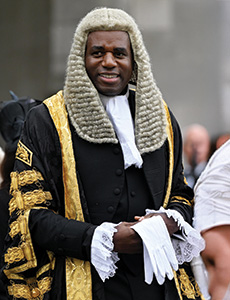

Professor Cheryl Thomas KC (Hon), Professor of Judicial Studies UCL Faculty of Laws, is Director of UCL Judicial Institute and UCL Jury Project and the UK’s leading expert on judges, juries and courts.
Twenty years of research on how the jury system really works reveals that the Leveson and Lammy proposals to curtail jury trials are not just unlikely to solve the Crown Court backlog, they will be detrimental to the fairness of the justice system and quality of democracy in Britain.
The last Labour government made jury service a universal civic duty. It removed any special exemptions from jury service (e.g., for politicians, judges, lawyers, doctors, clergy). As a result we now have one of the most democratic jury systems in the world. If you’re on the electoral register you are eligible for jury service, and you will be expected to do your civic duty if summoned. Research by the UCL Jury Project tracking everyone summoned for jury service showed that this inclusive approach results in remarkably representative groups of local people doing jury service at every Crown Court. And it found the juries this system produces are fair.
The UCL Jury Project has studied every single jury verdict returned over the last 18 years at every Crown Court. This shows that minority ethnic defendants are not more likely than White defendants to be convicted by a jury in England and Wales across all offence types. In contrast members of a minority ethnic group are more likely to be stopped, searched and arrested by the police, to be charged by the Crown Prosecution Service and to receive harsher sentences from judges. Removing the right to elect a jury trial for almost all either way offences will eliminate the one part of the justice system that we know does not systematically discriminate against defendants.
If judges are to replace juries, there should be a guarantee of regular and truly independent assessments of the impact of this change on minority ethnic defendants, a time limit to the use of judge-alone trials and a commitment to return to jury trials if judge-alone trials are found to discriminate.
Our research also shows that juries are both effective and efficient. Jury conviction rates are highest for offences with the most concrete evidence against the defendant and lowest for those offences where evidence is limited and the legal test to convict is higher. Contrary to popular belief, juries in England and Wales are also more likely to convict than acquit defendants on rape charges, with the jury rape conviction rate now at 73%. And once juries are sent out to deliberate, they almost always return verdicts. Hung juries occur less than 1% of the time. It is ironic that, in the name of efficiency, the Lammy and Leveson proposals would remove from courts the very people who work effectively and efficiently.
But juries aren’t just fair, effective and efficient. Jury service is transformational for members of the public. We have surveyed thousands of real jurors in England and Wales, and almost everyone who served on a jury (87%) said they would not have done jury service when summoned if it was voluntary. But when they did their civic duty, this had a powerful positive impact. After serving on a jury, almost all of these same people (81%) said they would be happy to do jury service again if summoned because they believed the system was fair and serving on a jury was educational, informative and interesting. Research has also shown that jury service can have powerful democratic effects, making people more likely to vote at subsequent elections and increasing their involvement in their community and in civic activities.
Unlike the publicly available evidence about the effectiveness of the jury system, we have seen little evidence that these proposals will reduce the backlog. No detailed cost analysis has been published and major factors do not appear to have been considered. The 2024 UK Judicial Attitude Survey showed that, even before these proposals, there was a looming judicial recruitment crisis in the Crown Court. Many more Circuit Judges planned to leave the judiciary in the next few years than there are Recorders willing to apply to replace them. Judge-only trials will hasten the departure of even more. The judges that stay will need to preside over the 80,000 pending jury trials. So where are the new judges to come from? What courtrooms will they use when the existing ones are all full dealing with the backlog? And where are the costings for hiring hundreds of salaried and fee-paid judges?
As well as the cost of more judges, we haven’t seen any figures for the costs of creating a new tier of the Crown Court. Any savings from removing juries need to be balanced against costs for new courtrooms, new staff, new training for judges and court staff, IT changes and numerous administrative changes. We also keep being told (without any evidence) that judge-alone trials will be 20% quicker than jury trials. But no calculations have been published showing the extra time needed for judges to write and deliver judgments and the inevitable increase in appeals. Nothing has also been said about the likely increased costs of judicial security once Crown Court judges are personally responsible for verdicts.
We also keep hearing there is no right to trial by jury here. But research shows the British public takes a very different view. The last time a Bill of Rights was proposed, the Rowntree Foundation conducted research with the British public on what rights should be enshrined in such a document. One right came out top of the list: the right to a fair trial before a jury. This was supported by 89% of the British population as the primary right that should be enshrined in law. So whether there is technically a legal right to trial by jury, it is clear the overwhelming majority of the British public feel there should be.
It’s also a red herring to argue that judge-alone trials are better because judges give reasons and juries don’t. In all jury trials now, juries are given written directions on how to reach a verdict. This usually includes specific questions which they need to answer Yes or No, and there is no reason we can’t ask juries to answer those questions in open court when they return verdicts. That way everyone would know the reasons juries reached their verdict. This would add no more time or cost to trials – unlike the days and expense it will take judges to produce written decisions.
The cause of the backlog is not the existence of juries but a shocking loss of funding in the criminal justice system over more than a decade. There cannot be a solution to the backlog without at least three things. Get the Crown Courts back to full operation: year after year governments have prevented the Crown Courts from sitting at full capacity. Repair the Crown Courts: many are falling apart and unusable. Fund legal work properly so there are enough defence and prosecution counsel to run cases.
History has shown that, once lost, jury trials will never return (e.g., civil and defamation juries). Abandoning trial by jury for almost all either way offences will remove the one stage in the criminal justice process that doesn’t discriminate; the only civic duty that applies equally to all; and one that increases the legitimacy of the justice system and has a positive democratic impact on the public. At a time when public confidence in democratic institutions is at an all-time low, it is hard to think of a more ill-judged and reckless idea.
Jury-less trial proposals threaten fairness, legitimacy and democracy without ending the backlog, writes Professor Cheryl Thomas KC (Hon), the UK’s leading expert on juries, judges and courts

The Chair of the Bar reports back
By Kem Kemal, CEO, Henry Dannell
By BSK Financial Planning
Mário Barroso, Head of R&D and Method Development at AlphaBiolabs
Susie Griffin on the admin that keeps barristers from billable work
Clement Cowley, Partner at The Penny Group, explains how global events can influence the performance of pensions and ISAs, and why taking a long-term approach to investing is often the most effective strategy

Kick off your career at the Bar Council’s Pupillage Fair this October – it’s one of the most valuable opportunities for aspiring barristers, says Amelia Clegg
Join us on Saturday 21 November 2026 at Leeds Beckett University and see for yourself why the North continues to be an exceptional place to build a career at the Bar
The golden age of advocacy? David Langwallner pays homage to the filmic if contentious barrister Sir Edward Carson and some of his contemporaries
Henry Fingerhut outlines what the Bar Standards Board AI guidance means for early career barristers
Not yet, says Jacob Turner. Regulation, unlike the technology itself, is a domain the legal profession can still control