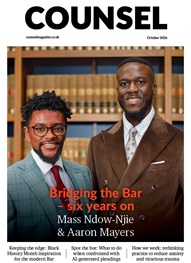
Two pupil barristers saw a problem they couldn’t ignore. Six years on, Mass Ndow-Njie and Aaron Mayers reflect on Bridging the Bar’s growth, the paradox at its heart, and the work still to be done

How to keep the edge, and the door open, in this adversarial profession? Building on the wisdom of influential Black figures past and present, Adeo Fraser shares his lessons learnt

It’s been one year since the Harman Report was published, so where are we on tackling harassment and bullying at the Bar? Nadia Motraghi KC meets Dame Maria Miller, the Bar’s first Commissioner for Conduct, to find out

Why litigation is like chess, what character-building moments can teach you, and the importance of focusing on the positives. By Isabel McArdle

Developing a tech start-up demands a different definition of excellence to the Bar, says Saara Idelbi. The co-creator of Advocatr on entrepreneurship, AI advocacy training, and matching the thrill of a killer cross-examination

For barristers, managing anxiety is a professional discipline as much as a personal one, says Annette Henry KC. This article examines the cues, clues and practical techniques for avoiding overwhelm and regaining calm

Managing vicarious trauma is essential when your daily work involves carrying other people’s crises, says Daniel Sheridan while yoga expert Tim Senesi explores the connection between mind, breath and body

The conversation around vicarious trauma is changing. Rebecca Norris challenges the idea that risk stems from exposure alone, arguing that the way we work, and the systems in which we work, can shape our response

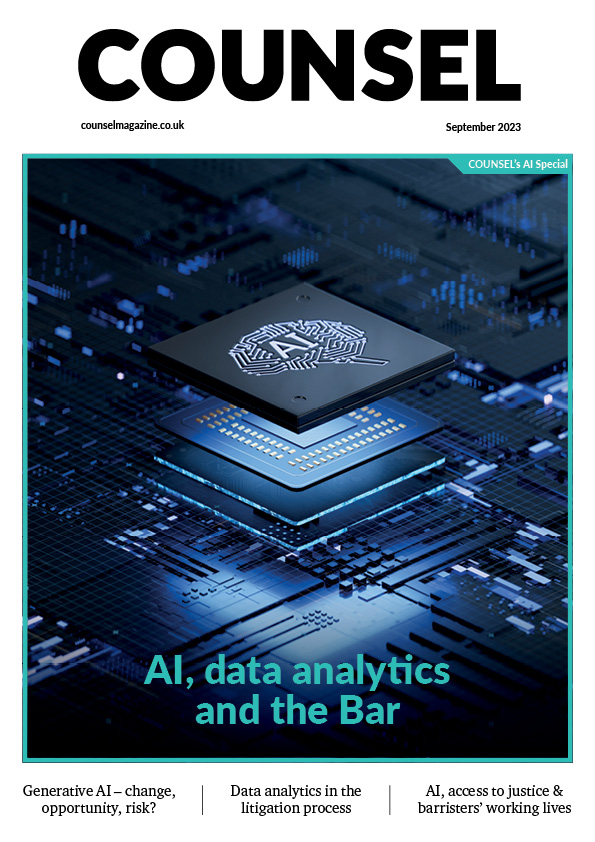
What to do when confronted with AI-generated pleadings and correspondence? Saara Idelbi and Nyasha Weinberg are here to lend a hand, with some assistance from the Bar Standards Board’s AI Guidance

In part two of a series exploring the skills driving excellence in legal practice, which AI cannot replicate, Michaela Hardwick turns to influence literacy. How do the six universal principles of influence apply to practice at the Bar?

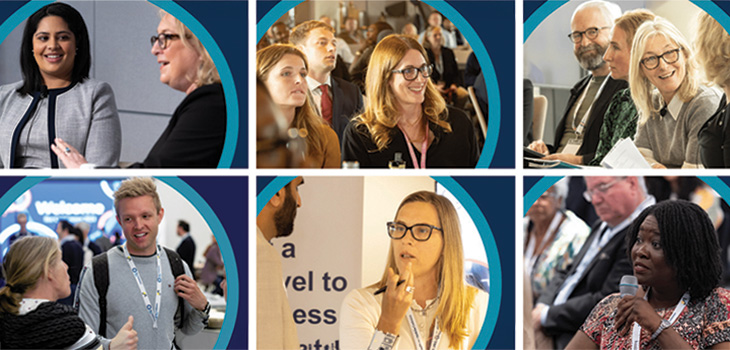
If you’ve never been to the Bar Conference before, this is the year to start. Amelia Clegg previews the profession’s flagship event

After a two-year investigation, Karim Khan KC was removed as ICC Chief Prosecutor in July. With the United States threatening to dismantle the court ‘brick by brick’, what’s next for the beleaguered ICC? asks Chris Stephen

Anu Kaura looks at the strengthened employer duty to prevent harassment – in force from October. What does it mean when third parties are in the room?

How to enhance the returner experience? With women’s career progression varying widely across chambers, and parental leave still a key point of attrition, don’t miss Nikki Alderson’s guide for chambers

Fixation on homogenising and assimilating Welsh legal language with the English misses the point, says Lewis Harrison

Fitzwilliam Museum, Cambridge – until 17 January 2027
Reviewed by Stephen Cragg KC
The golden age of advocacy? David Langwallner pays homage to the filmic if contentious barrister Sir Edward Carson and some of his contemporaries



The Chief Legal Officer to the Metropolitan Police, barrister Brett Welch, tells Anthony Inglese CB about his mission and the work to turn the Met around

Solicitor General Ellie Reeves KC MP discusses her decade as a trade union and employment law barrister, the demands of life as a Law Officer and the number one priority shaping her work. Interview by Anthony Inglese CB

There is no typical day in the life as a Supreme Court judicial assistant, says Josephine Gillingwater, and that’s what makes the role so enjoyably diverse

Amelia Clegg shares the lessons standing her in good stead as 2026 Chair of the Young Barristers’ Committee and the priorities for her term

Simon Regis CBE, Chair of the Bar Council Employed Barristers’ Committee, sets out his three key priorities for the year ahead

A career shaped by advocacy beyond her practice, and the realities of living with an invisible disability – Dr Natasha Shotunde, Black Barristers’ Network Co-Founder and its Chair for seven years, reflects on a decade at the Bar

It’s been five years since the groundbreaking QC competition in which six Black women barristers, including the 2025 Chair of the Bar, took silk. Yet today, the number of Black KCs remains ‘critically low’. Desirée Artesi talks to Baroness Scotland KC, Allison Munroe KC and Melanie Simpson KC about the critical success factors, barriers and ideas for embedding change

Brie Stevens-Hoare KC looks at the range of initiatives aiming to increase diversity in judicial appointments. What’s making the difference? What more needs to be done?

Senior barristers reflect on the progress made since the publication of Race at the Bar: A Snapshot Report in 2021, as well as the persistent challenges and cultural shifts still needed. Interviews by Mariam Diaby

From a traumatic formative education to exceptional criminal silk – Laurie-Anne Power KC talks about her path to the Bar, pursuit of equality and speaking out against discrimination (not just during Black History Month)
What to do when confronted with AI-generated pleadings and correspondence? Saara Idelbi and Nyasha Weinberg are here to lend a hand, with some assistance from the Bar Standards Board’s AI Guidance

Henry Fingerhut outlines what the Bar Standards Board AI guidance means for early career barristers

Not yet, says Jacob Turner. Regulation, unlike the technology itself, is a domain the legal profession can still control

The smarter the machines, the more vital the human advocate. As AI reshapes the profession, Lynda Gibbs KC (Hon) and Wendy Showell Nicholas show why empathy, judgement and persuasion are the barrister’s greatest strengths

As AI reshapes legal practice, the advocates who thrive will be those willing to dig deep, says Michaela Hardwick. By mining the rich seam of their experience and honing the human skills at the profession’s core, barristers can unearth what’s needed to build a sustainable practice

Kick off your career at the Bar Council’s Pupillage Fair this October – it’s one of the most valuable opportunities for aspiring barristers, says Amelia Clegg

Join us on Saturday 21 November 2026 at Leeds Beckett University and see for yourself why the North continues to be an exceptional place to build a career at the Bar

How can applicants obtain quality feedback, make the best use of the feedback they do receive and improve from year to year? John Goss provides some pointers

And trying again – a guide for aspiring barristers. By Baldip Singh


The Chair of the Bar reports back

By Kem Kemal, CEO, Henry Dannell
By BSK Financial Planning
Mário Barroso, Head of R&D and Method Development at AlphaBiolabs
Susie Griffin on the admin that keeps barristers from billable work
Clement Cowley, Partner at The Penny Group, explains how global events can influence the performance of pensions and ISAs, and why taking a long-term approach to investing is often the most effective strategy

Kick off your career at the Bar Council’s Pupillage Fair this October – it’s one of the most valuable opportunities for aspiring barristers, says Amelia Clegg
Join us on Saturday 21 November 2026 at Leeds Beckett University and see for yourself why the North continues to be an exceptional place to build a career at the Bar
The golden age of advocacy? David Langwallner pays homage to the filmic if contentious barrister Sir Edward Carson and some of his contemporaries
Henry Fingerhut outlines what the Bar Standards Board AI guidance means for early career barristers
Not yet, says Jacob Turner. Regulation, unlike the technology itself, is a domain the legal profession can still control