*/
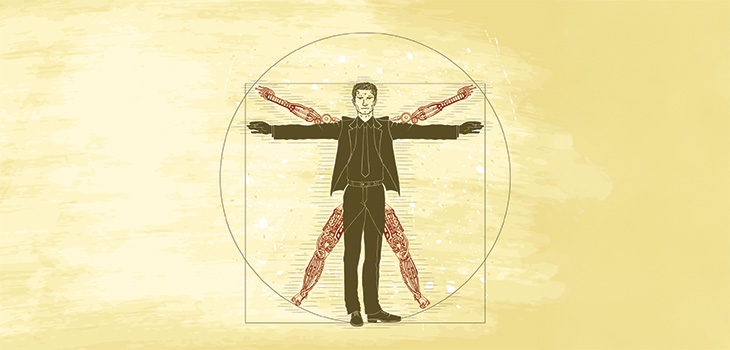
There is a particular genre of article that appears at every technological inflection point. It announces the end of a profession with the confidence of a prophet and the drama of a tabloid headline. The most recent iteration* assures us that artificial intelligence will ‘completely destroy’ the law as we know it – replacing barristers, emptying chambers and perhaps even rendering judges obsolete.
It is a seductive narrative. It is also incomplete.
The truth lies somewhere between complacency and catastrophe.
Let us begin with intellectual honesty. The rate of AI development is extraordinary. Anyone working closely with frontier models over the past 18 months will recognise the acceleration described in recent commentary. Tasks that once required hours now require minutes. Drafting that consumed a weekend can be produced in seconds. Research that once involved trawling through authorities can be mapped instantly.
In my own practice, I use AI to:
Each of these uses improves efficiency. Each frees time for strategic thinking. Each enhances – rather than diminishes – the quality of the final product.
None removes my responsibility.
The technology is improving rapidly. That much is undeniable. But speed alone does not equate to replacement.
The apocalyptic thesis rests on a fundamental assumption: that legal work is reducible to cognitive pattern recognition, and that once machines outperform humans at that function, the profession collapses.
This misunderstands what lawyers actually do.
Yes, much of our work involves research, drafting, and analysis. These elements are highly susceptible to automation. Process-driven tasks – conveyancing, probate, document review, due diligence – will continue to be compressed by AI. That is not controversial. It is already happening.
But law is not merely the production of text.
Law is:
An AI system can draft a skeleton argument. It cannot stand behind it.
An AI system can summarise authorities. It cannot certify that the submission is accurate and ethically sound.
An AI system can suggest a sentencing structure. It cannot bear the constitutional responsibility of imposing it.
The legal profession is not simply a cognitive service industry. It is a responsibility profession.
Recent commentary has suggested that even the judiciary may be replaced.
This conflates assistance with substitution.
Government policy is already moving toward AI-enabled efficiency in the courts – transcription, anonymisation, summarisation, digital listing. These are administrative and supportive functions. They are designed to reduce delay and improve transparency.
None displace adjudication.
Adjudication requires:
These are not merely computational tasks. They are normative judgements exercised within a constitutional framework.
Even if a system could replicate analytical reasoning at superhuman scale, the question would remain: who is accountable?
No democratic society is about to delegate the coercive power of the state to an unaccountable algorithm.
The more interesting question is not whether AI will eliminate lawyers, but what type of lawyer will remain viable.
In earlier writing,** I described AI as a ‘digital junior’. That metaphor remains useful.
A junior barrister can draft.
A junior can research.
A junior can propose arguments.
But the junior requires supervision.
AI is similar – except faster, cheaper and occasionally prone to fabricating authorities with serene confidence.
The lawyer of the next decade will not be replaced by AI.
They will be replaced by lawyers who use AI better.
The skill set is shifting:
The profession will contract in some areas. It will expand in others. Roles that consist solely of document production without client contact or strategic responsibility are exposed. Roles requiring accountability, advocacy, negotiation and ethical judgement are far more resilient.
The recent cases in England and elsewhere involving fictitious authorities demonstrate something important: the risk is not that AI is too intelligent; it is that it is not accountable.
Large language models generate plausible text. They do not ‘know’ whether it is true. The duty to verify remains entirely human.
Every time I use AI to draft or summarise, I assume it may be wrong.
Every citation is checked.
Every factual assertion is cross-referenced.
Every evaluative conclusion is re-analysed independently.
The lawyer signs the document.
The lawyer stands before the court.
The lawyer answers for error.
Until a machine can be struck off, sued in negligence, or cross-examined, it cannot replace the profession’s core function.
The economic pressure described in recent commentary is real. If a complex draft can be produced in 30 seconds for pennies, market forces will respond.
But economics in law are mediated by:
Clients do not merely purchase text. They purchase assurance.
They purchase someone who will say:
‘This is correct.’
‘This is safe.’
‘I stand behind it.’
AI lowers the cost of production.
It does not remove the value of responsibility.
Across jurisdictions – the United States, Canada, Australia, Singapore – the trajectory is similar. Courts are embracing AI for efficiency. Firms are deploying it aggressively for drafting and research. Regulators are issuing guidance.
None are abolishing the profession.
Even the most technologically enthusiastic commentators concede that roles requiring licensed accountability will endure longer. Law sits squarely within that category.
Adoption will be uneven. Some sectors will automate rapidly. Others – particularly advocacy-heavy or highly regulated fields – will evolve more slowly.
But extinction is not evolution.
Should a bright student abandon the idea of becoming a lawyer?
No.
But they should abandon the idea of becoming a 2005 lawyer in a 2035 world.
Future entrants must:
The bar for entry is rising – not disappearing.
AI can:
AI cannot:
The law is not merely logic. It is applied morality within institutional constraint.
That remains human work.
The claim that AI will kill all the lawyers is rhetorically powerful. It is not professionally precise.
AI is not the end of law.
It is the end of certain inefficiencies within law.
It is not the abolition of lawyers.
It is the elevation of those who exercise judgement over those who merely produce drafts.
Like every capable legal assistant, AI requires:
The lawyer remains the conductor.
AI can analyse the score with astonishing speed.
It cannot conduct the orchestra.
And until a machine can accept responsibility for the music – and the silence that follows – the profession is not about to disappear.
* ‘AI will kill all the lawyers: a barrister’s warning’, Sean Thomas, The Spectator, 16 December 2025
**‘The Ghost in the Machine: AI, Advocacy, and the Modern Bar’, Richard Paige, Park Square Barristers Blog, October 2025
Bar regulator publishes AI guidance
The Bar Standards Board has published Guidance on the use of Artificial Intelligence and Other Technologies, valid from 18 May 2026. Welcomed by the Bar Council as a complement to its own guidance (updated in November 2025), the BSB guide explains how existing duties in the BSB Handbook apply and advises barristers and chambers to take a risk-based approach before procuring, adopting and using AI technologies.

Richard Paige practises at Normanton Chambers and Park Square Barristers, specialising in clinical negligence. He sits as a Recorder (Civil/Crime) and has integrated AI into his practice and sitting.
There is a particular genre of article that appears at every technological inflection point. It announces the end of a profession with the confidence of a prophet and the drama of a tabloid headline. The most recent iteration* assures us that artificial intelligence will ‘completely destroy’ the law as we know it – replacing barristers, emptying chambers and perhaps even rendering judges obsolete.
It is a seductive narrative. It is also incomplete.
The truth lies somewhere between complacency and catastrophe.
Let us begin with intellectual honesty. The rate of AI development is extraordinary. Anyone working closely with frontier models over the past 18 months will recognise the acceleration described in recent commentary. Tasks that once required hours now require minutes. Drafting that consumed a weekend can be produced in seconds. Research that once involved trawling through authorities can be mapped instantly.
In my own practice, I use AI to:
Each of these uses improves efficiency. Each frees time for strategic thinking. Each enhances – rather than diminishes – the quality of the final product.
None removes my responsibility.
The technology is improving rapidly. That much is undeniable. But speed alone does not equate to replacement.
The apocalyptic thesis rests on a fundamental assumption: that legal work is reducible to cognitive pattern recognition, and that once machines outperform humans at that function, the profession collapses.
This misunderstands what lawyers actually do.
Yes, much of our work involves research, drafting, and analysis. These elements are highly susceptible to automation. Process-driven tasks – conveyancing, probate, document review, due diligence – will continue to be compressed by AI. That is not controversial. It is already happening.
But law is not merely the production of text.
Law is:
An AI system can draft a skeleton argument. It cannot stand behind it.
An AI system can summarise authorities. It cannot certify that the submission is accurate and ethically sound.
An AI system can suggest a sentencing structure. It cannot bear the constitutional responsibility of imposing it.
The legal profession is not simply a cognitive service industry. It is a responsibility profession.
Recent commentary has suggested that even the judiciary may be replaced.
This conflates assistance with substitution.
Government policy is already moving toward AI-enabled efficiency in the courts – transcription, anonymisation, summarisation, digital listing. These are administrative and supportive functions. They are designed to reduce delay and improve transparency.
None displace adjudication.
Adjudication requires:
These are not merely computational tasks. They are normative judgements exercised within a constitutional framework.
Even if a system could replicate analytical reasoning at superhuman scale, the question would remain: who is accountable?
No democratic society is about to delegate the coercive power of the state to an unaccountable algorithm.
The more interesting question is not whether AI will eliminate lawyers, but what type of lawyer will remain viable.
In earlier writing,** I described AI as a ‘digital junior’. That metaphor remains useful.
A junior barrister can draft.
A junior can research.
A junior can propose arguments.
But the junior requires supervision.
AI is similar – except faster, cheaper and occasionally prone to fabricating authorities with serene confidence.
The lawyer of the next decade will not be replaced by AI.
They will be replaced by lawyers who use AI better.
The skill set is shifting:
The profession will contract in some areas. It will expand in others. Roles that consist solely of document production without client contact or strategic responsibility are exposed. Roles requiring accountability, advocacy, negotiation and ethical judgement are far more resilient.
The recent cases in England and elsewhere involving fictitious authorities demonstrate something important: the risk is not that AI is too intelligent; it is that it is not accountable.
Large language models generate plausible text. They do not ‘know’ whether it is true. The duty to verify remains entirely human.
Every time I use AI to draft or summarise, I assume it may be wrong.
Every citation is checked.
Every factual assertion is cross-referenced.
Every evaluative conclusion is re-analysed independently.
The lawyer signs the document.
The lawyer stands before the court.
The lawyer answers for error.
Until a machine can be struck off, sued in negligence, or cross-examined, it cannot replace the profession’s core function.
The economic pressure described in recent commentary is real. If a complex draft can be produced in 30 seconds for pennies, market forces will respond.
But economics in law are mediated by:
Clients do not merely purchase text. They purchase assurance.
They purchase someone who will say:
‘This is correct.’
‘This is safe.’
‘I stand behind it.’
AI lowers the cost of production.
It does not remove the value of responsibility.
Across jurisdictions – the United States, Canada, Australia, Singapore – the trajectory is similar. Courts are embracing AI for efficiency. Firms are deploying it aggressively for drafting and research. Regulators are issuing guidance.
None are abolishing the profession.
Even the most technologically enthusiastic commentators concede that roles requiring licensed accountability will endure longer. Law sits squarely within that category.
Adoption will be uneven. Some sectors will automate rapidly. Others – particularly advocacy-heavy or highly regulated fields – will evolve more slowly.
But extinction is not evolution.
Should a bright student abandon the idea of becoming a lawyer?
No.
But they should abandon the idea of becoming a 2005 lawyer in a 2035 world.
Future entrants must:
The bar for entry is rising – not disappearing.
AI can:
AI cannot:
The law is not merely logic. It is applied morality within institutional constraint.
That remains human work.
The claim that AI will kill all the lawyers is rhetorically powerful. It is not professionally precise.
AI is not the end of law.
It is the end of certain inefficiencies within law.
It is not the abolition of lawyers.
It is the elevation of those who exercise judgement over those who merely produce drafts.
Like every capable legal assistant, AI requires:
The lawyer remains the conductor.
AI can analyse the score with astonishing speed.
It cannot conduct the orchestra.
And until a machine can accept responsibility for the music – and the silence that follows – the profession is not about to disappear.
* ‘AI will kill all the lawyers: a barrister’s warning’, Sean Thomas, The Spectator, 16 December 2025
**‘The Ghost in the Machine: AI, Advocacy, and the Modern Bar’, Richard Paige, Park Square Barristers Blog, October 2025
Bar regulator publishes AI guidance
The Bar Standards Board has published Guidance on the use of Artificial Intelligence and Other Technologies, valid from 18 May 2026. Welcomed by the Bar Council as a complement to its own guidance (updated in November 2025), the BSB guide explains how existing duties in the BSB Handbook apply and advises barristers and chambers to take a risk-based approach before procuring, adopting and using AI technologies.


The Chair of the Bar reports back
Susie Griffin on the admin that keeps barristers from billable work
Clement Cowley, Partner at The Penny Group, explains how global events can influence the performance of pensions and ISAs, and why taking a long-term approach to investing is often the most effective strategy
Mário Barroso, Head of R&D and Method Development at AlphaBiolabs, discusses what family law professionals need to know about hallucinogens, from the main hallucinogenic drugs encountered in family proceedings, to their effects and the testing options available
Harmony Christian Ministries is the latest charity to benefit from a £500 donation from AlphaBiolabs via the company’s Giving Back initiative
By David Green
At the start of her term, Chair of the Bar 2026 Kirsty Brimelow KC set out a series of priorities for the year ahead. One of those priorities was children in the justice system
As the world becomes more digital, Barbara Vinagre Mota examines international research into the mental health consequences of judges’ exposure to graphic and immersive evidence, highlighting the importance of support systems
In an era of patient-centred care and growing concern over misconduct in medical settings, why do women still lack the right to choose women consultants for examination and treatment? Charles Davey investigates
Reviewed by Daniel Barnett
James McNeill Whistler at Tate Britain until 27 September Rothko in Florence at Palazzo Strozzi until 23 August Reviewed by Stephen Cragg KC