*/

The case against judge-only justice – and why efficiency is not enough. By Professor Leslie Thomas KC
The government’s proposal to remove defendants’ right to elect jury trial has been presented as a pragmatic response to court backlogs. It is nothing of the sort. It is a constitutional retreat dressed up as modernisation, and the evidence does not support it.
On 2 December 2025, the Lord Chancellor told Parliament that the right of defendants to elect jury trial would be removed across a large category of criminal cases. Cases with likely sentences of under three years would no longer automatically attract jury trial. The court – meaning, in practice, a judge – would decide where a case is heard. The Lord Chancellor presenting this proposal was David Lammy: the same David Lammy who, as author of the Lammy Review in 2017, described juries as a ‘success story’ of the criminal justice system and documented devastating racial disparities in judicial sentencing.
Although recent proposals have focused on complex fraud, the principle at stake is not confined to one category of case. Once the premise is accepted that certain cases are too intricate or too burdensome for juries, the logic extends easily to terrorism, protest and other serious offences. The question is therefore not about fraud. It is about who we trust to exercise the power of criminal judgement.
I have been thinking about these questions for some time. My Gresham College lectures, ‘Do We Need Judges?’ and ‘Do We Need Juries?’, delivered in 2022, explored the evidence on both institutions in some depth. What that research made clear, and what the present debate consistently obscures, is that the case against juries rests largely on assumptions about judicial superiority that do not survive scrutiny. This article draws on that work, and on my subsequent article in the Amicus Journal, to make the argument directly.
My view, formed over a career litigating in courts with juries and courts without them, is that the case for removing jury trial has not been made. The argument from efficiency is real but insufficient. The argument from judicial superiority is largely assumed rather than demonstrated. And what is at stake – the democratic legitimacy of criminal conviction – is too important to be traded away for the sake of case throughput.
The current debate is structured as a choice between two things: the inefficiency of juries and the rational efficiency of judges. That framing should be resisted, because it smuggles in an assumption that has never been properly examined, namely that the problem with our criminal courts is too much public participation, and that the solution is more professional control.
That assumption is wrong. The crisis confronting the Crown Court was not created by juries. It was created by a decade and a half of underinvestment, court closures, the erosion of legal aid, chronic underfunding of the Crown Prosecution Service and the systemic neglect of a justice system that successive governments have treated as a cost rather than a cornerstone. Removing juries does not address a single one of those causes. It simply reconfigures who exercises power within a system that remains structurally broken.
There is a deeper problem with the framing. Criminal justice is not merely an exercise in administrative case disposal. It is the most coercive expression of state power. It is where the state can imprison, stigmatise and morally condemn. Before it does so, it should be required to persuade not just a professional functionary, but a group of citizens drawn from the community. A faster route to conviction is not obviously a better one. A more predictable system is not necessarily a more legitimate one. Sometimes predictability is another name for concentrated authority.
When I researched my Gresham lecture on judges, I went looking for the evidence that professional judges are better finders of fact than lay people. I did not find it. What I found instead was a body of psychological research that should make everyone, judges included, considerably more humble about what legal training actually equips a person to do.
Judges are trained in law and advocacy. They are not trained in psychology, memory science or trauma. Yet they are constantly required to make fine-grained assessments of witness credibility, often in cases involving significant trauma, mental illness, neurodiversity or profound cultural difference. The legal profession has for generations relied on assumptions we now know to be unreliable: that inconsistency in a witness’s account indicates fabrication; that a truthful witness will be composed and chronological; that demeanour reveals something meaningful about honesty.
Hilary Evans Cameron’s work on memory and credibility assessment demonstrates that these assumptions are not merely imprecise, they are actively misleading. Human memory for temporal detail is poor. Internal inconsistency is a normal feature of genuine recollection. Hypermnesia – remembering more over time rather than less – is particularly common in relation to traumatic events and should not be treated as evidence of invention. Demeanour is shaped by culture, trauma, autism and fear in ways that have nothing to do with truthfulness.
Crucially, Cameron was not writing about juries. She was writing about professional decision-makers, judges, civil servants, adjudicators. Her work demonstrates that professionals are not demonstrably better than lay people at distinguishing truth from falsehood. What professionals sometimes possess is not greater accuracy, but greater confidence. And confidence, in the absence of accuracy, is not a virtue. It is a hazard.
The Sally Clark case is a standing reminder of what professional confidence can produce when it is not subjected to adequate scrutiny. A grossly misleading statistical claim was advanced, accepted, repeated and not corrected at first appeal. That was not a failure of democratic participation. It was a failure of professional judgement at every level of the system.
The case for juries has sometimes been overstated by those who cite Professor Cheryl Thomas’s research as proof that jury trial is racially unbiased. Thomas’s studies found broadly similar conviction rates across ethnic groups, a finding endorsed enthusiastically in the Lammy Review. Those findings are important. But they should be read with care.
Similar conviction rates at the point of verdict do not prove systemic fairness. Between 2006 and 2008, Black defendants accounted for approximately 14% of all jury verdicts while constituting roughly 3% of the general population. Disproportionality on that scale, operating at every stage of the criminal process before trial, cannot simply be dissolved by parity of conviction rates at its conclusion. As Lee Bridges argued, an exclusive focus on the point of verdict risks implying that those operating at later stages bear no responsibility for correcting unfairness at earlier ones.
But the more important point, for present purposes, is this: whatever one makes of the jury bias data, the evidence of bias in professional judicial decision-making is at least as troubling, and in some respects considerably more so.
Hopkins, Uhrig and Colahan’s 2016 Ministry of Justice study found that, within drugs offences, the odds of imprisonment were around 240% higher for offenders from Black, Asian and Minority Ethnic backgrounds compared to those from a White background, under similar criminal circumstances. That figure did not appear in the chapter of the Lammy Review on juries. It appeared in the chapter on judges. And the qualitative research led by Keir Monteith KC at the University of Manchester, Racial Bias and the Bench, provides sobering texture to those numbers. Legal practitioners described magistrates who appeared to have reached their verdict before the defence had opened its case; tribunal judges who applied habitual scepticism to witnesses from different cultural backgrounds; and courts that were unwilling to entertain even the possibility that a racialised defendant might have experienced racist policing.
These are not aberrations. They are patterns. And they should feature prominently in any honest assessment of what judge-only justice would look like in practice.
Defenders of jury trial are sometimes accused of constitutional sentimentality, of clinging to Magna Carta imagery and ‘12 good men and true’ mythology when the practical case has become untenable. I want to resist that characterisation, because the argument for juries does not rest on sentiment. It rests on constitutional function.
Bushell’s Case, decided in 1670, established that jurors could not be punished for returning a verdict contrary to the evidence. That principle, that a judge may direct a jury on law but cannot compel a jury to convict, is not an inefficiency. It is a safeguard. The jury is not an arm of the state. It is one of the very few points in our constitutional order at which the citizen stands between the accused and the coercive power of the state. What critics of jury trial call unpredictability is, in constitutional terms, independence.
Replacing the jury with a professional judge does not eliminate the risks inherent in human fact-finding. It concentrates them. It moves decision-making from a diverse group of citizens, who must deliberate collectively, challenge each other’s assumptions, and reach agreement, to a single professional whose social background is narrow, whose training does not include the sciences most relevant to the task, and who deliberates alone. The absence of collective deliberation is not a neutral feature. It removes the one structural mechanism most likely to surface and correct individual error.
It is frequently said that modern criminal cases, particularly fraud, terrorism and lengthy financial trials, are simply too complex for lay decision-makers. I have heard this argument many times. It does not improve with repetition.
Complexity, in this context, is almost never defined with any precision. Fraud cases are not morally unintelligible to jurors. Dishonesty is not a concept that requires legal training to grasp. Cases become unwieldy because they are overcharged, poorly organised and dependent on expert evidence that nobody has bothered to explain in accessible terms. The answer to that problem is better case preparation and better judicial directions, not the removal of the public from the process.
Protest cases are described as complex because they involve moral and political judgement. But those are exactly the questions on which democratic participation is most defensible. If the state is to criminalise political protest, it should be required to persuade citizens, not rely on a professional judiciary to confirm its own judgement. And terrorism cases, which involve the gravest exercises of state power available to any government, seem to me to demand more public participation, not less.
None of this is an argument against reform. I have argued elsewhere, and at length, that the criminal courts are in profound difficulty and need urgent structural repair. But reform should address causes, not displace safeguards.
Training matters. Judges and advocates receive almost no education in cognitive bias, memory science or trauma, yet are expected to perform demanding evaluative tasks that depend on precisely those things. The psychological literature has comprehensively discredited many of the credibility assessment techniques still taught to young barristers. That needs to change, and it needs to change in the lecture room as much as in the courtroom.
The rules of evidence need serious attention too. We currently exclude expert psychological evidence on memory and credibility on the basis that these are matters within the jury’s common knowledge. They are not. We exclude the science most likely to improve accuracy and then criticise lay decision-makers for falling short of standards we have made it impossible for them to meet.
Judicial diversity requires genuine ambition, not occasional gestures. As the Monteith report argues, what is needed is a critical mass of judges ‘reflective of society’, people who bring different life experiences, different professional histories, and different instincts to the bench. A judiciary drawn disproportionately from those who have spent their careers representing the powerful will keep struggling with cases involving the powerless. That is not a peripheral concern. It goes to the legitimacy of every judgment delivered.
And the courts need money. Not reviews, not consultations, not structural reorganisations that leave the fundamental problems untouched. Sustained investment in buildings, in legal aid, in the Crown Prosecution Service and in the people who make the system work.
The jury is an imperfect institution. It always has been. But the case for removing it from a significant category of criminal cases rests on an assumption, that professional judges offer a safer, fairer and more reliable alternative, that the evidence simply does not support.
Judges are indispensable to the rule of law. Their independence, their expertise in law and their willingness, at their best, to check executive power are all things worth protecting. But that is a different proposition from saying that judges should monopolise fact-finding in criminal cases, and that moving from 12 citizens to one professional makes the system more just.
On the available evidence, it does not. It makes it faster. It makes it more controllable. It may make it more predictable. But predictability and justice are not synonyms. And a reform which lowers the threshold at which the state may convict, even in the name of efficiency, is not a neutral administrative change. It is a constitutional one, and it deserves to be treated as such.
The jury is not an administrative inconvenience. It is a constitutional safeguard. And in anxious times, safeguards are precisely the things we should be slow to surrender.
Leslie Thomas KC, ‘Do We Need Judges?’, Gresham College, 1 December 2022
Leslie Thomas KC, ‘Do We Need Juries?’, Gresham College, 29 September 2022
Cheryl Thomas, Are Juries Fair?, MOJ Research Series 1/10, 2010
Kathryn Hopkins, Noah Uhrig, and Matthew Colahan, Associations between ethnic background and being sentenced to prison in the Crown Court in England and Wales in 2015, MOJ, 2016
Keir Monteith KC et al, Racial Bias and the Bench, University of Manchester, 2022
Hilary Evans Cameron, ‘Refugee Status Determinations and the Limits of Memory’, International Journal of Refugee Law, 2010, 22(4) 469
Lee Bridges, ‘Lammy Review: will it change outcomes in the criminal justice system?’, Race & Class, 2017, 59 (3)
Hansard, Vol 776, 2 December 2025
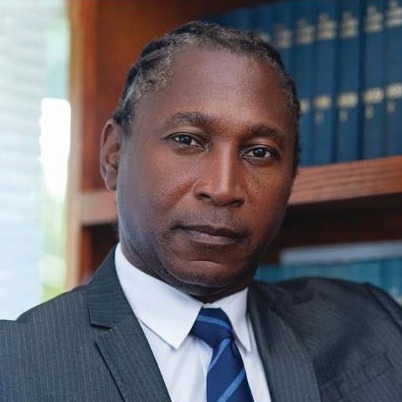
Professor Leslie Thomas KC is is an award-winning human rights/civil liberties barrister and former Joint Head of Garden Court Chambers and head of JC Legal Solutions in the Caribbean. In 2020 Leslie became Professor of Law at Gresham College and visiting Professor of Law at Goldsmiths Law School, University of London. He is a Bencher and advocacy trainer for the Inner Temple. Leslie is a member of the Bar Standards Board for England and Wales, sits on the BSB’s Race Equality Taskforce and is the Chair of the Equality Diversity and Inclusion sub-committee for the Inner Temple.
The government’s proposal to remove defendants’ right to elect jury trial has been presented as a pragmatic response to court backlogs. It is nothing of the sort. It is a constitutional retreat dressed up as modernisation, and the evidence does not support it.
On 2 December 2025, the Lord Chancellor told Parliament that the right of defendants to elect jury trial would be removed across a large category of criminal cases. Cases with likely sentences of under three years would no longer automatically attract jury trial. The court – meaning, in practice, a judge – would decide where a case is heard. The Lord Chancellor presenting this proposal was David Lammy: the same David Lammy who, as author of the Lammy Review in 2017, described juries as a ‘success story’ of the criminal justice system and documented devastating racial disparities in judicial sentencing.
Although recent proposals have focused on complex fraud, the principle at stake is not confined to one category of case. Once the premise is accepted that certain cases are too intricate or too burdensome for juries, the logic extends easily to terrorism, protest and other serious offences. The question is therefore not about fraud. It is about who we trust to exercise the power of criminal judgement.
I have been thinking about these questions for some time. My Gresham College lectures, ‘Do We Need Judges?’ and ‘Do We Need Juries?’, delivered in 2022, explored the evidence on both institutions in some depth. What that research made clear, and what the present debate consistently obscures, is that the case against juries rests largely on assumptions about judicial superiority that do not survive scrutiny. This article draws on that work, and on my subsequent article in the Amicus Journal, to make the argument directly.
My view, formed over a career litigating in courts with juries and courts without them, is that the case for removing jury trial has not been made. The argument from efficiency is real but insufficient. The argument from judicial superiority is largely assumed rather than demonstrated. And what is at stake – the democratic legitimacy of criminal conviction – is too important to be traded away for the sake of case throughput.
The current debate is structured as a choice between two things: the inefficiency of juries and the rational efficiency of judges. That framing should be resisted, because it smuggles in an assumption that has never been properly examined, namely that the problem with our criminal courts is too much public participation, and that the solution is more professional control.
That assumption is wrong. The crisis confronting the Crown Court was not created by juries. It was created by a decade and a half of underinvestment, court closures, the erosion of legal aid, chronic underfunding of the Crown Prosecution Service and the systemic neglect of a justice system that successive governments have treated as a cost rather than a cornerstone. Removing juries does not address a single one of those causes. It simply reconfigures who exercises power within a system that remains structurally broken.
There is a deeper problem with the framing. Criminal justice is not merely an exercise in administrative case disposal. It is the most coercive expression of state power. It is where the state can imprison, stigmatise and morally condemn. Before it does so, it should be required to persuade not just a professional functionary, but a group of citizens drawn from the community. A faster route to conviction is not obviously a better one. A more predictable system is not necessarily a more legitimate one. Sometimes predictability is another name for concentrated authority.
When I researched my Gresham lecture on judges, I went looking for the evidence that professional judges are better finders of fact than lay people. I did not find it. What I found instead was a body of psychological research that should make everyone, judges included, considerably more humble about what legal training actually equips a person to do.
Judges are trained in law and advocacy. They are not trained in psychology, memory science or trauma. Yet they are constantly required to make fine-grained assessments of witness credibility, often in cases involving significant trauma, mental illness, neurodiversity or profound cultural difference. The legal profession has for generations relied on assumptions we now know to be unreliable: that inconsistency in a witness’s account indicates fabrication; that a truthful witness will be composed and chronological; that demeanour reveals something meaningful about honesty.
Hilary Evans Cameron’s work on memory and credibility assessment demonstrates that these assumptions are not merely imprecise, they are actively misleading. Human memory for temporal detail is poor. Internal inconsistency is a normal feature of genuine recollection. Hypermnesia – remembering more over time rather than less – is particularly common in relation to traumatic events and should not be treated as evidence of invention. Demeanour is shaped by culture, trauma, autism and fear in ways that have nothing to do with truthfulness.
Crucially, Cameron was not writing about juries. She was writing about professional decision-makers, judges, civil servants, adjudicators. Her work demonstrates that professionals are not demonstrably better than lay people at distinguishing truth from falsehood. What professionals sometimes possess is not greater accuracy, but greater confidence. And confidence, in the absence of accuracy, is not a virtue. It is a hazard.
The Sally Clark case is a standing reminder of what professional confidence can produce when it is not subjected to adequate scrutiny. A grossly misleading statistical claim was advanced, accepted, repeated and not corrected at first appeal. That was not a failure of democratic participation. It was a failure of professional judgement at every level of the system.
The case for juries has sometimes been overstated by those who cite Professor Cheryl Thomas’s research as proof that jury trial is racially unbiased. Thomas’s studies found broadly similar conviction rates across ethnic groups, a finding endorsed enthusiastically in the Lammy Review. Those findings are important. But they should be read with care.
Similar conviction rates at the point of verdict do not prove systemic fairness. Between 2006 and 2008, Black defendants accounted for approximately 14% of all jury verdicts while constituting roughly 3% of the general population. Disproportionality on that scale, operating at every stage of the criminal process before trial, cannot simply be dissolved by parity of conviction rates at its conclusion. As Lee Bridges argued, an exclusive focus on the point of verdict risks implying that those operating at later stages bear no responsibility for correcting unfairness at earlier ones.
But the more important point, for present purposes, is this: whatever one makes of the jury bias data, the evidence of bias in professional judicial decision-making is at least as troubling, and in some respects considerably more so.
Hopkins, Uhrig and Colahan’s 2016 Ministry of Justice study found that, within drugs offences, the odds of imprisonment were around 240% higher for offenders from Black, Asian and Minority Ethnic backgrounds compared to those from a White background, under similar criminal circumstances. That figure did not appear in the chapter of the Lammy Review on juries. It appeared in the chapter on judges. And the qualitative research led by Keir Monteith KC at the University of Manchester, Racial Bias and the Bench, provides sobering texture to those numbers. Legal practitioners described magistrates who appeared to have reached their verdict before the defence had opened its case; tribunal judges who applied habitual scepticism to witnesses from different cultural backgrounds; and courts that were unwilling to entertain even the possibility that a racialised defendant might have experienced racist policing.
These are not aberrations. They are patterns. And they should feature prominently in any honest assessment of what judge-only justice would look like in practice.
Defenders of jury trial are sometimes accused of constitutional sentimentality, of clinging to Magna Carta imagery and ‘12 good men and true’ mythology when the practical case has become untenable. I want to resist that characterisation, because the argument for juries does not rest on sentiment. It rests on constitutional function.
Bushell’s Case, decided in 1670, established that jurors could not be punished for returning a verdict contrary to the evidence. That principle, that a judge may direct a jury on law but cannot compel a jury to convict, is not an inefficiency. It is a safeguard. The jury is not an arm of the state. It is one of the very few points in our constitutional order at which the citizen stands between the accused and the coercive power of the state. What critics of jury trial call unpredictability is, in constitutional terms, independence.
Replacing the jury with a professional judge does not eliminate the risks inherent in human fact-finding. It concentrates them. It moves decision-making from a diverse group of citizens, who must deliberate collectively, challenge each other’s assumptions, and reach agreement, to a single professional whose social background is narrow, whose training does not include the sciences most relevant to the task, and who deliberates alone. The absence of collective deliberation is not a neutral feature. It removes the one structural mechanism most likely to surface and correct individual error.
It is frequently said that modern criminal cases, particularly fraud, terrorism and lengthy financial trials, are simply too complex for lay decision-makers. I have heard this argument many times. It does not improve with repetition.
Complexity, in this context, is almost never defined with any precision. Fraud cases are not morally unintelligible to jurors. Dishonesty is not a concept that requires legal training to grasp. Cases become unwieldy because they are overcharged, poorly organised and dependent on expert evidence that nobody has bothered to explain in accessible terms. The answer to that problem is better case preparation and better judicial directions, not the removal of the public from the process.
Protest cases are described as complex because they involve moral and political judgement. But those are exactly the questions on which democratic participation is most defensible. If the state is to criminalise political protest, it should be required to persuade citizens, not rely on a professional judiciary to confirm its own judgement. And terrorism cases, which involve the gravest exercises of state power available to any government, seem to me to demand more public participation, not less.
None of this is an argument against reform. I have argued elsewhere, and at length, that the criminal courts are in profound difficulty and need urgent structural repair. But reform should address causes, not displace safeguards.
Training matters. Judges and advocates receive almost no education in cognitive bias, memory science or trauma, yet are expected to perform demanding evaluative tasks that depend on precisely those things. The psychological literature has comprehensively discredited many of the credibility assessment techniques still taught to young barristers. That needs to change, and it needs to change in the lecture room as much as in the courtroom.
The rules of evidence need serious attention too. We currently exclude expert psychological evidence on memory and credibility on the basis that these are matters within the jury’s common knowledge. They are not. We exclude the science most likely to improve accuracy and then criticise lay decision-makers for falling short of standards we have made it impossible for them to meet.
Judicial diversity requires genuine ambition, not occasional gestures. As the Monteith report argues, what is needed is a critical mass of judges ‘reflective of society’, people who bring different life experiences, different professional histories, and different instincts to the bench. A judiciary drawn disproportionately from those who have spent their careers representing the powerful will keep struggling with cases involving the powerless. That is not a peripheral concern. It goes to the legitimacy of every judgment delivered.
And the courts need money. Not reviews, not consultations, not structural reorganisations that leave the fundamental problems untouched. Sustained investment in buildings, in legal aid, in the Crown Prosecution Service and in the people who make the system work.
The jury is an imperfect institution. It always has been. But the case for removing it from a significant category of criminal cases rests on an assumption, that professional judges offer a safer, fairer and more reliable alternative, that the evidence simply does not support.
Judges are indispensable to the rule of law. Their independence, their expertise in law and their willingness, at their best, to check executive power are all things worth protecting. But that is a different proposition from saying that judges should monopolise fact-finding in criminal cases, and that moving from 12 citizens to one professional makes the system more just.
On the available evidence, it does not. It makes it faster. It makes it more controllable. It may make it more predictable. But predictability and justice are not synonyms. And a reform which lowers the threshold at which the state may convict, even in the name of efficiency, is not a neutral administrative change. It is a constitutional one, and it deserves to be treated as such.
The jury is not an administrative inconvenience. It is a constitutional safeguard. And in anxious times, safeguards are precisely the things we should be slow to surrender.
Leslie Thomas KC, ‘Do We Need Judges?’, Gresham College, 1 December 2022
Leslie Thomas KC, ‘Do We Need Juries?’, Gresham College, 29 September 2022
Cheryl Thomas, Are Juries Fair?, MOJ Research Series 1/10, 2010
Kathryn Hopkins, Noah Uhrig, and Matthew Colahan, Associations between ethnic background and being sentenced to prison in the Crown Court in England and Wales in 2015, MOJ, 2016
Keir Monteith KC et al, Racial Bias and the Bench, University of Manchester, 2022
Hilary Evans Cameron, ‘Refugee Status Determinations and the Limits of Memory’, International Journal of Refugee Law, 2010, 22(4) 469
Lee Bridges, ‘Lammy Review: will it change outcomes in the criminal justice system?’, Race & Class, 2017, 59 (3)
Hansard, Vol 776, 2 December 2025
The case against judge-only justice – and why efficiency is not enough. By Professor Leslie Thomas KC


The Chair of the Bar reports back
Susie Griffin on the admin that keeps barristers from billable work
Clement Cowley, Partner at The Penny Group, explains how global events can influence the performance of pensions and ISAs, and why taking a long-term approach to investing is often the most effective strategy
Mário Barroso, Head of R&D and Method Development at AlphaBiolabs, discusses what family law professionals need to know about hallucinogens, from the main hallucinogenic drugs encountered in family proceedings, to their effects and the testing options available
Harmony Christian Ministries is the latest charity to benefit from a £500 donation from AlphaBiolabs via the company’s Giving Back initiative
By David Green
At the start of her term, Chair of the Bar 2026 Kirsty Brimelow KC set out a series of priorities for the year ahead. One of those priorities was children in the justice system
As the world becomes more digital, Barbara Vinagre Mota examines international research into the mental health consequences of judges’ exposure to graphic and immersive evidence, highlighting the importance of support systems
In an era of patient-centred care and growing concern over misconduct in medical settings, why do women still lack the right to choose women consultants for examination and treatment? Charles Davey investigates
Reviewed by Daniel Barnett
James McNeill Whistler at Tate Britain until 27 September Rothko in Florence at Palazzo Strozzi until 23 August Reviewed by Stephen Cragg KC