*/
On 26 March, the Public Bill Committee showcased five women silks battling for the deletion of clauses 1 to 7 of the Courts and Tribunals Bill, which remove the right to elect trial on indictment and take away jury trial where the defendant would be likely to receive a sentence of imprisonment of more than three years.
I was first up alongside Riel Karmy-Jones KC, Chair of the Criminal Bar Association, followed by Circuit Leaders Claire Davies KC, Caroline Goodwin KC and Samantha Hillas KC. The Bar Council has submitted amendments which include the establishment of a Sexual Offences/Domestic Abuse Court. These courts will directly reduce the waiting of vulnerable victims/complainants and obviate any need (which has not been shown) to set up a judge-only court.
We also have proposed 12 offences that should be reclassified to summary offences. The Bar Council never has been against change or against moving the threshold of offences. During COVID, barristers were designated key workers who kept the system functioning in extreme circumstances. It consistently warned of the now realised looming crisis.
I was keynote speaker at the annual Rights of Women dinner which, with 30 NGOs in the violence against women and girls sector, wrote to the Lord Chancellor asking the government to reconsider restricting jury trials. I reflected on my work, alongside Amnesty Denmark, changing the sexual offences laws in Denmark, Finland and Norway to consent-based legislation. I wrote a piece for The Times on FGM protection orders (£), the law that I led when Chair of the Bar Human Rights Committee.
It has been unfortunate that the government has sought to pitch complainants and victims against the Bar in its ambition to push through its deeply unpopular Bill. Barristers continue to give complainants and victims a voice in court and safeguard their rights. They also work pro bono for victims nationally and globally.
Magistrates’ Courts are not the solution, where the backlog is nearly 380,000 cases: a record high. Increasing its caseload by 10-15% will increase delays. I spoke at the launch of Transform Justice’s latest CourtWatch report Due Dignity. It is a sombre compilation of 2,300 Magistrates’ Courts observations and spotlights poor quality justice delivered to the person behind the case number.
During a meeting with Lord Timpson, Minister of State for Prisons, and Tim Coates, Head of Prisoner Escort Custody Services (PECS), I raised the delays of delivery of defendants to court and gave some headlines from our data collection. Please continue to complete the PECS delay survey form.
I led the Bar Council visits to both the Northern Circuit and the Midland Circuit, with Amelia Clegg, Chair of the Young Barristers’ Committee. We focused upon the civil and family courts, as well as crime, in Liverpool, Preston and Nottingham. With thanks to the judges and barristers for their time, particularly HHJ Wood KC, HHJ Altham, HHJ Beech, HHJ Bancroft, HHJ Rosalind Coe KC, HHJ Gillespie, HHJ Shant KC, St Mary’s Chambers, Ropewalk Chambers, 15 Winkley Square, St John’s Buildings Chambers and Circuit Leaders and Juniors, Samantha Hillas KC, Julie Taylor and Isabella Denn-White and Harpreet Sandhu KC, Lucy Jones and Jack Stuart. We discussed legal aid, block listing, digitisation, AI and Family Drug and Alcohol Court need.
During the Crown Court robing room drop-ins, barristers spoke candidly as I looked up at the collapsed ceiling (Preston) and the draining of water from a flood (Nottingham). HHJ Altham, Resident Judge for Lancashire and Recorder of Preston, took us through the success of their domestic abuse expedited listing, pointing to the waiting between plea and trial preparation hearing and trial having reduced from 15-16 months to around 13 months, a reduction of about 16%.
I attended the second English Law Promotion Panel discussion, chaired by the Courts Minister. It aims to champion and futureproof legal services. Linked to the need to remove the silo between trade and legal services at government level, I had a productive meeting with the Director of EU and Services in the Department for Business and Trade.
I also spoke at the International Bar Association’s launch of Raising the Bar: Women in Law.
We collaborated with the Foreign, Commonwealth & Development Office (FCDO) and Inner Temple to host the ‘Counsel of Nations’ event, gathering diplomats, government lawyers and practitioners in public and international law. I opened the event by reflecting on the Bar’s role in advising states on complex and politically sensitive matters, both domestically and internationally. Our panel included Lord Lloyd-Jones, Sally Langrish, FCDO Legal Adviser and Director General, and Naomi Hart of Essex Court Chambers.
Finally, congratulations to the winners of the Young Citizens’ Bar Mock Trial: Richard Huish College. It was an inspiring day. I recalled that it was a moot that convinced me I could be a barrister and, maybe, a good one.

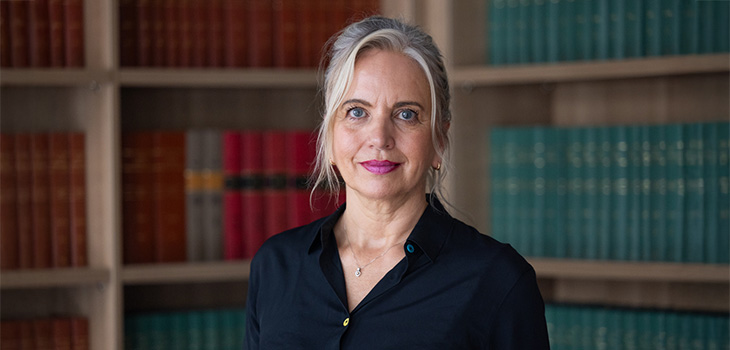
Kirsty Brimelow KC is Chair of the Bar for 2026. She has been a criminal, public law and international human rights barrister for some 30 years, practising from Doughty Street Chambers for over half that time. Kirsty was Chair of the Criminal Bar Association (2022-23) and Chair of the Bar Human Rights Committee (2012-18). She was appointed as a silk in 2011, Deputy High Court Judge in 2021, Recorder in 2022 and is a Bencher of Gray’s Inn.
On 26 March, the Public Bill Committee showcased five women silks battling for the deletion of clauses 1 to 7 of the Courts and Tribunals Bill, which remove the right to elect trial on indictment and take away jury trial where the defendant would be likely to receive a sentence of imprisonment of more than three years.
I was first up alongside Riel Karmy-Jones KC, Chair of the Criminal Bar Association, followed by Circuit Leaders Claire Davies KC, Caroline Goodwin KC and Samantha Hillas KC. The Bar Council has submitted amendments which include the establishment of a Sexual Offences/Domestic Abuse Court. These courts will directly reduce the waiting of vulnerable victims/complainants and obviate any need (which has not been shown) to set up a judge-only court.
We also have proposed 12 offences that should be reclassified to summary offences. The Bar Council never has been against change or against moving the threshold of offences. During COVID, barristers were designated key workers who kept the system functioning in extreme circumstances. It consistently warned of the now realised looming crisis.
I was keynote speaker at the annual Rights of Women dinner which, with 30 NGOs in the violence against women and girls sector, wrote to the Lord Chancellor asking the government to reconsider restricting jury trials. I reflected on my work, alongside Amnesty Denmark, changing the sexual offences laws in Denmark, Finland and Norway to consent-based legislation. I wrote a piece for The Times on FGM protection orders (£), the law that I led when Chair of the Bar Human Rights Committee.
It has been unfortunate that the government has sought to pitch complainants and victims against the Bar in its ambition to push through its deeply unpopular Bill. Barristers continue to give complainants and victims a voice in court and safeguard their rights. They also work pro bono for victims nationally and globally.
Magistrates’ Courts are not the solution, where the backlog is nearly 380,000 cases: a record high. Increasing its caseload by 10-15% will increase delays. I spoke at the launch of Transform Justice’s latest CourtWatch report Due Dignity. It is a sombre compilation of 2,300 Magistrates’ Courts observations and spotlights poor quality justice delivered to the person behind the case number.
During a meeting with Lord Timpson, Minister of State for Prisons, and Tim Coates, Head of Prisoner Escort Custody Services (PECS), I raised the delays of delivery of defendants to court and gave some headlines from our data collection. Please continue to complete the PECS delay survey form.
I led the Bar Council visits to both the Northern Circuit and the Midland Circuit, with Amelia Clegg, Chair of the Young Barristers’ Committee. We focused upon the civil and family courts, as well as crime, in Liverpool, Preston and Nottingham. With thanks to the judges and barristers for their time, particularly HHJ Wood KC, HHJ Altham, HHJ Beech, HHJ Bancroft, HHJ Rosalind Coe KC, HHJ Gillespie, HHJ Shant KC, St Mary’s Chambers, Ropewalk Chambers, 15 Winkley Square, St John’s Buildings Chambers and Circuit Leaders and Juniors, Samantha Hillas KC, Julie Taylor and Isabella Denn-White and Harpreet Sandhu KC, Lucy Jones and Jack Stuart. We discussed legal aid, block listing, digitisation, AI and Family Drug and Alcohol Court need.
During the Crown Court robing room drop-ins, barristers spoke candidly as I looked up at the collapsed ceiling (Preston) and the draining of water from a flood (Nottingham). HHJ Altham, Resident Judge for Lancashire and Recorder of Preston, took us through the success of their domestic abuse expedited listing, pointing to the waiting between plea and trial preparation hearing and trial having reduced from 15-16 months to around 13 months, a reduction of about 16%.
I attended the second English Law Promotion Panel discussion, chaired by the Courts Minister. It aims to champion and futureproof legal services. Linked to the need to remove the silo between trade and legal services at government level, I had a productive meeting with the Director of EU and Services in the Department for Business and Trade.
I also spoke at the International Bar Association’s launch of Raising the Bar: Women in Law.
We collaborated with the Foreign, Commonwealth & Development Office (FCDO) and Inner Temple to host the ‘Counsel of Nations’ event, gathering diplomats, government lawyers and practitioners in public and international law. I opened the event by reflecting on the Bar’s role in advising states on complex and politically sensitive matters, both domestically and internationally. Our panel included Lord Lloyd-Jones, Sally Langrish, FCDO Legal Adviser and Director General, and Naomi Hart of Essex Court Chambers.
Finally, congratulations to the winners of the Young Citizens’ Bar Mock Trial: Richard Huish College. It was an inspiring day. I recalled that it was a moot that convinced me I could be a barrister and, maybe, a good one.

The Chair of the Bar reports back
Susie Griffin on the admin that keeps barristers from billable work
Clement Cowley, Partner at The Penny Group, explains how global events can influence the performance of pensions and ISAs, and why taking a long-term approach to investing is often the most effective strategy
Mário Barroso, Head of R&D and Method Development at AlphaBiolabs, discusses what family law professionals need to know about hallucinogens, from the main hallucinogenic drugs encountered in family proceedings, to their effects and the testing options available
Harmony Christian Ministries is the latest charity to benefit from a £500 donation from AlphaBiolabs via the company’s Giving Back initiative
By David Green
At the start of her term, Chair of the Bar 2026 Kirsty Brimelow KC set out a series of priorities for the year ahead. One of those priorities was children in the justice system
As the world becomes more digital, Barbara Vinagre Mota examines international research into the mental health consequences of judges’ exposure to graphic and immersive evidence, highlighting the importance of support systems
In an era of patient-centred care and growing concern over misconduct in medical settings, why do women still lack the right to choose women consultants for examination and treatment? Charles Davey investigates
Reviewed by Daniel Barnett
James McNeill Whistler at Tate Britain until 27 September Rothko in Florence at Palazzo Strozzi until 23 August Reviewed by Stephen Cragg KC