*/
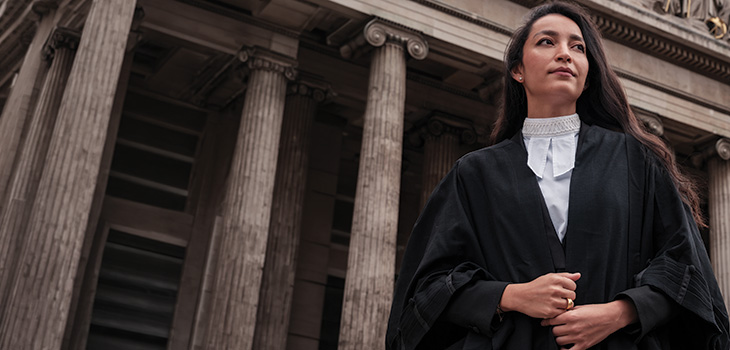
Heritage as an anchor and a compass, finding our common humanity and embracing the power of the outsider – Melina Antoniadis’s lessons learnt
From my earliest days, I have navigated between worlds. The Greek diaspora community of Montreal, where I was born, is a place where heritage is preserved in stories, traditions and names – often frozen in time, while societies evolve and change in the homeland. My grandmother, my father’s mother, who embodied resilience and strength, often reminded me never to forget where I came from, no matter how far I travelled. Her guidance has continued to lead me wherever I go.
Subconsciously, the desire to connect with my heritage became the compass that guided me throughout my journey as a lawyer, and later, to the English and Welsh Bar. As a law student, I drew on my Greek heritage when pursuing internships. I immersed myself in the maritime world of shipping law in Piraeus, served as an assistant to two Consuls General in Montreal, and worked as an intern at the Permanent Representation of Greece to the International Civil Aviation Organization. After finishing law school, I did an internship with the UN at the Extraordinary Chambers in the Courts of Cambodia. I was intent on travelling to Cambodia, an ambition which was driven by my desire to connect with my Khmer roots. My mother and her family having left the country 50 years earlier, I had grown up with little direct knowledge of this part of my heritage. When I experienced Cambodia for the first time – walking the streets my mother had never returned to and assisting the Office of the Prosecutor in bringing to justice the very individuals responsible for my family leaving their homeland – that journey became both a professional milestone and a profoundly personal one.
Effective advocacy, I have come to understand, depends as much on listening as it does on speaking, and on recognising the common humanity that binds us all. Following my qualification as a lawyer in Canada, my work in international law took me across contexts as diverse as delimiting maritime boundaries, protecting cultural heritage sites during armed conflict, interpreting historical treaties and assessing the impacts of climate change on human rights. More than once, I have been asked to travel at short notice into the middle of an ongoing conflict. I have worked with teams of lawyers from a wide array of countries, spanning from Vanuatu to Bolivia to Luxembourg, and more recently across the African Union, each contributing their unique traditions, legal cultures and personal stories. What has consistently struck me throughout these experiences is the profound similarity that unites us as human beings. Across continents and cultures, I have witnessed how much more similar we are than different; how much more alike we are than we realise.
Working with Cambodia has been transformative, teaching me lessons about redemption and reconciliation. Over recent years, Cambodia has undertaken substantial efforts to recover its looted antiquities from around the world through a multifaceted strategy involving careful negotiation, diplomatic engagement, media outreach and direct collaboration with former looters – some of which are former Khmer Rouge child soldiers. I am a member of the restitution team led by a brilliant American attorney based in Phnom Penh, and operating under the Ministry of Culture and Fine Arts, where I believe our efforts help restore not only artefacts, but also the cultural identity and national pride of Cambodians, including its younger generation. Last year, Cambodia welcomed 14 Khmer antiquities from the Metropolitan Museum of Art in New York, following several years of negotiations.
Working on the return of the Parthenon Sculptures has showed me the power of a forward-looking, collaborative approach to solving an age-old debate: a bridge connecting Greece and the UK, where both sides stand to benefit. This belief in connection was behind my decision to found NOSTOS Strategies in 2023, the world’s first strategic consultancy solely dedicated to the return of cultural heritage. Nostos – Greek for ‘homecoming’ – felt like the only word that could capture the mission. I wanted to help countries and peoples recover what had been lost. The unique cultural partnership as imagined by our campaign’s founder – a sharp-witted Greek-Canadian – and articulated by a joint British-Greek advisory board and a core team of professional strategists, is built on mutual respect, vision and creative problem-solving. I remain hopeful that a such a meaningful partnership will be concluded between the two countries. I long to see the Parthenon Sculptures finally reunited in Greece, with the British Museum having the opportunity to display, for the first time, iconic Greek masterpieces that have never left Greece. My father will be proud.
While certain nations may differ, their aspirations often run in parallel. Across China, Mexico, Armenia, Ghana, Nigeria, India, Egypt, First Nations in Canada, the plea is the same: to reconnect with history and cultural heritage. Countries and communities may have different ways of reaching goals, and there is no one-size-fits-all approach. Each society operates within its own unique context shaped by history, culture, values and social structures. As these jurisdictions become increasingly central to the global legal landscape, I see immense opportunities for meaningful engagement. The analytical rigour, cutting advocacy and ethical standards of the English and Welsh Bar are in ever-greater demand. Practising internationally requires barristers who are not only highly skilled, but also possess a degree of adaptability and cultural sensitivity.
I encourage others to seek out opportunities to build bridges across borders, languages and traditions. Last year, I formally qualified as a barrister, having completed my transfer from the Law Society of Ontario and so I find myself navigating, yet again, a new world, with new colleagues. I may be the first Cambodian to be called to the English Bar, and certainly am the first Canadian-Greek-Cambodian to reach this milestone. Completing a stage in Paris as one of last year’s Inner Temple Pegasus Scholars, I was inspired by the openness and curiosity of my fellow English barristers. They approached our French colleagues with genuine warmth and a desire to learn and connect – a spirit that reflected the very purpose of the historic Paris Bar Exchange. This filled me with pride and optimism for the profession we share.
While there have been moments when I felt like an outsider, I have always felt welcome. From the outset, I found myself embraced by a set of chambers that was international in outlook and diverse in composition. I was met not with scepticism, but with openness. My heads of chambers demonstrated remarkable flexibility and encouragement, giving me the space to develop a practice that spans from London courtrooms to the International Court of Justice, from restitution of cultural heritage on distant continents, to developing new practice areas like international arbitration. Colleagues at the Bar, from baby barristers to KCs, have been refreshingly welcoming – never turning down invitations for coffee and conversation. Even judges who occasionally stumble over the pronunciation of my last name during hearings do so with good humour. They treat my points just as they would any other barrister’s. These gestures matter: they affirm that my individuality is not a barrier, but part of the fabric that enriches the profession.
At the same time, I have come to value the outsider’s perspective. What once felt like a difference, I now understand can be a strength – a lesson my parents were always reminding me of. Far from being a limitation, the outsider’s view can become one of the greatest assets in our work, sharpening abilities to adapt to situations, to ask questions that others may assume have only one answer and develop trust.
The Bar, in its highest form, is not only a forum for justice but also a bridge across worlds, enabling us to serve causes that transcend borders and generations, and to forge meaningful connections with fellow human beings.
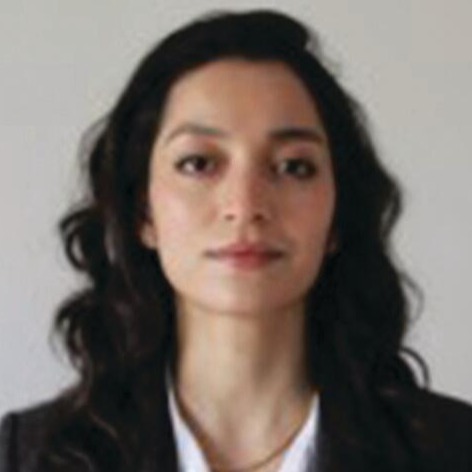
Melina Antoniadis specialises in public international law, and practises from chambers in London. She is a member of the Bar of England and Wales, and the Law Society of Ontario. Melina is the Founder of NOSTOS Strategies, the world’s first strategic consultancy solely dedicated to the return of cultural heritage.
From my earliest days, I have navigated between worlds. The Greek diaspora community of Montreal, where I was born, is a place where heritage is preserved in stories, traditions and names – often frozen in time, while societies evolve and change in the homeland. My grandmother, my father’s mother, who embodied resilience and strength, often reminded me never to forget where I came from, no matter how far I travelled. Her guidance has continued to lead me wherever I go.
Subconsciously, the desire to connect with my heritage became the compass that guided me throughout my journey as a lawyer, and later, to the English and Welsh Bar. As a law student, I drew on my Greek heritage when pursuing internships. I immersed myself in the maritime world of shipping law in Piraeus, served as an assistant to two Consuls General in Montreal, and worked as an intern at the Permanent Representation of Greece to the International Civil Aviation Organization. After finishing law school, I did an internship with the UN at the Extraordinary Chambers in the Courts of Cambodia. I was intent on travelling to Cambodia, an ambition which was driven by my desire to connect with my Khmer roots. My mother and her family having left the country 50 years earlier, I had grown up with little direct knowledge of this part of my heritage. When I experienced Cambodia for the first time – walking the streets my mother had never returned to and assisting the Office of the Prosecutor in bringing to justice the very individuals responsible for my family leaving their homeland – that journey became both a professional milestone and a profoundly personal one.
Effective advocacy, I have come to understand, depends as much on listening as it does on speaking, and on recognising the common humanity that binds us all. Following my qualification as a lawyer in Canada, my work in international law took me across contexts as diverse as delimiting maritime boundaries, protecting cultural heritage sites during armed conflict, interpreting historical treaties and assessing the impacts of climate change on human rights. More than once, I have been asked to travel at short notice into the middle of an ongoing conflict. I have worked with teams of lawyers from a wide array of countries, spanning from Vanuatu to Bolivia to Luxembourg, and more recently across the African Union, each contributing their unique traditions, legal cultures and personal stories. What has consistently struck me throughout these experiences is the profound similarity that unites us as human beings. Across continents and cultures, I have witnessed how much more similar we are than different; how much more alike we are than we realise.
Working with Cambodia has been transformative, teaching me lessons about redemption and reconciliation. Over recent years, Cambodia has undertaken substantial efforts to recover its looted antiquities from around the world through a multifaceted strategy involving careful negotiation, diplomatic engagement, media outreach and direct collaboration with former looters – some of which are former Khmer Rouge child soldiers. I am a member of the restitution team led by a brilliant American attorney based in Phnom Penh, and operating under the Ministry of Culture and Fine Arts, where I believe our efforts help restore not only artefacts, but also the cultural identity and national pride of Cambodians, including its younger generation. Last year, Cambodia welcomed 14 Khmer antiquities from the Metropolitan Museum of Art in New York, following several years of negotiations.
Working on the return of the Parthenon Sculptures has showed me the power of a forward-looking, collaborative approach to solving an age-old debate: a bridge connecting Greece and the UK, where both sides stand to benefit. This belief in connection was behind my decision to found NOSTOS Strategies in 2023, the world’s first strategic consultancy solely dedicated to the return of cultural heritage. Nostos – Greek for ‘homecoming’ – felt like the only word that could capture the mission. I wanted to help countries and peoples recover what had been lost. The unique cultural partnership as imagined by our campaign’s founder – a sharp-witted Greek-Canadian – and articulated by a joint British-Greek advisory board and a core team of professional strategists, is built on mutual respect, vision and creative problem-solving. I remain hopeful that a such a meaningful partnership will be concluded between the two countries. I long to see the Parthenon Sculptures finally reunited in Greece, with the British Museum having the opportunity to display, for the first time, iconic Greek masterpieces that have never left Greece. My father will be proud.
While certain nations may differ, their aspirations often run in parallel. Across China, Mexico, Armenia, Ghana, Nigeria, India, Egypt, First Nations in Canada, the plea is the same: to reconnect with history and cultural heritage. Countries and communities may have different ways of reaching goals, and there is no one-size-fits-all approach. Each society operates within its own unique context shaped by history, culture, values and social structures. As these jurisdictions become increasingly central to the global legal landscape, I see immense opportunities for meaningful engagement. The analytical rigour, cutting advocacy and ethical standards of the English and Welsh Bar are in ever-greater demand. Practising internationally requires barristers who are not only highly skilled, but also possess a degree of adaptability and cultural sensitivity.
I encourage others to seek out opportunities to build bridges across borders, languages and traditions. Last year, I formally qualified as a barrister, having completed my transfer from the Law Society of Ontario and so I find myself navigating, yet again, a new world, with new colleagues. I may be the first Cambodian to be called to the English Bar, and certainly am the first Canadian-Greek-Cambodian to reach this milestone. Completing a stage in Paris as one of last year’s Inner Temple Pegasus Scholars, I was inspired by the openness and curiosity of my fellow English barristers. They approached our French colleagues with genuine warmth and a desire to learn and connect – a spirit that reflected the very purpose of the historic Paris Bar Exchange. This filled me with pride and optimism for the profession we share.
While there have been moments when I felt like an outsider, I have always felt welcome. From the outset, I found myself embraced by a set of chambers that was international in outlook and diverse in composition. I was met not with scepticism, but with openness. My heads of chambers demonstrated remarkable flexibility and encouragement, giving me the space to develop a practice that spans from London courtrooms to the International Court of Justice, from restitution of cultural heritage on distant continents, to developing new practice areas like international arbitration. Colleagues at the Bar, from baby barristers to KCs, have been refreshingly welcoming – never turning down invitations for coffee and conversation. Even judges who occasionally stumble over the pronunciation of my last name during hearings do so with good humour. They treat my points just as they would any other barrister’s. These gestures matter: they affirm that my individuality is not a barrier, but part of the fabric that enriches the profession.
At the same time, I have come to value the outsider’s perspective. What once felt like a difference, I now understand can be a strength – a lesson my parents were always reminding me of. Far from being a limitation, the outsider’s view can become one of the greatest assets in our work, sharpening abilities to adapt to situations, to ask questions that others may assume have only one answer and develop trust.
The Bar, in its highest form, is not only a forum for justice but also a bridge across worlds, enabling us to serve causes that transcend borders and generations, and to forge meaningful connections with fellow human beings.
Heritage as an anchor and a compass, finding our common humanity and embracing the power of the outsider – Melina Antoniadis’s lessons learnt

The Chair of the Bar reports back
Susie Griffin on the admin that keeps barristers from billable work
Clement Cowley, Partner at The Penny Group, explains how global events can influence the performance of pensions and ISAs, and why taking a long-term approach to investing is often the most effective strategy
Mário Barroso, Head of R&D and Method Development at AlphaBiolabs, discusses what family law professionals need to know about hallucinogens, from the main hallucinogenic drugs encountered in family proceedings, to their effects and the testing options available
Harmony Christian Ministries is the latest charity to benefit from a £500 donation from AlphaBiolabs via the company’s Giving Back initiative
By David Green
At the start of her term, Chair of the Bar 2026 Kirsty Brimelow KC set out a series of priorities for the year ahead. One of those priorities was children in the justice system
As the world becomes more digital, Barbara Vinagre Mota examines international research into the mental health consequences of judges’ exposure to graphic and immersive evidence, highlighting the importance of support systems
In an era of patient-centred care and growing concern over misconduct in medical settings, why do women still lack the right to choose women consultants for examination and treatment? Charles Davey investigates
Reviewed by Daniel Barnett
James McNeill Whistler at Tate Britain until 27 September Rothko in Florence at Palazzo Strozzi until 23 August Reviewed by Stephen Cragg KC