*/
Drug misuse remains a recurrent feature in family proceedings, often shaping decisions around safeguarding, supervision and contact.
However, the substance abuse landscape is no longer confined to heroin, cocaine, and cannabis. Toxicology laboratories are seeing an increase in controlled prescription drug misuse, the continued emergence of New Psychoactive Substances (NPS), and a marked rise in poly-drug use.
In addition, street drugs are increasingly adulterated or contaminated, meaning individuals may be unaware of the full range of substances they have consumed, many of which fall outside standard drug testing panels and may not be detected unless specifically requested.
For legal practitioners, it is no longer enough to know whether someone has taken a drug. Understanding what that drug is, how it is classified, and how it is typically used is equally important.
In family cases, how a substance is classified under UK law can have a real bearing on how risk is assessed and how evidence is framed.
Importantly, legal status does not necessarily reflect safeguarding risk. A substance may be lawfully prescribed, yet misused in a manner that impairs cognition, behaviour, or parenting capacity.
While traditional illicit drugs remain relevant, family practitioners are increasingly encountering a broader spectrum of substances in legally-instructed testing:
We are also seeing increasing misuse of prescription-only medications including anticonvulsants like gabapentin and pregabalin, antidepressants, antipsychotics, and anabolic steroids. These substances may be lawfully prescribed, yet excessive or non-prescribed use can contribute to mood instability, cognitive impairment, or behavioural volatility.
Understanding the main drug groups can help shape the scope of testing instructed and avoid gaps in the evidential picture.
Standard drug panels are designed to detect the most misused controlled substances. However, where prescription drug misuse, synthetic cannabinoids, or emerging psychoactive substances are suspected, an extended panel may be required.
Results must also be interpreted within clinical and behavioural context. The presence of a prescribed medication does not automatically indicate misuse; conversely, lawful access does not negate safeguarding concerns.
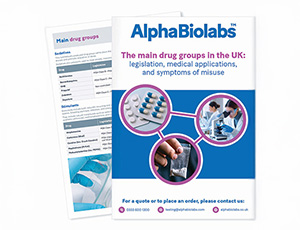
In response to demand for our previous guide, Drug & Alcohol Testing: a summary of testing options, we have developed a complementary guide for family law professionals: The main drug groups in the UK: legislation, medical applications and symptoms of misuse.
The guide provides:

Drug misuse remains a recurrent feature in family proceedings, often shaping decisions around safeguarding, supervision and contact.
However, the substance abuse landscape is no longer confined to heroin, cocaine, and cannabis. Toxicology laboratories are seeing an increase in controlled prescription drug misuse, the continued emergence of New Psychoactive Substances (NPS), and a marked rise in poly-drug use.
In addition, street drugs are increasingly adulterated or contaminated, meaning individuals may be unaware of the full range of substances they have consumed, many of which fall outside standard drug testing panels and may not be detected unless specifically requested.
For legal practitioners, it is no longer enough to know whether someone has taken a drug. Understanding what that drug is, how it is classified, and how it is typically used is equally important.
In family cases, how a substance is classified under UK law can have a real bearing on how risk is assessed and how evidence is framed.
Importantly, legal status does not necessarily reflect safeguarding risk. A substance may be lawfully prescribed, yet misused in a manner that impairs cognition, behaviour, or parenting capacity.
While traditional illicit drugs remain relevant, family practitioners are increasingly encountering a broader spectrum of substances in legally-instructed testing:
We are also seeing increasing misuse of prescription-only medications including anticonvulsants like gabapentin and pregabalin, antidepressants, antipsychotics, and anabolic steroids. These substances may be lawfully prescribed, yet excessive or non-prescribed use can contribute to mood instability, cognitive impairment, or behavioural volatility.
Understanding the main drug groups can help shape the scope of testing instructed and avoid gaps in the evidential picture.
Standard drug panels are designed to detect the most misused controlled substances. However, where prescription drug misuse, synthetic cannabinoids, or emerging psychoactive substances are suspected, an extended panel may be required.
Results must also be interpreted within clinical and behavioural context. The presence of a prescribed medication does not automatically indicate misuse; conversely, lawful access does not negate safeguarding concerns.
In response to demand for our previous guide, Drug & Alcohol Testing: a summary of testing options, we have developed a complementary guide for family law professionals: The main drug groups in the UK: legislation, medical applications and symptoms of misuse.
The guide provides:

The Chair of the Bar reports back
Susie Griffin on the admin that keeps barristers from billable work
Clement Cowley, Partner at The Penny Group, explains how global events can influence the performance of pensions and ISAs, and why taking a long-term approach to investing is often the most effective strategy
Mário Barroso, Head of R&D and Method Development at AlphaBiolabs, discusses what family law professionals need to know about hallucinogens, from the main hallucinogenic drugs encountered in family proceedings, to their effects and the testing options available
Harmony Christian Ministries is the latest charity to benefit from a £500 donation from AlphaBiolabs via the company’s Giving Back initiative
By David Green

The golden age of advocacy? David Langwallner pays homage to the filmic if contentious barrister Sir Edward Carson and some of his contemporaries
Leah Arthur, a pupil, and her second seat supervisor, John Goss, share their perspectives on building a productive pupil-supervisor relationship
Henry Fingerhut outlines what the Bar Standards Board AI guidance means for early career barristers
The Ministry of Justice will match-fund up to 100 criminal pupillages, with grants available to criminal chambers across England and Wales. Similar to the COIC scheme, the grants will match-fund pupillages additional to those otherwise offered without government funding
Not yet, says Jacob Turner. Regulation, unlike the technology itself, is a domain the legal profession can still control