*/

Reflections by Jayne Drake, Senior Clerk, St Pauls Chambers
The recent Institute of Barristers’ Clerks (IBC) Awards evening was, for many of us, more than simply a celebration of achievement. As Chair of the Awards Committee and a member of the IBC Executive Committee, I was proud to help organise the first formal awards event in the organisation’s history, and particularly proud to see two members of the St Pauls Chambers clerking team in the regional categories.
The evening also prompted reflection on how the role of chambers professionals has evolved, and what the modern Bar needs from those who support it.
Clerking functions such as diary management, fee negotiation and the allocation of work remain fundamental to the successful operation of every chambers, but there are many additional demands. Chambers professionals today include practice managers, marketers, mentors, wellbeing advocates, business developers, front of house and client care teams, operational staff, relationship managers and trusted advisers. We need to understand not only the legal market, but also the ambitions, pressures upon, and personalities of the barristers we support.
That evolution reflects a broader truth: barristers are not all the same, and success looks different for everyone. Some barristers seek high-profile advocacy and leadership roles. Others prioritise flexibility, collegiate culture, intellectual challenge or long-term sustainability. The best chambers recognise that individuality. And the best clerks adapt to it.
In my experience, barristers rarely leave chambers simply because another set offers a marginally more competitive contribution structure. People stay where they feel supported. They stay where they are understood. They stay where they believe somebody is invested in their success – commercially, professionally and personally.
At St Pauls Chambers, these are conversations we have regularly: What sort of practice does this barrister want to build? What sort of professional life do they want in five or ten years’ time? What environment will allow them to thrive?
Across all practice areas, barristers are managing increasing workloads, court delays, financial uncertainty and wellbeing concerns. Chambers’ professionals experience many of those same pressures alongside the barristers they support, balancing operational demands, recruitment, practice development and the responsibility of helping members navigate a demanding profession. That shared experience has created a greater appreciation of the importance of culture, communication and genuine professional support.
Stability at the Bar can be more fragile than people imagine. Even successful sets with longstanding reputations are not immune from periods of division. We experienced disagreements ourselves – not about money in isolation, but fundamentally different views about what chambers should become, how we value the people who support the business of the Bar, and what investment in the future ought to look like. It was a reminder that chambers are ultimately communities of people before they are businesses.
Heraclitus’s philosophy of perpetual change reminds us that no institution or profession ever truly stands still. Chambers are no different. People arrive, people leave, priorities shift, and leadership passes from one generation to the next. The task for those entrusted with stewardship is not to resist change entirely, but to guide it with perspective and integrity.
Once emotions subsided, what remained was a group of people committed to preserving a chambers built on mutual support, professionalism and long-term sustainability. In many ways, the experience clarified who we are.
We are not seeking growth for its own sake, nor are we searching simply for the highest earners or the loudest personalities. We are looking for people who share a vision of chambers as a collective enterprise, one where success is measured not only financially, but in the quality of relationships, culture and professional trust that exist within it.
At their best, chambers are professional homes. Those that will thrive will not necessarily be those with the loudest marketing or the lowest contribution structures. They will be the chambers that understand people best. And that is the standard we continue to aspire to every day at St Pauls Chambers.
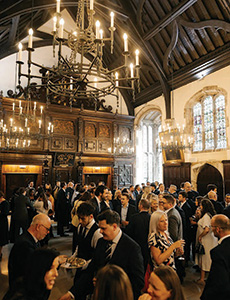
The inaugural Institute of Barristers’ Clerks Awards evening (pictured above) took place on Friday 8 May at Lincoln’s Inn.
Earlier this year, Counsel magazine published an article written by Thomas Cowan of St Pauls Chambers about ‘making the leap’ and finding the place where lawyers can truly thrive. That phrase stayed with me because chambers should be more than simply a place from which barristers practise.



St Pauls Chambers is a leading barristers chambers in Leeds, offering legal services in various areas of law. Find out more about their barristers, expertise and careers at www.stpaulschambers.com.
The recent Institute of Barristers’ Clerks (IBC) Awards evening was, for many of us, more than simply a celebration of achievement. As Chair of the Awards Committee and a member of the IBC Executive Committee, I was proud to help organise the first formal awards event in the organisation’s history, and particularly proud to see two members of the St Pauls Chambers clerking team in the regional categories.
The evening also prompted reflection on how the role of chambers professionals has evolved, and what the modern Bar needs from those who support it.
Clerking functions such as diary management, fee negotiation and the allocation of work remain fundamental to the successful operation of every chambers, but there are many additional demands. Chambers professionals today include practice managers, marketers, mentors, wellbeing advocates, business developers, front of house and client care teams, operational staff, relationship managers and trusted advisers. We need to understand not only the legal market, but also the ambitions, pressures upon, and personalities of the barristers we support.
That evolution reflects a broader truth: barristers are not all the same, and success looks different for everyone. Some barristers seek high-profile advocacy and leadership roles. Others prioritise flexibility, collegiate culture, intellectual challenge or long-term sustainability. The best chambers recognise that individuality. And the best clerks adapt to it.
In my experience, barristers rarely leave chambers simply because another set offers a marginally more competitive contribution structure. People stay where they feel supported. They stay where they are understood. They stay where they believe somebody is invested in their success – commercially, professionally and personally.
At St Pauls Chambers, these are conversations we have regularly: What sort of practice does this barrister want to build? What sort of professional life do they want in five or ten years’ time? What environment will allow them to thrive?
Across all practice areas, barristers are managing increasing workloads, court delays, financial uncertainty and wellbeing concerns. Chambers’ professionals experience many of those same pressures alongside the barristers they support, balancing operational demands, recruitment, practice development and the responsibility of helping members navigate a demanding profession. That shared experience has created a greater appreciation of the importance of culture, communication and genuine professional support.
Stability at the Bar can be more fragile than people imagine. Even successful sets with longstanding reputations are not immune from periods of division. We experienced disagreements ourselves – not about money in isolation, but fundamentally different views about what chambers should become, how we value the people who support the business of the Bar, and what investment in the future ought to look like. It was a reminder that chambers are ultimately communities of people before they are businesses.
Heraclitus’s philosophy of perpetual change reminds us that no institution or profession ever truly stands still. Chambers are no different. People arrive, people leave, priorities shift, and leadership passes from one generation to the next. The task for those entrusted with stewardship is not to resist change entirely, but to guide it with perspective and integrity.
Once emotions subsided, what remained was a group of people committed to preserving a chambers built on mutual support, professionalism and long-term sustainability. In many ways, the experience clarified who we are.
We are not seeking growth for its own sake, nor are we searching simply for the highest earners or the loudest personalities. We are looking for people who share a vision of chambers as a collective enterprise, one where success is measured not only financially, but in the quality of relationships, culture and professional trust that exist within it.
At their best, chambers are professional homes. Those that will thrive will not necessarily be those with the loudest marketing or the lowest contribution structures. They will be the chambers that understand people best. And that is the standard we continue to aspire to every day at St Pauls Chambers.
The inaugural Institute of Barristers’ Clerks Awards evening (pictured above) took place on Friday 8 May at Lincoln’s Inn.
Earlier this year, Counsel magazine published an article written by Thomas Cowan of St Pauls Chambers about ‘making the leap’ and finding the place where lawyers can truly thrive. That phrase stayed with me because chambers should be more than simply a place from which barristers practise.
Reflections by Jayne Drake, Senior Clerk, St Pauls Chambers

The Chair of the Bar reports back
Susie Griffin on the admin that keeps barristers from billable work
Clement Cowley, Partner at The Penny Group, explains how global events can influence the performance of pensions and ISAs, and why taking a long-term approach to investing is often the most effective strategy
Mário Barroso, Head of R&D and Method Development at AlphaBiolabs, discusses what family law professionals need to know about hallucinogens, from the main hallucinogenic drugs encountered in family proceedings, to their effects and the testing options available
Harmony Christian Ministries is the latest charity to benefit from a £500 donation from AlphaBiolabs via the company’s Giving Back initiative
By David Green

At the start of her term, Chair of the Bar 2026 Kirsty Brimelow KC set out a series of priorities for the year ahead. One of those priorities was children in the justice system
As the world becomes more digital, Barbara Vinagre Mota examines international research into the mental health consequences of judges’ exposure to graphic and immersive evidence, highlighting the importance of support systems
In an era of patient-centred care and growing concern over misconduct in medical settings, why do women still lack the right to choose women consultants for examination and treatment? Charles Davey investigates
Reviewed by Daniel Barnett
James McNeill Whistler at Tate Britain until 27 September Rothko in Florence at Palazzo Strozzi until 23 August Reviewed by Stephen Cragg KC