*/
After a two-year investigation, Karim Khan KC was removed as ICC Chief Prosecutor in July. With the United States threatening to dismantle the court ‘brick by brick’, what’s next for the beleaguered ICC? asks Chris Stephen
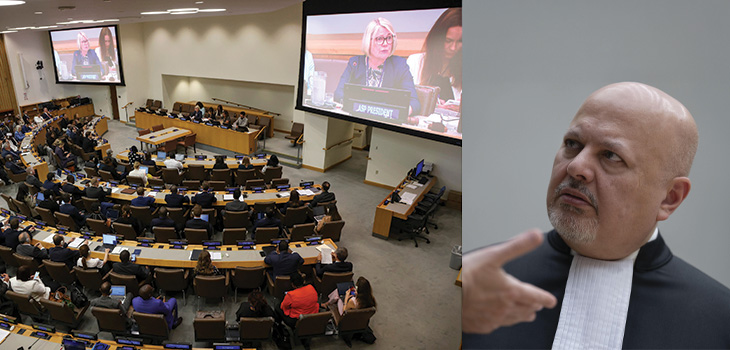
The greatest controversy in the history of the International Criminal Court (ICC) ended not with a bang but a whimper, with the firing of Chief Prosecutor Karim Khan, accused of sexually harassing a subordinate, decided after a short session of its governing Assembly of States Parties in late July.
The Assembly, made up of the court’s member nations, met in a borrowed hall at UN headquarters in New York on a sweltering Friday afternoon.
The harassment investigation lasted two years, studded with press leaks, lurid claims and accusations from all sides of political interference. Days earlier Khan’s accuser, a married Malaysian staffer, broke cover to give a CNN interview. Referring to herself only as Sarah, she gave excruciating details of claims Khan molested her at his home, office and hotels on foreign assignments.
She was not asked to give evidence, nor was Khan invited, difficult anyway as he is under a Trump administration visa ban. Officials glossed over a report by three judges that there was not enough evidence to prove Khan’s guilt beyond reasonable doubt, and fired him for ‘serious misconduct and serious breach of duty’. The evidence remains secret, as does the voting, with 82 of the 125 member states voting by secret ballot for his immediate dismissal.
Khan, also suspended by the UK’s Bar Standards Board for the same matter, denies the allegations and has vowed to clear his name.
But for the court, the pain is not over. Its biggest scandal has coincided with its biggest crisis – President Trump’s promise to ‘dismantle’ it.
Khan, a 56-year-old British KC, was heralded as the court’s saviour when he arrived five years ago.
He took office with the court in pieces. A year before, a searing report, the Independent Expert Review, revealed widespread sexual harassment against junior staff. It also blamed the low war crimes conviction rate on poor judges, saying: ‘Some judges have owed their success in the ballot more to electoral horse-trading than competence.’
Announcing a page had been turned, Khan started well. When Russia invaded Ukraine he aimed for the top, with Vladimir Putin and his high command indicted.
But he also tied the court in knots with inconsistent investigations. First over his Gaza probe. Israeli prime minister Benjamin Netanyahu and former defence minister Yoav Gallant were indicted, but no Hamas leaders are charged. Khan wanted to indict three Hamas commanders, but all were killed before charges could be brought. Since then he failed to produce new Hamas suspects, or explain why not.
And then there is the Palestinian Authority, signatory state for Palestine’s ICC membership. Several reports, notably by Human Rights Watch, accuse it of systematic torture of political opponents. Ordinarily, that should trigger an ICC investigation, but none happened.
Khan also rattled cages by consulting with human rights groups about how to prosecute world leaders for environmental crimes. Yet the ICC Statute has only one ecological charge, and that only in time of war. Critics worried the court was making its own laws.
That is arguably the case with the issue that has put Washington on red alert – Myanmar. The country’s junta has persecuted quarter-of-a-million Rohingya, earning international opprobrium. However, Myanmar is not an ICC member.
That didn’t stop the court designing a work-around. Neighbouring Bangladesh, where the Rohingya fled, is in the ICC. So the court opened a Situation, or investigation, in that country.
The court’s labyrinthine legal argument is that elements of the crime of deportation take place as refugees cross into Bangladesh. Thus, if elements of Myanmar’s crimes happen on ICC territory, all can be prosecuted. And, bingo, the ICC gave itself Myanmar jurisdiction. Khan then requested a crimes against humanity indictment against Myanmar president Min Aung Hlaing.
Legally this is contentious. The ICC is formed by treaty, and extending jurisdiction to other states breaks the principle that a treaty cannot bind non-parties. In effect, the court has declared global jurisdiction, subject to victims fleeing to ICC countries. A second-such case is now under way, with a Situation opened in Lithuania to investigate non-member Belarus for deporting political opponents.
This has rung alarm bells in Washington. Some fear the court will ‘do a Myanmar’ to indict Trump for ICE deportations, simply by opening a Situation in Mexico, where many deportees are sent.
The US accuses the court of being part of what it styles the Global Left, targeting some abuses while ignoring others. It objects to investigations of its ally Israel and American soldiers formerly in Afghanistan.
Trump has sanctioned 13 court officials, including ICC president Tomoko Akane. In a Wall Street Journal editorial, Secretary of State Marco Rubio cast America’s battle with the court as ‘sovereign states over globalism’, and declared: ‘We will dismantle the ICC – brick by brick, if necessary.’
A united court could mount a common front against this, but there are bitter divisions inside its boxy Hague headquarters. Harassment and bullying remain major issues, with internal investigators saying abuse complaints last year nearly doubled.
Three quarters of prosecution staff told the annual staff survey they wouldn’t report abuse, fearing retaliation from superiors. Rival groups in the prosecution office, for and against Khan, take shots at each other with anonymous social media posts.
Meanwhile judges have sat on Khan’s Myanmar indictment request for 23 months, an unheard-of delay. Critics wonder if the judges have cold feet, not wanting to put their names to bad law.
As if things were not complicated enough, Bangladesh’s government is reported to be abusing political opponents. Having opened a Situation there, the ICC is duty-bound to investigate. But again, no probe has been announced.
And all the while, the ICC fails to deliver. In 24 years, it has jailed only ten war criminals.
Certainly its erratic behaviour has put off member states. Six have withdrawn from the ICC since June, and many don’t pay their annual contributions, leaving the court permanently in arrears. Seven have given Netanyahu arrest immunity and others don’t arrest ICC suspects, thanks to a precedent set by South Africa.
These days South Africa is enthusiastic about human rights, accusing Israel of genocide in Gaza at the International Court of Justice. But ten years ago, it refused to arrest a prominent ICC genocide suspect, Sudanese president Omar al-Bashir. Hague judges ruled Pretoria had broken the court’s most important rule, but with South Africa threatening to quit the court, they decided against punishment. Since then, other nations have ignored arrest orders, most recently Mongolia and Italy. Without states making arrests, the court risks becoming a paper tiger.
The issue linking all these problems is philosophical. The ICC was set up to be free of governmental interference. Jurists were to operate under that treasured word, ‘independence’. Free of political pressure, they would undoubtably make fair and good decisions. But it turns out human nature doesn’t work that way. Left to its own devices, the court has become a disciplinary nightmare laden with scattergun rulings. It will be many months before a new chief prosecutor is appointed, and it is unclear whether anyone can bring order from the current chaos. In the meantime, faced with US hostility, member states may be wondering if it is a project worth saving.
In October, Trump issued his harshest sanctions yet, forbidding American firms and banks from doing business with the court. Rubio said: ‘Either the ICC will end its threats or we will end the ICC.’
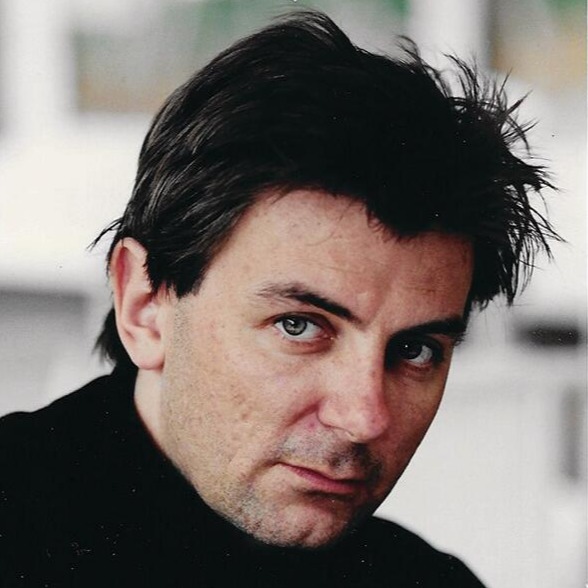
Chris Stephen is a former war correspondent for The Guardian and author of The Future of War Crimes Justice, published in 2024 by Melville House (London and New York).
The greatest controversy in the history of the International Criminal Court (ICC) ended not with a bang but a whimper, with the firing of Chief Prosecutor Karim Khan, accused of sexually harassing a subordinate, decided after a short session of its governing Assembly of States Parties in late July.
The Assembly, made up of the court’s member nations, met in a borrowed hall at UN headquarters in New York on a sweltering Friday afternoon.
The harassment investigation lasted two years, studded with press leaks, lurid claims and accusations from all sides of political interference. Days earlier Khan’s accuser, a married Malaysian staffer, broke cover to give a CNN interview. Referring to herself only as Sarah, she gave excruciating details of claims Khan molested her at his home, office and hotels on foreign assignments.
She was not asked to give evidence, nor was Khan invited, difficult anyway as he is under a Trump administration visa ban. Officials glossed over a report by three judges that there was not enough evidence to prove Khan’s guilt beyond reasonable doubt, and fired him for ‘serious misconduct and serious breach of duty’. The evidence remains secret, as does the voting, with 82 of the 125 member states voting by secret ballot for his immediate dismissal.
Khan, also suspended by the UK’s Bar Standards Board for the same matter, denies the allegations and has vowed to clear his name.
But for the court, the pain is not over. Its biggest scandal has coincided with its biggest crisis – President Trump’s promise to ‘dismantle’ it.
Khan, a 56-year-old British KC, was heralded as the court’s saviour when he arrived five years ago.
He took office with the court in pieces. A year before, a searing report, the Independent Expert Review, revealed widespread sexual harassment against junior staff. It also blamed the low war crimes conviction rate on poor judges, saying: ‘Some judges have owed their success in the ballot more to electoral horse-trading than competence.’
Announcing a page had been turned, Khan started well. When Russia invaded Ukraine he aimed for the top, with Vladimir Putin and his high command indicted.
But he also tied the court in knots with inconsistent investigations. First over his Gaza probe. Israeli prime minister Benjamin Netanyahu and former defence minister Yoav Gallant were indicted, but no Hamas leaders are charged. Khan wanted to indict three Hamas commanders, but all were killed before charges could be brought. Since then he failed to produce new Hamas suspects, or explain why not.
And then there is the Palestinian Authority, signatory state for Palestine’s ICC membership. Several reports, notably by Human Rights Watch, accuse it of systematic torture of political opponents. Ordinarily, that should trigger an ICC investigation, but none happened.
Khan also rattled cages by consulting with human rights groups about how to prosecute world leaders for environmental crimes. Yet the ICC Statute has only one ecological charge, and that only in time of war. Critics worried the court was making its own laws.
That is arguably the case with the issue that has put Washington on red alert – Myanmar. The country’s junta has persecuted quarter-of-a-million Rohingya, earning international opprobrium. However, Myanmar is not an ICC member.
That didn’t stop the court designing a work-around. Neighbouring Bangladesh, where the Rohingya fled, is in the ICC. So the court opened a Situation, or investigation, in that country.
The court’s labyrinthine legal argument is that elements of the crime of deportation take place as refugees cross into Bangladesh. Thus, if elements of Myanmar’s crimes happen on ICC territory, all can be prosecuted. And, bingo, the ICC gave itself Myanmar jurisdiction. Khan then requested a crimes against humanity indictment against Myanmar president Min Aung Hlaing.
Legally this is contentious. The ICC is formed by treaty, and extending jurisdiction to other states breaks the principle that a treaty cannot bind non-parties. In effect, the court has declared global jurisdiction, subject to victims fleeing to ICC countries. A second-such case is now under way, with a Situation opened in Lithuania to investigate non-member Belarus for deporting political opponents.
This has rung alarm bells in Washington. Some fear the court will ‘do a Myanmar’ to indict Trump for ICE deportations, simply by opening a Situation in Mexico, where many deportees are sent.
The US accuses the court of being part of what it styles the Global Left, targeting some abuses while ignoring others. It objects to investigations of its ally Israel and American soldiers formerly in Afghanistan.
Trump has sanctioned 13 court officials, including ICC president Tomoko Akane. In a Wall Street Journal editorial, Secretary of State Marco Rubio cast America’s battle with the court as ‘sovereign states over globalism’, and declared: ‘We will dismantle the ICC – brick by brick, if necessary.’
A united court could mount a common front against this, but there are bitter divisions inside its boxy Hague headquarters. Harassment and bullying remain major issues, with internal investigators saying abuse complaints last year nearly doubled.
Three quarters of prosecution staff told the annual staff survey they wouldn’t report abuse, fearing retaliation from superiors. Rival groups in the prosecution office, for and against Khan, take shots at each other with anonymous social media posts.
Meanwhile judges have sat on Khan’s Myanmar indictment request for 23 months, an unheard-of delay. Critics wonder if the judges have cold feet, not wanting to put their names to bad law.
As if things were not complicated enough, Bangladesh’s government is reported to be abusing political opponents. Having opened a Situation there, the ICC is duty-bound to investigate. But again, no probe has been announced.
And all the while, the ICC fails to deliver. In 24 years, it has jailed only ten war criminals.
Certainly its erratic behaviour has put off member states. Six have withdrawn from the ICC since June, and many don’t pay their annual contributions, leaving the court permanently in arrears. Seven have given Netanyahu arrest immunity and others don’t arrest ICC suspects, thanks to a precedent set by South Africa.
These days South Africa is enthusiastic about human rights, accusing Israel of genocide in Gaza at the International Court of Justice. But ten years ago, it refused to arrest a prominent ICC genocide suspect, Sudanese president Omar al-Bashir. Hague judges ruled Pretoria had broken the court’s most important rule, but with South Africa threatening to quit the court, they decided against punishment. Since then, other nations have ignored arrest orders, most recently Mongolia and Italy. Without states making arrests, the court risks becoming a paper tiger.
The issue linking all these problems is philosophical. The ICC was set up to be free of governmental interference. Jurists were to operate under that treasured word, ‘independence’. Free of political pressure, they would undoubtably make fair and good decisions. But it turns out human nature doesn’t work that way. Left to its own devices, the court has become a disciplinary nightmare laden with scattergun rulings. It will be many months before a new chief prosecutor is appointed, and it is unclear whether anyone can bring order from the current chaos. In the meantime, faced with US hostility, member states may be wondering if it is a project worth saving.
In October, Trump issued his harshest sanctions yet, forbidding American firms and banks from doing business with the court. Rubio said: ‘Either the ICC will end its threats or we will end the ICC.’
After a two-year investigation, Karim Khan KC was removed as ICC Chief Prosecutor in July. With the United States threatening to dismantle the court ‘brick by brick’, what’s next for the beleaguered ICC? asks Chris Stephen

The Chair of the Bar reports back
By BSK Financial Planning
Susie Griffin on the admin that keeps barristers from billable work
Clement Cowley, Partner at The Penny Group, explains how global events can influence the performance of pensions and ISAs, and why taking a long-term approach to investing is often the most effective strategy
Mário Barroso, Head of R&D and Method Development at AlphaBiolabs, discusses what family law professionals need to know about hallucinogens, from the main hallucinogenic drugs encountered in family proceedings, to their effects and the testing options available
Harmony Christian Ministries is the latest charity to benefit from a £500 donation from AlphaBiolabs via the company’s Giving Back initiative

Kick off your career at the Bar Council’s Pupillage Fair this October – it’s one of the most valuable opportunities for aspiring barristers, says Amelia Clegg
The golden age of advocacy? David Langwallner pays homage to the filmic if contentious barrister Sir Edward Carson and some of his contemporaries
Henry Fingerhut outlines what the Bar Standards Board AI guidance means for early career barristers
The Ministry of Justice will match-fund up to 100 criminal pupillages, with grants available to criminal chambers across England and Wales. Similar to the COIC scheme, the grants will match-fund pupillages additional to those otherwise offered without government funding
Not yet, says Jacob Turner. Regulation, unlike the technology itself, is a domain the legal profession can still control