*/

Karlia Lykourgou and Harriet Johnson examine the growing use of AI across the criminal justice system, from efficiency-enhancing tools to more contentious applications such as facial recognition technology
The good news is artificial intelligence will save us (if it doesn’t kill us by 2030). In the meantime, the Ministry of Justice is hinging its hopes on a three-year strategy to integrate AI across courts, prisons, probation and legal services, as announced in its July 2025 policy paper titled, AI Action Plan for Justice.
The logic for this move was underscored by Part II of Brian Leveson’s review published in February, which emphasised the importance of AI as a means of creating efficiencies across the justice system, and enthusiastically endorsed in the government’s response to the review in October.
In June, the ‘PoliceAI’ centre was launched, delivering a key commitment of January’s Police Reform white paper, to implement a huge redesign of policing to meet the needs of the digital age. As the name indicates, the centre’s purpose is to develop and scale AI tools to automate processes and free up officers for frontline work.
You have probably come across the realities of what this means for your cases. Strange redactions, impenetrable software confidently referenced in police witness statements undertaking transcription, triage, summary and data ‘cleansing’ operations, all far more reliable than the bad old days when humans used to do it.
Northumbria University’s Probable Futures Project has identified over 70 distinct AI tools being trialled and used by police for various purposes, but the implementation of these technologies is patchy across the forces.
Facial recognition is among the most contentious tools available, used for post-incident matching against custody lists and live facial recognition technology for real-time scanning against watch lists.
In R (Bridges) v South Wales Police [2020] EWCA Civ 1058 the Court of Appeal found South Wales Police’s use of automated facial recognition technology unlawful due to a lack of adequate safeguards. Six years on, however, the High Court recently dismissed a judicial review brought by Big Brother Watch in Thompson and Carlo [2026] EWHC 915 (Admin), finding the Metropolitan Police’s 2024 live facial recognition policy has sufficient clarity, foreseeability and safeguards to be compatible with Articles 8, 10 and 11 of the ECHR.
Police use of AI, and in particular facial recognition technology, is not governed by a dedicated statutory regime. Its legality hinges on a combination of police powers, data protection and human rights law, equality duties, statutory codes, national guidance and force-level policies. Oversight is split between a series of regulatory bodies.
The government has conceded there are ‘legitimate concerns’ arising from this model, and the Police Reform Bill is intended to draw on responses to the recent 2025-26 consultation to create a single body to oversee police use of AI technologies.
In September, the Joint Committee on Human Rights highlighted the urgency for statutory oversight, proposing the need for a new AI Bill to address the scale and seriousness of threats to human rights posed by AI systems. Whether the government decides to follow that recommendation or proceed with its more horizontal approach to AI regulation remains to be seen.
Aside from developments in policing, legislators have been busy plugging the gaps in statutes concerning image-based abuse offences to meet the new capabilities of AI-image generators such as Grok.
Section138 of the Data (Use and Access) Act 2025 (D(UA)A 2025) has criminalised creating or requesting the creation of non-consensual AI-generated intimate images.
The Crime and Policing Act 2026 (CPA 2026) being rolled out in stages, amends the Online Safety Act 2023 to include provisions for the reporting of intimate image content and responsibilities for its timely removal (see s 100, now in force).
Section 72 CPA 2026 (not yet in force) also creates a new s 46A Sexual Offences Act 2003 offence criminalising the creation, possession and distribution of AI models or software optimised to generate indecent images of children.
In court, the use of technology by lawyers and members of the public has raised other issues.
Though Meta glasses have not yet made a (reported) appearance in the UK criminal courts, in March a High Court judge found that a litigant in insolvency proceedings had been ‘assisted or coached’ during cross-examination via smart glasses using a live phone call. Amid wider concerns about covert recording (the glasses have now been banned from various pubs, restaurants and theatres), HMCTS announced in August that smart glasses would be confiscated from anyone entering a court or tribunal building in England and Wales.
In R v FGD [2026] EWCA Crim 918, the Court of Appeal allowed a prosecution appeal against a Recorder’s decision to stay a rape trial as an abuse of process. A download of the complainant’s phone, ordered after they produced late screenshots to support their account, revealed that they had used an AI chatbot to compile a summary of their account, together with 24 anticipated cross-examination questions and suggested answers. The Court of Appeal noted that the complainant’s Achieving Best Evidence interview pre-dated the AI use and was untainted, and held that any prejudice could be adequately addressed by the trial process. The court invited the National Police Chiefs Council, the Crown Prosecution Service and the Criminal Procedure Rules Committee to consider regulating AI use by witnesses, noting that FGD was ‘unlikely to be an isolated example’.
The impact of AI is not limited to live evidence. As deepfakes become harder to detect, and public awareness of them grows, trials are increasingly seeing a corresponding risk of genuine evidence being wrongly dismissed as fabricated in what is known as the ‘liar’s dividend’. Where authenticity is put in issue the task of positively proving that footage or audio has not been altered is almost always likely to fall to the police or CPS.
Practitioners increasingly report, albeit anecdotally, concerns about litigants in person, and occasionally lay clients, using AI tools to record or transcribe hearings. Those doing so often do not seem to appreciate that unauthorised recording of proceedings may constitute a contempt of court.
As for lawyers, the courts have shown little tolerance for reliance on unverified AI output. In R (Ayinde) v Haringey LBC [2025] EWHC 1040 (Admin), the High Court found multiple non-existence authorities cited and made wasted costs order; the Upper Tribunal took a similar approach in R (Munir) [2026] UKUT 00081. At the time of publication, an online tracker maintained by Matthew Lee records 87 UK cases involving suspected or confirmed AI-hallucinated citations, including the first Solicitors Disciplinary Tribunal strike-off in SRA v Kumar (2026) 12884.
Despite this, the approach of the courts to the use of AI in general has been one of cautious encouragement. Sir Geoffrey Vos MR recently said that judges should not shun AI’s careful use, while stressing lawyers’ continuing duty to verify AI-generated research independently.
One development that is likely to be seen as positive by many, including those tasked with keeping a contemporaneous note of evidence, is the trialling by HMCTS of an in-house ‘Justice Transcribe’ for Crown Court transcripts. The Law Society has welcomed the aim of cheaper, faster access, but called for a focus on appropriate safeguards, including the need to retain underlying audio for verification. In October, a pilot began at Inner London Crown Court of an ‘AI Case Readiness Assistant’, designed to flag any case issues or missing documents that could delay hearings.
AI undoubtedly has the potential to create efficiencies across the criminal justice system, but a warning from of a representative of the National Black Police Association comes to mind: ‘Just because we can doesn’t always mean that we should.’
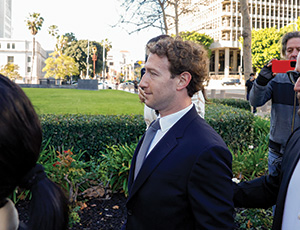
In February, a California judge upbraided members of Mark Zuckerberg’s team for wearing Meta glasses in court during the trial over the impact of social media on children.

Karlia Lykourgou is a crime and regulatory law barrister with a particular interest in data protection and technology law.

Harriet Johnson is a barrister specialising in criminal, public and human rights law with a particular expertise in violence against women and girls.
The good news is artificial intelligence will save us (if it doesn’t kill us by 2030). In the meantime, the Ministry of Justice is hinging its hopes on a three-year strategy to integrate AI across courts, prisons, probation and legal services, as announced in its July 2025 policy paper titled, AI Action Plan for Justice.
The logic for this move was underscored by Part II of Brian Leveson’s review published in February, which emphasised the importance of AI as a means of creating efficiencies across the justice system, and enthusiastically endorsed in the government’s response to the review in October.
In June, the ‘PoliceAI’ centre was launched, delivering a key commitment of January’s Police Reform white paper, to implement a huge redesign of policing to meet the needs of the digital age. As the name indicates, the centre’s purpose is to develop and scale AI tools to automate processes and free up officers for frontline work.
You have probably come across the realities of what this means for your cases. Strange redactions, impenetrable software confidently referenced in police witness statements undertaking transcription, triage, summary and data ‘cleansing’ operations, all far more reliable than the bad old days when humans used to do it.
Northumbria University’s Probable Futures Project has identified over 70 distinct AI tools being trialled and used by police for various purposes, but the implementation of these technologies is patchy across the forces.
Facial recognition is among the most contentious tools available, used for post-incident matching against custody lists and live facial recognition technology for real-time scanning against watch lists.
In R (Bridges) v South Wales Police [2020] EWCA Civ 1058 the Court of Appeal found South Wales Police’s use of automated facial recognition technology unlawful due to a lack of adequate safeguards. Six years on, however, the High Court recently dismissed a judicial review brought by Big Brother Watch in Thompson and Carlo [2026] EWHC 915 (Admin), finding the Metropolitan Police’s 2024 live facial recognition policy has sufficient clarity, foreseeability and safeguards to be compatible with Articles 8, 10 and 11 of the ECHR.
Police use of AI, and in particular facial recognition technology, is not governed by a dedicated statutory regime. Its legality hinges on a combination of police powers, data protection and human rights law, equality duties, statutory codes, national guidance and force-level policies. Oversight is split between a series of regulatory bodies.
The government has conceded there are ‘legitimate concerns’ arising from this model, and the Police Reform Bill is intended to draw on responses to the recent 2025-26 consultation to create a single body to oversee police use of AI technologies.
In September, the Joint Committee on Human Rights highlighted the urgency for statutory oversight, proposing the need for a new AI Bill to address the scale and seriousness of threats to human rights posed by AI systems. Whether the government decides to follow that recommendation or proceed with its more horizontal approach to AI regulation remains to be seen.
Aside from developments in policing, legislators have been busy plugging the gaps in statutes concerning image-based abuse offences to meet the new capabilities of AI-image generators such as Grok.
Section138 of the Data (Use and Access) Act 2025 (D(UA)A 2025) has criminalised creating or requesting the creation of non-consensual AI-generated intimate images.
The Crime and Policing Act 2026 (CPA 2026) being rolled out in stages, amends the Online Safety Act 2023 to include provisions for the reporting of intimate image content and responsibilities for its timely removal (see s 100, now in force).
Section 72 CPA 2026 (not yet in force) also creates a new s 46A Sexual Offences Act 2003 offence criminalising the creation, possession and distribution of AI models or software optimised to generate indecent images of children.
In court, the use of technology by lawyers and members of the public has raised other issues.
Though Meta glasses have not yet made a (reported) appearance in the UK criminal courts, in March a High Court judge found that a litigant in insolvency proceedings had been ‘assisted or coached’ during cross-examination via smart glasses using a live phone call. Amid wider concerns about covert recording (the glasses have now been banned from various pubs, restaurants and theatres), HMCTS announced in August that smart glasses would be confiscated from anyone entering a court or tribunal building in England and Wales.
In R v FGD [2026] EWCA Crim 918, the Court of Appeal allowed a prosecution appeal against a Recorder’s decision to stay a rape trial as an abuse of process. A download of the complainant’s phone, ordered after they produced late screenshots to support their account, revealed that they had used an AI chatbot to compile a summary of their account, together with 24 anticipated cross-examination questions and suggested answers. The Court of Appeal noted that the complainant’s Achieving Best Evidence interview pre-dated the AI use and was untainted, and held that any prejudice could be adequately addressed by the trial process. The court invited the National Police Chiefs Council, the Crown Prosecution Service and the Criminal Procedure Rules Committee to consider regulating AI use by witnesses, noting that FGD was ‘unlikely to be an isolated example’.
The impact of AI is not limited to live evidence. As deepfakes become harder to detect, and public awareness of them grows, trials are increasingly seeing a corresponding risk of genuine evidence being wrongly dismissed as fabricated in what is known as the ‘liar’s dividend’. Where authenticity is put in issue the task of positively proving that footage or audio has not been altered is almost always likely to fall to the police or CPS.
Practitioners increasingly report, albeit anecdotally, concerns about litigants in person, and occasionally lay clients, using AI tools to record or transcribe hearings. Those doing so often do not seem to appreciate that unauthorised recording of proceedings may constitute a contempt of court.
As for lawyers, the courts have shown little tolerance for reliance on unverified AI output. In R (Ayinde) v Haringey LBC [2025] EWHC 1040 (Admin), the High Court found multiple non-existence authorities cited and made wasted costs order; the Upper Tribunal took a similar approach in R (Munir) [2026] UKUT 00081. At the time of publication, an online tracker maintained by Matthew Lee records 87 UK cases involving suspected or confirmed AI-hallucinated citations, including the first Solicitors Disciplinary Tribunal strike-off in SRA v Kumar (2026) 12884.
Despite this, the approach of the courts to the use of AI in general has been one of cautious encouragement. Sir Geoffrey Vos MR recently said that judges should not shun AI’s careful use, while stressing lawyers’ continuing duty to verify AI-generated research independently.
One development that is likely to be seen as positive by many, including those tasked with keeping a contemporaneous note of evidence, is the trialling by HMCTS of an in-house ‘Justice Transcribe’ for Crown Court transcripts. The Law Society has welcomed the aim of cheaper, faster access, but called for a focus on appropriate safeguards, including the need to retain underlying audio for verification. In October, a pilot began at Inner London Crown Court of an ‘AI Case Readiness Assistant’, designed to flag any case issues or missing documents that could delay hearings.
AI undoubtedly has the potential to create efficiencies across the criminal justice system, but a warning from of a representative of the National Black Police Association comes to mind: ‘Just because we can doesn’t always mean that we should.’
In February, a California judge upbraided members of Mark Zuckerberg’s team for wearing Meta glasses in court during the trial over the impact of social media on children.
Karlia Lykourgou and Harriet Johnson examine the growing use of AI across the criminal justice system, from efficiency-enhancing tools to more contentious applications such as facial recognition technology

The Chair of the Bar reports back
Conner Wright, Legal Case Manager at AlphaBiolabs, answers the most frequently asked questions about SCRAM Continuous Alcohol Monitoring (SCRAM CAM®) posed by family law professionals
Ryan Prins of Philips SpeechLive explains how barristers can boost drafting efficiency with AI-assisted speech recognition – while keeping full oversight
Finding available counsel shouldn’t be complicated, says Kaan Kartal of Brieflink
By Kem Kemal, CEO, Henry Dannell
By BSK Financial Planning

For barristers, managing anxiety is a professional discipline as much as a personal one, says Annette Henry KC. This article examines the cues, clues and practical techniques for avoiding overwhelm and regaining calm
If you’ve never been to the Bar Conference before, this is the year to start. Amelia Clegg previews the profession’s flagship event
After a two-year investigation, Karim Khan KC was removed as ICC Chief Prosecutor in July. With the United States threatening to dismantle the court ‘brick by brick’, what’s next for the beleaguered ICC? asks Chris Stephen
Kick off your career at the Bar Council’s Pupillage Fair this October – it’s one of the most valuable opportunities for aspiring barristers, says Amelia Clegg
Join us on Saturday 21 November 2026 at Leeds Beckett University and see for yourself why the North continues to be an exceptional place to build a career at the Bar