*/
SCRAM CAM has been a valuable alcohol monitoring tool for family law professionals for well over a decade. Yet questions about how the device works, how it’s funded, and how reliable it really is, still arise.
With the festive period fast approaching, a time when concerns around a parent or caregiver’s sobriety often come under closer scrutiny, we’re here to address the most commonly asked questions about SCRAM.
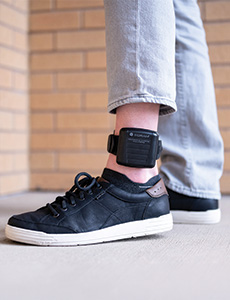
SCRAM is an alcohol monitoring device worn around the ankle, that uses transdermal analysis to sample insensible perspiration, the small amount of moisture that is constantly present on the skin. Around 1% of any alcohol consumed is expelled from the body this way.
A pump inside the bracelet draws in a sample every 30 minutes and a fuel cell, like the technology used in breathalysers, reacts with any ethanol present to measure alcohol concentration.
This continuous, automated process means the device can register very low levels of consumption, as little as one to two units, providing a detailed, ongoing picture of a participant’s drinking behaviour.
SCRAM is Legal Aid Agency approved, meaning funding shouldn’t present a barrier where a court order has been obtained.
Additionally, AlphaBiolabs operates a straightforward, single-tier pricing structure for SCRAM, so there are no hidden costs once a quote has been provided. Our contract is always with the Instructing Party – the person who completes and signs our referral form.
Quotes for SCRAM can be requested by phone, email, or via our quote form (download or complete online).
Although spilled alcohol could trigger a SCRAM alert, the device has been specifically designed to distinguish environmental exposure from a genuine drinking event.
Spilling a drink or a product containing alcohol (such as hairspray, household cleaners, hand sanitiser) creates a rapid spike that evaporates and burns off much faster than the body can metabolise alcohol. Additionally, our confirmation process includes analysis that ensures any confirmed drinking event is due to consumed alcohol.
Our data experts have tested exposure to hairspray and hundreds of other alcohol-containing products to confirm the bracelet doesn’t mimic a true drinking event, meaning results can be relied upon with confidence in family proceedings.
The SCRAM bracelet includes several anti-tamper features designed to maintain testing accuracy and confirm results relate to the correct wearer.
Temperature and infrared sensors monitor the skin’s reflective quality to detect anything placed between the bracelet and the ankle, while strap and battery sensors confirm the device remains fitted correctly. The device also runs continuous diagnostic checks to ensure it is functioning correctly throughout the monitoring period.
These features are central to SCRAM’s evidential value, giving courts and legal professionals confidence that results reflect the true behaviour of the wearer throughout the monitoring period.
The SCRAM bracelet is commonly worn for a period of 30 to 60 days, offering a reliable indication of drinking patterns, though it can be worn for as long as required.
This makes SCRAM particularly well suited for alcohol monitoring over the festive period, where continuous monitoring can provide reassurance and a consistent evidential picture, rather than relying on a single point-in-time test, such as breath testing.
AlphaBiolabs has over 20 years’ experience supporting family law professionals with court-admissible alcohol testing, including SCRAM.
If you require alcohol monitoring over the festive period, we recommend instructing SCRAM in good time to ensure fitting can be arranged before Christmas.
To request a quote, contact our New Enquiry team on 0333 600 1300, email testing@alphabiolabs.com, or complete our online quote form at www.alphabiolabs.co.uk/legal-test-forms/

SCRAM CAM has been a valuable alcohol monitoring tool for family law professionals for well over a decade. Yet questions about how the device works, how it’s funded, and how reliable it really is, still arise.
With the festive period fast approaching, a time when concerns around a parent or caregiver’s sobriety often come under closer scrutiny, we’re here to address the most commonly asked questions about SCRAM.
SCRAM is an alcohol monitoring device worn around the ankle, that uses transdermal analysis to sample insensible perspiration, the small amount of moisture that is constantly present on the skin. Around 1% of any alcohol consumed is expelled from the body this way.
A pump inside the bracelet draws in a sample every 30 minutes and a fuel cell, like the technology used in breathalysers, reacts with any ethanol present to measure alcohol concentration.
This continuous, automated process means the device can register very low levels of consumption, as little as one to two units, providing a detailed, ongoing picture of a participant’s drinking behaviour.
SCRAM is Legal Aid Agency approved, meaning funding shouldn’t present a barrier where a court order has been obtained.
Additionally, AlphaBiolabs operates a straightforward, single-tier pricing structure for SCRAM, so there are no hidden costs once a quote has been provided. Our contract is always with the Instructing Party – the person who completes and signs our referral form.
Quotes for SCRAM can be requested by phone, email, or via our quote form (download or complete online).
Although spilled alcohol could trigger a SCRAM alert, the device has been specifically designed to distinguish environmental exposure from a genuine drinking event.
Spilling a drink or a product containing alcohol (such as hairspray, household cleaners, hand sanitiser) creates a rapid spike that evaporates and burns off much faster than the body can metabolise alcohol. Additionally, our confirmation process includes analysis that ensures any confirmed drinking event is due to consumed alcohol.
Our data experts have tested exposure to hairspray and hundreds of other alcohol-containing products to confirm the bracelet doesn’t mimic a true drinking event, meaning results can be relied upon with confidence in family proceedings.
The SCRAM bracelet includes several anti-tamper features designed to maintain testing accuracy and confirm results relate to the correct wearer.
Temperature and infrared sensors monitor the skin’s reflective quality to detect anything placed between the bracelet and the ankle, while strap and battery sensors confirm the device remains fitted correctly. The device also runs continuous diagnostic checks to ensure it is functioning correctly throughout the monitoring period.
These features are central to SCRAM’s evidential value, giving courts and legal professionals confidence that results reflect the true behaviour of the wearer throughout the monitoring period.
The SCRAM bracelet is commonly worn for a period of 30 to 60 days, offering a reliable indication of drinking patterns, though it can be worn for as long as required.
This makes SCRAM particularly well suited for alcohol monitoring over the festive period, where continuous monitoring can provide reassurance and a consistent evidential picture, rather than relying on a single point-in-time test, such as breath testing.
AlphaBiolabs has over 20 years’ experience supporting family law professionals with court-admissible alcohol testing, including SCRAM.
If you require alcohol monitoring over the festive period, we recommend instructing SCRAM in good time to ensure fitting can be arranged before Christmas.
To request a quote, contact our New Enquiry team on 0333 600 1300, email testing@alphabiolabs.com, or complete our online quote form at www.alphabiolabs.co.uk/legal-test-forms/

The Chair of the Bar reports back
Conner Wright, Legal Case Manager at AlphaBiolabs, answers the most frequently asked questions about SCRAM Continuous Alcohol Monitoring (SCRAM CAM®) posed by family law professionals
Ryan Prins of Philips SpeechLive explains how barristers can boost drafting efficiency with AI-assisted speech recognition – while keeping full oversight
By Kem Kemal, CEO, Henry Dannell
By BSK Financial Planning
Mário Barroso, Head of R&D and Method Development at AlphaBiolabs

For barristers, managing anxiety is a professional discipline as much as a personal one, says Annette Henry KC. This article examines the cues, clues and practical techniques for avoiding overwhelm and regaining calm
If you’ve never been to the Bar Conference before, this is the year to start. Amelia Clegg previews the profession’s flagship event
After a two-year investigation, Karim Khan KC was removed as ICC Chief Prosecutor in July. With the United States threatening to dismantle the court ‘brick by brick’, what’s next for the beleaguered ICC? asks Chris Stephen
Kick off your career at the Bar Council’s Pupillage Fair this October – it’s one of the most valuable opportunities for aspiring barristers, says Amelia Clegg
Join us on Saturday 21 November 2026 at Leeds Beckett University and see for yourself why the North continues to be an exceptional place to build a career at the Bar