*/

At last, one of the great films about the law has been properly filmed. François Ozon, the last of the French new wave directors (or perhaps leading a new new wave), has brought the greatest humanist intellect of the 20th century, Albert Camus, to the big screen. Ozon’s French-speaking production is far superior to the 1967 version by Luchino Visconti starring Marcello Mastroianni. Beautifully filmed in black and white and faithful to the elegance of 1930-40s Algeria, it replicates by analogy the many images of Camus, not least by Henri Cartier-Bresson.
At the Venice International Film Festival 2025, L’Etranger scooped Best Film and in the Lumiere Awards 2026 (France’s Golden Globes) it won Best Actor (Benjamin Voisin as Meursault) and Best Cinematography (Manuel Dacosse). It arrived in UK cinemas this April, with the title translated as The Stranger (not, on this occasion, as The Outsider).

The film is, of course, based on Camus’ 1942 book about the limits and challenges of multi-culturalism, and legal and moral guilt. It is about a murder and why, and a prosecutorial interrogation suffused by moral indignation, religious in orientation and no doubt modelled on Fyodor Dostoevsky, Camus’ greatest influence.
The protagonist is Meursault, a French settler in Algeria. Unmoved from attending his mother’s funeral, he returns to Algiers and forms a romantic relationship with Marie (Rebecca Marder). We see their idyllic and glamorous afternoon, swimming at the beach and a light-hearted trip to the cinema. This in stark contrast to the company he keeps, including Sintès (Pierre Lottin) who is abusive to his Algerian girlfriend, Djemila. Meursault, unbothered by this, is drawn into an altercation between Sintès, Djemila’s brother and another Algerian man. Tension hangs in the air between the two cultures. When Mersault later encounters the brother alone on the beach, in a scene of senseless violence in the oppressive heat, he shoots him.
The rest of the film is dedicated to the trial, undertaken in a stiflingly hot courtroom, and his incarceration. Why did he do it? A racist or purely amoral act? Meursault’s defence: ‘C’était à cause du soleil’ – it was the sun. Not the best defence. A completely indifferent sense of his culpability. His refusal to explain, or show any interest or compassion for anyone or anything, infuriates and horrifies the prosecution. This becomes the focus of the trial, rather than the killing. His sense of emotional numbness and passivity is further demonstrated by his indifference to the death of his mother. So, such evidence demonises him. No Arab witnesses are called. The death penalty ensues. Eventually, he rises from his state of detachment to rage at the priest (Swann Arlaud) in an intense debate on existentialism and absurdity.
Though Ozon chooses to give the victim a name – Moussa – and a personal history in the film, in court, as in the book, the victim remains nameless and is anonymously referred to as ‘the Arab’. This erasure of identity has long been a focus of critical debate. In the film, Mersault’s colonial blindness to the indigenous people drops for a moment as he observes their world from the police van.
Ozon has been accused by Camus’ daughter of sanitising his work through wokeism; her main complaint being the addition of a scene at the end where Djemila is pictured by her brother’s grave which is inscribed with his name in Arabic – not in the book and a contradiction of sorts.
Much criticism was attached to Camus for his stance on racism and now to Ozon for concluding the film with The Cure’s song Killing an Arab – as if Camus ever condoned racism. The Meursault Investigation (Other Press 2015) written by the Algerian writer Kamel Daoud criticises Camus’ putative racism or imperialism, or simply a lack of empathy for the murdered Arab. The attribution of racism to Camus for accepting continued French control over Algeria was also made by Edward Said in Culture and Imperialism (1993) and in a famous monograph by the Irish public intellectual Conor Cruise O’Brien. But Camus himself was a ‘pied noir’ of mixed heritage and doubly despised as an outsider in both France and Algeria. In fact, Camus promoted peaceful co-existence between the transplanted French and the indigenous population, and condemned the torture and death penalty – not just implicitly in L’Etranger but most noticeably in Reflections on The Guillotine (1957), an essential if little read text collated in Louis Blom-Cooper’s anthology The Law as Literature (1961). Such accusations are, in my view, deeply unfair on a man dedicated both to truth and justice.
In fact, throughout Camus’ novels and political texts, such as the remarkable The Rebel (1951) which puts most works of legal and political philosophy in the shade, we find a distaste for extremism or fundamentalism, whether secular or religious, and the assertion of legalist moderation. The Plague (1947) brought Camus right back into recent focus and became a huge bestseller during COVID for all it says about our overreactive authoritarian surveillance times, with plagues yet to come. In it is the famous quote: ‘There always comes a time in history when the man who dares to say that two and two make four is punished with death.’
Camus was a truth seeker, most evident in The Fall (1956) which was the final book published during his lifetime. A monologue by Jean-Baptiste Clamence, a barrister manqué in Amsterdam, if ever filmed it would require the sort of bravura performance John Hurt was adept at in Beckett’s Krapp’s Last Tape. Camus quotes Mikhail Lermontov at the outset: ‘It is in fact a portrait, not of an individual; it is the aggregate of the vices of our whole generation in their fullest expression.’ In a Mexican bar in Amsterdam, that city of half measures, compromises and ambiguities, Clamence regales the assembled multitudes as a self-styled judge penitent. He describes himself as: ‘A charming Janus and a play actor so very much important in an advocate.’
Months of orgy and excess lead to a slippage in the standard of his closing speeches and in considerable self-reflection. We thus have the lawyer as monster, posing and preening, loquacious and fawning, with avowed but hypocritical good intentions and ostensible and indeed ostentatious charity while self-serving.
So, in all Camus’ crucial texts there is much for lawyers today about professional hypocrisy, the confusion of sin and guilt, the horrors of the death penalty, the need for the assertion of legalistic moderation and the dislike of bloodletting and extremism in an age of intolerance not least internationally.
Camus is not a European colonialist, as O’Brien absurdly and fashionably maintained, but a just man and a universal citizen for all seasons. Ozon’s film is a faithful if sanitised tribute to his genius. The work ripples through the ages.
Next, someone should film The Fall.
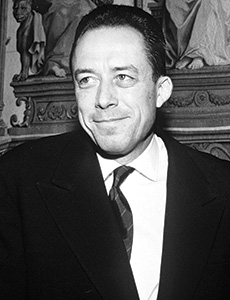
Above: Camus received the Nobel Prize in Literature 1957 ‘for his important literary production, which with clear-sighted earnestness illuminates the problems of the human conscience in our times’.
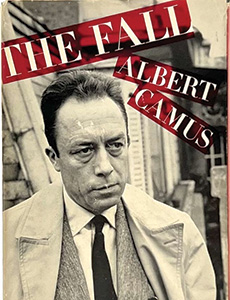
Below: Camus photographed by Cartier-Bresson for a US edition of The Fall.

David Langwallner is a graduate of the Harvard Law School and the London School of Economics. He is a barrister at 1MCB and was 2015 Irish Lawyer of the Year for his work as director of the Irish Innocence Project.
At last, one of the great films about the law has been properly filmed. François Ozon, the last of the French new wave directors (or perhaps leading a new new wave), has brought the greatest humanist intellect of the 20th century, Albert Camus, to the big screen. Ozon’s French-speaking production is far superior to the 1967 version by Luchino Visconti starring Marcello Mastroianni. Beautifully filmed in black and white and faithful to the elegance of 1930-40s Algeria, it replicates by analogy the many images of Camus, not least by Henri Cartier-Bresson.
At the Venice International Film Festival 2025, L’Etranger scooped Best Film and in the Lumiere Awards 2026 (France’s Golden Globes) it won Best Actor (Benjamin Voisin as Meursault) and Best Cinematography (Manuel Dacosse). It arrived in UK cinemas this April, with the title translated as The Stranger (not, on this occasion, as The Outsider).
The film is, of course, based on Camus’ 1942 book about the limits and challenges of multi-culturalism, and legal and moral guilt. It is about a murder and why, and a prosecutorial interrogation suffused by moral indignation, religious in orientation and no doubt modelled on Fyodor Dostoevsky, Camus’ greatest influence.
The protagonist is Meursault, a French settler in Algeria. Unmoved from attending his mother’s funeral, he returns to Algiers and forms a romantic relationship with Marie (Rebecca Marder). We see their idyllic and glamorous afternoon, swimming at the beach and a light-hearted trip to the cinema. This in stark contrast to the company he keeps, including Sintès (Pierre Lottin) who is abusive to his Algerian girlfriend, Djemila. Meursault, unbothered by this, is drawn into an altercation between Sintès, Djemila’s brother and another Algerian man. Tension hangs in the air between the two cultures. When Mersault later encounters the brother alone on the beach, in a scene of senseless violence in the oppressive heat, he shoots him.
The rest of the film is dedicated to the trial, undertaken in a stiflingly hot courtroom, and his incarceration. Why did he do it? A racist or purely amoral act? Meursault’s defence: ‘C’était à cause du soleil’ – it was the sun. Not the best defence. A completely indifferent sense of his culpability. His refusal to explain, or show any interest or compassion for anyone or anything, infuriates and horrifies the prosecution. This becomes the focus of the trial, rather than the killing. His sense of emotional numbness and passivity is further demonstrated by his indifference to the death of his mother. So, such evidence demonises him. No Arab witnesses are called. The death penalty ensues. Eventually, he rises from his state of detachment to rage at the priest (Swann Arlaud) in an intense debate on existentialism and absurdity.
Though Ozon chooses to give the victim a name – Moussa – and a personal history in the film, in court, as in the book, the victim remains nameless and is anonymously referred to as ‘the Arab’. This erasure of identity has long been a focus of critical debate. In the film, Mersault’s colonial blindness to the indigenous people drops for a moment as he observes their world from the police van.
Ozon has been accused by Camus’ daughter of sanitising his work through wokeism; her main complaint being the addition of a scene at the end where Djemila is pictured by her brother’s grave which is inscribed with his name in Arabic – not in the book and a contradiction of sorts.
Much criticism was attached to Camus for his stance on racism and now to Ozon for concluding the film with The Cure’s song Killing an Arab – as if Camus ever condoned racism. The Meursault Investigation (Other Press 2015) written by the Algerian writer Kamel Daoud criticises Camus’ putative racism or imperialism, or simply a lack of empathy for the murdered Arab. The attribution of racism to Camus for accepting continued French control over Algeria was also made by Edward Said in Culture and Imperialism (1993) and in a famous monograph by the Irish public intellectual Conor Cruise O’Brien. But Camus himself was a ‘pied noir’ of mixed heritage and doubly despised as an outsider in both France and Algeria. In fact, Camus promoted peaceful co-existence between the transplanted French and the indigenous population, and condemned the torture and death penalty – not just implicitly in L’Etranger but most noticeably in Reflections on The Guillotine (1957), an essential if little read text collated in Louis Blom-Cooper’s anthology The Law as Literature (1961). Such accusations are, in my view, deeply unfair on a man dedicated both to truth and justice.
In fact, throughout Camus’ novels and political texts, such as the remarkable The Rebel (1951) which puts most works of legal and political philosophy in the shade, we find a distaste for extremism or fundamentalism, whether secular or religious, and the assertion of legalist moderation. The Plague (1947) brought Camus right back into recent focus and became a huge bestseller during COVID for all it says about our overreactive authoritarian surveillance times, with plagues yet to come. In it is the famous quote: ‘There always comes a time in history when the man who dares to say that two and two make four is punished with death.’
Camus was a truth seeker, most evident in The Fall (1956) which was the final book published during his lifetime. A monologue by Jean-Baptiste Clamence, a barrister manqué in Amsterdam, if ever filmed it would require the sort of bravura performance John Hurt was adept at in Beckett’s Krapp’s Last Tape. Camus quotes Mikhail Lermontov at the outset: ‘It is in fact a portrait, not of an individual; it is the aggregate of the vices of our whole generation in their fullest expression.’ In a Mexican bar in Amsterdam, that city of half measures, compromises and ambiguities, Clamence regales the assembled multitudes as a self-styled judge penitent. He describes himself as: ‘A charming Janus and a play actor so very much important in an advocate.’
Months of orgy and excess lead to a slippage in the standard of his closing speeches and in considerable self-reflection. We thus have the lawyer as monster, posing and preening, loquacious and fawning, with avowed but hypocritical good intentions and ostensible and indeed ostentatious charity while self-serving.
So, in all Camus’ crucial texts there is much for lawyers today about professional hypocrisy, the confusion of sin and guilt, the horrors of the death penalty, the need for the assertion of legalistic moderation and the dislike of bloodletting and extremism in an age of intolerance not least internationally.
Camus is not a European colonialist, as O’Brien absurdly and fashionably maintained, but a just man and a universal citizen for all seasons. Ozon’s film is a faithful if sanitised tribute to his genius. The work ripples through the ages.
Next, someone should film The Fall.
Above: Camus received the Nobel Prize in Literature 1957 ‘for his important literary production, which with clear-sighted earnestness illuminates the problems of the human conscience in our times’.
Below: Camus photographed by Cartier-Bresson for a US edition of The Fall.

The Chair of the Bar reports back
Susie Griffin on the admin that keeps barristers from billable work
Clement Cowley, Partner at The Penny Group, explains how global events can influence the performance of pensions and ISAs, and why taking a long-term approach to investing is often the most effective strategy
Mário Barroso, Head of R&D and Method Development at AlphaBiolabs, discusses what family law professionals need to know about hallucinogens, from the main hallucinogenic drugs encountered in family proceedings, to their effects and the testing options available
Harmony Christian Ministries is the latest charity to benefit from a £500 donation from AlphaBiolabs via the company’s Giving Back initiative
By David Green

At the start of her term, Chair of the Bar 2026 Kirsty Brimelow KC set out a series of priorities for the year ahead. One of those priorities was children in the justice system
As the world becomes more digital, Barbara Vinagre Mota examines international research into the mental health consequences of judges’ exposure to graphic and immersive evidence, highlighting the importance of support systems
In an era of patient-centred care and growing concern over misconduct in medical settings, why do women still lack the right to choose women consultants for examination and treatment? Charles Davey investigates
Reviewed by Daniel Barnett
James McNeill Whistler at Tate Britain until 27 September Rothko in Florence at Palazzo Strozzi until 23 August Reviewed by Stephen Cragg KC