*/
Nick Peacock’s top crooners – guaranteed to melt away your cares
Reader, have you been in court when you realise you had been sitting listening to the submissions of your opponent, or the ex tempore judgment of the judge, transfixed not by the content, but by the tone or timbre of the voice you’re listening to? The sound alone of a voice can be beguiling and misleading, diverting us from what the speaker is saying to how they’re saying it. As I write this article, I can think of at least one appellate judge and one silk friend whose voices are the aural equivalent for me of sinking gently into a hot, relaxing bath.
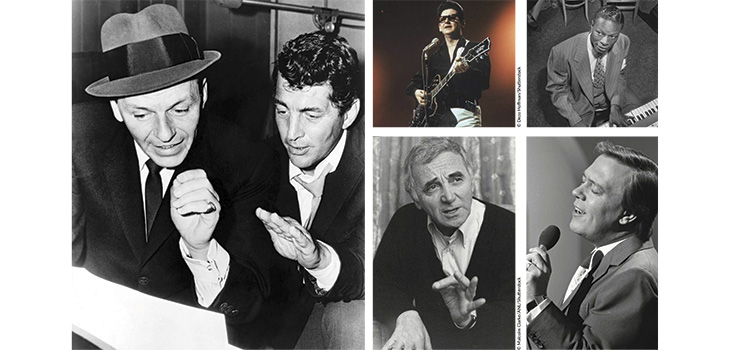
Some years ago, I sold my vinyl collection. I have slowly learned to live with the constant uncertainty of whether I did the right thing, but the young record dealer to whom I sold many boxes of vinyl was struck by the fact that, interspersed with many, many indie guitar albums (see previous articles in Counsel), there was a whole bunch of albums by Ol’ Blue Eyes himself, the late great Frank Sinatra, and other crooners. He asked why, and at the time I could only express hopeless though unreasoned devotion, but I think the answer is something to do with the hypnotic power of the voice as an instrument.
I’ve been taking a few singing lessons of late. And no, before you ask, I will not be singing to you. But the few lessons I’ve had so far make me agog at Sinatra’s voice – it’s not just his astonishing sense of timing – his phrasing is spot-on, perfect. It’s the sound of it, the not-quite-raspiness of it. If you want somewhere to start, I’d try ‘Songs for Swingin’ Lovers’ (1957) or any of the Nelson Riddle-arranged albums on Capitol from around that time. I defy you to listen to track one, ‘You Make Me Feel So Young’ and not find yourself tapping a few digits as you go along. As a tip for barristers who would like to train their voice, Sinatra used to practise breathing like a trombonist, with a glass of water on his stomach for diaphragm control, as well as other breathing and physical exercise routines. Try his ‘It Was A Very Good Year’ from 1965 for some still-got-it (or is that wish-I-still-had-it?) self-reflective wistfulness.
But Sinatra’s isn’t the only voice which can bring me out in goosebumps. I have a great fondness for Matt Munro (‘Born Free’, obviously, but he crooned his way through all of the standards), Nat ‘King’ Cole (please, if you can, listen to his version of ‘Stardust’ on ‘Love Is The Thing’, another Capitol release, this time from 1956 – dim the lights, turn the volume up and, dear reader, do not even dare to try this with an MP3) and Dean Martin (I have a long-running debate with my pro sound engineer pal who thinks Dean trumps Frank – words fail me at the error of this, but Dean’s ‘Gentle On My Mind’ really is a fabulous listen).
Anyway, you should by now, I think, have guessed I’m heading somewhere – if not as high as the highs of Frank Sinatra, then pretty close. For there remain two more singers without whom this article could not exist. The first is the real king of rock and roll. Nope, not Elvis, though I have nothing but love and respect for him (and, goodness, I wish I had been at one of the Vegas revival shows in 1969 to hear ‘Suspicious Minds’ – don’t you?). No, the real king of rock and roll, and one of the very loveliest recorded voices you could ever hope to hear, is that of Roy Orbison. As a new father I used to sing his ‘In Dreams’ to my daughters as they fell asleep – in time, they both learned to sing it back, and my work was complete. Roy’s high tenor voice speaks of love, pain and longing with a fragility that few if any can match. If you do not know his work, I envy you your first listen.
And so, finally, I present to you a singer whose work combines two of my greatest loves – a mellifluous voice, and France. Charles Aznavour (whom I was lucky enough to see at the Royal Albert Hall in 2013) was French-Armenian, and a former lover of Edith Piaf .(Ah, Piaf, a favourite of my late father – how could I not mention her in this piece?) Aznavour sang in many languages, and you probably know his English-language version ‘She’ from the ‘Notting Hill’ film soundtrack. But I mention him because I still recall where I was when I heard ‘Non, Je n’ai rien oublié’ for the first time. Everything that a voice can do to tell a story of lost love, regret and nostalgia, he does in that song. It is astonishing in its breadth and scope – there is nothing quite like it as an example of the power of the voice. Actually, when I become Minister of Culture (dream on; Ed.), Aznavour’s ‘Mes Emmerdes’ will be compulsory listening at the end of everyone’s weekend. But that, my friends, is a whole different story…

Nicholas Peacock is a barrister at Hailsham Chambers, specialising in clinical negligence, professional disciplinary cases and inquests. He is a former Chair of the Bar Council Wellbeing at the Bar Working Group. He is as sure as he can be of anything that he prefers Frank Sinatra to Dean Martin, but only just.
Reader, have you been in court when you realise you had been sitting listening to the submissions of your opponent, or the ex tempore judgment of the judge, transfixed not by the content, but by the tone or timbre of the voice you’re listening to? The sound alone of a voice can be beguiling and misleading, diverting us from what the speaker is saying to how they’re saying it. As I write this article, I can think of at least one appellate judge and one silk friend whose voices are the aural equivalent for me of sinking gently into a hot, relaxing bath.
Some years ago, I sold my vinyl collection. I have slowly learned to live with the constant uncertainty of whether I did the right thing, but the young record dealer to whom I sold many boxes of vinyl was struck by the fact that, interspersed with many, many indie guitar albums (see previous articles in Counsel), there was a whole bunch of albums by Ol’ Blue Eyes himself, the late great Frank Sinatra, and other crooners. He asked why, and at the time I could only express hopeless though unreasoned devotion, but I think the answer is something to do with the hypnotic power of the voice as an instrument.
I’ve been taking a few singing lessons of late. And no, before you ask, I will not be singing to you. But the few lessons I’ve had so far make me agog at Sinatra’s voice – it’s not just his astonishing sense of timing – his phrasing is spot-on, perfect. It’s the sound of it, the not-quite-raspiness of it. If you want somewhere to start, I’d try ‘Songs for Swingin’ Lovers’ (1957) or any of the Nelson Riddle-arranged albums on Capitol from around that time. I defy you to listen to track one, ‘You Make Me Feel So Young’ and not find yourself tapping a few digits as you go along. As a tip for barristers who would like to train their voice, Sinatra used to practise breathing like a trombonist, with a glass of water on his stomach for diaphragm control, as well as other breathing and physical exercise routines. Try his ‘It Was A Very Good Year’ from 1965 for some still-got-it (or is that wish-I-still-had-it?) self-reflective wistfulness.
But Sinatra’s isn’t the only voice which can bring me out in goosebumps. I have a great fondness for Matt Munro (‘Born Free’, obviously, but he crooned his way through all of the standards), Nat ‘King’ Cole (please, if you can, listen to his version of ‘Stardust’ on ‘Love Is The Thing’, another Capitol release, this time from 1956 – dim the lights, turn the volume up and, dear reader, do not even dare to try this with an MP3) and Dean Martin (I have a long-running debate with my pro sound engineer pal who thinks Dean trumps Frank – words fail me at the error of this, but Dean’s ‘Gentle On My Mind’ really is a fabulous listen).
Anyway, you should by now, I think, have guessed I’m heading somewhere – if not as high as the highs of Frank Sinatra, then pretty close. For there remain two more singers without whom this article could not exist. The first is the real king of rock and roll. Nope, not Elvis, though I have nothing but love and respect for him (and, goodness, I wish I had been at one of the Vegas revival shows in 1969 to hear ‘Suspicious Minds’ – don’t you?). No, the real king of rock and roll, and one of the very loveliest recorded voices you could ever hope to hear, is that of Roy Orbison. As a new father I used to sing his ‘In Dreams’ to my daughters as they fell asleep – in time, they both learned to sing it back, and my work was complete. Roy’s high tenor voice speaks of love, pain and longing with a fragility that few if any can match. If you do not know his work, I envy you your first listen.
And so, finally, I present to you a singer whose work combines two of my greatest loves – a mellifluous voice, and France. Charles Aznavour (whom I was lucky enough to see at the Royal Albert Hall in 2013) was French-Armenian, and a former lover of Edith Piaf .(Ah, Piaf, a favourite of my late father – how could I not mention her in this piece?) Aznavour sang in many languages, and you probably know his English-language version ‘She’ from the ‘Notting Hill’ film soundtrack. But I mention him because I still recall where I was when I heard ‘Non, Je n’ai rien oublié’ for the first time. Everything that a voice can do to tell a story of lost love, regret and nostalgia, he does in that song. It is astonishing in its breadth and scope – there is nothing quite like it as an example of the power of the voice. Actually, when I become Minister of Culture (dream on; Ed.), Aznavour’s ‘Mes Emmerdes’ will be compulsory listening at the end of everyone’s weekend. But that, my friends, is a whole different story…
Nick Peacock’s top crooners – guaranteed to melt away your cares

The Chair of the Bar reports back
Susie Griffin on the admin that keeps barristers from billable work
Clement Cowley, Partner at The Penny Group, explains how global events can influence the performance of pensions and ISAs, and why taking a long-term approach to investing is often the most effective strategy
Mário Barroso, Head of R&D and Method Development at AlphaBiolabs, discusses what family law professionals need to know about hallucinogens, from the main hallucinogenic drugs encountered in family proceedings, to their effects and the testing options available
Harmony Christian Ministries is the latest charity to benefit from a £500 donation from AlphaBiolabs via the company’s Giving Back initiative
By David Green

At the start of her term, Chair of the Bar 2026 Kirsty Brimelow KC set out a series of priorities for the year ahead. One of those priorities was children in the justice system
As the world becomes more digital, Barbara Vinagre Mota examines international research into the mental health consequences of judges’ exposure to graphic and immersive evidence, highlighting the importance of support systems
In an era of patient-centred care and growing concern over misconduct in medical settings, why do women still lack the right to choose women consultants for examination and treatment? Charles Davey investigates
Reviewed by Daniel Barnett
James McNeill Whistler at Tate Britain until 27 September Rothko in Florence at Palazzo Strozzi until 23 August Reviewed by Stephen Cragg KC