*/
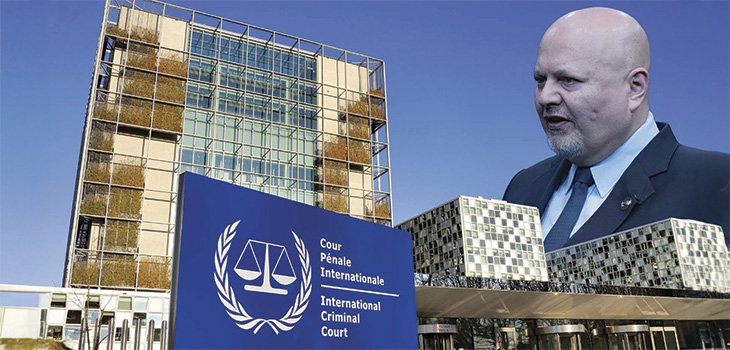
The International Criminal Court is in deep water again. Its inability to deal with the sexual harassment allegation against Chief Prosecutor Karim Khan KC has morphed into the worst crisis in the court’s history, says Chris Stephen
Update: On 8 June, the ICC Bureau announced that Karim Khan KC would be suspended from duties until the case is decided by the ultimate boss of the court – its 125 member states. They are to hold a meeting, the Assembly of States Parties, later this summer. The meeting is unprecedented, and the Assembly has the option of deciding the case itself or starting another investigative process. At the time of publication, no date has been set for that meeting.
Update: On 19 June, Khan was suspended from practice by the Chair of the Bar Standards Board's Independent Decision-Making Body. Under the BSB's Enforcement Regulations, the interim suspension will be considered by an Interim Suspension Panel at a hearing within the next four weeks.
Khan has consistently denied the allegations in their entirety.
***
Imagine a trial without the possibility of cross-examination. Imagine being the judge. Imagine trying to reach a verdict based only on two diametrically different statements, with no way to probe inconsistencies. That, in a nutshell, is the problem facing the sexual harassment investigation of International Criminal Court (ICC) Chief Prosecutor Karim Khan KC.
The harassment allegation, and the court’s inability to deal with it, has morphed into the worst crisis in ICC history. After 18 months of investigating and two inconclusive reports, a third probe is getting under way, with no clear end in sight.
The saga began in April 2024 when the alleged victim, a married Malaysian prosecution staffer, told two colleagues that Khan had been sexually harassing her over the previous 12 months.
She was already working at the ICC’s prosecution office when Khan was appointed in 2021. He arrived with a stellar reputation as one of the world’s leading war crimes defence lawyers. Many hoped this poacher-turned-gamekeeper could inject new life into the court.
Allegations include that he promoted her, with a pay bump, to work in his private office. What followed, according to her, were sexual advances in the office, his home and hotels on official assignments.
At first, the ICC’s internal affairs unit tried to investigate after a report by the co-workers, but the alleged victim did not file a formal complaint, distrusting their independence in the fish-tank world of The Hague.
There the matter might have rested. Except that six months later, in quick succession, investigative stories were published by Associated Press, the Guardian and Wall Street Journal. Each reported the alleged misconduct. Khan has consistently denied the allegations in their entirety, insisting he had no inappropriate relations with her. His defenders say this is part of a smear campaign to discredit him.
Those news stories stung the court into action, but what to do? The solution was asking the United Nations to investigate. The ICC has no connection to the UN, guaranteeing the UN’s internal affairs unit would be independent.
A year later the UN report was ready. It has 5,000 pages and 137 findings. But no verdict. A summary of the final report, leaked to the media, said ‘evidence indicated’ Khan’s conduct against the woman ‘escalated over time, resulting in him engaging in nonconsensual sexual contact with her’.
But as any trial lawyer knows, ‘evidence indicated’ is a long way from ‘evidence proved’. That was the best the UN could do, because they had no powers to probe deeper than the original statements.
Next up were a panel of three judges, hired by the court to produce that elusive verdict. But after three months of pondering, they gave up. Their report, also leaked, says the UN evidence was so limited as to be ‘almost destined for fruitlessness’. But the UN report was all they had, so they announced they lacked the evidence to prove Khan guilty beyond reasonable doubt and pronounced him innocent.
Khan, on voluntary leave of absence since May 2025, declared himself exonerated.
Opponents decried a lack of proper process. The Association of International Criminal Law Prosecutors said the result helped neither Khan nor his alleged victim. ‘The facts were never fully determined and the law was never fully applied.’
Others complained that the ‘beyond-reasonable-doubt’ test is too steep for such a case, with the lower ‘balance-of-probability’ more common. They are probably right, but with Khan facing the sack and ruin if found guilty, it is surely best that any verdict arrives free of reasonable doubt.
All of which circles back to the key problem – a verdict is to be determined to a criminal trial standard, but investigators are denied the evidence-checking tools used in criminal trials.
‘The findings being described as “exoneration” were reached without any testing of the evidence,’ wrote Michael Karnavas, an experienced war crimes lawyer and critic of the process. ‘It is not a minor procedural detail. It is the entire point.’
Some of the court’s bosses seem to agree. Ultimate control of the ICC rests with its 125 member nations, collectively known as the Assembly of States Parties. Day-to-day matters are handled by an executive committee called the Bureau. In April the Bureau voted to ignore the judges’ verdict and do its own investigation. Most of its members are Hague ambassadors of whichever country is taking its turn on the Bureau. Now they are to become judge and jury.
All this is taking place against a backdrop of a court lurching towards irrelevance. The ICC opened in 2002 but in all that time, after investigating 17 conflicts, it has jailed just eight war criminals. High profile indictments of Vladimir Putin and Benjamin Netanyahu made headlines, but neither are likely to appear for trial, underlining the ICC’s limitations.
Internally, the court is badly fractured, with Khan in the doghouse with judges over a separate matter. Three years ago, Venezuela appealed against the ICC’s decision to investigate the Maduro regime. Among the Venezuela legal team making representations in The Hague was Khan’s sister in-law, who had worked for him in previous cases. Khan never mentioned this to the judges, who only found out when it was revealed by the Washington Post. Last year, despite Khan’s denial of any conflict of interest or bias, the Appeals Chamber banned him from further involvement in the Venezuela case, castigating him for not revealing his familial connection.
Relations are also poisonous among staff. Sexual harassment has a long and bitter history at the ICC. Six years ago, an investigation found harassment and bullying endemic, describing a ‘culture of fear’ among junior staff. The court promised to mend its ways, but last year its internal affairs unit said bullying allegations have nearly doubled. The annual staff survey revealed only a third of the court’s 900 personnel think it has an ‘open and honest’ culture.
The ICC is also under pressure from without. The Kremlin has threatened to bomb the courthouse and it is shuddering under sanctions from Trump. European states, once enthusiastic backers, are turning away. France, Italy, Germany, Greece, Poland and Romania are among those saying they may give arrest immunity to Netanyahu.
Khan has meanwhile raised the stakes in the investigation, opposing the Bureau’s decision to re-open the case. ‘It’s not acceptable,’ he said in a TV interview. ‘This isn’t how due process works. It’s the opposite of due process.’
Missing in all this is leadership. The court itself has no chief officer, with its president responsible only for administration, while judges and prosecutors run their own departments. Leadership is supposed to come from member states. More than two thirds of the world’s nations are ICC members, but when it comes to governance, most hide behind the inaction of the others. There is no ‘inner group’ of countries working to give the court direction, hence the sense of drift.
The Bureau’s new probe may also be inconclusive, because its tools are so limited. Each party has to submit a fresh statement, and the Bureau will make a decision in early summer based on that. Or, more likely, kick it upstairs to the full Assembly. The Assembly could reach a verdict with a simple majority vote, although it is not due to meet until December. Whatever that final verdict, it will not look good for the ICC. Many will wonder how a court can be trusted to investigate war crimes when it cannot properly investigate itself.
Chris Stephen is a former war correspondent for The Guardian and author of The Future of War Crimes Justice, published in 2024 by Melville House (London and New York).
Update: On 8 June, the ICC Bureau announced that Karim Khan KC would be suspended from duties until the case is decided by the ultimate boss of the court – its 125 member states. They are to hold a meeting, the Assembly of States Parties, later this summer. The meeting is unprecedented, and the Assembly has the option of deciding the case itself or starting another investigative process. At the time of publication, no date has been set for that meeting.
Update: On 19 June, Khan was suspended from practice by the Chair of the Bar Standards Board's Independent Decision-Making Body. Under the BSB's Enforcement Regulations, the interim suspension will be considered by an Interim Suspension Panel at a hearing within the next four weeks.
Khan has consistently denied the allegations in their entirety.
***
Imagine a trial without the possibility of cross-examination. Imagine being the judge. Imagine trying to reach a verdict based only on two diametrically different statements, with no way to probe inconsistencies. That, in a nutshell, is the problem facing the sexual harassment investigation of International Criminal Court (ICC) Chief Prosecutor Karim Khan KC.
The harassment allegation, and the court’s inability to deal with it, has morphed into the worst crisis in ICC history. After 18 months of investigating and two inconclusive reports, a third probe is getting under way, with no clear end in sight.
The saga began in April 2024 when the alleged victim, a married Malaysian prosecution staffer, told two colleagues that Khan had been sexually harassing her over the previous 12 months.
She was already working at the ICC’s prosecution office when Khan was appointed in 2021. He arrived with a stellar reputation as one of the world’s leading war crimes defence lawyers. Many hoped this poacher-turned-gamekeeper could inject new life into the court.
Allegations include that he promoted her, with a pay bump, to work in his private office. What followed, according to her, were sexual advances in the office, his home and hotels on official assignments.
At first, the ICC’s internal affairs unit tried to investigate after a report by the co-workers, but the alleged victim did not file a formal complaint, distrusting their independence in the fish-tank world of The Hague.
There the matter might have rested. Except that six months later, in quick succession, investigative stories were published by Associated Press, the Guardian and Wall Street Journal. Each reported the alleged misconduct. Khan has consistently denied the allegations in their entirety, insisting he had no inappropriate relations with her. His defenders say this is part of a smear campaign to discredit him.
Those news stories stung the court into action, but what to do? The solution was asking the United Nations to investigate. The ICC has no connection to the UN, guaranteeing the UN’s internal affairs unit would be independent.
A year later the UN report was ready. It has 5,000 pages and 137 findings. But no verdict. A summary of the final report, leaked to the media, said ‘evidence indicated’ Khan’s conduct against the woman ‘escalated over time, resulting in him engaging in nonconsensual sexual contact with her’.
But as any trial lawyer knows, ‘evidence indicated’ is a long way from ‘evidence proved’. That was the best the UN could do, because they had no powers to probe deeper than the original statements.
Next up were a panel of three judges, hired by the court to produce that elusive verdict. But after three months of pondering, they gave up. Their report, also leaked, says the UN evidence was so limited as to be ‘almost destined for fruitlessness’. But the UN report was all they had, so they announced they lacked the evidence to prove Khan guilty beyond reasonable doubt and pronounced him innocent.
Khan, on voluntary leave of absence since May 2025, declared himself exonerated.
Opponents decried a lack of proper process. The Association of International Criminal Law Prosecutors said the result helped neither Khan nor his alleged victim. ‘The facts were never fully determined and the law was never fully applied.’
Others complained that the ‘beyond-reasonable-doubt’ test is too steep for such a case, with the lower ‘balance-of-probability’ more common. They are probably right, but with Khan facing the sack and ruin if found guilty, it is surely best that any verdict arrives free of reasonable doubt.
All of which circles back to the key problem – a verdict is to be determined to a criminal trial standard, but investigators are denied the evidence-checking tools used in criminal trials.
‘The findings being described as “exoneration” were reached without any testing of the evidence,’ wrote Michael Karnavas, an experienced war crimes lawyer and critic of the process. ‘It is not a minor procedural detail. It is the entire point.’
Some of the court’s bosses seem to agree. Ultimate control of the ICC rests with its 125 member nations, collectively known as the Assembly of States Parties. Day-to-day matters are handled by an executive committee called the Bureau. In April the Bureau voted to ignore the judges’ verdict and do its own investigation. Most of its members are Hague ambassadors of whichever country is taking its turn on the Bureau. Now they are to become judge and jury.
All this is taking place against a backdrop of a court lurching towards irrelevance. The ICC opened in 2002 but in all that time, after investigating 17 conflicts, it has jailed just eight war criminals. High profile indictments of Vladimir Putin and Benjamin Netanyahu made headlines, but neither are likely to appear for trial, underlining the ICC’s limitations.
Internally, the court is badly fractured, with Khan in the doghouse with judges over a separate matter. Three years ago, Venezuela appealed against the ICC’s decision to investigate the Maduro regime. Among the Venezuela legal team making representations in The Hague was Khan’s sister in-law, who had worked for him in previous cases. Khan never mentioned this to the judges, who only found out when it was revealed by the Washington Post. Last year, despite Khan’s denial of any conflict of interest or bias, the Appeals Chamber banned him from further involvement in the Venezuela case, castigating him for not revealing his familial connection.
Relations are also poisonous among staff. Sexual harassment has a long and bitter history at the ICC. Six years ago, an investigation found harassment and bullying endemic, describing a ‘culture of fear’ among junior staff. The court promised to mend its ways, but last year its internal affairs unit said bullying allegations have nearly doubled. The annual staff survey revealed only a third of the court’s 900 personnel think it has an ‘open and honest’ culture.
The ICC is also under pressure from without. The Kremlin has threatened to bomb the courthouse and it is shuddering under sanctions from Trump. European states, once enthusiastic backers, are turning away. France, Italy, Germany, Greece, Poland and Romania are among those saying they may give arrest immunity to Netanyahu.
Khan has meanwhile raised the stakes in the investigation, opposing the Bureau’s decision to re-open the case. ‘It’s not acceptable,’ he said in a TV interview. ‘This isn’t how due process works. It’s the opposite of due process.’
Missing in all this is leadership. The court itself has no chief officer, with its president responsible only for administration, while judges and prosecutors run their own departments. Leadership is supposed to come from member states. More than two thirds of the world’s nations are ICC members, but when it comes to governance, most hide behind the inaction of the others. There is no ‘inner group’ of countries working to give the court direction, hence the sense of drift.
The Bureau’s new probe may also be inconclusive, because its tools are so limited. Each party has to submit a fresh statement, and the Bureau will make a decision in early summer based on that. Or, more likely, kick it upstairs to the full Assembly. The Assembly could reach a verdict with a simple majority vote, although it is not due to meet until December. Whatever that final verdict, it will not look good for the ICC. Many will wonder how a court can be trusted to investigate war crimes when it cannot properly investigate itself.
The International Criminal Court is in deep water again. Its inability to deal with the sexual harassment allegation against Chief Prosecutor Karim Khan KC has morphed into the worst crisis in the court’s history, says Chris Stephen

The Chair of the Bar reports back
Susie Griffin on the admin that keeps barristers from billable work
Clement Cowley, Partner at The Penny Group, explains how global events can influence the performance of pensions and ISAs, and why taking a long-term approach to investing is often the most effective strategy
Mário Barroso, Head of R&D and Method Development at AlphaBiolabs, discusses what family law professionals need to know about hallucinogens, from the main hallucinogenic drugs encountered in family proceedings, to their effects and the testing options available
Harmony Christian Ministries is the latest charity to benefit from a £500 donation from AlphaBiolabs via the company’s Giving Back initiative
By David Green

At the start of her term, Chair of the Bar 2026 Kirsty Brimelow KC set out a series of priorities for the year ahead. One of those priorities was children in the justice system
As the world becomes more digital, Barbara Vinagre Mota examines international research into the mental health consequences of judges’ exposure to graphic and immersive evidence, highlighting the importance of support systems
In an era of patient-centred care and growing concern over misconduct in medical settings, why do women still lack the right to choose women consultants for examination and treatment? Charles Davey investigates
Reviewed by Daniel Barnett
James McNeill Whistler at Tate Britain until 27 September Rothko in Florence at Palazzo Strozzi until 23 August Reviewed by Stephen Cragg KC