*/
SCRAM CAM®
By Ashley Friday of AlphaBiolabs
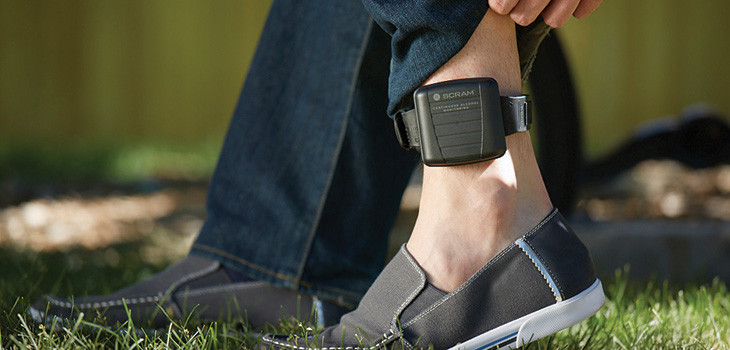
SCRAM CAM or SCRAM is an alcohol monitoring bracelet worn around the ankle. It uses 24/7 transdermal analysis to detect traces of alcohol in sweat and can be used as an alternative to, or complement, other forms of alcohol testing. The bracelet takes readings every 30 minutes and stores the data automatically. As it can register very low levels of alcohol consumption (1-2 units), it provides a highly accurate insight into a participant’s drinking activity over a defined period. It is increasingly used as a transitioning measure where alcohol testing has been undertaken, but ongoing drinking behaviour needs to be monitored.
SCRAM can be used to support treatment or enhance supervision in many different scenarios, including:
A good recent example is that of Callum (not his real name), whose previous alcohol misuse had left his ex-partner concerned about the impact this could have on their two young children. As a result, the court limited visitation rights until Callum could demonstrate his commitment to sobriety. Callum agreed to wear the SCRAM bracelet over a period of three months, and reports from the device confirmed that he had remained alcohol-free throughout that period. The court was satisfied that Callum was reliably abstinent, and granted him supervised contact with his children, with the possibility of unsupervised contact in the future.
SCRAM is Legal Aid Agency approved, meaning that legal aid funding shouldn’t be an issue when court orders are obtained. At AlphaBiolabs, we have simplified our SCRAM pricing structure, with no hidden costs to pay once you have obtained a quote from us. Our Price Promise means we will also match any like-for-like quote and beat it by a further 10%, meaning that we will always offer the most competitive pricing in the UK.
It is not unknown for clients to try and ‘trick’ SCRAM by placing objects between the bracelet and the ankle, submerging it in water, or using lotions, oils and alcohol-containing products to try and interfere with its performance. However, SCRAM includes several anti-tamper features to maintain testing accuracy, including temperature, infrared, strap and battery sensors. SCRAM also performs continuous diagnostic tests to ensure the unit is functioning properly. So if someone wearing a SCRAM bracelet tries to tamper with it, we will know!
It is very unlikely that spilling alcohol on the bracelet would generate a false positive. The system is designed to distinguish between environmental exposure, and alcohol that metabolises through the skin: spilling a drink or product containing alcohol would create a spike much faster than if the wearer had consumed alcohol. Our confirmation process includes careful analysis to ensure that any alerted drinking events occurred due to alcohol consumption, not environmental exposure.
We have over 20 years’ experience providing court-ordered alcohol testing services and offer a wide range of solutions for ongoing alcohol monitoring, including SCRAM. Our in-house experts are trained to fit and remove the bracelet at your client’s home, and a wireless base station is installed to record readings automatically from data stored in the bracelet. More reasons to choose AlphaBiolabs & SCRAM:

Ashley Friday is Sample Collections Manager at AlphaBioabs. Ashley oversees the day-to-day management of AlphaBiolabs’ sample collections department and a team of professional clinicians who operate across the UK. She also hosts AlphaBiolabs’ legal webinars and has delivered several bespoke training sessions on DNA, drug and alcohol testing to the Judicial College.
SCRAM CAM or SCRAM is an alcohol monitoring bracelet worn around the ankle. It uses 24/7 transdermal analysis to detect traces of alcohol in sweat and can be used as an alternative to, or complement, other forms of alcohol testing. The bracelet takes readings every 30 minutes and stores the data automatically. As it can register very low levels of alcohol consumption (1-2 units), it provides a highly accurate insight into a participant’s drinking activity over a defined period. It is increasingly used as a transitioning measure where alcohol testing has been undertaken, but ongoing drinking behaviour needs to be monitored.
SCRAM can be used to support treatment or enhance supervision in many different scenarios, including:
A good recent example is that of Callum (not his real name), whose previous alcohol misuse had left his ex-partner concerned about the impact this could have on their two young children. As a result, the court limited visitation rights until Callum could demonstrate his commitment to sobriety. Callum agreed to wear the SCRAM bracelet over a period of three months, and reports from the device confirmed that he had remained alcohol-free throughout that period. The court was satisfied that Callum was reliably abstinent, and granted him supervised contact with his children, with the possibility of unsupervised contact in the future.
SCRAM is Legal Aid Agency approved, meaning that legal aid funding shouldn’t be an issue when court orders are obtained. At AlphaBiolabs, we have simplified our SCRAM pricing structure, with no hidden costs to pay once you have obtained a quote from us. Our Price Promise means we will also match any like-for-like quote and beat it by a further 10%, meaning that we will always offer the most competitive pricing in the UK.
It is not unknown for clients to try and ‘trick’ SCRAM by placing objects between the bracelet and the ankle, submerging it in water, or using lotions, oils and alcohol-containing products to try and interfere with its performance. However, SCRAM includes several anti-tamper features to maintain testing accuracy, including temperature, infrared, strap and battery sensors. SCRAM also performs continuous diagnostic tests to ensure the unit is functioning properly. So if someone wearing a SCRAM bracelet tries to tamper with it, we will know!
It is very unlikely that spilling alcohol on the bracelet would generate a false positive. The system is designed to distinguish between environmental exposure, and alcohol that metabolises through the skin: spilling a drink or product containing alcohol would create a spike much faster than if the wearer had consumed alcohol. Our confirmation process includes careful analysis to ensure that any alerted drinking events occurred due to alcohol consumption, not environmental exposure.
We have over 20 years’ experience providing court-ordered alcohol testing services and offer a wide range of solutions for ongoing alcohol monitoring, including SCRAM. Our in-house experts are trained to fit and remove the bracelet at your client’s home, and a wireless base station is installed to record readings automatically from data stored in the bracelet. More reasons to choose AlphaBiolabs & SCRAM:
By Ashley Friday of AlphaBiolabs

The Chair of the Bar reports back
Susie Griffin on the admin that keeps barristers from billable work
Clement Cowley, Partner at The Penny Group, explains how global events can influence the performance of pensions and ISAs, and why taking a long-term approach to investing is often the most effective strategy
Mário Barroso, Head of R&D and Method Development at AlphaBiolabs, discusses what family law professionals need to know about hallucinogens, from the main hallucinogenic drugs encountered in family proceedings, to their effects and the testing options available
Harmony Christian Ministries is the latest charity to benefit from a £500 donation from AlphaBiolabs via the company’s Giving Back initiative
By David Green

The golden age of advocacy? David Langwallner pays homage to the filmic if contentious barrister Sir Edward Carson and some of his contemporaries
Leah Arthur, a pupil, and her second seat supervisor, John Goss, share their perspectives on building a productive pupil-supervisor relationship
Henry Fingerhut outlines what the Bar Standards Board AI guidance means for early career barristers
The Ministry of Justice will match-fund up to 100 criminal pupillages, with grants available to criminal chambers across England and Wales. Similar to the COIC scheme, the grants will match-fund pupillages additional to those otherwise offered without government funding
Not yet, says Jacob Turner. Regulation, unlike the technology itself, is a domain the legal profession can still control