*/
In Bleak House, Charles Dickens symbolises the Court of Chancery through the deep fog hanging over Lincoln’s Inn and an endless probate case:
‘Jarndyce v Jarndyce drones on. The scarecrow of a suit has in course of time become so complicated that no man alive knows what it means. The parties to it understand it least; but it has been observed that no two Chancery lawyers can talk about it for five minutes without coming to a total disagreement as to all the premises… Scores of persons have found themselves made parties in Jarndyce v Jarndyce without knowing how or why; whole families have inherited legendary hatreds with the suit… Wards of court have faded into mothers and grandmothers; there are not three Jarndyces left upon the earth perhaps, since old Tom Jarndyce in despair blew his brains out at a coffee-house in Chancery Lane.’
Two decades on, the Judicature Reforms of 1873-76 abolished the independent Court of Chancery and created a Chancery Division as one of five divisions in a new High Court of Justice, as well as a Court of Appeal and judicial role for the House of Lords. More recently, I attended a meeting with the President of the King’s Bench Division and the Chancellor of the High Court and I can confirm that the Chancery Division is to be replaced with a Business and Property Division. The reasons given are to make ‘Chancery’ globally accessible and to allow the easier cross-deployment of judges.
On the promised increase to criminal legal aid, the Courts and Legal Services Minister has replied to my letter, stating that their work on the pledged £34 million is at ‘an advanced stage’ and consultation will occur shortly. Minister Sackman has stated that the increase will apply to new representation orders from the point at which revised rates come into force, relying upon the practice of not applying uplifts to existing cases. This approach is wrapped in its own 19th century fog.
Europe continues to be a focus for collaboration and partnership. I have spoken at the Warsaw Bar Association annual assembly, highlighting the one-year anniversary of the signing of the Council of Europe Convention for the Protection of the Profession of Lawyer and urging its ratification.
Barristers and practitioners also travelled from the EU and the UK to join the Bar Council and King’s College Centre of European Law’s inaugural International Collective Redress Conference, superbly led by Anneli Howard KC. I was delighted to open the conference at a reception at the House of Lords and welcome the speakers and chairs, from the President of the Competition Appeal Tribunal, Mrs Justice Kelyn Bacon, and Lady Rose of Colmworth to Lord Snowden and Lord Justice Green, to leading litigation funders and academics, specialist KCs and solicitors.
I visited Prague for the International Bar Association Leadership Conference and showcased another first, namely speaking on the work of the Bar Council’s Nature and Climate Panel, how climate change impacts over 20 legal sectors and the necessity of climate competency to properly advise on climate risk.
Children in the justice system are in focus, and we have worked alongside the government to ensure that the minimum age of criminal responsibility is within its Youth Justice white paper. Our expert working group, chaired by Dominic Lewis and myself, has completed its analysis. Publication is imminent.
The Family Bar was out in force in support of the swearing in of the new President of the Family Division, Lord Justice Cobb. Conscious of being a warm-up act for Leslie Samuels KC, I hope that my speech captured some of our new President’s emotional intelligence, energy and values.
The Courts and Tribunals Bill featured in the King’s Speech. The Bar Council organised the second Court Constituency Day, alongside the Circuit Leaders and the Criminal Bar Association. Thank you to those barristers volunteering their time to explain to MPs how the criminal justice system sank into its current state and how it can resurface. As was explained to Charlotte Nichols MP at Snaresbrook Crown Court, not one measure requires the reduction of jury trials. Please write to your MP.
The Wales and Chester Circuit hosted our Bar Council team and I was accompanied by Chief Executive Jim Morris, Rhiannon Du Cann and Justina Naik. The visits to Cardiff and Swansea included my talk on bullying and harassment and a spot of Joe’s Ice Cream. The young Bar was brilliantly represented by Rose Glanville, alongside Circuit Leader Christopher Rees KC and Bar Council member Dominic Boothroyd. Family, civil and criminal judges gave their time generously. The attendance by our smallest Circuit was truly phenomenal.
See you all at the London Legal Walk, where we pace the streets for access to justice, London International Disputes Week and the Bar Council’s Pride month event. Diolch!

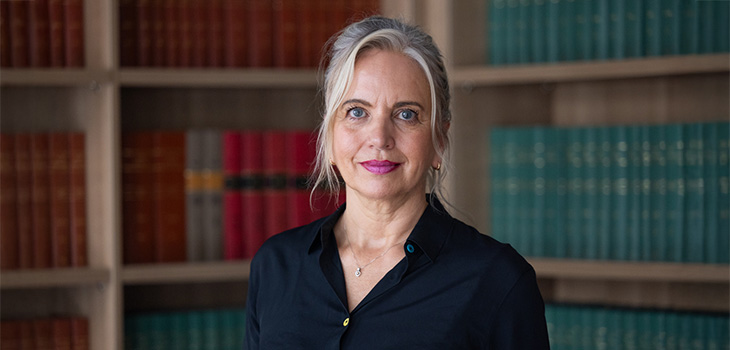
Kirsty Brimelow KC is Chair of the Bar for 2026. She has been a criminal, public law and international human rights barrister for some 30 years, practising from Doughty Street Chambers for over half that time. Kirsty was Chair of the Criminal Bar Association (2022-23) and Chair of the Bar Human Rights Committee (2012-18). She was appointed as a silk in 2011, Deputy High Court Judge in 2021, Recorder in 2022 and is a Bencher of Gray’s Inn.
In Bleak House, Charles Dickens symbolises the Court of Chancery through the deep fog hanging over Lincoln’s Inn and an endless probate case:
‘Jarndyce v Jarndyce drones on. The scarecrow of a suit has in course of time become so complicated that no man alive knows what it means. The parties to it understand it least; but it has been observed that no two Chancery lawyers can talk about it for five minutes without coming to a total disagreement as to all the premises… Scores of persons have found themselves made parties in Jarndyce v Jarndyce without knowing how or why; whole families have inherited legendary hatreds with the suit… Wards of court have faded into mothers and grandmothers; there are not three Jarndyces left upon the earth perhaps, since old Tom Jarndyce in despair blew his brains out at a coffee-house in Chancery Lane.’
Two decades on, the Judicature Reforms of 1873-76 abolished the independent Court of Chancery and created a Chancery Division as one of five divisions in a new High Court of Justice, as well as a Court of Appeal and judicial role for the House of Lords. More recently, I attended a meeting with the President of the King’s Bench Division and the Chancellor of the High Court and I can confirm that the Chancery Division is to be replaced with a Business and Property Division. The reasons given are to make ‘Chancery’ globally accessible and to allow the easier cross-deployment of judges.
On the promised increase to criminal legal aid, the Courts and Legal Services Minister has replied to my letter, stating that their work on the pledged £34 million is at ‘an advanced stage’ and consultation will occur shortly. Minister Sackman has stated that the increase will apply to new representation orders from the point at which revised rates come into force, relying upon the practice of not applying uplifts to existing cases. This approach is wrapped in its own 19th century fog.
Europe continues to be a focus for collaboration and partnership. I have spoken at the Warsaw Bar Association annual assembly, highlighting the one-year anniversary of the signing of the Council of Europe Convention for the Protection of the Profession of Lawyer and urging its ratification.
Barristers and practitioners also travelled from the EU and the UK to join the Bar Council and King’s College Centre of European Law’s inaugural International Collective Redress Conference, superbly led by Anneli Howard KC. I was delighted to open the conference at a reception at the House of Lords and welcome the speakers and chairs, from the President of the Competition Appeal Tribunal, Mrs Justice Kelyn Bacon, and Lady Rose of Colmworth to Lord Snowden and Lord Justice Green, to leading litigation funders and academics, specialist KCs and solicitors.
I visited Prague for the International Bar Association Leadership Conference and showcased another first, namely speaking on the work of the Bar Council’s Nature and Climate Panel, how climate change impacts over 20 legal sectors and the necessity of climate competency to properly advise on climate risk.
Children in the justice system are in focus, and we have worked alongside the government to ensure that the minimum age of criminal responsibility is within its Youth Justice white paper. Our expert working group, chaired by Dominic Lewis and myself, has completed its analysis. Publication is imminent.
The Family Bar was out in force in support of the swearing in of the new President of the Family Division, Lord Justice Cobb. Conscious of being a warm-up act for Leslie Samuels KC, I hope that my speech captured some of our new President’s emotional intelligence, energy and values.
The Courts and Tribunals Bill featured in the King’s Speech. The Bar Council organised the second Court Constituency Day, alongside the Circuit Leaders and the Criminal Bar Association. Thank you to those barristers volunteering their time to explain to MPs how the criminal justice system sank into its current state and how it can resurface. As was explained to Charlotte Nichols MP at Snaresbrook Crown Court, not one measure requires the reduction of jury trials. Please write to your MP.
The Wales and Chester Circuit hosted our Bar Council team and I was accompanied by Chief Executive Jim Morris, Rhiannon Du Cann and Justina Naik. The visits to Cardiff and Swansea included my talk on bullying and harassment and a spot of Joe’s Ice Cream. The young Bar was brilliantly represented by Rose Glanville, alongside Circuit Leader Christopher Rees KC and Bar Council member Dominic Boothroyd. Family, civil and criminal judges gave their time generously. The attendance by our smallest Circuit was truly phenomenal.
See you all at the London Legal Walk, where we pace the streets for access to justice, London International Disputes Week and the Bar Council’s Pride month event. Diolch!

The Chair of the Bar reports back
Susie Griffin on the admin that keeps barristers from billable work
Clement Cowley, Partner at The Penny Group, explains how global events can influence the performance of pensions and ISAs, and why taking a long-term approach to investing is often the most effective strategy
Mário Barroso, Head of R&D and Method Development at AlphaBiolabs, discusses what family law professionals need to know about hallucinogens, from the main hallucinogenic drugs encountered in family proceedings, to their effects and the testing options available
Harmony Christian Ministries is the latest charity to benefit from a £500 donation from AlphaBiolabs via the company’s Giving Back initiative
By David Green

At the start of her term, Chair of the Bar 2026 Kirsty Brimelow KC set out a series of priorities for the year ahead. One of those priorities was children in the justice system
As the world becomes more digital, Barbara Vinagre Mota examines international research into the mental health consequences of judges’ exposure to graphic and immersive evidence, highlighting the importance of support systems
In an era of patient-centred care and growing concern over misconduct in medical settings, why do women still lack the right to choose women consultants for examination and treatment? Charles Davey investigates
Reviewed by Daniel Barnett
James McNeill Whistler at Tate Britain until 27 September Rothko in Florence at Palazzo Strozzi until 23 August Reviewed by Stephen Cragg KC