*/
Christina Warner investigates the widespread urban dog culling pre-Morocco 2030, the ‘FIFA factor’ and international implications
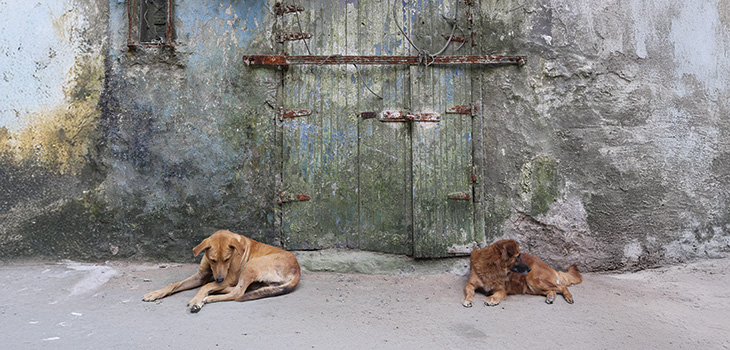
As Morocco prepares to co-host the FIFA 2030 World Cup alongside Spain and Portugal, a troubling narrative has emerged from several Moroccan cities: local activists, veterinarians and international NGOs have reported sudden surges in street dog killings, often carried out by municipal authorities.
As reported by the International Animal Welfare and Protection Coalition (IAWPC), eyewitnesses have described shootings, poisoning and blunt-force killing said to be part of a broader effort to ‘clean up’ urban areas ahead of the tournament.
While hosting a global sporting event inevitably brings logistical pressures, the use of systematic animal culling raises serious questions – not only ethical, but legal. Moreover, reports of children witnessing these killings have introduced a deeply concerning dimension to the crisis, one that engages the UN Convention on the Rights of the Child and General Comment No. 26 on Children’s Rights and the Environment.
These reports have prompted dialogue around the international legal landscape on animal welfare concerns, their implications for Morocco, and the broader question of how global sporting institutions should respond when host nations pursue harmful or unlawful animal control measures.
Morocco, like many countries in the region, faces genuine public-health challenges associated with free-roaming dogs. Rabies remains a risk and municipalities understandably feel pressure to demonstrate that they can ensure safe streets for citizens and tourists alike. However, international organisations including the World Organisation for Animal Health and World Health Organization are clear that mass culling is not an effective strategy for rabies control. Long-term vaccination, sterilisation and education programmes have repeatedly been shown to reduce disease risk without resorting to lethal measures.
Where states pursue practices that contravene accepted scientific standards and involve unnecessary cruelty, questions of international responsibility may arise. Animals themselves are rarely rights-bearers under international law, but states remain bound by obligations relating to public safety, environmental protection and, critically, children’s rights.
General Comment No. 26 of the UN Committee on the Rights of the Child (UNCRC), adopted in 2023, explicitly recognises that children have a right to live in a clean, healthy and sustainable environment. It goes further, noting that states must prevent children from being exposed to harmful environmental practices, including animal abuse: ‘States should protect children from exposure to environmental harm, including cruelty to animals, pollution, biodiversity loss and the destruction of nature’ (UNCRC, General Comment No. 26, para 27).
UNCRC emphasises that witnessing environmental destruction or animal suffering can have a lasting psychological impact on children, particularly when carried out by authorities entrusted with their protection. IAWPC cites reports from Marrakech, Casablanca, Agadir and other cities describing children encountering dead or dying dogs on their way to school or witnessing municipal workers capturing and killing dogs in broad daylight. In some instances, children reportedly filmed these scenes, sharing them on social media.
These accounts place Morocco at risk of being seen as breaching its duties under the UNCRC. General Comment No. 26 makes clear that states should regulate, monitor and where necessary prohibit activities that expose children to environmentally linked violence or trauma, including cruelty to animals. It also underscores the role of states in modelling respect for the natural world – an obligation that sits uneasily alongside scenes of public killing.
Animal protection remains a patchwork field in international law, but is far from non-existent. The European Convention for the Protection of Animals (to which Morocco is not a party) sets important regional standards. Globally, the International Court of Justice has recognised that cruelty to animals can intersect with environmental law, particularly where ecosystems or public health are affected.
Furthermore, the UN Environment Programme has increasingly emphasised the interconnection between animal welfare, biodiversity and sustainability. Although these frameworks may not create binding obligations in relation to street animals, they contribute to an emerging expectation, what legal academics have coined “soft law norms”, that states should avoid unnecessary suffering and should adopt humane, scientifically grounded population-management measures.
Morocco has made progress in recent years through targeted vaccination programmes and partnerships with NGOs, but the renewed culling risks undermining those efforts. It also positions the country in tension with the global direction of travel, where animal welfare considerations are becoming increasingly integrated into both environmental governance and human-rights discourse.
FIFA has, in recent years, faced growing scrutiny regarding the human-rights impact of major tournaments. The organisation now has a dedicated Human Rights Policy and is expected to carry out due-diligence assessments of host nations. These policies emphasise the protection of vulnerable populations and require hosts to avoid harming communities or the environment.
Although animals are not expressly mentioned, the indirect human-rights implications, particularly regarding children, fall squarely within FIFA’s scope. Witnessing violence, trauma, and environmental harm are issues FIFA has pledged to take seriously.
The question now arises whether FIFA has a responsibility to investigate or address the treatment of dogs in Morocco, particularly where the killings are alleged to be linked to World Cup preparations. If culling is taking place in anticipation of the tournament, then it arguably engages FIFA’s due-diligence obligations.
International NGOs have already begun calling for action. If public pressure intensifies, FIFA may face reputational risks similar to those it encountered over labour rights in Qatar. At the very least, a review of Morocco’s animal-control practices may be required.
Beyond legal frameworks, the social consequences of the culling cannot be understated. For many communities, street dogs form an integral part of neighbourhood life. A 2025 report from the Stray Dog Solidarity Alliance argued that children grow up naming, feeding and recognising them as sentient beings with whom they share space and surroundings. The sudden removal or violent killing of these animals can be profoundly distressing.
General Comment No. 26 notes that children’s emotional connection to animals is a key component of environmental education and respect for life. Violent disruption of this connection can undermine emotional development and may normalise harmful attitudes toward animals.
Studies in child psychology demonstrate the connection between witnessing animal cruelty and intergenerational harm (Ladny and Meyer, 2019). If state-sanctioned killings are publicly visible, the long-term impact on communities may be significant.
Officially, Morocco maintains that it has shifted away from lethal control methods towards a national programme based on sterilisation, vaccination (particularly against rabies) and release, often described as Trap-Neuter-Vaccinate-Release. The Ministry of Interior and Ministry of Health have pointed to investments in veterinary infrastructure, including the construction of shelters, the deployment of mobile veterinary units, and partnerships with the national veterinary authorities. The government has also highlighted draft animal-welfare legislation intended to prohibit unjustified killing of stray animals and regulate how municipalities manage stray populations.
However, these assurances sit alongside continued and credible allegations from animal-welfare organisations, NGOs and journalists that culling practices have not, in fact, ceased, despite official policy statements to the contrary. These organisations argue that there is a clear gap between national-level commitments and what is occurring on the ground, particularly in urban areas likely to attract international visitors.
The controversy was further complicated by a 2025 ruling of the Administrative Court in Rabat, which found the Ministry of Interior legally responsible for killings of stray dogs by gunfire. Although the court declined to order an immediate halt to the practice, it nonetheless recognised state liability, awarding symbolic damages to the claimant animal-protection groups. This judgment has been cited by campaigners as evidence that lethal practices have occurred even as the state publicly denies them.
As a result, Morocco’s response can best be described as one of partial reform under significant scrutiny. While there is evidence of policy change, legislative proposals and pilot welfare-based programmes, implementation appears inconsistent, and independent monitoring remains limited.
The issue remains unresolved and presents a stark challenge at the intersection of animal-welfare law, children’s rights and international human-rights obligations. Whether or not these culls are directly linked to World Cup preparations, the perception alone risks undermining Morocco’s international standing and FIFA’s commitment to ethical practice.
For the millions of people who will visit Morocco in 2030 – and for the children who live there today – the world will be watching closely.
References
Why Killing Dogs Doesn’t Work, Stray Dog Solidarity Alliance, 2025
Ladny and Meyer, ‘Traumatized Witnesses: Review of Childhood Exposure to Animal Cruelty’, Journal of Child & Adolescent Trauma, Vol 13, 2019

As Morocco prepares to co-host the FIFA 2030 World Cup alongside Spain and Portugal, a troubling narrative has emerged from several Moroccan cities: local activists, veterinarians and international NGOs have reported sudden surges in street dog killings, often carried out by municipal authorities.
As reported by the International Animal Welfare and Protection Coalition (IAWPC), eyewitnesses have described shootings, poisoning and blunt-force killing said to be part of a broader effort to ‘clean up’ urban areas ahead of the tournament.
While hosting a global sporting event inevitably brings logistical pressures, the use of systematic animal culling raises serious questions – not only ethical, but legal. Moreover, reports of children witnessing these killings have introduced a deeply concerning dimension to the crisis, one that engages the UN Convention on the Rights of the Child and General Comment No. 26 on Children’s Rights and the Environment.
These reports have prompted dialogue around the international legal landscape on animal welfare concerns, their implications for Morocco, and the broader question of how global sporting institutions should respond when host nations pursue harmful or unlawful animal control measures.
Morocco, like many countries in the region, faces genuine public-health challenges associated with free-roaming dogs. Rabies remains a risk and municipalities understandably feel pressure to demonstrate that they can ensure safe streets for citizens and tourists alike. However, international organisations including the World Organisation for Animal Health and World Health Organization are clear that mass culling is not an effective strategy for rabies control. Long-term vaccination, sterilisation and education programmes have repeatedly been shown to reduce disease risk without resorting to lethal measures.
Where states pursue practices that contravene accepted scientific standards and involve unnecessary cruelty, questions of international responsibility may arise. Animals themselves are rarely rights-bearers under international law, but states remain bound by obligations relating to public safety, environmental protection and, critically, children’s rights.
General Comment No. 26 of the UN Committee on the Rights of the Child (UNCRC), adopted in 2023, explicitly recognises that children have a right to live in a clean, healthy and sustainable environment. It goes further, noting that states must prevent children from being exposed to harmful environmental practices, including animal abuse: ‘States should protect children from exposure to environmental harm, including cruelty to animals, pollution, biodiversity loss and the destruction of nature’ (UNCRC, General Comment No. 26, para 27).
UNCRC emphasises that witnessing environmental destruction or animal suffering can have a lasting psychological impact on children, particularly when carried out by authorities entrusted with their protection. IAWPC cites reports from Marrakech, Casablanca, Agadir and other cities describing children encountering dead or dying dogs on their way to school or witnessing municipal workers capturing and killing dogs in broad daylight. In some instances, children reportedly filmed these scenes, sharing them on social media.
These accounts place Morocco at risk of being seen as breaching its duties under the UNCRC. General Comment No. 26 makes clear that states should regulate, monitor and where necessary prohibit activities that expose children to environmentally linked violence or trauma, including cruelty to animals. It also underscores the role of states in modelling respect for the natural world – an obligation that sits uneasily alongside scenes of public killing.
Animal protection remains a patchwork field in international law, but is far from non-existent. The European Convention for the Protection of Animals (to which Morocco is not a party) sets important regional standards. Globally, the International Court of Justice has recognised that cruelty to animals can intersect with environmental law, particularly where ecosystems or public health are affected.
Furthermore, the UN Environment Programme has increasingly emphasised the interconnection between animal welfare, biodiversity and sustainability. Although these frameworks may not create binding obligations in relation to street animals, they contribute to an emerging expectation, what legal academics have coined “soft law norms”, that states should avoid unnecessary suffering and should adopt humane, scientifically grounded population-management measures.
Morocco has made progress in recent years through targeted vaccination programmes and partnerships with NGOs, but the renewed culling risks undermining those efforts. It also positions the country in tension with the global direction of travel, where animal welfare considerations are becoming increasingly integrated into both environmental governance and human-rights discourse.
FIFA has, in recent years, faced growing scrutiny regarding the human-rights impact of major tournaments. The organisation now has a dedicated Human Rights Policy and is expected to carry out due-diligence assessments of host nations. These policies emphasise the protection of vulnerable populations and require hosts to avoid harming communities or the environment.
Although animals are not expressly mentioned, the indirect human-rights implications, particularly regarding children, fall squarely within FIFA’s scope. Witnessing violence, trauma, and environmental harm are issues FIFA has pledged to take seriously.
The question now arises whether FIFA has a responsibility to investigate or address the treatment of dogs in Morocco, particularly where the killings are alleged to be linked to World Cup preparations. If culling is taking place in anticipation of the tournament, then it arguably engages FIFA’s due-diligence obligations.
International NGOs have already begun calling for action. If public pressure intensifies, FIFA may face reputational risks similar to those it encountered over labour rights in Qatar. At the very least, a review of Morocco’s animal-control practices may be required.
Beyond legal frameworks, the social consequences of the culling cannot be understated. For many communities, street dogs form an integral part of neighbourhood life. A 2025 report from the Stray Dog Solidarity Alliance argued that children grow up naming, feeding and recognising them as sentient beings with whom they share space and surroundings. The sudden removal or violent killing of these animals can be profoundly distressing.
General Comment No. 26 notes that children’s emotional connection to animals is a key component of environmental education and respect for life. Violent disruption of this connection can undermine emotional development and may normalise harmful attitudes toward animals.
Studies in child psychology demonstrate the connection between witnessing animal cruelty and intergenerational harm (Ladny and Meyer, 2019). If state-sanctioned killings are publicly visible, the long-term impact on communities may be significant.
Officially, Morocco maintains that it has shifted away from lethal control methods towards a national programme based on sterilisation, vaccination (particularly against rabies) and release, often described as Trap-Neuter-Vaccinate-Release. The Ministry of Interior and Ministry of Health have pointed to investments in veterinary infrastructure, including the construction of shelters, the deployment of mobile veterinary units, and partnerships with the national veterinary authorities. The government has also highlighted draft animal-welfare legislation intended to prohibit unjustified killing of stray animals and regulate how municipalities manage stray populations.
However, these assurances sit alongside continued and credible allegations from animal-welfare organisations, NGOs and journalists that culling practices have not, in fact, ceased, despite official policy statements to the contrary. These organisations argue that there is a clear gap between national-level commitments and what is occurring on the ground, particularly in urban areas likely to attract international visitors.
The controversy was further complicated by a 2025 ruling of the Administrative Court in Rabat, which found the Ministry of Interior legally responsible for killings of stray dogs by gunfire. Although the court declined to order an immediate halt to the practice, it nonetheless recognised state liability, awarding symbolic damages to the claimant animal-protection groups. This judgment has been cited by campaigners as evidence that lethal practices have occurred even as the state publicly denies them.
As a result, Morocco’s response can best be described as one of partial reform under significant scrutiny. While there is evidence of policy change, legislative proposals and pilot welfare-based programmes, implementation appears inconsistent, and independent monitoring remains limited.
The issue remains unresolved and presents a stark challenge at the intersection of animal-welfare law, children’s rights and international human-rights obligations. Whether or not these culls are directly linked to World Cup preparations, the perception alone risks undermining Morocco’s international standing and FIFA’s commitment to ethical practice.
For the millions of people who will visit Morocco in 2030 – and for the children who live there today – the world will be watching closely.
References
Why Killing Dogs Doesn’t Work, Stray Dog Solidarity Alliance, 2025
Ladny and Meyer, ‘Traumatized Witnesses: Review of Childhood Exposure to Animal Cruelty’, Journal of Child & Adolescent Trauma, Vol 13, 2019
Christina Warner investigates the widespread urban dog culling pre-Morocco 2030, the ‘FIFA factor’ and international implications


The Chair of the Bar reports back
Susie Griffin on the admin that keeps barristers from billable work
Clement Cowley, Partner at The Penny Group, explains how global events can influence the performance of pensions and ISAs, and why taking a long-term approach to investing is often the most effective strategy
Mário Barroso, Head of R&D and Method Development at AlphaBiolabs, discusses what family law professionals need to know about hallucinogens, from the main hallucinogenic drugs encountered in family proceedings, to their effects and the testing options available
Harmony Christian Ministries is the latest charity to benefit from a £500 donation from AlphaBiolabs via the company’s Giving Back initiative
By David Green
At the start of her term, Chair of the Bar 2026 Kirsty Brimelow KC set out a series of priorities for the year ahead. One of those priorities was children in the justice system
As the world becomes more digital, Barbara Vinagre Mota examines international research into the mental health consequences of judges’ exposure to graphic and immersive evidence, highlighting the importance of support systems
In an era of patient-centred care and growing concern over misconduct in medical settings, why do women still lack the right to choose women consultants for examination and treatment? Charles Davey investigates
Reviewed by Daniel Barnett
James McNeill Whistler at Tate Britain until 27 September Rothko in Florence at Palazzo Strozzi until 23 August Reviewed by Stephen Cragg KC