*/

Managing vicarious trauma is essential when your daily work involves carrying other people’s crises, says Daniel Sheridan while yoga expert Tim Senesi explores the connection between mind, breath and body
‘It is said that two arrows fly our way whenever we experience a negative event. Being struck by the first arrow hurts – that arrow is pain. The second arrow is our emotional reaction to the first, and often, it is even more painful than the first arrow. That second arrow is where suffering originates from.’
The parable of the two arrows is a foundational Buddhist teaching that illustrates the difference between unavoidable physical or emotional pain (the first arrow) and the suffering we create through our mental reaction, resistance and rumination (the second, optional arrow). What application does this have to being a barrister?
Barristers are paid to think and strategise, filtering out the intense emotions surrounding a case to focus on the facts. However, at the family Bar, our clients – children, mothers and fathers – frequently carry profound, unimaginable trauma. The danger is that by clearing away their emotional overhang, we inadvertently absorb it. Empathy is essential for effective, trauma-informed advocacy, but it also acts as the conduit for vicarious trauma, meaning that some cases stay with us long after we leave the courtroom.
When the ‘arrows’ that have struck your clients are the very same ones that have struck you, the professional firewall melts away. This is the raw reality of the family Bar. You are not just analysing facts; you are navigating a psychological minefield where a client’s testimony can act as a direct echo of your own lived experience. In those moments, trauma-informed practice stops being a helpful framework and becomes a survival mechanism for the advocate. When the case chimes with your own history, managing it requires a different approach.
Trauma, originating from the Greek word for ‘wound’, defines both the exposure to severe distress and its psychological effects. SAMHSA (2014) characterises it as an event or circumstance experienced as harmful or life-threatening that impairs an individual’s long-term functioning and wellbeing. Ultimately, these trauma responses work directly against our parasympathetic nervous system, requiring deliberate effort to restore equilibrium.
Viewing trauma-informed practice as a ‘journey without a destination’ takes the pressure off finding a perfect, permanent solution and shifts the focus to continuous adaptation. Because human experiences and case dynamics are always evolving, our approach to managing the impact of that work must change too.
Managing vicarious trauma and burnout is absolutely essential when your daily work involves carrying the weight of other people’s crises. When you are exposed to distressing material and acute trauma as a ‘daily diet’, standard, superficial self-care (like taking a hot bath or watching a movie) isn’t enough. You need systemic, psychological and practical strategies to protect your wellbeing. When personal life events quietly pile on top of an already heavy professional workload, the cumulative effect can be staggering. In the context of the family Bar, this can be the tipping point. You are already using your cognitive and emotional energy to manage the ‘arrows’ striking your clients; when an unexpected crisis, relationship breakdown, loss or illness occurs in your own life, your internal reservoir is suddenly depleted.
What makes this particularly dangerous for advocates is that we are trained to compartmentalise. We pride ourselves on the ability to leave our personal lives at the courtroom door. But human psychology doesn’t work in airtight compartments – you can’t control it all, and you don’t need to.
In the words of Zen master Taisen Deshimaru, you have to ‘think with your whole body’. As a barrister, your primary tool is your intellect. When you are an overthinker by nature, your brain is already running its high-voltage processor on overdrive. The brain is just one part of the anatomy of stress; the reality is that trauma, anxiety and exhaustion are somatic experiences – they live in our bodies.
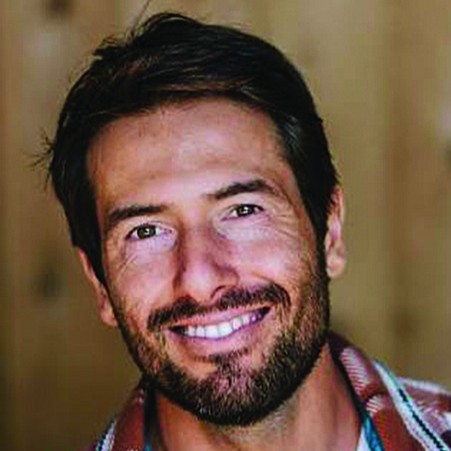
I don’t profess to be an expert in these things, so I have outsourced the ‘how to’ to someone whose professional discipline is anchored in the connection between mind, breath and body – one of my personal heroes, my yoga teacher, Tim Senesi. Read his tips below.
SAMHSA’s Concept of Trauma and Guidance for a Trauma-Informed Approach, US Substance Abuse and Mental Health Services Administration, Trauma and Justice Strategic Initiative, July 2014

Dan Sheridan, a specialist child law practitioner, overcame chronic burnout during the legal aid hacking crisis and personal loss, restoring a positive outlook through yoga, self-care and renewed focus on wellbeing.
‘It is said that two arrows fly our way whenever we experience a negative event. Being struck by the first arrow hurts – that arrow is pain. The second arrow is our emotional reaction to the first, and often, it is even more painful than the first arrow. That second arrow is where suffering originates from.’
The parable of the two arrows is a foundational Buddhist teaching that illustrates the difference between unavoidable physical or emotional pain (the first arrow) and the suffering we create through our mental reaction, resistance and rumination (the second, optional arrow). What application does this have to being a barrister?
Barristers are paid to think and strategise, filtering out the intense emotions surrounding a case to focus on the facts. However, at the family Bar, our clients – children, mothers and fathers – frequently carry profound, unimaginable trauma. The danger is that by clearing away their emotional overhang, we inadvertently absorb it. Empathy is essential for effective, trauma-informed advocacy, but it also acts as the conduit for vicarious trauma, meaning that some cases stay with us long after we leave the courtroom.
When the ‘arrows’ that have struck your clients are the very same ones that have struck you, the professional firewall melts away. This is the raw reality of the family Bar. You are not just analysing facts; you are navigating a psychological minefield where a client’s testimony can act as a direct echo of your own lived experience. In those moments, trauma-informed practice stops being a helpful framework and becomes a survival mechanism for the advocate. When the case chimes with your own history, managing it requires a different approach.
Trauma, originating from the Greek word for ‘wound’, defines both the exposure to severe distress and its psychological effects. SAMHSA (2014) characterises it as an event or circumstance experienced as harmful or life-threatening that impairs an individual’s long-term functioning and wellbeing. Ultimately, these trauma responses work directly against our parasympathetic nervous system, requiring deliberate effort to restore equilibrium.
Viewing trauma-informed practice as a ‘journey without a destination’ takes the pressure off finding a perfect, permanent solution and shifts the focus to continuous adaptation. Because human experiences and case dynamics are always evolving, our approach to managing the impact of that work must change too.
Managing vicarious trauma and burnout is absolutely essential when your daily work involves carrying the weight of other people’s crises. When you are exposed to distressing material and acute trauma as a ‘daily diet’, standard, superficial self-care (like taking a hot bath or watching a movie) isn’t enough. You need systemic, psychological and practical strategies to protect your wellbeing. When personal life events quietly pile on top of an already heavy professional workload, the cumulative effect can be staggering. In the context of the family Bar, this can be the tipping point. You are already using your cognitive and emotional energy to manage the ‘arrows’ striking your clients; when an unexpected crisis, relationship breakdown, loss or illness occurs in your own life, your internal reservoir is suddenly depleted.
What makes this particularly dangerous for advocates is that we are trained to compartmentalise. We pride ourselves on the ability to leave our personal lives at the courtroom door. But human psychology doesn’t work in airtight compartments – you can’t control it all, and you don’t need to.
In the words of Zen master Taisen Deshimaru, you have to ‘think with your whole body’. As a barrister, your primary tool is your intellect. When you are an overthinker by nature, your brain is already running its high-voltage processor on overdrive. The brain is just one part of the anatomy of stress; the reality is that trauma, anxiety and exhaustion are somatic experiences – they live in our bodies.
I don’t profess to be an expert in these things, so I have outsourced the ‘how to’ to someone whose professional discipline is anchored in the connection between mind, breath and body – one of my personal heroes, my yoga teacher, Tim Senesi. Read his tips below.
SAMHSA’s Concept of Trauma and Guidance for a Trauma-Informed Approach, US Substance Abuse and Mental Health Services Administration, Trauma and Justice Strategic Initiative, July 2014
Managing vicarious trauma is essential when your daily work involves carrying other people’s crises, says Daniel Sheridan while yoga expert Tim Senesi explores the connection between mind, breath and body

The Chair of the Bar reports back
By Kem Kemal, CEO, Henry Dannell
By BSK Financial Planning
Mário Barroso, Head of R&D and Method Development at AlphaBiolabs
Susie Griffin on the admin that keeps barristers from billable work
Clement Cowley, Partner at The Penny Group, explains how global events can influence the performance of pensions and ISAs, and why taking a long-term approach to investing is often the most effective strategy

Kick off your career at the Bar Council’s Pupillage Fair this October – it’s one of the most valuable opportunities for aspiring barristers, says Amelia Clegg
The golden age of advocacy? David Langwallner pays homage to the filmic if contentious barrister Sir Edward Carson and some of his contemporaries
Henry Fingerhut outlines what the Bar Standards Board AI guidance means for early career barristers
The Ministry of Justice will match-fund up to 100 criminal pupillages, with grants available to criminal chambers across England and Wales. Similar to the COIC scheme, the grants will match-fund pupillages additional to those otherwise offered without government funding
Not yet, says Jacob Turner. Regulation, unlike the technology itself, is a domain the legal profession can still control