*/

The judiciary has a long journey before it is fully inclusive and representative, but the First-tier Tribunal has made a remarkable start. Diego F Soto-Miranda reflects on his personal odyssey and the wider context
This posting, I hope, marks the first stage in a long and successful judicial career dedicated to public service, guided by an unwavering commitment to ensuring that justice is both done and seen to be done. I am fortunate to have been selected in 2025 to serve as a DQ Member of the First-tier Tribunal (FTT), first at Fox Court in London then from April 2026 at the London Tribunal Centre.
It is, at the same time, only another station on a voyage that may, by analogy, be likened to an Odyssean expedition towards ethical and civic ideals. Homer himself might nod in approval at a tribunal navigating law, ethics and procedural intricacies with such perseverance.
I had the pleasure of undertaking the prerequisite observation day at Fox Court on 22 August 2025. Travelling there by taxi, I arrived early enough to meet the tribunal group I would be observing for the day. I had the opportunity to sit through five appeals, all of which concluded in ways I had not anticipated, yet which revealed the nuanced reasoning and meticulous care underpinning each decision. I listened attentively to all deliberations and witnessed firsthand the immense diligence required behind the scenes to reach judgments that are fair, balanced and fully consonant with the principle that justice must be seen to be done.
The tribunal bench in Hearing Room 15, to which I had been assigned, were exceedingly kind and generous with their time, offering explanations, guidance and advice for the future when I would be sitting in their chair space. During the lunch break, and by way of reasonable adjustments, so often absent in other professional settings, I was shown into a side room where I could rest comfortably, a provision that will continue to be available to me in future sittings. A health and safety protocol review was also carried out for my future reference in case of emergencies, conducted by a very considerate young person from the HMCTS administration team in conjunction with my assigned leading judge.
Similarly, having arrived a day early via national rail and taxi, I attended the FTT’s residential induction course from 2 to 5 September 2025. The experience was exemplary in every respect: the teaching outstanding, the accommodation excellent and the food of the highest standard. All necessary reasonable adjustments were provided with efficiency and thoughtfulness, enabling full participation.
While there remains a long journey ahead to achieve a fully inclusive and representative judiciary, the FTT has made a remarkable beginning. Its efforts are both laudable and instructive, setting a standard that I hope other professional sectors will seek to emulate. As with any grand voyage of discovery or heroic odyssey, the first leg is crucial: the charts must be studied, the crew prepared and the vessel rigged. In my case, the vessel is the law, the charts those of procedural guidance and the crew my fellow tribunal colleagues. The course is set, and I sail with both humility and resolve, eager to navigate the challenges that lie ahead.
In recent years, judicial accessibility has garnered increasing attention. Much discourse has focused on accommodating litigants and practitioners. Relatively little has been written about judges and tribunal members who use wheelchairs. Their presence is not merely symbolic; it exemplifies the legal profession’s commitment to inclusivity and demonstrates that physical disability is no barrier to judicial excellence.
This progress is increasingly supported by institutional initiatives across the judiciary. The Reasonable Adjustments Policy for Judicial Office Holders (2025), applicable to all jurisdictions and judicial levels, clarifies the respective responsibilities of the Judicial Appointments Commission, Judicial Office and HMCTS in ensuring that reasonable adjustments are properly considered and implemented. The Workplace Adjustments Working Group further supports judicial office holders with disabilities where adjustment issues cannot be resolved locally, reflecting an ongoing cross-jurisdictional commitment to accessibility and retention.
Modern courts across multiple jurisdictions have recognised the need for reasonable adjustments to enable full judicial participation. These include accessible courtrooms, tailored technology and procedural accommodations. While wheelchair-using judges remain rare, confirmed examples exist, showing that mobility impairment is fully compatible with the highest standards of judicial service.
Disability inclusion also forms a core strand of the renewed Judicial Diversity and Inclusion Strategy 2026–30, including work directed towards retention, wellbeing and practical support for judicial office holders. Guidance for neurodivergent individuals and those with non-visible disabilities is also under development. Continued engagement with representative bodies, including the Association of Judicial Office Holders with a Disability and the Judicial Diversity Committee disability working group, helps ensure that lived experience continues to inform policy and practice.
In the United States, federal and state courts have reported judges serving while using wheelchairs. Examples include Judge Richard A. Sand (Southern District of New York), Judge Philip Pro (California) and Judge Michael E. Kabaker (Illinois). These judges exemplify that navigating complex legal rules is often more challenging than manoeuvring a wheelchair down a crowded corridor.
From my own experience and perception, judges and tribunal members who are wheelchair users appear more visible within tribunals and lower courts, particularly within the FTT structure, where accessibility, flexibility and practical accommodation are often more readily integrated into working practices. While there are judicial office holders with disabilities across different jurisdictions, official data is not collected specifically regarding wheelchair users or mobility impairments. As someone paralysed from the neck down, I nevertheless remain conscious that severe physical disability continues to be relatively uncommon within the judiciary
My own impression is that tribunals and lower courts may presently provide some of the most practically accessible environments for judicial office holders with significant mobility impairments, reflecting the importance of flexibility, accessibility and institutional support.
Implications for legal practice
Our presence carries both symbolic and practical significance. Symbolically, it reinforces the judiciary’s commitment to equality, challenging assumptions about disability and professional competence. Practically, it requires institutional planning, including courtroom design, accessible technology and procedural adjustments.
Comparative analysis indicates that jurisdictions with proactive accessibility policies are more likely to attract skilled judges with mobility impairments. Adjustments include accessible entrances, digital case management and staff familiar with mobility requirements, ensuring that judges can participate fully, whether presiding over appellate matters or managing tribunal hearings. One might even say that, at times, the real challenge is negotiating photocopiers.
Several initiatives could further enhance inclusion:
While accessibility across tribunals and courts continues to develop positively, greater visible representation of judicial office holders with mobility impairments at senior judicial levels may further strengthen public confidence in the judiciary’s commitment to equality and inclusion.
Confirmed evidence shows that judges in wheelchairs are serving globally, particularly in tribunals and lower courts. Institutional readiness ensures that mobility impairment does not preclude judicial service. Comparative analysis highlights that countries with proactive accessibility policies provide effective models for inclusion, balancing judicial rigour with equitable participation. The recently launched Judicial Wellbeing Strategy also includes a commitment to developing training so that judicial leaders can provide the best possible pastoral support to judicial office holders with disabilities.
Our presence should be seen not as an exception, but as a testament to the judiciary’s commitment to accessibility, equality and excellence. With continued institutional support, jurisdictions worldwide can ensure that the legal system reflects the diversity and capability of the society it serves.
I am hopeful that this is the first leg of my ongoing journey of public service, a careful navigation of law, ethics and personal endeavour, Odyssean in spirit, with eyes fixed firmly on the horizon.
India – Administrative Tribunals – Yes (source: Central Administrative Tribunal Notices)
This article was revised on 8 May 2026. Certain reflections within this article are intentionally personal and experiential in nature, drawing upon the author’s own observations rather than comprehensive institutional demographic data.
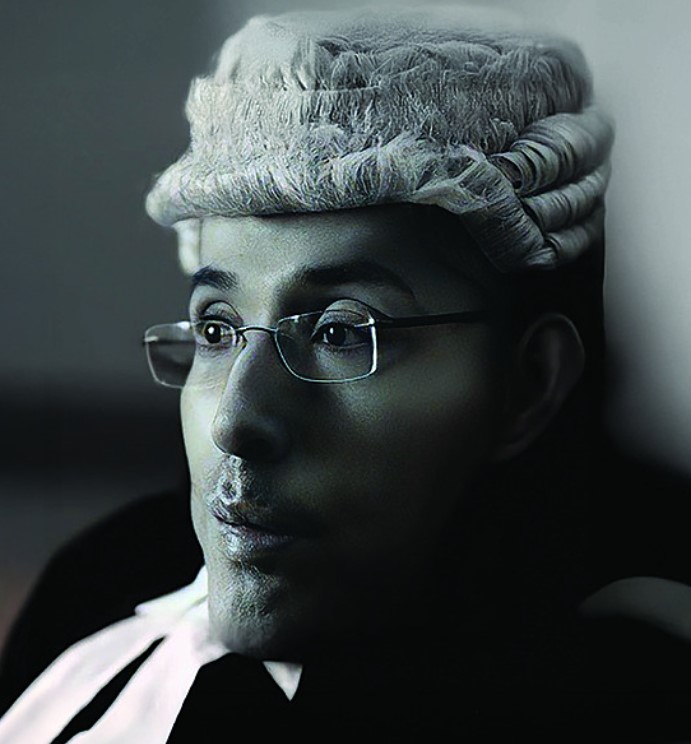
Diego F Soto-Miranda is a barrister at 1EC Barristers, specialising in commercial, defamation and human rights law. Passionately advocating for justice, he champions equality, inclusivity and integrity in the profession. Diego was appointed a DQ Member of the First-tier Tribunal in 2025.
This posting, I hope, marks the first stage in a long and successful judicial career dedicated to public service, guided by an unwavering commitment to ensuring that justice is both done and seen to be done. I am fortunate to have been selected in 2025 to serve as a DQ Member of the First-tier Tribunal (FTT), first at Fox Court in London then from April 2026 at the London Tribunal Centre.
It is, at the same time, only another station on a voyage that may, by analogy, be likened to an Odyssean expedition towards ethical and civic ideals. Homer himself might nod in approval at a tribunal navigating law, ethics and procedural intricacies with such perseverance.
I had the pleasure of undertaking the prerequisite observation day at Fox Court on 22 August 2025. Travelling there by taxi, I arrived early enough to meet the tribunal group I would be observing for the day. I had the opportunity to sit through five appeals, all of which concluded in ways I had not anticipated, yet which revealed the nuanced reasoning and meticulous care underpinning each decision. I listened attentively to all deliberations and witnessed firsthand the immense diligence required behind the scenes to reach judgments that are fair, balanced and fully consonant with the principle that justice must be seen to be done.
The tribunal bench in Hearing Room 15, to which I had been assigned, were exceedingly kind and generous with their time, offering explanations, guidance and advice for the future when I would be sitting in their chair space. During the lunch break, and by way of reasonable adjustments, so often absent in other professional settings, I was shown into a side room where I could rest comfortably, a provision that will continue to be available to me in future sittings. A health and safety protocol review was also carried out for my future reference in case of emergencies, conducted by a very considerate young person from the HMCTS administration team in conjunction with my assigned leading judge.
Similarly, having arrived a day early via national rail and taxi, I attended the FTT’s residential induction course from 2 to 5 September 2025. The experience was exemplary in every respect: the teaching outstanding, the accommodation excellent and the food of the highest standard. All necessary reasonable adjustments were provided with efficiency and thoughtfulness, enabling full participation.
While there remains a long journey ahead to achieve a fully inclusive and representative judiciary, the FTT has made a remarkable beginning. Its efforts are both laudable and instructive, setting a standard that I hope other professional sectors will seek to emulate. As with any grand voyage of discovery or heroic odyssey, the first leg is crucial: the charts must be studied, the crew prepared and the vessel rigged. In my case, the vessel is the law, the charts those of procedural guidance and the crew my fellow tribunal colleagues. The course is set, and I sail with both humility and resolve, eager to navigate the challenges that lie ahead.
In recent years, judicial accessibility has garnered increasing attention. Much discourse has focused on accommodating litigants and practitioners. Relatively little has been written about judges and tribunal members who use wheelchairs. Their presence is not merely symbolic; it exemplifies the legal profession’s commitment to inclusivity and demonstrates that physical disability is no barrier to judicial excellence.
This progress is increasingly supported by institutional initiatives across the judiciary. The Reasonable Adjustments Policy for Judicial Office Holders (2025), applicable to all jurisdictions and judicial levels, clarifies the respective responsibilities of the Judicial Appointments Commission, Judicial Office and HMCTS in ensuring that reasonable adjustments are properly considered and implemented. The Workplace Adjustments Working Group further supports judicial office holders with disabilities where adjustment issues cannot be resolved locally, reflecting an ongoing cross-jurisdictional commitment to accessibility and retention.
Modern courts across multiple jurisdictions have recognised the need for reasonable adjustments to enable full judicial participation. These include accessible courtrooms, tailored technology and procedural accommodations. While wheelchair-using judges remain rare, confirmed examples exist, showing that mobility impairment is fully compatible with the highest standards of judicial service.
Disability inclusion also forms a core strand of the renewed Judicial Diversity and Inclusion Strategy 2026–30, including work directed towards retention, wellbeing and practical support for judicial office holders. Guidance for neurodivergent individuals and those with non-visible disabilities is also under development. Continued engagement with representative bodies, including the Association of Judicial Office Holders with a Disability and the Judicial Diversity Committee disability working group, helps ensure that lived experience continues to inform policy and practice.
In the United States, federal and state courts have reported judges serving while using wheelchairs. Examples include Judge Richard A. Sand (Southern District of New York), Judge Philip Pro (California) and Judge Michael E. Kabaker (Illinois). These judges exemplify that navigating complex legal rules is often more challenging than manoeuvring a wheelchair down a crowded corridor.
From my own experience and perception, judges and tribunal members who are wheelchair users appear more visible within tribunals and lower courts, particularly within the FTT structure, where accessibility, flexibility and practical accommodation are often more readily integrated into working practices. While there are judicial office holders with disabilities across different jurisdictions, official data is not collected specifically regarding wheelchair users or mobility impairments. As someone paralysed from the neck down, I nevertheless remain conscious that severe physical disability continues to be relatively uncommon within the judiciary
My own impression is that tribunals and lower courts may presently provide some of the most practically accessible environments for judicial office holders with significant mobility impairments, reflecting the importance of flexibility, accessibility and institutional support.
Implications for legal practice
Our presence carries both symbolic and practical significance. Symbolically, it reinforces the judiciary’s commitment to equality, challenging assumptions about disability and professional competence. Practically, it requires institutional planning, including courtroom design, accessible technology and procedural adjustments.
Comparative analysis indicates that jurisdictions with proactive accessibility policies are more likely to attract skilled judges with mobility impairments. Adjustments include accessible entrances, digital case management and staff familiar with mobility requirements, ensuring that judges can participate fully, whether presiding over appellate matters or managing tribunal hearings. One might even say that, at times, the real challenge is negotiating photocopiers.
Several initiatives could further enhance inclusion:
While accessibility across tribunals and courts continues to develop positively, greater visible representation of judicial office holders with mobility impairments at senior judicial levels may further strengthen public confidence in the judiciary’s commitment to equality and inclusion.
Confirmed evidence shows that judges in wheelchairs are serving globally, particularly in tribunals and lower courts. Institutional readiness ensures that mobility impairment does not preclude judicial service. Comparative analysis highlights that countries with proactive accessibility policies provide effective models for inclusion, balancing judicial rigour with equitable participation. The recently launched Judicial Wellbeing Strategy also includes a commitment to developing training so that judicial leaders can provide the best possible pastoral support to judicial office holders with disabilities.
Our presence should be seen not as an exception, but as a testament to the judiciary’s commitment to accessibility, equality and excellence. With continued institutional support, jurisdictions worldwide can ensure that the legal system reflects the diversity and capability of the society it serves.
I am hopeful that this is the first leg of my ongoing journey of public service, a careful navigation of law, ethics and personal endeavour, Odyssean in spirit, with eyes fixed firmly on the horizon.
India – Administrative Tribunals – Yes (source: Central Administrative Tribunal Notices)
This article was revised on 8 May 2026. Certain reflections within this article are intentionally personal and experiential in nature, drawing upon the author’s own observations rather than comprehensive institutional demographic data.
The judiciary has a long journey before it is fully inclusive and representative, but the First-tier Tribunal has made a remarkable start. Diego F Soto-Miranda reflects on his personal odyssey and the wider context

The Chair of the Bar reports back
Susie Griffin on the admin that keeps barristers from billable work
Clement Cowley, Partner at The Penny Group, explains how global events can influence the performance of pensions and ISAs, and why taking a long-term approach to investing is often the most effective strategy
Mário Barroso, Head of R&D and Method Development at AlphaBiolabs, discusses what family law professionals need to know about hallucinogens, from the main hallucinogenic drugs encountered in family proceedings, to their effects and the testing options available
Harmony Christian Ministries is the latest charity to benefit from a £500 donation from AlphaBiolabs via the company’s Giving Back initiative
By David Green
At the start of her term, Chair of the Bar 2026 Kirsty Brimelow KC set out a series of priorities for the year ahead. One of those priorities was children in the justice system
As the world becomes more digital, Barbara Vinagre Mota examines international research into the mental health consequences of judges’ exposure to graphic and immersive evidence, highlighting the importance of support systems
In an era of patient-centred care and growing concern over misconduct in medical settings, why do women still lack the right to choose women consultants for examination and treatment? Charles Davey investigates
Reviewed by Daniel Barnett
James McNeill Whistler at Tate Britain until 27 September Rothko in Florence at Palazzo Strozzi until 23 August Reviewed by Stephen Cragg KC