*/
By Jo Delahunty KC
Reviewed by Anna Yarde
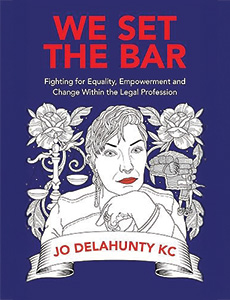
Bristol University Press (May 2026), Paperback 306 pages, ISBN 9781529221282
Thank you for your love letter, which was profound.
Although its arrival was anticipated, the complicated feelings conjured by your vulnerability, openness and integrity were not. Such candour takes a great deal of courage. Thank you for setting the Bar.
It is easy to admire the JDKC that others can see – the advocate, the leader, the fighter. The one who has earned her suffix through fearless cross-examination and the relentless pursuit of justice. The JDKC who lectures, practises and adjudicates.
But understanding the journey that led there – and the person behind the initials – adds depth and meaning to the achievements. It is those experiences, and the supporting actors, that resonate so clearly and for so many. After all, it is a rare individual who leads a life completely untouched by disadvantage, abuse, discrimination, bullying, disability/illness or the improper use of power – whether by themselves or a treasured friend or colleague. And it is the absolute duty of leaders and those in privileged positions to ensure that the voices of those who experience those obstacles are truly listened to and acted upon. Talking about the role models who shaped our stories, as you have done, enable us all to become the mentors that the next generation needs and deserves.
Your determination to empower leaders and juniors alike to become the change that we all need is forceful. Thank you for taking responsibility for the lead vocals, while giving others a platform to share their experiences and form the chorus. Your willingness to share your own difficult, painful memories is testament to your commitment to enabling those at the Bar to speak up when it is uncomfortable, and to always do what is right.
Thank you for talking about the burden, as well as the privilege of representing the most vulnerable individuals in care proceedings.
How intrusive it feels to not only read about someone else’s most personal moments, but to immersive yourself in their private conversations, raw and unfiltered feelings, and the everyday details of their being. To be drawn in, consumed, and to finally retreat hours later – taking part of their story forever into yours.
What it feels like to bear witness to someone else’s grief, pain, confusion and suffering. To predict the likely outcome of their story. To take a share in the responsibility how it ends.
Thank you for showing us what it means, and costs, to share the beautiful chaos of a whole, complex person. What it means to look a certain way, speak a certain way and think a certain way at the Bar. How we must all reflect on who we are and the values that will govern our practice. What it means to do right. And why we must all do it – after all, We Set the Bar.
Perhaps we should wonder – was this letter truly only meant for us? You see, we’ve also been swept up in this all-consuming, utterly addictive romance. We’ve already made the same life-long commitment to justice, accountability and human rights – ‘til death do us part.
And, just as you have done, we have made the same choice: that the cost, working conditions, and sacrifice, is worth the reward.
We make that choice, over and over and over – as individuals – and we join to create an unstoppable force for good. We do so, listening to the words in your love letter, and committing to make the Bar a healthier, more egalitarian place: ‘We come to the Bar to make a difference. When we do, the lengths we have gone to achieve our place fade into nothing, and we would not think twice before doing so again.’
In service, standing together, and always in unrelenting, defiant hope that we will be heard,
.jpg?sfvrsn=45ad8771_1)
Anna Yarde is a family law barrister at Harcourt. She specialises in the law relating to children, Deprivation of Liberty and Forced Marriage. Anna is a Legal 500 leading junior (2025)
Bristol University Press (May 2026), Paperback 306 pages, ISBN 9781529221282
Thank you for your love letter, which was profound.
Although its arrival was anticipated, the complicated feelings conjured by your vulnerability, openness and integrity were not. Such candour takes a great deal of courage. Thank you for setting the Bar.
It is easy to admire the JDKC that others can see – the advocate, the leader, the fighter. The one who has earned her suffix through fearless cross-examination and the relentless pursuit of justice. The JDKC who lectures, practises and adjudicates.
But understanding the journey that led there – and the person behind the initials – adds depth and meaning to the achievements. It is those experiences, and the supporting actors, that resonate so clearly and for so many. After all, it is a rare individual who leads a life completely untouched by disadvantage, abuse, discrimination, bullying, disability/illness or the improper use of power – whether by themselves or a treasured friend or colleague. And it is the absolute duty of leaders and those in privileged positions to ensure that the voices of those who experience those obstacles are truly listened to and acted upon. Talking about the role models who shaped our stories, as you have done, enable us all to become the mentors that the next generation needs and deserves.
Your determination to empower leaders and juniors alike to become the change that we all need is forceful. Thank you for taking responsibility for the lead vocals, while giving others a platform to share their experiences and form the chorus. Your willingness to share your own difficult, painful memories is testament to your commitment to enabling those at the Bar to speak up when it is uncomfortable, and to always do what is right.
Thank you for talking about the burden, as well as the privilege of representing the most vulnerable individuals in care proceedings.
How intrusive it feels to not only read about someone else’s most personal moments, but to immersive yourself in their private conversations, raw and unfiltered feelings, and the everyday details of their being. To be drawn in, consumed, and to finally retreat hours later – taking part of their story forever into yours.
What it feels like to bear witness to someone else’s grief, pain, confusion and suffering. To predict the likely outcome of their story. To take a share in the responsibility how it ends.
Thank you for showing us what it means, and costs, to share the beautiful chaos of a whole, complex person. What it means to look a certain way, speak a certain way and think a certain way at the Bar. How we must all reflect on who we are and the values that will govern our practice. What it means to do right. And why we must all do it – after all, We Set the Bar.
Perhaps we should wonder – was this letter truly only meant for us? You see, we’ve also been swept up in this all-consuming, utterly addictive romance. We’ve already made the same life-long commitment to justice, accountability and human rights – ‘til death do us part.
And, just as you have done, we have made the same choice: that the cost, working conditions, and sacrifice, is worth the reward.
We make that choice, over and over and over – as individuals – and we join to create an unstoppable force for good. We do so, listening to the words in your love letter, and committing to make the Bar a healthier, more egalitarian place: ‘We come to the Bar to make a difference. When we do, the lengths we have gone to achieve our place fade into nothing, and we would not think twice before doing so again.’
In service, standing together, and always in unrelenting, defiant hope that we will be heard,
By Jo Delahunty KC
Reviewed by Anna Yarde


The Chair of the Bar reports back
Susie Griffin on the admin that keeps barristers from billable work
Clement Cowley, Partner at The Penny Group, explains how global events can influence the performance of pensions and ISAs, and why taking a long-term approach to investing is often the most effective strategy
Mário Barroso, Head of R&D and Method Development at AlphaBiolabs, discusses what family law professionals need to know about hallucinogens, from the main hallucinogenic drugs encountered in family proceedings, to their effects and the testing options available
Harmony Christian Ministries is the latest charity to benefit from a £500 donation from AlphaBiolabs via the company’s Giving Back initiative
By David Green
At the start of her term, Chair of the Bar 2026 Kirsty Brimelow KC set out a series of priorities for the year ahead. One of those priorities was children in the justice system
As the world becomes more digital, Barbara Vinagre Mota examines international research into the mental health consequences of judges’ exposure to graphic and immersive evidence, highlighting the importance of support systems
In an era of patient-centred care and growing concern over misconduct in medical settings, why do women still lack the right to choose women consultants for examination and treatment? Charles Davey investigates
Reviewed by Daniel Barnett
James McNeill Whistler at Tate Britain until 27 September Rothko in Florence at Palazzo Strozzi until 23 August Reviewed by Stephen Cragg KC