*/
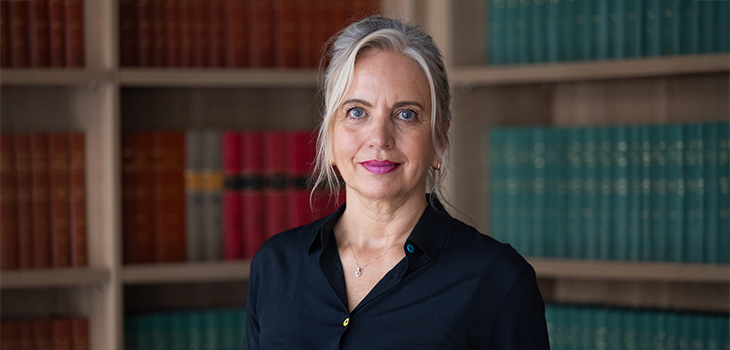
Earth Day was held on 22 April 2026, and I marked it by joining Estelle Dehon KC to launch the Cornerstone Climate Guide. It demystifies acronyms scattered around global warming and explains terms such as ‘doughnut economics’ and ‘just transition’. One change I have introduced has been the establishment of the Bar Council’s Nature and Climate Panel, replacing a previous Climate Crisis Working Group. In 2024 the UK Supreme Court in R (Finch) v Surrey CC & Ors [2024] UKSC 20 observed: ‘You can only care about what you know about.’ Pragmatically, climate literacy is required across all major practice areas.
This year the 22nd Ruth Steinkraus-Cohen Lecture of the Westminster United Nations Association, co-sponsored by the Bar Council and SOAS’s Centre for International Studies and Diplomacy, was delivered by Professor Philippa Webb KC. I gave opening remarks on the fracturing of the core assumptions of the global rules-based order. Philippa’s fascinating lecture considered regime change and international law and how the head wearing the crown currently lies particularly uneasy.
On Ukraine Law Day, I joined a Criminal Responsibility for War Crimes panel moderated by David Josse KC, Co-Vice-Chair of the International Committee, alongside Baroness Victoria Prentis KC, Andrew Cayley KC, Khrystyna Kit and Judge Oleksandra Yanovska. I focused on conflict resolution.
At Exeter University, Phil Robertson, Director of Policy, and I were welcomed to the Association of Law Teachers conference where I gave the keynote speech on freedom and social justice, in line with the Bar Council’s work supporting European colleagues. The Western Circuit also generously hosted our visit. We met with the Resident Judge of the Combined Court, HHJ Patrick, and family judge HHJ Willsteed and barristers in the robing room as they raised concerns that included the Courts and Tribunals Bill, the junior Bar, civil block listing and terrorism cases where prosecution are paid less than the defence. Thank you to Circuit junior Natasha Bellinger who accompanied us and to Magdalen Chambers for providing us with both food and thoughts. The information is utilised and helps drive change.
I have written to the Courts and Legal Services Minister in relation to the lack of implementation of the £34 million (including VAT) criminal legal aid increase, announced on 2 December 2025. I also raised this dire lack of progress at the Criminal Legal Aid Advisory Board. The Bar Council provided detail as to implementation of the increase on 14 January 2026. The assertion that the government is pulling every lever is not aligned with reality. The designated modest legal aid increase is required urgently to assist barrister retention.
The Bar Council, with the Criminal Bar Association and Circuit Leaders, sent written evidence to the Public Bill Committee (PBC). We highlighted the regions in England where delays are reducing and pointed to the manageable backlog in Wales. The line by line reading of the Bill completed on 28 April 2026. Voting on amendments follows political party lines with the built-in majority for the government, but our evidence is informing the debate. I also wrote to the PBC on the issue of judicial review of jury allocation decisions by a judge, pointing to s 29(3) of the Senior Courts Act 1981 which significantly limits judicial review. The Courts Minister now agrees that judicial review will not generally be available to challenge allocation decisions. Another safeguard falls or at the very least will generate time-consuming litigation.
The Bill will be a ‘carry over’ bill in the King’s Speech on 13 May and the legislation will continue its stages in the next session. Do keep writing to your MPs. It isn’t solely a criminal Bar issue but affects us all.
Building on our successful visit to India, we will have an even stronger presence at this year’s London International Disputes Week (1-5 June) with two panel sessions, including one on ADR and AI, and a networking event with the Arbitration Bar of India.
Turning to our future, the pupil survey contains positive news with falling of incidents of bullying and harassment but there are negative experiences for pupils with disabilities. The Bar Council recently has produced a neurodiversity guide. I also have met with the Operations Director of HMCTS and specifically raised the experience of barristers with disabilities, seen and unseen. The Bar Council remains ready to assist HMCTS’s progression of improvement of the court estate.
Finally, a personal memory and marking of the decade since the passing of John Jones QC. He was remembered in tears and laughter. He walks beside us. Look after yourselves and use the Bar Council’s wellbeing resources, including LawCare. Our door always is open.

Kirsty Brimelow KC is Chair of the Bar for 2026. She has been a criminal, public law and international human rights barrister for some 30 years, practising from Doughty Street Chambers for over half that time. Kirsty was Chair of the Criminal Bar Association (2022-23) and Chair of the Bar Human Rights Committee (2012-18). She was appointed as a silk in 2011, Deputy High Court Judge in 2021, Recorder in 2022 and is a Bencher of Gray’s Inn.
Earth Day was held on 22 April 2026, and I marked it by joining Estelle Dehon KC to launch the Cornerstone Climate Guide. It demystifies acronyms scattered around global warming and explains terms such as ‘doughnut economics’ and ‘just transition’. One change I have introduced has been the establishment of the Bar Council’s Nature and Climate Panel, replacing a previous Climate Crisis Working Group. In 2024 the UK Supreme Court in R (Finch) v Surrey CC & Ors [2024] UKSC 20 observed: ‘You can only care about what you know about.’ Pragmatically, climate literacy is required across all major practice areas.
This year the 22nd Ruth Steinkraus-Cohen Lecture of the Westminster United Nations Association, co-sponsored by the Bar Council and SOAS’s Centre for International Studies and Diplomacy, was delivered by Professor Philippa Webb KC. I gave opening remarks on the fracturing of the core assumptions of the global rules-based order. Philippa’s fascinating lecture considered regime change and international law and how the head wearing the crown currently lies particularly uneasy.
On Ukraine Law Day, I joined a Criminal Responsibility for War Crimes panel moderated by David Josse KC, Co-Vice-Chair of the International Committee, alongside Baroness Victoria Prentis KC, Andrew Cayley KC, Khrystyna Kit and Judge Oleksandra Yanovska. I focused on conflict resolution.
At Exeter University, Phil Robertson, Director of Policy, and I were welcomed to the Association of Law Teachers conference where I gave the keynote speech on freedom and social justice, in line with the Bar Council’s work supporting European colleagues. The Western Circuit also generously hosted our visit. We met with the Resident Judge of the Combined Court, HHJ Patrick, and family judge HHJ Willsteed and barristers in the robing room as they raised concerns that included the Courts and Tribunals Bill, the junior Bar, civil block listing and terrorism cases where prosecution are paid less than the defence. Thank you to Circuit junior Natasha Bellinger who accompanied us and to Magdalen Chambers for providing us with both food and thoughts. The information is utilised and helps drive change.
I have written to the Courts and Legal Services Minister in relation to the lack of implementation of the £34 million (including VAT) criminal legal aid increase, announced on 2 December 2025. I also raised this dire lack of progress at the Criminal Legal Aid Advisory Board. The Bar Council provided detail as to implementation of the increase on 14 January 2026. The assertion that the government is pulling every lever is not aligned with reality. The designated modest legal aid increase is required urgently to assist barrister retention.
The Bar Council, with the Criminal Bar Association and Circuit Leaders, sent written evidence to the Public Bill Committee (PBC). We highlighted the regions in England where delays are reducing and pointed to the manageable backlog in Wales. The line by line reading of the Bill completed on 28 April 2026. Voting on amendments follows political party lines with the built-in majority for the government, but our evidence is informing the debate. I also wrote to the PBC on the issue of judicial review of jury allocation decisions by a judge, pointing to s 29(3) of the Senior Courts Act 1981 which significantly limits judicial review. The Courts Minister now agrees that judicial review will not generally be available to challenge allocation decisions. Another safeguard falls or at the very least will generate time-consuming litigation.
The Bill will be a ‘carry over’ bill in the King’s Speech on 13 May and the legislation will continue its stages in the next session. Do keep writing to your MPs. It isn’t solely a criminal Bar issue but affects us all.
Building on our successful visit to India, we will have an even stronger presence at this year’s London International Disputes Week (1-5 June) with two panel sessions, including one on ADR and AI, and a networking event with the Arbitration Bar of India.
Turning to our future, the pupil survey contains positive news with falling of incidents of bullying and harassment but there are negative experiences for pupils with disabilities. The Bar Council recently has produced a neurodiversity guide. I also have met with the Operations Director of HMCTS and specifically raised the experience of barristers with disabilities, seen and unseen. The Bar Council remains ready to assist HMCTS’s progression of improvement of the court estate.
Finally, a personal memory and marking of the decade since the passing of John Jones QC. He was remembered in tears and laughter. He walks beside us. Look after yourselves and use the Bar Council’s wellbeing resources, including LawCare. Our door always is open.


The Chair of the Bar reports back
Susie Griffin on the admin that keeps barristers from billable work
Clement Cowley, Partner at The Penny Group, explains how global events can influence the performance of pensions and ISAs, and why taking a long-term approach to investing is often the most effective strategy
Mário Barroso, Head of R&D and Method Development at AlphaBiolabs, discusses what family law professionals need to know about hallucinogens, from the main hallucinogenic drugs encountered in family proceedings, to their effects and the testing options available
Harmony Christian Ministries is the latest charity to benefit from a £500 donation from AlphaBiolabs via the company’s Giving Back initiative
By David Green
At the start of her term, Chair of the Bar 2026 Kirsty Brimelow KC set out a series of priorities for the year ahead. One of those priorities was children in the justice system
As the world becomes more digital, Barbara Vinagre Mota examines international research into the mental health consequences of judges’ exposure to graphic and immersive evidence, highlighting the importance of support systems
In an era of patient-centred care and growing concern over misconduct in medical settings, why do women still lack the right to choose women consultants for examination and treatment? Charles Davey investigates
Reviewed by Daniel Barnett
James McNeill Whistler at Tate Britain until 27 September Rothko in Florence at Palazzo Strozzi until 23 August Reviewed by Stephen Cragg KC