*/
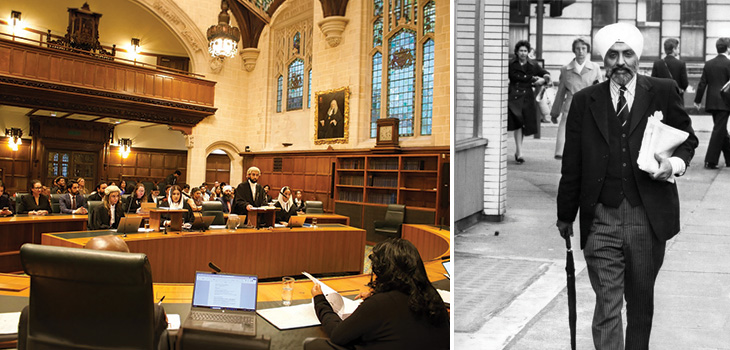
Above right: His Honour Judge Mota Singh in 1979, pictured on the day he was sworn in as a Recorder and became the UK’s first ethnic minority judge. Above left: The 2026 Sir Mota Singh Moot Final.
The Sir Mota Singh Moot has returned, offering an impressive glimpse of a more representative Bar. If this is what the future looks like, why does the present still lag so far behind? ask Baldip Singh and Prof Jo Delahunty KC
There are few rooms in which a student can feel the full weight of the profession quite like the Supreme Court of the United Kingdom. It is a place designed for finality, for decisions that settle arguments, not for those still learning how to make them. And yet, for the third consecutive year, that is precisely what has happened. The Sir Mota Singh Moot has returned, and with it, a quiet but unmistakable challenge to the Bar: if this is what the future looks like, why does the present still lag so far behind?
Let’s be clear from the outset. This is not just another student competition padded out with polite applause and networking drinks. The Sir Mota Singh Moot is a disruption, albeit a well-mannered one. It places students, many from backgrounds historically underrepresented at the Bar, into the most rarefied legal setting in the country and asks them not to observe, but to perform. It makes them visible: to each other; to the judiciary; to the profession. There are no favours given nor none asked: no lowered expectations. This is not tokenism. It is about the demonstration of advocacy deployed under pressure.
The moot is organised by Sikhs in Law, an organisation that has managed something the profession often talks about but rarely achieves: meaningful inclusivity. Its motto, ‘open to all’, is not branding, it is borne out in numbers. Only around a quarter of its members are Sikh. The rest come from across the profession, drawn not by identity, but by a shared belief that the law should look more like the society it serves. That creed is illustrated by the unity that joins the two authors of this piece. As Jo has pointed out on joint platforms with Baldip, they have more in common than differences. Both believe and act to achieve inclusivity and diversity. Both believe in reaching down the professional ladder to enable others to take the first step and then climb the rungs. Neither accept the Bar’s profile, as it is, as good enough when one looks at its gender and ethnicity. Radical? It should not be. They amplify the call for inclusivity and retention evidenced powerfully by multiple Bar Council reports.
The philosophical roots of the openness and welcome that drives Sikhs in Law lie in the teachings of Guru Nanak: equality, service, humility. They are values that sit comfortably alongside the best traditions of the Bar, though one might be forgiven for wondering how often they are actively practised. The harsh reality is, the legal profession likes the idea of fairness far more than it likes the inconvenience of achieving it.
The moot itself honours His Honour Judge Mota Singh, the first ethnic minority judge in the United Kingdom. At Southwark Crown Court, he became known not just for his legal ability, but for his decency. And that matters. The profession tends to lionise brilliance, but it is character that leaves the deeper mark. His legacy is not simply that he broke barriers, but that he showed one could succeed without losing one’s humanity or identity.
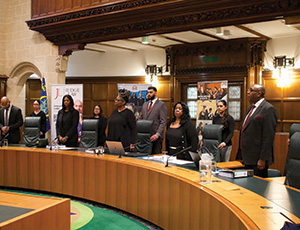
In its short life, the moot has developed a habit of making statements without shouting about them. The first year saw a bench composed of senior Sikh practitioners and silks, visible proof that progress, while slow, is real. The second year expanded the lens further: a panel of five women judges from five different faiths and backgrounds from Circuit judges to silks, reflecting a profession that is, at least in pockets, evolving. This year continued that trajectory with the inclusion of Mrs Justice Obi, only the second Black female High Court judge, sitting alongside Ben Aina KC, Jason Pitter KC, Laurie-Anne Power KC, and Deborah Bryan.
This is what representation looks like when it is done properly. Not tokenistic. Not apologetic. Just normalised excellence. And that, perhaps, is the point. It should not be remarkable. But until it stops being remarkable, it remains necessary.
The problem set for this year’s moot was clinical negligence, centred on consent, language barriers, and cultural misunderstanding. In other words, the kind of legal issue that resists tidy answers. It required competitors to grapple with questions that go beyond statute and case law: what does ‘informed consent’ really mean when understanding is imperfect? How does the law account for difference without making assumptions about it? Where does responsibility sit when communication breaks down? How often is language a barrier rather than a means of communication?
These are not hypothetical concerns. They are live issues, playing out daily in hospitals as also courtrooms across the country. The more diverse the society, the more complex these questions become. It has an impact on family law as also crime, immigration and housing. A profession that does not reflect that diversity risks missing or misunderstanding how language and culture impact on our capacity to effectively communicate, particularly when in a situation of stress.
The advocacy on display was, in a word, formidable. Composed, precise, and, at times, genuinely compelling. There was no sense of students merely ‘having a go’. These were arguments on a serious issue, delivered with confidence. Many of those delivering it came from backgrounds that the Bar has not always made space for.
That should give pause because it exposes a persistent myth: that widening access somehow dilutes quality. The opposite is true. Talent has never been the issue. Nor potential. Access and affordability has – and is.
As Talbir Singh KC observed, ‘The Sir Mota Singh Moot is a compelling illustration of leading, high-profile barristers, together with a High Court judge, giving back to the profession by fostering the growth and development of advocacy among students from a wide range of backgrounds.’ He is right. But the quote carries an implicit challenge. If this is what ‘giving back’ looks like at its best, why is it still the exception rather than the rule?
Because here is where the tone must shift, slightly sharper, slightly less comfortable.
The Chair of the Bar might fairly observe that the profession cannot afford to treat access and diversity as optional extras or matters to be revisited when time allows. If the Bar is serious about maintaining excellence, it must be equally serious about where that excellence is drawn from. That requires sustained commitment, not sporadic initiatives. Barbara Mills KC, as the first Black Chair of the Bar, made clear efforts to push that agenda forward during her tenure, and Kirsty Brimelow KC has similarly pledged in her inaugural address this year to continue that work. But the reality is that the role of Chair lasts only a year. Progress cannot be confined to a single tenure or carried by one office. It must be collective and continuous, and change must happen at very basic levels of entry- such as mini pupillages, pupillage and tenancy. That falls to chambers to deliver as a collective duty of its members and moreover each member of the Bar has an individual duty to facilitate change and inclusivity. That responsibility is not one to be shouldered by the legal aid Bar as it too often it is. It falls to the profession to ensure change happens, because a Bar that does not widen access will narrow its own future. The question is no longer whether change is needed, but whether we are prepared to do the work required to achieve it.
The Bar has a tendency to talk a good game on diversity. Panels are convened. Reports are published. Statements are issued. And yet, progress remains uneven. Look at silk appointments, judicial appointments. There are still too many rooms where diversity is discussed rather than embodied. Too many pathways that remain opaque unless you already know where to look.
And too often, there is a quiet assumption that someone else will fix it.
The reality is less flattering. The structure of the profession, self-employed, decentralised, fiercely independent, makes collective responsibility easy to avoid. It is entirely possible to have a successful career at the Bar while contributing precisely nothing to its future sustainability. No mentoring. No outreach. No effort to widen the pool. Just quiet, individual success.
That might be understandable. It should not be acceptable.
Because professions, like institutions, do not improve on goodwill alone. They improve because people inside them decide that they should. That means taking responsibility not just for one’s own career, but for the system that enables it.
Succession planning is not a corporate buzzword. It is a necessity. Who replaces us? Who follows? Who gets the same opportunities, or better ones? If the answer to those questions is left to chance, then the outcome will be predictable. And it will not be progress.
There is, of course, a degree of irony here. The Bar prides itself on independence. But independence should not mean isolation. Nor should it mean indifference. If anything, it should demand a higher level of engagement. Because if we do not take responsibility for the profession, who exactly do we expect will?
This is not about altruism. It is about self-interest, properly understood. A more diverse profession is a stronger one. It brings broader perspectives, sharper thinking, and a deeper understanding of the society the law serves. It is better equipped to deal with complexity, to anticipate problems, to deliver justice in a way that is both fair and seen to be fair.
And yes, it is also about legacy.
Because at some point, every barrister leaves the profession behind. The question is in what state. Is it more open, more accessible, more reflective of the world outside its walls? Or is it essentially unchanged, save for the addition of a few more names on the door?
It is tempting to think of legacy in personal terms, cases won, silks taken, reputations built. But those are, in the end, individual achievements. The more meaningful question is collective: did we leave the system better than we found it?
The Sir Mota Singh Moot offers one answer. It shows what is possible when effort is applied deliberately. When students are given access, they rise to it. When they see themselves reflected in the profession, they begin to believe they belong. When barriers, practical, cultural, psychological, are removed, participation follows.
And sometimes, the barriers are smaller than we care to admit: the absence of alcohol; consideration of dietary needs; creating spaces where people do not feel like outsiders; providing quiet spaces for prayer; respecting dress codes; respecting hair style decisions, respecting the proper pronunciation of names. These are not grand reforms. But they matter because inclusion is often found in easily achieved by attention to detail- consistently, with courtesy and respect.
Good humour can help too. Inclusivity is not a heavy weight to be borne like a hair shirt. The Moot proceedings ended with an impromptu a cappella rendition of Three Little Birds by Bob Marley, a surreal but oddly fitting conclusion in a building more accustomed to constitutional gravity than reggae reassurance. ‘Every little thing is gonna be alright’ is not, strictly speaking, a legal principle. But one suspects it is a sentiment many practitioners would welcome from time to time.
The next generation is not waiting without judgement at the door. They are already there, watching, assessing, deciding whether this is a profession that has space for them. The question is not whether they meet the standard. It is whether we are prepared to meet them halfway.
So here is the challenge, plainly put; if you are at the Bar, what are you doing, actually doing, to ensure that the profession is more accessible than it was when you entered it? Not in theory; not in principle, in practice.
Are you mentoring? Are you judging moots? Are you speaking to students who have never met a barrister? Are you supporting initiatives that widen access? Or are you, like too many, assuming that these things will happen without you? Because they will not. Not at the scale and with the speed required.
Being a gateway requires effort; time; intentionality; a willingness to look beyond one’s own immediate concerns.
The Sir Mota Singh Moot shows what that looks like when it is done well. It is not perfect. No initiative is. But it is purposeful. And it is working.
If this is the future of the Bar, and it should be, then the only remaining question is whether we, you, are prepared to put in the time and effort to build it.
Are you?
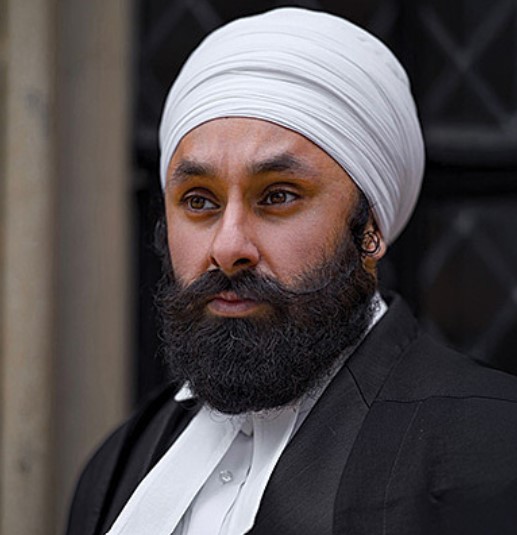
Baldip Singh is an award-winning family law barrister, a Deputy District Judge and one of the youngest ever appointed as a Master of the Bench at Inner Temple. Baldip is the founder and chair of Sikhs in Law.

Professor Jo Delahunty KC MCIArb is a barrister, family arbitrator, Recorder and Emeritus Professor of Law Gresham College. Winner of ‘Family Law KC of the Year’ in the 2025 LexisNexis Awards; winner of ‘The Lawyer You Aspire to Be’ in the 2025 Legal Style Awards; finalist for ‘DEI: Outstanding Contribution’ in the 2025 Chambers UK Bar Awards. Jo was awarded the Panth Seva Award by Sikhs in Law for her contribution to society. Jo is ranked as a Star Silk Individual by Chambers & Partners 2026, and Band 1 Leading Silk, The Legal 500 2026. She is the author of We Set The Bar and Domestic Abuse in the Family Justice System, both published this year.
There are few rooms in which a student can feel the full weight of the profession quite like the Supreme Court of the United Kingdom. It is a place designed for finality, for decisions that settle arguments, not for those still learning how to make them. And yet, for the third consecutive year, that is precisely what has happened. The Sir Mota Singh Moot has returned, and with it, a quiet but unmistakable challenge to the Bar: if this is what the future looks like, why does the present still lag so far behind?
Let’s be clear from the outset. This is not just another student competition padded out with polite applause and networking drinks. The Sir Mota Singh Moot is a disruption, albeit a well-mannered one. It places students, many from backgrounds historically underrepresented at the Bar, into the most rarefied legal setting in the country and asks them not to observe, but to perform. It makes them visible: to each other; to the judiciary; to the profession. There are no favours given nor none asked: no lowered expectations. This is not tokenism. It is about the demonstration of advocacy deployed under pressure.
The moot is organised by Sikhs in Law, an organisation that has managed something the profession often talks about but rarely achieves: meaningful inclusivity. Its motto, ‘open to all’, is not branding, it is borne out in numbers. Only around a quarter of its members are Sikh. The rest come from across the profession, drawn not by identity, but by a shared belief that the law should look more like the society it serves. That creed is illustrated by the unity that joins the two authors of this piece. As Jo has pointed out on joint platforms with Baldip, they have more in common than differences. Both believe and act to achieve inclusivity and diversity. Both believe in reaching down the professional ladder to enable others to take the first step and then climb the rungs. Neither accept the Bar’s profile, as it is, as good enough when one looks at its gender and ethnicity. Radical? It should not be. They amplify the call for inclusivity and retention evidenced powerfully by multiple Bar Council reports.
The philosophical roots of the openness and welcome that drives Sikhs in Law lie in the teachings of Guru Nanak: equality, service, humility. They are values that sit comfortably alongside the best traditions of the Bar, though one might be forgiven for wondering how often they are actively practised. The harsh reality is, the legal profession likes the idea of fairness far more than it likes the inconvenience of achieving it.
The moot itself honours His Honour Judge Mota Singh, the first ethnic minority judge in the United Kingdom. At Southwark Crown Court, he became known not just for his legal ability, but for his decency. And that matters. The profession tends to lionise brilliance, but it is character that leaves the deeper mark. His legacy is not simply that he broke barriers, but that he showed one could succeed without losing one’s humanity or identity.
In its short life, the moot has developed a habit of making statements without shouting about them. The first year saw a bench composed of senior Sikh practitioners and silks, visible proof that progress, while slow, is real. The second year expanded the lens further: a panel of five women judges from five different faiths and backgrounds from Circuit judges to silks, reflecting a profession that is, at least in pockets, evolving. This year continued that trajectory with the inclusion of Mrs Justice Obi, only the second Black female High Court judge, sitting alongside Ben Aina KC, Jason Pitter KC, Laurie-Anne Power KC, and Deborah Bryan.
This is what representation looks like when it is done properly. Not tokenistic. Not apologetic. Just normalised excellence. And that, perhaps, is the point. It should not be remarkable. But until it stops being remarkable, it remains necessary.
The problem set for this year’s moot was clinical negligence, centred on consent, language barriers, and cultural misunderstanding. In other words, the kind of legal issue that resists tidy answers. It required competitors to grapple with questions that go beyond statute and case law: what does ‘informed consent’ really mean when understanding is imperfect? How does the law account for difference without making assumptions about it? Where does responsibility sit when communication breaks down? How often is language a barrier rather than a means of communication?
These are not hypothetical concerns. They are live issues, playing out daily in hospitals as also courtrooms across the country. The more diverse the society, the more complex these questions become. It has an impact on family law as also crime, immigration and housing. A profession that does not reflect that diversity risks missing or misunderstanding how language and culture impact on our capacity to effectively communicate, particularly when in a situation of stress.
The advocacy on display was, in a word, formidable. Composed, precise, and, at times, genuinely compelling. There was no sense of students merely ‘having a go’. These were arguments on a serious issue, delivered with confidence. Many of those delivering it came from backgrounds that the Bar has not always made space for.
That should give pause because it exposes a persistent myth: that widening access somehow dilutes quality. The opposite is true. Talent has never been the issue. Nor potential. Access and affordability has – and is.
As Talbir Singh KC observed, ‘The Sir Mota Singh Moot is a compelling illustration of leading, high-profile barristers, together with a High Court judge, giving back to the profession by fostering the growth and development of advocacy among students from a wide range of backgrounds.’ He is right. But the quote carries an implicit challenge. If this is what ‘giving back’ looks like at its best, why is it still the exception rather than the rule?
Because here is where the tone must shift, slightly sharper, slightly less comfortable.
The Chair of the Bar might fairly observe that the profession cannot afford to treat access and diversity as optional extras or matters to be revisited when time allows. If the Bar is serious about maintaining excellence, it must be equally serious about where that excellence is drawn from. That requires sustained commitment, not sporadic initiatives. Barbara Mills KC, as the first Black Chair of the Bar, made clear efforts to push that agenda forward during her tenure, and Kirsty Brimelow KC has similarly pledged in her inaugural address this year to continue that work. But the reality is that the role of Chair lasts only a year. Progress cannot be confined to a single tenure or carried by one office. It must be collective and continuous, and change must happen at very basic levels of entry- such as mini pupillages, pupillage and tenancy. That falls to chambers to deliver as a collective duty of its members and moreover each member of the Bar has an individual duty to facilitate change and inclusivity. That responsibility is not one to be shouldered by the legal aid Bar as it too often it is. It falls to the profession to ensure change happens, because a Bar that does not widen access will narrow its own future. The question is no longer whether change is needed, but whether we are prepared to do the work required to achieve it.
The Bar has a tendency to talk a good game on diversity. Panels are convened. Reports are published. Statements are issued. And yet, progress remains uneven. Look at silk appointments, judicial appointments. There are still too many rooms where diversity is discussed rather than embodied. Too many pathways that remain opaque unless you already know where to look.
And too often, there is a quiet assumption that someone else will fix it.
The reality is less flattering. The structure of the profession, self-employed, decentralised, fiercely independent, makes collective responsibility easy to avoid. It is entirely possible to have a successful career at the Bar while contributing precisely nothing to its future sustainability. No mentoring. No outreach. No effort to widen the pool. Just quiet, individual success.
That might be understandable. It should not be acceptable.
Because professions, like institutions, do not improve on goodwill alone. They improve because people inside them decide that they should. That means taking responsibility not just for one’s own career, but for the system that enables it.
Succession planning is not a corporate buzzword. It is a necessity. Who replaces us? Who follows? Who gets the same opportunities, or better ones? If the answer to those questions is left to chance, then the outcome will be predictable. And it will not be progress.
There is, of course, a degree of irony here. The Bar prides itself on independence. But independence should not mean isolation. Nor should it mean indifference. If anything, it should demand a higher level of engagement. Because if we do not take responsibility for the profession, who exactly do we expect will?
This is not about altruism. It is about self-interest, properly understood. A more diverse profession is a stronger one. It brings broader perspectives, sharper thinking, and a deeper understanding of the society the law serves. It is better equipped to deal with complexity, to anticipate problems, to deliver justice in a way that is both fair and seen to be fair.
And yes, it is also about legacy.
Because at some point, every barrister leaves the profession behind. The question is in what state. Is it more open, more accessible, more reflective of the world outside its walls? Or is it essentially unchanged, save for the addition of a few more names on the door?
It is tempting to think of legacy in personal terms, cases won, silks taken, reputations built. But those are, in the end, individual achievements. The more meaningful question is collective: did we leave the system better than we found it?
The Sir Mota Singh Moot offers one answer. It shows what is possible when effort is applied deliberately. When students are given access, they rise to it. When they see themselves reflected in the profession, they begin to believe they belong. When barriers, practical, cultural, psychological, are removed, participation follows.
And sometimes, the barriers are smaller than we care to admit: the absence of alcohol; consideration of dietary needs; creating spaces where people do not feel like outsiders; providing quiet spaces for prayer; respecting dress codes; respecting hair style decisions, respecting the proper pronunciation of names. These are not grand reforms. But they matter because inclusion is often found in easily achieved by attention to detail- consistently, with courtesy and respect.
Good humour can help too. Inclusivity is not a heavy weight to be borne like a hair shirt. The Moot proceedings ended with an impromptu a cappella rendition of Three Little Birds by Bob Marley, a surreal but oddly fitting conclusion in a building more accustomed to constitutional gravity than reggae reassurance. ‘Every little thing is gonna be alright’ is not, strictly speaking, a legal principle. But one suspects it is a sentiment many practitioners would welcome from time to time.
The next generation is not waiting without judgement at the door. They are already there, watching, assessing, deciding whether this is a profession that has space for them. The question is not whether they meet the standard. It is whether we are prepared to meet them halfway.
So here is the challenge, plainly put; if you are at the Bar, what are you doing, actually doing, to ensure that the profession is more accessible than it was when you entered it? Not in theory; not in principle, in practice.
Are you mentoring? Are you judging moots? Are you speaking to students who have never met a barrister? Are you supporting initiatives that widen access? Or are you, like too many, assuming that these things will happen without you? Because they will not. Not at the scale and with the speed required.
Being a gateway requires effort; time; intentionality; a willingness to look beyond one’s own immediate concerns.
The Sir Mota Singh Moot shows what that looks like when it is done well. It is not perfect. No initiative is. But it is purposeful. And it is working.
If this is the future of the Bar, and it should be, then the only remaining question is whether we, you, are prepared to put in the time and effort to build it.
Are you?
The Sir Mota Singh Moot has returned, offering an impressive glimpse of a more representative Bar. If this is what the future looks like, why does the present still lag so far behind? ask Baldip Singh and Prof Jo Delahunty KC

The Chair of the Bar reports back
By Kem Kemal, CEO, Henry Dannell
By BSK Financial Planning
Mário Barroso, Head of R&D and Method Development at AlphaBiolabs
Susie Griffin on the admin that keeps barristers from billable work
Clement Cowley, Partner at The Penny Group, explains how global events can influence the performance of pensions and ISAs, and why taking a long-term approach to investing is often the most effective strategy

Kick off your career at the Bar Council’s Pupillage Fair this October – it’s one of the most valuable opportunities for aspiring barristers, says Amelia Clegg
Join us on Saturday 21 November 2026 at Leeds Beckett University and see for yourself why the North continues to be an exceptional place to build a career at the Bar
The golden age of advocacy? David Langwallner pays homage to the filmic if contentious barrister Sir Edward Carson and some of his contemporaries
Henry Fingerhut outlines what the Bar Standards Board AI guidance means for early career barristers
Not yet, says Jacob Turner. Regulation, unlike the technology itself, is a domain the legal profession can still control