*/
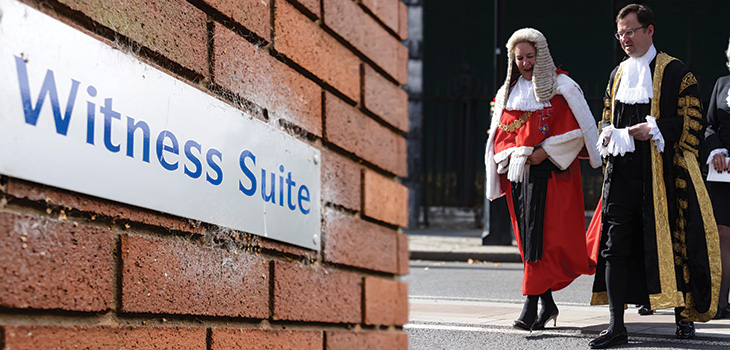
Charlotte Bull, on the professional frontline of the cases the government seeks to prioritise, gives her perspective on the new courts and upgrades to the complainant experience. Can they deliver the real action promised?
On 21 September 2026 the government announced the creation of specialist rape courts in England and Wales to be rolled out over the next two years, alongside measures to improve rape complainants’ experiences of the criminal justice system.
In the last 12 months alone, I have prosecuted 16 rape and serious sexual offences (RASSO) trials. I expect to prosecute six more before the end of 2026. I also hold defence briefs in RASSO cases. My diary is substantially blocked out with RASSO trials stretching into 2031. I am on the professional frontline of the cases the government seeks to prioritise.
Announcing the plans, Lord Chancellor Alex Norris MP promised: ‘Real action to improve our courts. Real action for victims. Real action to deliver the justice they deserve.’
Lofty ambitions, noble rhetoric and, few would disagree, sorely needed. In my view, however, the proposals cut neither far nor deep enough.
The centrepiece of the announcement is that every Crown Court will have a specialist courtroom dealing exclusively with RASSO trials.
Unfortunately, labelling a court as specialist, does not a specialist court make. In the robing room on any given Monday morning at least a third of listed trials will be RASSO, sometimes as many as two thirds. By Tuesday, a subsequent canvassing of the robing room will demonstrate that often the only effective trials that have found court space are sex cases. RASSO trials already dominate listings at every Crown Court I attend. In London the vast majority of full-time judges hold a sex-ticket (allowing them to preside over RASSO trials) and many part-time judges (Recorders) are similarly trained. The idea that one dedicated court per Crown Court will make any difference betrays a fundamental misunderstanding of current listing practices and overall pressures on the system.
Between 2021 and 2023 Operation Soteria launched through selected police forces and the Crown Prosecution Service (CPS) areas. A national rollout followed. It transformed how RASSO cases are investigated and charged. Quite properly it shifted investigations away from scrutinising the complainant’s credibility and behaviour towards a suspect-centric approach. No longer were cases cherry-picked around the ‘perfect’ or most easily presentable complainant. The move was bold, necessary and long overdue. However, it also led to cases previously unlikely to be charged going to court. CPS adult rape charges increased by 303.9% against the 2021 baseline. Not only did volume increase, but complexity too. Cases needed more supporting evidence for a realistic prospect of conviction and disclosure became ever more labyrinthine. Successful court reform must consider the genesis of cases. Yet CPS and police resources have not matched the increased caseload. Unless this changes, complainants will continue to face postponed trials due to disclosure delays, or acquittals because of inadequate evidence collection, regardless of whether the trial is heard in a specialist rape court.
In the past year I have watched trials pushed back by two years because of issues completing the disclosure process. Recently, in one of my cases police could not complete disclosure of relevant social services records (such material requires an appointment with social services for ‘viewing’ and those appointments can take upwards of three months to arrange). I have also listened to many defence closing speeches making much of the fact that the Crown has failed to collect an available body of evidence that could have corroborated the complainant’s account. My experience is that the failure to collect supporting evidence is rarely, if ever, because of incompetence. Rather it is the inevitable result of specialist RASSO officers and CPS lawyers being vastly over-stretched and under-staffed. I see nothing in the government proposals that will address these issues.
There is also the chronic shortage of barristers willing to prosecute RASSO trials, which will thwart plans for specialist courts, however many are established. The CPS RASSO panel now accepts applicants year-round, unlike other specialist panels with annual application windows. Around 770 advocates are currently authorised to prosecute RASSO trials nationwide, against more than 5,000 cases charged annually and a backlog of over 15,000 RASSO cases awaiting trial. Plainly the numbers do not stack up. RASSO trials are unattractive to many criminal practitioners. They are demanding in subject matter, emotional intensity and, increasingly, factual complexity. Many at the Bar understandably feel the financial reward does not justify the effort.
Those outside the criminal justice system may be surprised to learn that witness services areas, where witnesses are looked after before giving evidence, are staffed almost exclusively by volunteers. Repeatedly over the last year I have been confronted with services that are not operational due to volunteer shortages. I have conducted mandatory pre-evidence meetings with rape complainants in stairwells or sitting on (broken) radiators in drafty corridors. I am often observed by suspicious security staff who tell me they are not authorised to open the many vacant nearby rooms that would be eminently more suitable for a highly sensitive conversation. Therefore, I remain sceptical of the government proposals that promise private waiting rooms and entrances for victims and enhanced facilities. These facilities, theoretically, exist already across the court estate but what the proposals appear to lack is for any meaningful budget to ensure they are appropriately staffed and well-run.
I also have serious concerns about well-meaning but ill-thought-out proposals allowing complainants to watch the defendant’s trial after giving evidence and attend sentence, both by live link. Much evidence in rape trials is shielded from the complainant. I have presented evidence so graphic and violent that jurors have left court to be physically sick. This includes CCTV of an unconscious woman being violently raped and medical drawings of ano-genital injuries showing lacerations, abrasions and the precise location of soil deposits. I fear court support will fall far short of what is needed for complainants to watch this evidence remotely. Allowing someone to relive the most traumatic experience of their life demands more than a screen and sympathetic court usher.
The proposals state that all court staff will be given trauma-informed training to better support complainants at court. I cannot envisage any training that would be sufficient to navigate the deep-rooted and diverse trauma responses of complainants. I recently took part in a sentencing exercise, following a rare guilty plea, where the complainant opted to read a Victim Personal Statement to the court, detailing the impact of the offence upon her. At her request she then remained in court to listen to the opening of the case and defence mitigation. At the end of the hearing the complainant stated that she was actively suicidal as a result of what she had heard. Myself, the police officer and court usher sat with her while she hyperventilated. It was not our job to do so but, of course, there was no one else.
That is the uncomfortable truth missing from the government’s announcement. We do not lack impressive promises, worthy ambitions or grandly titled initiatives. We lack the people, resources and infrastructure to make them work. RASSO prosecutions need properly funded investigations, adequately staffed prosecution teams, fairly remunerated advocates and specialist psychological support for those navigating the process. Without those foundations, the latest reforms will become just another failed opportunity for real action.
Money pledged
The Government Response to the Independent Review of the Criminal Courts, published on 12 October 2026, promised welcome and much-needed investment across the criminal justice system, including: unlimited Crown Court sitting days; up to £34 million more a year for criminal legal aid advocates alongside £116 million for criminal legal aid solicitors; £287 million in the court estate (vital repairs and digital system upgrades); £23 million to deliver specialist rape courts (over two years); £550 million invested in victims support services (over three years); and an additional £96 million for the Crown Prosecution Service (over three years).

Charlotte Bull is a criminal barrister at Church Court Chambers, prosecuting and defending across the full spectrum of criminal cases. Charlotte is appointed to the CPS Advocate Panel at Grade 3 for both General Crime and RASSO, and was previously a Senior Crown Prosecutor and Acting District Crown Prosecutor at the CPS.
On 21 September 2026 the government announced the creation of specialist rape courts in England and Wales to be rolled out over the next two years, alongside measures to improve rape complainants’ experiences of the criminal justice system.
In the last 12 months alone, I have prosecuted 16 rape and serious sexual offences (RASSO) trials. I expect to prosecute six more before the end of 2026. I also hold defence briefs in RASSO cases. My diary is substantially blocked out with RASSO trials stretching into 2031. I am on the professional frontline of the cases the government seeks to prioritise.
Announcing the plans, Lord Chancellor Alex Norris MP promised: ‘Real action to improve our courts. Real action for victims. Real action to deliver the justice they deserve.’
Lofty ambitions, noble rhetoric and, few would disagree, sorely needed. In my view, however, the proposals cut neither far nor deep enough.
The centrepiece of the announcement is that every Crown Court will have a specialist courtroom dealing exclusively with RASSO trials.
Unfortunately, labelling a court as specialist, does not a specialist court make. In the robing room on any given Monday morning at least a third of listed trials will be RASSO, sometimes as many as two thirds. By Tuesday, a subsequent canvassing of the robing room will demonstrate that often the only effective trials that have found court space are sex cases. RASSO trials already dominate listings at every Crown Court I attend. In London the vast majority of full-time judges hold a sex-ticket (allowing them to preside over RASSO trials) and many part-time judges (Recorders) are similarly trained. The idea that one dedicated court per Crown Court will make any difference betrays a fundamental misunderstanding of current listing practices and overall pressures on the system.
Between 2021 and 2023 Operation Soteria launched through selected police forces and the Crown Prosecution Service (CPS) areas. A national rollout followed. It transformed how RASSO cases are investigated and charged. Quite properly it shifted investigations away from scrutinising the complainant’s credibility and behaviour towards a suspect-centric approach. No longer were cases cherry-picked around the ‘perfect’ or most easily presentable complainant. The move was bold, necessary and long overdue. However, it also led to cases previously unlikely to be charged going to court. CPS adult rape charges increased by 303.9% against the 2021 baseline. Not only did volume increase, but complexity too. Cases needed more supporting evidence for a realistic prospect of conviction and disclosure became ever more labyrinthine. Successful court reform must consider the genesis of cases. Yet CPS and police resources have not matched the increased caseload. Unless this changes, complainants will continue to face postponed trials due to disclosure delays, or acquittals because of inadequate evidence collection, regardless of whether the trial is heard in a specialist rape court.
In the past year I have watched trials pushed back by two years because of issues completing the disclosure process. Recently, in one of my cases police could not complete disclosure of relevant social services records (such material requires an appointment with social services for ‘viewing’ and those appointments can take upwards of three months to arrange). I have also listened to many defence closing speeches making much of the fact that the Crown has failed to collect an available body of evidence that could have corroborated the complainant’s account. My experience is that the failure to collect supporting evidence is rarely, if ever, because of incompetence. Rather it is the inevitable result of specialist RASSO officers and CPS lawyers being vastly over-stretched and under-staffed. I see nothing in the government proposals that will address these issues.
There is also the chronic shortage of barristers willing to prosecute RASSO trials, which will thwart plans for specialist courts, however many are established. The CPS RASSO panel now accepts applicants year-round, unlike other specialist panels with annual application windows. Around 770 advocates are currently authorised to prosecute RASSO trials nationwide, against more than 5,000 cases charged annually and a backlog of over 15,000 RASSO cases awaiting trial. Plainly the numbers do not stack up. RASSO trials are unattractive to many criminal practitioners. They are demanding in subject matter, emotional intensity and, increasingly, factual complexity. Many at the Bar understandably feel the financial reward does not justify the effort.
Those outside the criminal justice system may be surprised to learn that witness services areas, where witnesses are looked after before giving evidence, are staffed almost exclusively by volunteers. Repeatedly over the last year I have been confronted with services that are not operational due to volunteer shortages. I have conducted mandatory pre-evidence meetings with rape complainants in stairwells or sitting on (broken) radiators in drafty corridors. I am often observed by suspicious security staff who tell me they are not authorised to open the many vacant nearby rooms that would be eminently more suitable for a highly sensitive conversation. Therefore, I remain sceptical of the government proposals that promise private waiting rooms and entrances for victims and enhanced facilities. These facilities, theoretically, exist already across the court estate but what the proposals appear to lack is for any meaningful budget to ensure they are appropriately staffed and well-run.
I also have serious concerns about well-meaning but ill-thought-out proposals allowing complainants to watch the defendant’s trial after giving evidence and attend sentence, both by live link. Much evidence in rape trials is shielded from the complainant. I have presented evidence so graphic and violent that jurors have left court to be physically sick. This includes CCTV of an unconscious woman being violently raped and medical drawings of ano-genital injuries showing lacerations, abrasions and the precise location of soil deposits. I fear court support will fall far short of what is needed for complainants to watch this evidence remotely. Allowing someone to relive the most traumatic experience of their life demands more than a screen and sympathetic court usher.
The proposals state that all court staff will be given trauma-informed training to better support complainants at court. I cannot envisage any training that would be sufficient to navigate the deep-rooted and diverse trauma responses of complainants. I recently took part in a sentencing exercise, following a rare guilty plea, where the complainant opted to read a Victim Personal Statement to the court, detailing the impact of the offence upon her. At her request she then remained in court to listen to the opening of the case and defence mitigation. At the end of the hearing the complainant stated that she was actively suicidal as a result of what she had heard. Myself, the police officer and court usher sat with her while she hyperventilated. It was not our job to do so but, of course, there was no one else.
That is the uncomfortable truth missing from the government’s announcement. We do not lack impressive promises, worthy ambitions or grandly titled initiatives. We lack the people, resources and infrastructure to make them work. RASSO prosecutions need properly funded investigations, adequately staffed prosecution teams, fairly remunerated advocates and specialist psychological support for those navigating the process. Without those foundations, the latest reforms will become just another failed opportunity for real action.
Money pledged
The Government Response to the Independent Review of the Criminal Courts, published on 12 October 2026, promised welcome and much-needed investment across the criminal justice system, including: unlimited Crown Court sitting days; up to £34 million more a year for criminal legal aid advocates alongside £116 million for criminal legal aid solicitors; £287 million in the court estate (vital repairs and digital system upgrades); £23 million to deliver specialist rape courts (over two years); £550 million invested in victims support services (over three years); and an additional £96 million for the Crown Prosecution Service (over three years).
Charlotte Bull, on the professional frontline of the cases the government seeks to prioritise, gives her perspective on the new courts and upgrades to the complainant experience. Can they deliver the real action promised?

The Chair of the Bar reports back
Conner Wright, Legal Case Manager at AlphaBiolabs, answers the most frequently asked questions about SCRAM Continuous Alcohol Monitoring (SCRAM CAM®) posed by family law professionals
Ryan Prins of Philips SpeechLive explains how barristers can boost drafting efficiency with AI-assisted speech recognition – while keeping full oversight
Finding available counsel shouldn’t be complicated, says Kaan Kartal of Brieflink
By Kem Kemal, CEO, Henry Dannell
By BSK Financial Planning

For barristers, managing anxiety is a professional discipline as much as a personal one, says Annette Henry KC. This article examines the cues, clues and practical techniques for avoiding overwhelm and regaining calm
If you’ve never been to the Bar Conference before, this is the year to start. Amelia Clegg previews the profession’s flagship event
After a two-year investigation, Karim Khan KC was removed as ICC Chief Prosecutor in July. With the United States threatening to dismantle the court ‘brick by brick’, what’s next for the beleaguered ICC? asks Chris Stephen
Kick off your career at the Bar Council’s Pupillage Fair this October – it’s one of the most valuable opportunities for aspiring barristers, says Amelia Clegg
Join us on Saturday 21 November 2026 at Leeds Beckett University and see for yourself why the North continues to be an exceptional place to build a career at the Bar