*/

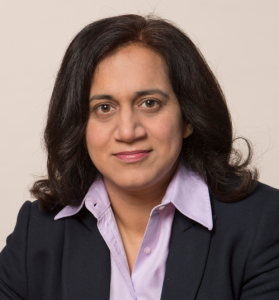
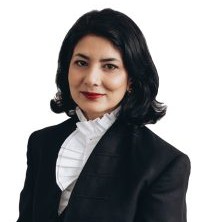
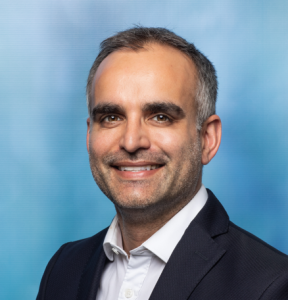
Clockwise from top left: Sadiya Choudhury KC, Anna Laney KC, Craig Rajgopaul KC and Saba Naqshbandi KC
Inspiring advocates to see that the accolade of KC is for ‘people like me’, KCA shares a selection of profiles of successful silks

Crown Prosecution Service
Appointed to silk in early 2024, Bill Baker is employed by the CPS as a Principal Crown Advocate in the Serious Economic Organised Crime and International Directorate (SEOCID) co-located with the National Crime Agency (NCA) in the North of England. In effect he has been standing counsel to the NCA for the last 14 years. At the end of his existing trial commitments, he will return to the self-employed Bar in Manchester.
Bill’s maternal grandfather was a miner, and both his parents attended Grammar Schools. His mother was a social worker specialising in severe learning disabilities and his father left school at 16 and became an accountant.
Bill studied law and (at his father’s prompting) accountancy at Lancaster University. He had a common law pupillage in Manchester then chose to specialise in crime as the cases involved important points in peoples’ lives. He spent 19 years at the self-employed Bar prosecuting and defending serious crime including murder, manslaughter, rape, fraud and multi-handed drug cases. In 2010 the then DPP Sir Keir Starmer and then Head of London CPS Alison Saunders recruited Bill to lead in the most difficult organised crime cases that had international and sensitive elements. He was one of a small number of experienced counsel recruited from the Bar at that time to work in house to ensure that problems that had led to large cases collapsing in the past were picked up and resolved by spreading good practice and excellence in casework.
The move to the CPS initially enabled Bill to enjoy a better work life balance with his young family when he was not part heard in a trial or working to a deadline, but over the years the demands of the job became increasingly heavy.
In 2020 Bill became part of a team of four counsel in the largest ever NCA prosecution of a large number of defendants across a number of trials (which was ongoing at the time of the interview for this profile). The support of the other counsel in the team enabled Bill to find the time to complete the application for the KC Competition. In the three years before the application Bill only worked on this one case, so he sought and was given permission by the KC Appointments Panel to go back further than three years for twelve cases. All Bill’s cases had typed openings and submissions, so his assessors were able to refresh their memories of the cases, and the work Bill had done. Before deciding to submit his application Bill went through each of these twelve cases to check they could provide sufficient evidence of the competencies. He was mentored by Heidi Stonecliffe KC, which allowed him to understand what was required to make a successful application. Where Bill’s cases involved sensitive matters, he could not rely on the specific facts of those matters but was able to explain the applicable law and procedure, which the Panel understood and accepted.
Bill’s interview was arranged for an afternoon in Manchester. He was due to be in court in Manchester that morning, but another member of the prosecution team volunteered to present the evidence to allow Bill to prepare for the interview and importantly be fresh for it. As the interview guidance suggested, Bill prepared examples of the competencies not given in his application, which he took into the interview as an aide memoir, although he only needed to refer to them for the full reference of a reported Cout of Appeal case he prosecuted. Bill was nervous when the interview began, but the Panel interviewers picked this up and immediately put him at his ease. They told him the competency they were going to ask about and asked clear fair questions, which led to the interview being an enjoyable experience.
As Bill’s job is to lead large multidisciplinary teams, he views his appointment as King’s Counsel as a recognition of the excellence of the work of all the people in those teams, which include CPS lawyers, Caseworkers and Managers and Officers and analysts in the National Crime Agency, Regional Organised Crime Unit and Lancashire Constabulary Force Major Investigations Team.
Pump Court Tax Chambers, London
Sadiya Choudhury KC, who was appointed to silk in 2024, is the daughter of immigrant parents: Sadiya’s father – who came to this country with just £3 in his pocket at the age of 21 – went on to become the first person of Pakistani heritage to qualify as a chartered accountant in Bradford. When Sadiya was 10 years old, the family moved back to Pakistan, where Sadiya continued her education, first taking the equivalent of GCSEs at a secondary school which no longer exists before attending the highly prestigious Kinnaird College in Lahore, Punjab, the oldest women’s college in the subcontinent. There, she took the equivalent of A-levels followed by a BSc in Pure Sciences (First Class) – an intense two-year course covering Maths, Physics and Chemistry. There was, like for many of her peers at both school and college, a strong expectation that she would go on to qualify as a doctor or, perhaps, study for an MBA. Sadiya, however, liked the idea of working in the legal profession. She considers that her science education formed a great basis for studying the law, especially tax law, as the two disciplines have much in common in terms of the problem-solving and analytical skills involved.
The family moved back to the UK after ten years in Lahore, and Sadiya studied law at St Edmund Hall, Oxford from where she eventually graduated with a First. There was some pressure on her to apply to be a solicitor in one of the City law firms, but Sadiya had firmly set her sights on a career at the Bar, as she liked attending court and being a specialist advocate sounded more interesting to her than being a solicitor. However, she needed to be very determined in her career goal as there were some people who – rather shockingly even 20 years ago – suggested that the Bar was ‘not for people like you’, implying, presumably, as a woman of Pakistani heritage. Sadiya was cautioned, perhaps more reasonably, that a career at the Bar was much riskier than the security offered as an employee of a big City law firm, as a self-employed barrister was dependent on getting clients’ instructions. Sadiya was not to be thwarted and was determined to pursue a career at the Bar.
She took the one-year Bar Vocational Course at the Inns of Court School of Law, London with the assistance of a Denning scholarship from Lincoln’s Inn and did mini pupillages in various practice areas. Sadiya soon decided that crime (‘too fact-based’) and family (‘not cut out for it’) were not for her. However, having done a mini pupillage in a Chancery set, Sadiya knew that she had found her vocation. She relished the complexity and analytical side of the field. Having been called to the Bar in 2002, Sadiya did her first six pupillage in a chambers based in Lincoln’s Inn which specialised in chancery practice. She became a member of Pump Court Tax Chambers – where she remains to this day – following completion of her second six pupillage in 2003. She did not need much encouragement to follow the suggestion that she should specialise in tax. Her chartered accountant father was, not unexpectedly, extremely happy with her choice! (Even if for the past several years he has been rather baffled as to why she takes cases for HMRC which has involved explaining the cab-rank rule to him.) The UK has the longest tax legislation code in the world and, naturally, undergoes change every year at each Budget, keeping Sadiya on her toes as you have to rapidly learn the new rules. It is, she says, a fascinating area of law with a wide span of interest covering such diverse areas as contract, divorce, insolvency and property to name but a few. It is, she emphasises, ‘not about numbers’ and she is keen that those coming into the profession are not put-off by such a misconception. To that end, Sadiya has been proactive in encouraging more women into the tax Bar, participating in a seminar organised by the Revenue Bar Association on women in tax to help dispel some of the myths about the speciality. Sadiya says that the speciality entails legal research and problem solving. Contrary to another misconception that tax barristers never go to court, it provides ample opportunities for advocacy (Sadiya has appeared in court about every three weeks for the past four years including remote hearings during lockdown). On the other hand, if you were someone who was less keen on oral advocacy, there was plenty of scope to focus on advisory work. Sadiya adds that ‘you never get bored’. She is extremely grateful that she never heeded those who questioned ‘is tax really the specialism for you?’
Sadiya soon became an in-demand tax expert, combining a broad advisory and litigation practice, and receiving instructions across all areas of direct and indirect tax law. Before taking silk, Sadiya was a member of the Attorney General’s A Panel of Civil Counsel, having previously been a member of the B and C Panels. She regularly appeared on behalf of HMRC, the National Crime Agency and other government departments.
Silk was never particularly in Sadiya’s sights, even as a highly successful and in-demand senior-junior. Sadiya says that this was linked to the thought that maybe silk was ‘not for people like me – as a brown single mum.’ As she points out, of the 95 barristers appointed in 2024, 58 practise in civil law. Out of those 58, 14 are female and 4 are Asian/Asian British – and she is the only one who is both. (Sadiya shared these statistics in a post on LinkedIn and got well over 600,000 views!) However, in considering applying for silk, Sadiya received extremely strong encouragement from her chambers, particularly from her new Senior Clerk who emphasised her credentials, not least her elevation through the ranks of the various Attorney-General Panels, ultimately to the A Panel. At the end of 2022, she promised ‘to stop laughing and to think seriously’ about applying for silk. To that end, Sadiya studied the KC Application Form and Guidance and started to think carefully about her cases over the past three years and about whether they could provide the necessary evidence of excellence across all the competencies. It was not an easy thing for her to approach other barristers (many already in silk) and the judges to see whether they would be content for her to list them as a potential assessor. But having taken her courage in both hands and done so, Sadiya said she found that all of those she approached said that they would be very happy to be named as a potential assessor. Sadiya emphasises that without her Senior Clerk ‘seeing through her various excuses’, she would never have applied for silk.
The competition is famously – and not unexpectedly – tough. As to advice to those considering applying for silk, Sadiya says it was vital not to underestimate the time an applicant would need to set aside for the application process. Identifying the 12 cases of substance takes time and a great deal of care to determine precisely which competency or competencies it will permit you – and particularly your assessors – to talk to at the high level of excellence required of the competition. A colleague helpfully recommended printing out the competency framework and to check the relevant section of the form against it to make sure all the competencies were covered. She ‘wrote and re-wrote’ her application form until she was completely satisfied with it and asked a colleague to proof-read it before she sent it off. Another challenge which Sadiya considers applicants should be aware of was, was how alien it felt to use the ‘I’ word. Sadiya says that she found it especially difficult to talk about herself. Barristers were used to advocating for their clients, not for themselves. But it was vital to overcome any in-built reticence to do so.
Having submitted her application form, Sadiya did her best to put the competition out of her mind. Then, later in the year, she was delighted to learn that she was to be invited to interview. Sadiya prepared for the interview by re-reading her application form several times and – because her most recent interview had been for pupillage back in 2001 – she obtained some assistance with competency-based interviewing. The advice of her brother, who is a management consultant, was to have extremely good and specific examples of how she had achieved a level of excellence on every relevant aspect of each competency which she would be able to refer to during the interview. As a student, she always had a banana before an important exam, in the same way sportsmen and women do before important fixtures, so she had one before the interview and went in feeling prepared. Having had the interview, Sadiya says that she decided ‘not to second-guess myself’ as to whether her answers were the ones the interviewers were looking for. The rest now was out of her hands and for the KC Selection Panel to make its mind up, an attitude of que sera sera which helped her get on with her life and work during the long months waiting for the results. She also kept in mind that it was her first attempt and if she was to be unsuccessful this time, she could consider applying again.
The announcement was delayed from an expected December date until mid-January, so it was a long wait to learn that she had been successful in the competition. Sadiya was nevertheless pleased to hear that KC Appointments had at last persuaded the Ministry of Justice to agree to a fixed announcement date in January in future. Following the announcement, Sadiya was overwhelmed by the outpouring of congratulations from family, friends and across the profession, including from people she did not know that well or at all, many delighted to see another woman join the ranks of silks (there have only been some 600 to date).
The KC Ceremony was wonderful, says Sadiya. She was surrounded by family, friends and colleagues and, of course, her daughter – in fact by the people who had been so important in giving her ‘fabulous support’ in her life and work over many years as an incredibly busy barrister and single mother, particularly her brother and sister-in-law and her Chambers’ colleagues. The day included some solemnity and much history, including at the various court ceremonies where the newly appointed silks got to bow to their peers, to the junior bench and to the senior judges in ceremonies before the Lady Chief Justice and other senior judges, as well as one before the judges of the Chancery Division. It was quite a remarkable, if daunting, experience, not least in getting the sequence of bows in the right order with all the new silks anxiously asking each other what to do before it was their turn!

Crown Office Chambers, London
Anna Laney KC is a construction specialist whose practice focuses on international arbitrations. She is a tenant at Crown Office Chambers in the Temple. She comes from ‘a proper working-class background’ and, with her brothers, was the first generation in her family to go to university. There were no connections with the legal profession, and it remained a mystery to Anna – and her family – that, at 8, she declared she wanted to be a barrister when she grew up, and she never wavered from that ambition. It wasn’t the only job outside the law that Anna had: her father – a plasterer – insisted on equal opportunities such that she spent her time working with him on building sites as her brothers had done beforehand. This experience stood Anna in good stead as a construction specialist – with her knowledge of practicality taking precedence over the law on numerous occasions!
Anna was educated in the state system until the age of 16 when she was awarded a scholarship to Charterhouse School, after which she read Law at Manchester University. Whilst she would have preferred to have studied a different subject at university (geography, perhaps) before embarking on her legal career that would have meant doing an additional year’s law conversion course after graduation, which she could not afford. To assist with the costs of Bar School, Anna was able to utilise her parents’ professions to secure grants from two City of London worshipful companies, respectfully The Worshipful Company Haberdashers (her mum was an upholsterer – among other trades) and The Plaisterers. Anna said that more young people from similar skilled trade family backgrounds should seek out such sources of financial support. When the Clerk to The Worshipful Company of Plaisterers heard of Anna’s appointment to silk, he sent congratulations and invited her to the April Banquet as a guest of honour. Given the area of law in which she practices, Anna felt this was a fitting ‘full circle’ moment to mark her appointment as silk.
The choice of construction law was obvious for Anna given her background – and it was fortunate that her offer of pupillage was with a construction specialist set of chambers. When she was not offered a tenancy, she spent time ‘squatting’ in the legal department of a multinational contractor whilst she found a third six: this taught her the realities of working in construction law from the sharp end rather than seeing it from the heady heights of an ivory tower. Anna says that sitting behind counsel in court and being part of solicitors’ post-court critique of both the barristers’ performance and their approach to solicitors was, without doubt, the most useful lesson she learned – and one she would otherwise have missed. She says that her mantra remains ‘everything happens for a reason’ – and that applies equally to the route to taking silk.
As a construction specialist, Anna deals with traditional employers’ and contractors’ contractual claims and the insurance and professional negligence disputes that often arise. The claims are highly technical both as to the law and the underlying factual matrix, and she loves grappling with each new discipline of expert evidence, continuing to deepen her knowledge of the more commonplace, and exploring the technical angles, whether they stem from design, workmanship or management issues. As a result, she is used to working with large teams of people from diverse backgrounds, which allowed her to address a number of the competency requirements. However, the nature of her practice is such that much of her advocacy is conducted within international and domestic arbitrations rather than purely before the High Court, and she also represents clients in alternative dispute resolution forums such as mediation and adjudication. Her focus on arbitration work was a significant challenge when applying for King’s Counsel; the guidance for applicants emphasises the need for some evidence of excellence in oral advocacy, ideally in contested settings (and also, in the case of arbitrations that they are conducted under England and Wales law or other common law jurisdictions). Anna’s advice to others in similar situations is to find the hook that allows you to demonstrate the equivalent challenges that arise in both forums (courts and arbitrations): for example, arguing a legal point before three arbitrators can be as challenging as presenting an argument to the Court of Appeal – as many members of the senior judiciary – across the world – spend their retirement years sitting as arbitrators.
Anna’s key advice to those going through the KC selection process is, ’don’t lose sight of who you are and be honest’. That may sound trite, but the application is stress-tested through the referee process, with references taken from judges, counsel and clients. Make sure to try and speak to those that you are putting down as referees to ensure that their perception of the case you are listing aligns with yours. Also, think about the cases you are putting down – are they ‘worthy’ of an application for silk by virtue of their substance and complexity? Anna did not have 12 such cases in the relevant three-year period. Given the size and length of her cases (including ‘monster arbitrations’) and her caring obligations, it would have been surprising if she had. Indeed, Anna believes that one of the reasons that she was unsuccessful on her first application was that she had listed 12 cases because she believed that that was essential. In fact, it is permissible for applicants to list fewer than 12 cases so long as the reason(s) for doing so is explained in terms that are likely to satisfy the Selection Panel, for example, the nature of the practice (e.g. very long cases), part-time working, caring responsibilities etc. – remembering that you will still need to demonstrate the required competencies from a smaller pool of cases. The second time around, Anna focussed on her substantial cases, explained the constraints and was successful.
Turning to the interview itself, Anna had a very clear sense that the KC Panel interviewers want to see the real you and possessed a honed antenna for inauthenticity. Throughout the interview she felt that the interviewers were working actively to ensure that if you had the skills to demonstrate a competency, they would draw that out of you. At no point did Anna feel that the interviewers were trying to catch her out, and she said that – perhaps bizarrely – once the interview was over, she realised the process had been enjoyable.
To prepare for an interview, Anna had the invaluable assistance of her best friend, who works in Human Capital at Deloitte. She assisted Anna by conducting mock interviews, which they then discussed and analysed. The fact that her friend did not work in the legal profession was irrelevant; what was critical was being close friends enabled a frankness that would not be present had Anna engaged a coach from a professional training company. Anna is open that she was ‘utterly rubbish’ in the first few practice runs, trying to cram too much information into her answers rather than focusing on the STAR model. Anna’s (and her friend’s) advice would be to find someone in your network that is experienced in conducting interviews and then be prepared to be told your interview skills need work – after all other than applying for a judicial position, it is unlikely that many prospective silks would have been the interviewee in many years!
Anna is married to another barrister, Simon Howarth KC, who took silk in 2022. They had decided some years ago not to apply in the same year (and that Simon should go first), partly because of the work and pressure the application process entailed, but mainly in case one of them were to be successful and the other one not! Anna joked that that might have caused a certain amount of discord, and she placed her remaining happily married ahead of being appointed to silk! Being serious, Anna recommends reaching out to friends and colleagues who have applied in recent years and being honest about what you perceive as your strengths and weaknesses when looking at the competency guidelines: those who have been through the process will more readily understand how to recast a weakness as a strength thereby improving your application.
The absolute high point of the whole process was the ceremony in Westminster Hall. Having spent years watching others take silk, it was wonderful to finally be one of those dressed up like a pantomime character in knee britches and buckled shoes! Anna was accompanied on the day by her parents and her brothers, with her husband able to make recommendations about thermals (top tips for the day (i) thicker tights and a thermal top make for a happy ceremony; and (ii) wear your buckled shoes in properly!). Anna’s father passed away suddenly in November, and it remains one of her proudest moments that her parents got to see her take Silk together.
Whisper it quietly,’ Anna said, ‘but in many respects, being in silk was easier than being a senior junior’. She caveats that by adding that clearly the responsibility falls more heavily upon your shoulders as ‘the buck stops here’ as a KC, and the pressures are considerably greater. But, Anna said, she had in fact been working at silk level for a number of years (hence, so many of her peers and judges ‘nagging me to apply for silk for a long time’) and stepping up had enabled Anna to do what she already loved, that is, putting a team together and working closely with that team. And as a KC you also had the luxury of having juniors to assist with the leg work giving yourself more ‘thinking space’. The added respect afforded to you as a KC is also noticeable, even as a very junior Silk. Anna says, ‘Don’t be afraid to apply – and don’t keep it a secret – if you are ready, people will help you be the best applicant you can be.’ Good Luck
Three Raymond Buildings, London
Applying for silk is often seen as a daunting and, for some, an almost insurmountable challenge which requires not only legal expertise but also a significant amount of self-belief, resilience, inward reflection and support. For many, the fear of failure can be the biggest barrier to considering the possibility, believes Saba Naqshbandi KC. ‘I’ve been there, faced those doubts, and I am here to say, if you are contemplating applying for silk, do it’ is the resounding message from Saba. Her success at securing silk on her first application is a significant personal milestone, and had she not been successful, she would certainly have applied again.
Saba was called to the Bar in 1996 and over the years developed a distinguished practice, becoming an expert in public inquiries, inquests, health and safety and commercial crime. She has been involved in some of the most high-profile and sensitive public inquiries in recent times, including Grenfell, the Manchester Arena, the Westminster Bridge and London Bridge terrorist attacks, and Alexander Litvinenko.
Saba’s path into the legal profession was not without its challenges. After attending a state primary school, her parents ‘worked incredibly hard’ to send her and her siblings to a fee-paying secondary school and to university. Having earned an LLM with distinction from University College London, but with no family or other connections in the law, she navigated the complexities of securing pupillage with ‘perseverance and a bit of luck’, finding an ‘extremely warm and welcoming home at Three Raymond Buildings.’
Saba’s extensive list of appointments and memberships (past and present) reflect her deep commitment to the legal profession and her desire to give back. Among her roles, she serves as a member of the Bar Council’s Retention Panel, a Bencher of Middle Temple and is a past Co-Chair of the Criminal Law Committee of the International Bar Association, a role highlighting her influence and leadership within the legal community.
Through her involvement with her chambers, Middle Temple, specialist legal associations and in her own personal life, Saba is a dedicated mentor to those who may feel that the barriers to entry or progression are unachievable. She has made a tangible difference to a wide array of individuals, from helping students secure pupillages through advice, application reviews, and mock interview practice, to enabling school pupils to gain first-hand experience of life as a barrister. She is a keen supporter of junior barristers and solicitors in finding new roles, developing their practices and advancing to senior positions. Saba’s commitment to nurturing the next generation of legal talent and supporting her peers is a testament to her belief in the importance of accessibility and inclusivity within her profession.
Returning to work after maternity leave, Saba discovered how challenging it was to regain her practice whilst adjusting to the responsibilities of motherhood. She needed, ‘a big kick of confidence’ to apply for silk and says that this experience has shaped her perspective on the importance of retention initiatives by the Bar Council and strengthened her resolve to push for practical changes that support working parents and encourage wellbeing across the profession.
Choosing support over a fear of failure, Saba was open about her application from the outset which enabled her colleagues both inside and outside of her chambers to step forward to help, whether by reviewing her application, or giving candid advice and spurring her on during the demanding process.
She was thrilled to have been offered an interview – day one, ‘the graveyard slot’ as she jokingly described it – and threw herself into preparing for it. Focussing on the guidance provided by KCA really helped her to concentrate on what the Panel were looking for. Nervous in the run up to the interview, in the end, Saba says she enjoyed the opportunity to advocate for herself for once and came out feeling she had done her very best. On reading her letter of appointment, after a very anxious wait, she burst into tears.
For Saba, one of the many joys of being appointed has been the warm congratulations from so many people: opponents, judges, barristers and friends some of whom she had not been in cases with for many years but who had been kind enough to remember her. A cherished box full of letters has been carefully put away, a reminder of a very special achievement.
One of her immediate initiatives was to hold an open meeting in her chambers for those considering applying for silk and set up a mentoring scheme helping incoming applicants. Encouraging her colleagues has been ‘a real pleasure’.
Looking back, Saba is clear-eyed about the sacrifices and the support that enabled her success which is why she is committed to ‘giving back’ by creating pathways for others to advance without feeling forced to choose between career and family. For Saba, a meaningful and successful legal career should be achievable for those with diverse life commitments, and she is determined to help shape a profession that respects those priorities.
It was always her 90-year-old father’s ambition to one day see his daughter appointed King’s Counsel, and to have her father present at the ceremony on 18 March 2024 was a much wished for dream come true for both of them. Unlike many others, Saba loved dressing up for the ceremony and has even contemplated wearing her breeches and buckled shoes on the school run!
Saba is extremely proud to be one of His Majesty’s King’s Counsel, is loving every single minute of it and often wonders why she did not apply sooner.
Blackstone Chambers, London
Craig Rajgopaul KC, who took silk in March 2024 having been called to the Bar in November 2010, specialises in employment and partnership law, with a complementary practice in commercial law. He previously practised as a solicitor-advocate with two leading City firms, Ashurst and then McDermott, Will and Emery. Craig has a wide-ranging employment and partnership practice spanning High Court, Employment Tribunal and appellate work, with additional expertise in the business protection sphere, notably in cases involving allegations of a breach of fiduciary duty and shareholder disputes. He has been involved in many of the most high-profile team move and restrictive covenant cases. He is regularly instructed in difficult discrimination and whistleblowing claims.
Craig’s Dad emigrated to the UK from India on his own as a sixteen-year-old, settling in Edinburgh, where Craig grew up. His Dad attended Strathclyde University which enabled him to fulfil his ambition to become an electrical engineer, going on to make a successful career in the Oil and Gas Industry. Craig’s Mum, who is of Scottish heritage, grew up on an Edinburgh council estate and was the first in her family to attend university, taking a Bachelor of Education degree and having a career in teaching. Craig’s Mum and Dad were childhood sweethearts, first meeting at a youth club. His parents’ hard work enabled Craig and his brother to enjoy a ‘nice middle-class life’, although, Craig added, ‘they were never flush with money’ with his parents making a lot of personal sacrifices in order to give their sons a private secondary education in Edinburgh.
After school, Craig attended Keble College, Oxford University, graduating in 2000 with first class honours in Modern History. He then spent two years on the graduate Japanese Exchange and teaching (JET) programme, teaching children in Japan. Halfway through his second year he decided to set his sights on a career in the law, encouraged by some other British JET participants who considered he was cut-out for such a career. Craig successfully applied for Ashurst (the global legal firm)’s graduate programme, receiving £10,000 from the firm in order to fund the one-year post-graduate legal conversion course, at BPP in London. Halfway through the course, Craig realised, belatedly, that he really wanted to become an advocate and should have, in hindsight, applied for a pupillage at the Bar, but could not afford to pay back the generous funding he received from Ashurst. His first seat as a trainee was in structure finance, which did not suit him at all, and he even toyed with giving up the law and moving back into teaching. However, his second seat was in employment law, which he loved – the combination of ever changing and challenging law, with real people and real problems. He decided to combine both advocacy and employment law through becoming a solicitor-advocate with higher rights of audience in the same year he qualified (2007).
After a year and a half PQE he moved to McDermott, Will & Emery with the intention to do more advocacy. However, he quickly became involved with Tullett Prebon v BGC Brokers, to date still the biggest team move case to have been litigated through to full trial. With a 45-day high court trial (and subsequent appeal to the Court of Appeal) involving teams of Silks and juniors, there was no opportunity for him to practice oral advocacy. Having worked incredibly hard on the case for over two years, McDermotts were speaking to him about becoming their next employment partner, and he thought that maybe he should pursue that challenge and then move to the Bar with the partnership ‘pips on his shoulder’. However, his instructed junior (Jonathan Cohen – now KC) suggested that if he took partnership, he would likely never leave, and that he should move to the Bar then.
Craig applied successfully to Littleton Chambers and (as a solicitor-advocate) only had to do a truncated pupillage of four months before being offered tenancy. ‘This was a lovely way into the Bar’, said Craig, as he never had to be a ‘baby barrister’ given his previous level of experience and contacts from being a solicitor. He was soon involved in some of the biggest cases, including another major team move case (QBE v Dymoke) and large-scale whistleblowing and discrimination cases. Those areas became the key limbs of Craig’s practice. He thoroughly enjoyed his time at Littleton Chambers but after ten years was approached by another set and, after much soul-searching, made the switch to Blackstone Chambers. One important consideration had been whether the switch would delay him being in a strong position to apply for King’s Counsel as some suggested might be the case, perhaps delaying the bid for silk by three years or more.
The switch of sets happened during the first year of the Covid pandemic, in July 2020, and Craig was soon working on major whistleblowing, discrimination and employee competition cases. After a year settling in at the new set on such cases, Craig spoke to the Clerks about his applying for silk and was encouraged to do so within the next couple of years. The existing employment silks in chambers were incredibly supportive of his application. Silk was something he had always aspired to, at the appropriate time. The actual spur to making an application was a substantial 6-week whistleblowing trial in late 2021 in which Craig cross-examined twenty-eight witnesses, leading a junior.
The application process took up a great deal of Craig’s time, all-told he calculated that he spent some seventy hours, including in contacting potential assessors and ensuring that he had the necessary cases of substance as defined in the application process to make a credible application. Craig had a coach, and he also spoke to a couple of Chambers’ silks about his application. Craig had no difficulties with the non-legal competencies, diversity and working with others as they were ingrained into how he was as a person both inside and outside the workplace. In addition to his lived experience as a gay, mixed-race barrister, he was able to cite his long-standing interest in and experience of education law as it related to special educational needs. He has been a Representative for Independent Parental Special Education Advice (IPSEA) for over twenty years and had appeared for numerous parents in successful appeals to the Special Educational Needs and Disability Tribunal (now the First Tier Tribunal). For a similar period, Craig had also been a school governor, so he had first-hand experience of the application of education law in schools. As a school governor of a state primary school in Wandsworth for the past ten years, he has helped to turn a school in special measures into one which received an Outstanding grade from OFSTED in its most recent inspection. Craig has also worked with autistic children for more than 15 years and taught in a special needs school in Japan.
In preparing for the KC interview, Craig did a couple of practice interviews and carefully re-read his application form, thinking about the sorts of questions his practice and cases could suggest to the interview panel. He came out of the interview thinking it had gone quite well but then followed the wait to learn whether or not he had been recommended for silk, during which he spent a lot of time second-guessing what he had said at the interview. The whole application process was highly demanding, and it was a rather unsettling year, not least because he was conscious of people judging him and not knowing what they were saying.
Craig received the good news from the KC Panel when he was on holiday, out on the barrier reef in Australia, a day never to be forgotten! Craig said that the KC Ceremony was like being married all over again in terms of the joy of the day and being surrounded by colleagues, friends and family (including his Mum, Dad, husband, sister-in-law and beloved nephew). Tristan Jones KC in his set was also appointed to silk on the same day and Craig said it was also lovely to share the day and all the chambers’ celebrations with him.

Peter is Policy Adviser to the King's Counsel Selection Panel in the KCA Secretariat. He was previously a senior civil servant in DEFRA, freelance consultant on EU issues and a counsellor.
Crown Prosecution Service
Appointed to silk in early 2024, Bill Baker is employed by the CPS as a Principal Crown Advocate in the Serious Economic Organised Crime and International Directorate (SEOCID) co-located with the National Crime Agency (NCA) in the North of England. In effect he has been standing counsel to the NCA for the last 14 years. At the end of his existing trial commitments, he will return to the self-employed Bar in Manchester.
Bill’s maternal grandfather was a miner, and both his parents attended Grammar Schools. His mother was a social worker specialising in severe learning disabilities and his father left school at 16 and became an accountant.
Bill studied law and (at his father’s prompting) accountancy at Lancaster University. He had a common law pupillage in Manchester then chose to specialise in crime as the cases involved important points in peoples’ lives. He spent 19 years at the self-employed Bar prosecuting and defending serious crime including murder, manslaughter, rape, fraud and multi-handed drug cases. In 2010 the then DPP Sir Keir Starmer and then Head of London CPS Alison Saunders recruited Bill to lead in the most difficult organised crime cases that had international and sensitive elements. He was one of a small number of experienced counsel recruited from the Bar at that time to work in house to ensure that problems that had led to large cases collapsing in the past were picked up and resolved by spreading good practice and excellence in casework.
The move to the CPS initially enabled Bill to enjoy a better work life balance with his young family when he was not part heard in a trial or working to a deadline, but over the years the demands of the job became increasingly heavy.
In 2020 Bill became part of a team of four counsel in the largest ever NCA prosecution of a large number of defendants across a number of trials (which was ongoing at the time of the interview for this profile). The support of the other counsel in the team enabled Bill to find the time to complete the application for the KC Competition. In the three years before the application Bill only worked on this one case, so he sought and was given permission by the KC Appointments Panel to go back further than three years for twelve cases. All Bill’s cases had typed openings and submissions, so his assessors were able to refresh their memories of the cases, and the work Bill had done. Before deciding to submit his application Bill went through each of these twelve cases to check they could provide sufficient evidence of the competencies. He was mentored by Heidi Stonecliffe KC, which allowed him to understand what was required to make a successful application. Where Bill’s cases involved sensitive matters, he could not rely on the specific facts of those matters but was able to explain the applicable law and procedure, which the Panel understood and accepted.
Bill’s interview was arranged for an afternoon in Manchester. He was due to be in court in Manchester that morning, but another member of the prosecution team volunteered to present the evidence to allow Bill to prepare for the interview and importantly be fresh for it. As the interview guidance suggested, Bill prepared examples of the competencies not given in his application, which he took into the interview as an aide memoir, although he only needed to refer to them for the full reference of a reported Cout of Appeal case he prosecuted. Bill was nervous when the interview began, but the Panel interviewers picked this up and immediately put him at his ease. They told him the competency they were going to ask about and asked clear fair questions, which led to the interview being an enjoyable experience.
As Bill’s job is to lead large multidisciplinary teams, he views his appointment as King’s Counsel as a recognition of the excellence of the work of all the people in those teams, which include CPS lawyers, Caseworkers and Managers and Officers and analysts in the National Crime Agency, Regional Organised Crime Unit and Lancashire Constabulary Force Major Investigations Team.
Pump Court Tax Chambers, London
Sadiya Choudhury KC, who was appointed to silk in 2024, is the daughter of immigrant parents: Sadiya’s father – who came to this country with just £3 in his pocket at the age of 21 – went on to become the first person of Pakistani heritage to qualify as a chartered accountant in Bradford. When Sadiya was 10 years old, the family moved back to Pakistan, where Sadiya continued her education, first taking the equivalent of GCSEs at a secondary school which no longer exists before attending the highly prestigious Kinnaird College in Lahore, Punjab, the oldest women’s college in the subcontinent. There, she took the equivalent of A-levels followed by a BSc in Pure Sciences (First Class) – an intense two-year course covering Maths, Physics and Chemistry. There was, like for many of her peers at both school and college, a strong expectation that she would go on to qualify as a doctor or, perhaps, study for an MBA. Sadiya, however, liked the idea of working in the legal profession. She considers that her science education formed a great basis for studying the law, especially tax law, as the two disciplines have much in common in terms of the problem-solving and analytical skills involved.
The family moved back to the UK after ten years in Lahore, and Sadiya studied law at St Edmund Hall, Oxford from where she eventually graduated with a First. There was some pressure on her to apply to be a solicitor in one of the City law firms, but Sadiya had firmly set her sights on a career at the Bar, as she liked attending court and being a specialist advocate sounded more interesting to her than being a solicitor. However, she needed to be very determined in her career goal as there were some people who – rather shockingly even 20 years ago – suggested that the Bar was ‘not for people like you’, implying, presumably, as a woman of Pakistani heritage. Sadiya was cautioned, perhaps more reasonably, that a career at the Bar was much riskier than the security offered as an employee of a big City law firm, as a self-employed barrister was dependent on getting clients’ instructions. Sadiya was not to be thwarted and was determined to pursue a career at the Bar.
She took the one-year Bar Vocational Course at the Inns of Court School of Law, London with the assistance of a Denning scholarship from Lincoln’s Inn and did mini pupillages in various practice areas. Sadiya soon decided that crime (‘too fact-based’) and family (‘not cut out for it’) were not for her. However, having done a mini pupillage in a Chancery set, Sadiya knew that she had found her vocation. She relished the complexity and analytical side of the field. Having been called to the Bar in 2002, Sadiya did her first six pupillage in a chambers based in Lincoln’s Inn which specialised in chancery practice. She became a member of Pump Court Tax Chambers – where she remains to this day – following completion of her second six pupillage in 2003. She did not need much encouragement to follow the suggestion that she should specialise in tax. Her chartered accountant father was, not unexpectedly, extremely happy with her choice! (Even if for the past several years he has been rather baffled as to why she takes cases for HMRC which has involved explaining the cab-rank rule to him.) The UK has the longest tax legislation code in the world and, naturally, undergoes change every year at each Budget, keeping Sadiya on her toes as you have to rapidly learn the new rules. It is, she says, a fascinating area of law with a wide span of interest covering such diverse areas as contract, divorce, insolvency and property to name but a few. It is, she emphasises, ‘not about numbers’ and she is keen that those coming into the profession are not put-off by such a misconception. To that end, Sadiya has been proactive in encouraging more women into the tax Bar, participating in a seminar organised by the Revenue Bar Association on women in tax to help dispel some of the myths about the speciality. Sadiya says that the speciality entails legal research and problem solving. Contrary to another misconception that tax barristers never go to court, it provides ample opportunities for advocacy (Sadiya has appeared in court about every three weeks for the past four years including remote hearings during lockdown). On the other hand, if you were someone who was less keen on oral advocacy, there was plenty of scope to focus on advisory work. Sadiya adds that ‘you never get bored’. She is extremely grateful that she never heeded those who questioned ‘is tax really the specialism for you?’
Sadiya soon became an in-demand tax expert, combining a broad advisory and litigation practice, and receiving instructions across all areas of direct and indirect tax law. Before taking silk, Sadiya was a member of the Attorney General’s A Panel of Civil Counsel, having previously been a member of the B and C Panels. She regularly appeared on behalf of HMRC, the National Crime Agency and other government departments.
Silk was never particularly in Sadiya’s sights, even as a highly successful and in-demand senior-junior. Sadiya says that this was linked to the thought that maybe silk was ‘not for people like me – as a brown single mum.’ As she points out, of the 95 barristers appointed in 2024, 58 practise in civil law. Out of those 58, 14 are female and 4 are Asian/Asian British – and she is the only one who is both. (Sadiya shared these statistics in a post on LinkedIn and got well over 600,000 views!) However, in considering applying for silk, Sadiya received extremely strong encouragement from her chambers, particularly from her new Senior Clerk who emphasised her credentials, not least her elevation through the ranks of the various Attorney-General Panels, ultimately to the A Panel. At the end of 2022, she promised ‘to stop laughing and to think seriously’ about applying for silk. To that end, Sadiya studied the KC Application Form and Guidance and started to think carefully about her cases over the past three years and about whether they could provide the necessary evidence of excellence across all the competencies. It was not an easy thing for her to approach other barristers (many already in silk) and the judges to see whether they would be content for her to list them as a potential assessor. But having taken her courage in both hands and done so, Sadiya said she found that all of those she approached said that they would be very happy to be named as a potential assessor. Sadiya emphasises that without her Senior Clerk ‘seeing through her various excuses’, she would never have applied for silk.
The competition is famously – and not unexpectedly – tough. As to advice to those considering applying for silk, Sadiya says it was vital not to underestimate the time an applicant would need to set aside for the application process. Identifying the 12 cases of substance takes time and a great deal of care to determine precisely which competency or competencies it will permit you – and particularly your assessors – to talk to at the high level of excellence required of the competition. A colleague helpfully recommended printing out the competency framework and to check the relevant section of the form against it to make sure all the competencies were covered. She ‘wrote and re-wrote’ her application form until she was completely satisfied with it and asked a colleague to proof-read it before she sent it off. Another challenge which Sadiya considers applicants should be aware of was, was how alien it felt to use the ‘I’ word. Sadiya says that she found it especially difficult to talk about herself. Barristers were used to advocating for their clients, not for themselves. But it was vital to overcome any in-built reticence to do so.
Having submitted her application form, Sadiya did her best to put the competition out of her mind. Then, later in the year, she was delighted to learn that she was to be invited to interview. Sadiya prepared for the interview by re-reading her application form several times and – because her most recent interview had been for pupillage back in 2001 – she obtained some assistance with competency-based interviewing. The advice of her brother, who is a management consultant, was to have extremely good and specific examples of how she had achieved a level of excellence on every relevant aspect of each competency which she would be able to refer to during the interview. As a student, she always had a banana before an important exam, in the same way sportsmen and women do before important fixtures, so she had one before the interview and went in feeling prepared. Having had the interview, Sadiya says that she decided ‘not to second-guess myself’ as to whether her answers were the ones the interviewers were looking for. The rest now was out of her hands and for the KC Selection Panel to make its mind up, an attitude of que sera sera which helped her get on with her life and work during the long months waiting for the results. She also kept in mind that it was her first attempt and if she was to be unsuccessful this time, she could consider applying again.
The announcement was delayed from an expected December date until mid-January, so it was a long wait to learn that she had been successful in the competition. Sadiya was nevertheless pleased to hear that KC Appointments had at last persuaded the Ministry of Justice to agree to a fixed announcement date in January in future. Following the announcement, Sadiya was overwhelmed by the outpouring of congratulations from family, friends and across the profession, including from people she did not know that well or at all, many delighted to see another woman join the ranks of silks (there have only been some 600 to date).
The KC Ceremony was wonderful, says Sadiya. She was surrounded by family, friends and colleagues and, of course, her daughter – in fact by the people who had been so important in giving her ‘fabulous support’ in her life and work over many years as an incredibly busy barrister and single mother, particularly her brother and sister-in-law and her Chambers’ colleagues. The day included some solemnity and much history, including at the various court ceremonies where the newly appointed silks got to bow to their peers, to the junior bench and to the senior judges in ceremonies before the Lady Chief Justice and other senior judges, as well as one before the judges of the Chancery Division. It was quite a remarkable, if daunting, experience, not least in getting the sequence of bows in the right order with all the new silks anxiously asking each other what to do before it was their turn!
Crown Office Chambers, London
Anna Laney KC is a construction specialist whose practice focuses on international arbitrations. She is a tenant at Crown Office Chambers in the Temple. She comes from ‘a proper working-class background’ and, with her brothers, was the first generation in her family to go to university. There were no connections with the legal profession, and it remained a mystery to Anna – and her family – that, at 8, she declared she wanted to be a barrister when she grew up, and she never wavered from that ambition. It wasn’t the only job outside the law that Anna had: her father – a plasterer – insisted on equal opportunities such that she spent her time working with him on building sites as her brothers had done beforehand. This experience stood Anna in good stead as a construction specialist – with her knowledge of practicality taking precedence over the law on numerous occasions!
Anna was educated in the state system until the age of 16 when she was awarded a scholarship to Charterhouse School, after which she read Law at Manchester University. Whilst she would have preferred to have studied a different subject at university (geography, perhaps) before embarking on her legal career that would have meant doing an additional year’s law conversion course after graduation, which she could not afford. To assist with the costs of Bar School, Anna was able to utilise her parents’ professions to secure grants from two City of London worshipful companies, respectfully The Worshipful Company Haberdashers (her mum was an upholsterer – among other trades) and The Plaisterers. Anna said that more young people from similar skilled trade family backgrounds should seek out such sources of financial support. When the Clerk to The Worshipful Company of Plaisterers heard of Anna’s appointment to silk, he sent congratulations and invited her to the April Banquet as a guest of honour. Given the area of law in which she practices, Anna felt this was a fitting ‘full circle’ moment to mark her appointment as silk.
The choice of construction law was obvious for Anna given her background – and it was fortunate that her offer of pupillage was with a construction specialist set of chambers. When she was not offered a tenancy, she spent time ‘squatting’ in the legal department of a multinational contractor whilst she found a third six: this taught her the realities of working in construction law from the sharp end rather than seeing it from the heady heights of an ivory tower. Anna says that sitting behind counsel in court and being part of solicitors’ post-court critique of both the barristers’ performance and their approach to solicitors was, without doubt, the most useful lesson she learned – and one she would otherwise have missed. She says that her mantra remains ‘everything happens for a reason’ – and that applies equally to the route to taking silk.
As a construction specialist, Anna deals with traditional employers’ and contractors’ contractual claims and the insurance and professional negligence disputes that often arise. The claims are highly technical both as to the law and the underlying factual matrix, and she loves grappling with each new discipline of expert evidence, continuing to deepen her knowledge of the more commonplace, and exploring the technical angles, whether they stem from design, workmanship or management issues. As a result, she is used to working with large teams of people from diverse backgrounds, which allowed her to address a number of the competency requirements. However, the nature of her practice is such that much of her advocacy is conducted within international and domestic arbitrations rather than purely before the High Court, and she also represents clients in alternative dispute resolution forums such as mediation and adjudication. Her focus on arbitration work was a significant challenge when applying for King’s Counsel; the guidance for applicants emphasises the need for some evidence of excellence in oral advocacy, ideally in contested settings (and also, in the case of arbitrations that they are conducted under England and Wales law or other common law jurisdictions). Anna’s advice to others in similar situations is to find the hook that allows you to demonstrate the equivalent challenges that arise in both forums (courts and arbitrations): for example, arguing a legal point before three arbitrators can be as challenging as presenting an argument to the Court of Appeal – as many members of the senior judiciary – across the world – spend their retirement years sitting as arbitrators.
Anna’s key advice to those going through the KC selection process is, ’don’t lose sight of who you are and be honest’. That may sound trite, but the application is stress-tested through the referee process, with references taken from judges, counsel and clients. Make sure to try and speak to those that you are putting down as referees to ensure that their perception of the case you are listing aligns with yours. Also, think about the cases you are putting down – are they ‘worthy’ of an application for silk by virtue of their substance and complexity? Anna did not have 12 such cases in the relevant three-year period. Given the size and length of her cases (including ‘monster arbitrations’) and her caring obligations, it would have been surprising if she had. Indeed, Anna believes that one of the reasons that she was unsuccessful on her first application was that she had listed 12 cases because she believed that that was essential. In fact, it is permissible for applicants to list fewer than 12 cases so long as the reason(s) for doing so is explained in terms that are likely to satisfy the Selection Panel, for example, the nature of the practice (e.g. very long cases), part-time working, caring responsibilities etc. – remembering that you will still need to demonstrate the required competencies from a smaller pool of cases. The second time around, Anna focussed on her substantial cases, explained the constraints and was successful.
Turning to the interview itself, Anna had a very clear sense that the KC Panel interviewers want to see the real you and possessed a honed antenna for inauthenticity. Throughout the interview she felt that the interviewers were working actively to ensure that if you had the skills to demonstrate a competency, they would draw that out of you. At no point did Anna feel that the interviewers were trying to catch her out, and she said that – perhaps bizarrely – once the interview was over, she realised the process had been enjoyable.
To prepare for an interview, Anna had the invaluable assistance of her best friend, who works in Human Capital at Deloitte. She assisted Anna by conducting mock interviews, which they then discussed and analysed. The fact that her friend did not work in the legal profession was irrelevant; what was critical was being close friends enabled a frankness that would not be present had Anna engaged a coach from a professional training company. Anna is open that she was ‘utterly rubbish’ in the first few practice runs, trying to cram too much information into her answers rather than focusing on the STAR model. Anna’s (and her friend’s) advice would be to find someone in your network that is experienced in conducting interviews and then be prepared to be told your interview skills need work – after all other than applying for a judicial position, it is unlikely that many prospective silks would have been the interviewee in many years!
Anna is married to another barrister, Simon Howarth KC, who took silk in 2022. They had decided some years ago not to apply in the same year (and that Simon should go first), partly because of the work and pressure the application process entailed, but mainly in case one of them were to be successful and the other one not! Anna joked that that might have caused a certain amount of discord, and she placed her remaining happily married ahead of being appointed to silk! Being serious, Anna recommends reaching out to friends and colleagues who have applied in recent years and being honest about what you perceive as your strengths and weaknesses when looking at the competency guidelines: those who have been through the process will more readily understand how to recast a weakness as a strength thereby improving your application.
The absolute high point of the whole process was the ceremony in Westminster Hall. Having spent years watching others take silk, it was wonderful to finally be one of those dressed up like a pantomime character in knee britches and buckled shoes! Anna was accompanied on the day by her parents and her brothers, with her husband able to make recommendations about thermals (top tips for the day (i) thicker tights and a thermal top make for a happy ceremony; and (ii) wear your buckled shoes in properly!). Anna’s father passed away suddenly in November, and it remains one of her proudest moments that her parents got to see her take Silk together.
Whisper it quietly,’ Anna said, ‘but in many respects, being in silk was easier than being a senior junior’. She caveats that by adding that clearly the responsibility falls more heavily upon your shoulders as ‘the buck stops here’ as a KC, and the pressures are considerably greater. But, Anna said, she had in fact been working at silk level for a number of years (hence, so many of her peers and judges ‘nagging me to apply for silk for a long time’) and stepping up had enabled Anna to do what she already loved, that is, putting a team together and working closely with that team. And as a KC you also had the luxury of having juniors to assist with the leg work giving yourself more ‘thinking space’. The added respect afforded to you as a KC is also noticeable, even as a very junior Silk. Anna says, ‘Don’t be afraid to apply – and don’t keep it a secret – if you are ready, people will help you be the best applicant you can be.’ Good Luck
Three Raymond Buildings, London
Applying for silk is often seen as a daunting and, for some, an almost insurmountable challenge which requires not only legal expertise but also a significant amount of self-belief, resilience, inward reflection and support. For many, the fear of failure can be the biggest barrier to considering the possibility, believes Saba Naqshbandi KC. ‘I’ve been there, faced those doubts, and I am here to say, if you are contemplating applying for silk, do it’ is the resounding message from Saba. Her success at securing silk on her first application is a significant personal milestone, and had she not been successful, she would certainly have applied again.
Saba was called to the Bar in 1996 and over the years developed a distinguished practice, becoming an expert in public inquiries, inquests, health and safety and commercial crime. She has been involved in some of the most high-profile and sensitive public inquiries in recent times, including Grenfell, the Manchester Arena, the Westminster Bridge and London Bridge terrorist attacks, and Alexander Litvinenko.
Saba’s path into the legal profession was not without its challenges. After attending a state primary school, her parents ‘worked incredibly hard’ to send her and her siblings to a fee-paying secondary school and to university. Having earned an LLM with distinction from University College London, but with no family or other connections in the law, she navigated the complexities of securing pupillage with ‘perseverance and a bit of luck’, finding an ‘extremely warm and welcoming home at Three Raymond Buildings.’
Saba’s extensive list of appointments and memberships (past and present) reflect her deep commitment to the legal profession and her desire to give back. Among her roles, she serves as a member of the Bar Council’s Retention Panel, a Bencher of Middle Temple and is a past Co-Chair of the Criminal Law Committee of the International Bar Association, a role highlighting her influence and leadership within the legal community.
Through her involvement with her chambers, Middle Temple, specialist legal associations and in her own personal life, Saba is a dedicated mentor to those who may feel that the barriers to entry or progression are unachievable. She has made a tangible difference to a wide array of individuals, from helping students secure pupillages through advice, application reviews, and mock interview practice, to enabling school pupils to gain first-hand experience of life as a barrister. She is a keen supporter of junior barristers and solicitors in finding new roles, developing their practices and advancing to senior positions. Saba’s commitment to nurturing the next generation of legal talent and supporting her peers is a testament to her belief in the importance of accessibility and inclusivity within her profession.
Returning to work after maternity leave, Saba discovered how challenging it was to regain her practice whilst adjusting to the responsibilities of motherhood. She needed, ‘a big kick of confidence’ to apply for silk and says that this experience has shaped her perspective on the importance of retention initiatives by the Bar Council and strengthened her resolve to push for practical changes that support working parents and encourage wellbeing across the profession.
Choosing support over a fear of failure, Saba was open about her application from the outset which enabled her colleagues both inside and outside of her chambers to step forward to help, whether by reviewing her application, or giving candid advice and spurring her on during the demanding process.
She was thrilled to have been offered an interview – day one, ‘the graveyard slot’ as she jokingly described it – and threw herself into preparing for it. Focussing on the guidance provided by KCA really helped her to concentrate on what the Panel were looking for. Nervous in the run up to the interview, in the end, Saba says she enjoyed the opportunity to advocate for herself for once and came out feeling she had done her very best. On reading her letter of appointment, after a very anxious wait, she burst into tears.
For Saba, one of the many joys of being appointed has been the warm congratulations from so many people: opponents, judges, barristers and friends some of whom she had not been in cases with for many years but who had been kind enough to remember her. A cherished box full of letters has been carefully put away, a reminder of a very special achievement.
One of her immediate initiatives was to hold an open meeting in her chambers for those considering applying for silk and set up a mentoring scheme helping incoming applicants. Encouraging her colleagues has been ‘a real pleasure’.
Looking back, Saba is clear-eyed about the sacrifices and the support that enabled her success which is why she is committed to ‘giving back’ by creating pathways for others to advance without feeling forced to choose between career and family. For Saba, a meaningful and successful legal career should be achievable for those with diverse life commitments, and she is determined to help shape a profession that respects those priorities.
It was always her 90-year-old father’s ambition to one day see his daughter appointed King’s Counsel, and to have her father present at the ceremony on 18 March 2024 was a much wished for dream come true for both of them. Unlike many others, Saba loved dressing up for the ceremony and has even contemplated wearing her breeches and buckled shoes on the school run!
Saba is extremely proud to be one of His Majesty’s King’s Counsel, is loving every single minute of it and often wonders why she did not apply sooner.
Blackstone Chambers, London
Craig Rajgopaul KC, who took silk in March 2024 having been called to the Bar in November 2010, specialises in employment and partnership law, with a complementary practice in commercial law. He previously practised as a solicitor-advocate with two leading City firms, Ashurst and then McDermott, Will and Emery. Craig has a wide-ranging employment and partnership practice spanning High Court, Employment Tribunal and appellate work, with additional expertise in the business protection sphere, notably in cases involving allegations of a breach of fiduciary duty and shareholder disputes. He has been involved in many of the most high-profile team move and restrictive covenant cases. He is regularly instructed in difficult discrimination and whistleblowing claims.
Craig’s Dad emigrated to the UK from India on his own as a sixteen-year-old, settling in Edinburgh, where Craig grew up. His Dad attended Strathclyde University which enabled him to fulfil his ambition to become an electrical engineer, going on to make a successful career in the Oil and Gas Industry. Craig’s Mum, who is of Scottish heritage, grew up on an Edinburgh council estate and was the first in her family to attend university, taking a Bachelor of Education degree and having a career in teaching. Craig’s Mum and Dad were childhood sweethearts, first meeting at a youth club. His parents’ hard work enabled Craig and his brother to enjoy a ‘nice middle-class life’, although, Craig added, ‘they were never flush with money’ with his parents making a lot of personal sacrifices in order to give their sons a private secondary education in Edinburgh.
After school, Craig attended Keble College, Oxford University, graduating in 2000 with first class honours in Modern History. He then spent two years on the graduate Japanese Exchange and teaching (JET) programme, teaching children in Japan. Halfway through his second year he decided to set his sights on a career in the law, encouraged by some other British JET participants who considered he was cut-out for such a career. Craig successfully applied for Ashurst (the global legal firm)’s graduate programme, receiving £10,000 from the firm in order to fund the one-year post-graduate legal conversion course, at BPP in London. Halfway through the course, Craig realised, belatedly, that he really wanted to become an advocate and should have, in hindsight, applied for a pupillage at the Bar, but could not afford to pay back the generous funding he received from Ashurst. His first seat as a trainee was in structure finance, which did not suit him at all, and he even toyed with giving up the law and moving back into teaching. However, his second seat was in employment law, which he loved – the combination of ever changing and challenging law, with real people and real problems. He decided to combine both advocacy and employment law through becoming a solicitor-advocate with higher rights of audience in the same year he qualified (2007).
After a year and a half PQE he moved to McDermott, Will & Emery with the intention to do more advocacy. However, he quickly became involved with Tullett Prebon v BGC Brokers, to date still the biggest team move case to have been litigated through to full trial. With a 45-day high court trial (and subsequent appeal to the Court of Appeal) involving teams of Silks and juniors, there was no opportunity for him to practice oral advocacy. Having worked incredibly hard on the case for over two years, McDermotts were speaking to him about becoming their next employment partner, and he thought that maybe he should pursue that challenge and then move to the Bar with the partnership ‘pips on his shoulder’. However, his instructed junior (Jonathan Cohen – now KC) suggested that if he took partnership, he would likely never leave, and that he should move to the Bar then.
Craig applied successfully to Littleton Chambers and (as a solicitor-advocate) only had to do a truncated pupillage of four months before being offered tenancy. ‘This was a lovely way into the Bar’, said Craig, as he never had to be a ‘baby barrister’ given his previous level of experience and contacts from being a solicitor. He was soon involved in some of the biggest cases, including another major team move case (QBE v Dymoke) and large-scale whistleblowing and discrimination cases. Those areas became the key limbs of Craig’s practice. He thoroughly enjoyed his time at Littleton Chambers but after ten years was approached by another set and, after much soul-searching, made the switch to Blackstone Chambers. One important consideration had been whether the switch would delay him being in a strong position to apply for King’s Counsel as some suggested might be the case, perhaps delaying the bid for silk by three years or more.
The switch of sets happened during the first year of the Covid pandemic, in July 2020, and Craig was soon working on major whistleblowing, discrimination and employee competition cases. After a year settling in at the new set on such cases, Craig spoke to the Clerks about his applying for silk and was encouraged to do so within the next couple of years. The existing employment silks in chambers were incredibly supportive of his application. Silk was something he had always aspired to, at the appropriate time. The actual spur to making an application was a substantial 6-week whistleblowing trial in late 2021 in which Craig cross-examined twenty-eight witnesses, leading a junior.
The application process took up a great deal of Craig’s time, all-told he calculated that he spent some seventy hours, including in contacting potential assessors and ensuring that he had the necessary cases of substance as defined in the application process to make a credible application. Craig had a coach, and he also spoke to a couple of Chambers’ silks about his application. Craig had no difficulties with the non-legal competencies, diversity and working with others as they were ingrained into how he was as a person both inside and outside the workplace. In addition to his lived experience as a gay, mixed-race barrister, he was able to cite his long-standing interest in and experience of education law as it related to special educational needs. He has been a Representative for Independent Parental Special Education Advice (IPSEA) for over twenty years and had appeared for numerous parents in successful appeals to the Special Educational Needs and Disability Tribunal (now the First Tier Tribunal). For a similar period, Craig had also been a school governor, so he had first-hand experience of the application of education law in schools. As a school governor of a state primary school in Wandsworth for the past ten years, he has helped to turn a school in special measures into one which received an Outstanding grade from OFSTED in its most recent inspection. Craig has also worked with autistic children for more than 15 years and taught in a special needs school in Japan.
In preparing for the KC interview, Craig did a couple of practice interviews and carefully re-read his application form, thinking about the sorts of questions his practice and cases could suggest to the interview panel. He came out of the interview thinking it had gone quite well but then followed the wait to learn whether or not he had been recommended for silk, during which he spent a lot of time second-guessing what he had said at the interview. The whole application process was highly demanding, and it was a rather unsettling year, not least because he was conscious of people judging him and not knowing what they were saying.
Craig received the good news from the KC Panel when he was on holiday, out on the barrier reef in Australia, a day never to be forgotten! Craig said that the KC Ceremony was like being married all over again in terms of the joy of the day and being surrounded by colleagues, friends and family (including his Mum, Dad, husband, sister-in-law and beloved nephew). Tristan Jones KC in his set was also appointed to silk on the same day and Craig said it was also lovely to share the day and all the chambers’ celebrations with him.
Inspiring advocates to see that the accolade of KC is for ‘people like me’, KCA shares a selection of profiles of successful silks

The Chair of the Bar reports back
Susie Griffin on the admin that keeps barristers from billable work
Clement Cowley, Partner at The Penny Group, explains how global events can influence the performance of pensions and ISAs, and why taking a long-term approach to investing is often the most effective strategy
Mário Barroso, Head of R&D and Method Development at AlphaBiolabs, discusses what family law professionals need to know about hallucinogens, from the main hallucinogenic drugs encountered in family proceedings, to their effects and the testing options available
Harmony Christian Ministries is the latest charity to benefit from a £500 donation from AlphaBiolabs via the company’s Giving Back initiative
By David Green

At the start of her term, Chair of the Bar 2026 Kirsty Brimelow KC set out a series of priorities for the year ahead. One of those priorities was children in the justice system
As the world becomes more digital, Barbara Vinagre Mota examines international research into the mental health consequences of judges’ exposure to graphic and immersive evidence, highlighting the importance of support systems
In an era of patient-centred care and growing concern over misconduct in medical settings, why do women still lack the right to choose women consultants for examination and treatment? Charles Davey investigates
Reviewed by Daniel Barnett
James McNeill Whistler at Tate Britain until 27 September Rothko in Florence at Palazzo Strozzi until 23 August Reviewed by Stephen Cragg KC