*/
Jemima Coleman and Zoë Leventhal KC on the evolving global movement seeking to reframe how we view nature: to recognise that nature possesses inherent rights and to enshrine these rights in law
Rights of Nature (RoN) is both a philosophical idea – a leap of the imagination, a paradigm shift in our thinking – and a legal response to overwhelming environmental degradation and biodiversity loss. It is the recognition that natural ecosystems – including trees, rivers, oceans, mountains and non-human species – have rights, just as human beings have rights. While still a relatively new concept in the UK, it is already an established tool to protect the natural world in Latin America, New Zealand, Australia and elsewhere.
Human life is dependent upon, and inextricably connected to, the natural world. But our economies and societies are emitting carbon, nitrogen, methane and phosphorus beyond the planetary boundaries relating to biosphere integrity, ocean acidification, and intolerable freshwater, land-system and climate change (Stockholm Resilience Centre (2023)). In this context, RoN is an evolving global movement (with initiatives in over 40 different countries) reacting against legal and regulatory systems that are predominantly designed to protect human and corporate interests; systems that have failed, and continue to fail, to prevent catastrophic levels of chemical pollution, deforestation and extractive mining.
These failings arise, in part, from economic models prioritising growth, in which nature is viewed as an infinite resource or form of ‘property’ to be exploited for profit, rather than a finite, delicately balanced ecosystem on which all life depends. Ecological degradation as the acceptable price for economic development.
As has been noted by Monica Feria-Tinta, the 1948 Universal Declaration of Human Rights seems, in retrospect, to have heralded an anthropocentric era, undermining an alternative vision of the world where all living beings and Nature had rights. Binding treaties enshrining the recognition of universal human rights almost inadvertently framed human social and political rights as separate from environmental rights (in the Universal Covenant on Civil and Political Rights and the Universal Covenant on Economic, Social and Cultural Rights). (See A Barrister for the Earth, Monica Feria-Tinta, Faber & Faber 2025.)
The Rights of Nature movement seeks to reframe how we view nature: to recognise that nature possesses inherent rights. And to enshrine these rights in law.
There are different approaches to this concept across the world emerging as a body of ‘Earth Law’. Nature’s rights have been enshrined in constitutional provisions, national laws, court decisions, local regulations, non-binding governmental policy and indigenous laws. The 2008 Constitution of the Republic of Ecuador recognises that ‘Nature, or Pacha Mama… has the right to integral respect for its existence and for the maintenance and regeneration of its life cycles, structure, functions and evolutionary processes’. In March 2024, He Whakaputanga Moana (‘Ocean Declaration’) was a ground-breaking step granting legal personhood to whales and dolphins signed by Pacific Indigenous leaders from the Cook Islands, Tahiti, Aotearoa (New Zealand), Rapa Nui and Tonga; a pro bono team at Simmons & Simmons led by Robert Allen are working on draft legislation to give legal force to this declaration. In February 2026, the Green Party in New Zealand introduced the Tohorā Oranga Bill, seeking legal personhood for whales. Other initiatives introducing ‘soft’ law can also have an impact: for example, the Universal Declaration of the Rights of Rivers (2020) developed by the Earth Law Centre, an NGO, recognises the uniquely important ecological role of rivers on the planet through ‘the right to flow’.
Advocating for Nature’s right to exist, flourish and evolve has been justified by reference to existing legal concepts, such as the human right to a healthy environment. But the justification is also framed in new ways, or new to the UK – for example, as a way to manifest spiritual or indigenous belief systems or, more radically, simply because of the inherent value of the natural world – not because of its use to humans.
There are different legal mechanisms emerging including granting Nature legal personhood, legal standing, the status of a ‘living entity’ or making it the ‘subject’ of rights. there are different governance structures to enforce these rights, including guardianship, rights to petition, rights to seek redress, and rights to claim compensation on behalf of Nature.
Although framed in terms of ‘Rights of Nature’, the various legal mechanisms adopted to recognise (or acknowledge, protect, establish or grant) these rights build on existing environmental laws and regulation, and are, in fact, predominantly designed to moderate or control human behaviour, rather than to intuit Nature’s will.
But the RoN approach also aspires to a different way of relating to Nature and non-human entities; it embeds into legal and governance frameworks concepts of (a) stewardship, (b) reciprocity (i.e. balancing acts of taking from nature with acts of giving back, and recognising the reciprocal benefits for human health), (c) spirituality and sentience, and (d) obligations to future generations.
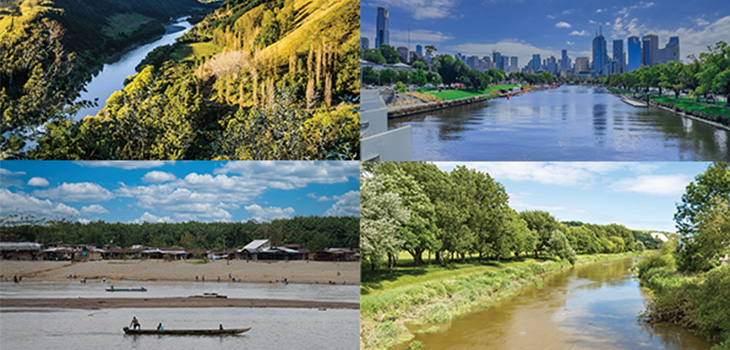
In the UK, it is rivers which are emerging as strong candidates for legal rights: the River Ouse in Lewes, Sussex has gained publicity nationally following the local council’s support for a Charter for the protection of its rights. This comes partly as a response to growing public outrage at the unacceptable levels of pollution in our rivers, and partly due to an emerging consensus that our existing body of environmental regulation is not fit for purpose. We know that possessing ‘human reason’ is not a prerequisite for the granting of legal personhood (compare the concept of corporate legal personality). Further, there is legal precedent internationally for granting legal rights to rivers, with the Whanganui river in New Zealand given legal personality by Te Awa Tupua legislation, the Yarra river in Melbourne, Australia declared a ‘living entity’ in law, and the Atrato river in Colombia held by its Constitutional Court as an entity ‘subject of legal rights’. Rivers seem an obvious choice; many people see the right to clean river systems as incontrovertible.
Where there is a constitutional right, as in Ecuador, anyone has the right to bring a case in court to assert these rights: ‘all persons, communities, peoples and nations can call upon public authorities to enforce the rights of nature’. This grants each citizen procedural standing in courts to take action on behalf of nature. Monica Feria-Tinta asserted this right when acting as Amicus Curiae in the Los Cedros case to protect the pristine Ecuadorian cloud forest ecosystem, with all its flora and fauna, from destruction by a mining concession to explore extraction of gold and other minerals (Feria-Tinta, 2025). The Constitutional Court of Ecuador’s judgment developed the legal principles that underpin the constitutional rights of nature: the ‘intrinsic value of nature’ means a ‘systemic perspective that protects natural processes for their own value’; it declared the mining project to be in violation of the Rights of Nature, as well as a breach of local communities’ right to water and a healthy environment.
By contrast, where rights of nature have been granted through legislation (as in New Zealand) or by court declaration (as in Colombia), a guardianship model has been adopted. In the Atrato case, the Constitutional Court of Colombia ordered that the river should be represented by a guardianship council made up of members of the Colombian State and representatives of the community that live along the river. This body would operate as a panel of experts to deploy their river knowledge to support the protection of the Atrato, to develop a plan to decontaminate water sources, recover its ecosystems and prevent further environmental damage. Community participation, especially by indigenous and local communities, is often central to these governance models, empowering them to advocate for restoration and protection of their environments. (Feria-Tinta, 2025.)
Despite legal recognition, RoN are not always enduring or effectively enforced. For example, in India, the courts briefly granted legal rights to the Ganges and Yamuna Rivers, but the decision was later overturned. In Ecuador, some court victories for Nature have not been properly enforced, and in Spain, the Mar Menor lagoon’s legal personhood was upheld by Spain’s Constitutional Court in November 2024, but without a guardianship process in place until recently.
Implementation challenges are common – a lack of clarity as to how the rights will be enforced in practice or insufficient resources for monitoring and compliance. For instance, in Colombia, despite the landmark ruling for the Atrato river mentioned above, a 2021 study found that the guardians’ ability to collect damages remained unclear and unused years after the ruling.
Political and economic resistance is a recurring challenge, particularly where RoN frameworks threaten powerful interests such as extractive industries. In Peru, oil companies resisted court rulings in favour of river rights.
Monitoring and evaluation systems are often underdeveloped in jurisdictions adopting RoN. This makes it difficult to assess compliance with RoN rights or to hold violators accountable. For example, Colombia’s plans to assess contamination and illegal mining impacts were delayed due to insufficient data and coordination, undermining the credibility and effectiveness of RoN initiatives.
Local government support can be leveraged by building on precedents such as the River Ouse Charter and motions passed by councils for the River Loddon and River Test. Councils can be encouraged to embed river rights into planning, development, and biodiversity policies, helping to bring RoN principles into decision-making at the local level and build momentum for national change. (See, for example, the Rights of Rivers toolkit developed by the Environmental Law Foundation and Hogan Lovells.)
Community-led declarations and charters, using accessible language and aligning with existing environmental frameworks (such as the Rights of Rivers declaration (above)), can build public understanding and support for RoN. These declarations can serve as a foundation for advocacy and policy engagement, and can be used to educate lawmakers and the wider public.
Guardianship models need diverse representation from local residents, scientists, and environmental NGOs, and sufficient funding and clear mandates are also essential.
Citizen science, strategic litigation and policy engagement are practical tools for river campaigners. Initiatives such as water quality monitoring, riparian planting, and annual ‘State of the Rivers’ reports can hold authorities accountable and promote river restoration. All these mechanisms provide a platform to engage with national bodies like the Environment Agency and to use existing legal avenues to improve environmental outcomes.
National legislation is, perhaps, the most effective way to embed RoN in English law, in the absence of a constitutional route. An Act of Parliament could integrate RoN principles into planning, land, tort and environmental law. A draft private members’ Bill on Nature’s Rights was proposed by the Green Party in October 2025.
In the short term, community engagement and public awareness may be more important. The growing success of various grassroots river campaigns across the UK is reflective of an important national sentiment. People often feel a deep connection with their particular local landscape or place of natural beauty. Nurturing this sense of connection encourages people to care for their immediate environment: for themselves and for the benefit of future generations.
The concept of Rights of Nature can inspire people to view Nature differently – with more care and respect – even in the absence of formal legislation.
A Barrister for the Earth: Ten Cases of Hope for Our Future, Monica Feria-Tinta, Faber & Faber 2025
Planetary boundaries, Stockholm Resilience Centre, Stockholm University, based on Richardson, J et al., ‘Earth beyond six of nine Planetary Boundaries’, Science Advances, 9, 37, 2023
‘Groundbreaking whale rights law launched’, joint announcement from the Pacific Whale Fund, Simmons & Simmons and Ocean Vision Legal, 20 November 2024
Rights of Rivers toolkit developed by the Environmental Law Foundation and Hogan Lovells, December 2025
‘Does nature have rights?‘, Monica Feria-Tinta, Counsel, November 2020
‘A barrister for the Earth: Monica Feria-Tinta’, Margherita Cornaglia, Counsel, May 2023
The Rights of Trees, Woodlands and Forests Toolkit, University of Sussex, February 2026
Eco jurisprudence monitor: an interactive map showing rights of nature legal approaches worldwide
‘Why barristers should care about the climate’, Ben Cooper KC and Estelle Dehon KC, Counsel, September 2022
‘Setting an example on sustainability’, Alexia Zimbler, Counsel, March 2024



Zoë Leventhal KC is a barrister at Matrix Chambers specialising in public and environmental law. She sits on the Bar Council’s Nature and Climate panel and on the advisory panel of the Bar Sustainability Network, and is also a trustee at the Environmental Law Foundation.
Rights of Nature (RoN) is both a philosophical idea – a leap of the imagination, a paradigm shift in our thinking – and a legal response to overwhelming environmental degradation and biodiversity loss. It is the recognition that natural ecosystems – including trees, rivers, oceans, mountains and non-human species – have rights, just as human beings have rights. While still a relatively new concept in the UK, it is already an established tool to protect the natural world in Latin America, New Zealand, Australia and elsewhere.
Human life is dependent upon, and inextricably connected to, the natural world. But our economies and societies are emitting carbon, nitrogen, methane and phosphorus beyond the planetary boundaries relating to biosphere integrity, ocean acidification, and intolerable freshwater, land-system and climate change (Stockholm Resilience Centre (2023)). In this context, RoN is an evolving global movement (with initiatives in over 40 different countries) reacting against legal and regulatory systems that are predominantly designed to protect human and corporate interests; systems that have failed, and continue to fail, to prevent catastrophic levels of chemical pollution, deforestation and extractive mining.
These failings arise, in part, from economic models prioritising growth, in which nature is viewed as an infinite resource or form of ‘property’ to be exploited for profit, rather than a finite, delicately balanced ecosystem on which all life depends. Ecological degradation as the acceptable price for economic development.
As has been noted by Monica Feria-Tinta, the 1948 Universal Declaration of Human Rights seems, in retrospect, to have heralded an anthropocentric era, undermining an alternative vision of the world where all living beings and Nature had rights. Binding treaties enshrining the recognition of universal human rights almost inadvertently framed human social and political rights as separate from environmental rights (in the Universal Covenant on Civil and Political Rights and the Universal Covenant on Economic, Social and Cultural Rights). (See A Barrister for the Earth, Monica Feria-Tinta, Faber & Faber 2025.)
The Rights of Nature movement seeks to reframe how we view nature: to recognise that nature possesses inherent rights. And to enshrine these rights in law.
There are different approaches to this concept across the world emerging as a body of ‘Earth Law’. Nature’s rights have been enshrined in constitutional provisions, national laws, court decisions, local regulations, non-binding governmental policy and indigenous laws. The 2008 Constitution of the Republic of Ecuador recognises that ‘Nature, or Pacha Mama… has the right to integral respect for its existence and for the maintenance and regeneration of its life cycles, structure, functions and evolutionary processes’. In March 2024, He Whakaputanga Moana (‘Ocean Declaration’) was a ground-breaking step granting legal personhood to whales and dolphins signed by Pacific Indigenous leaders from the Cook Islands, Tahiti, Aotearoa (New Zealand), Rapa Nui and Tonga; a pro bono team at Simmons & Simmons led by Robert Allen are working on draft legislation to give legal force to this declaration. In February 2026, the Green Party in New Zealand introduced the Tohorā Oranga Bill, seeking legal personhood for whales. Other initiatives introducing ‘soft’ law can also have an impact: for example, the Universal Declaration of the Rights of Rivers (2020) developed by the Earth Law Centre, an NGO, recognises the uniquely important ecological role of rivers on the planet through ‘the right to flow’.
Advocating for Nature’s right to exist, flourish and evolve has been justified by reference to existing legal concepts, such as the human right to a healthy environment. But the justification is also framed in new ways, or new to the UK – for example, as a way to manifest spiritual or indigenous belief systems or, more radically, simply because of the inherent value of the natural world – not because of its use to humans.
There are different legal mechanisms emerging including granting Nature legal personhood, legal standing, the status of a ‘living entity’ or making it the ‘subject’ of rights. there are different governance structures to enforce these rights, including guardianship, rights to petition, rights to seek redress, and rights to claim compensation on behalf of Nature.
Although framed in terms of ‘Rights of Nature’, the various legal mechanisms adopted to recognise (or acknowledge, protect, establish or grant) these rights build on existing environmental laws and regulation, and are, in fact, predominantly designed to moderate or control human behaviour, rather than to intuit Nature’s will.
But the RoN approach also aspires to a different way of relating to Nature and non-human entities; it embeds into legal and governance frameworks concepts of (a) stewardship, (b) reciprocity (i.e. balancing acts of taking from nature with acts of giving back, and recognising the reciprocal benefits for human health), (c) spirituality and sentience, and (d) obligations to future generations.
In the UK, it is rivers which are emerging as strong candidates for legal rights: the River Ouse in Lewes, Sussex has gained publicity nationally following the local council’s support for a Charter for the protection of its rights. This comes partly as a response to growing public outrage at the unacceptable levels of pollution in our rivers, and partly due to an emerging consensus that our existing body of environmental regulation is not fit for purpose. We know that possessing ‘human reason’ is not a prerequisite for the granting of legal personhood (compare the concept of corporate legal personality). Further, there is legal precedent internationally for granting legal rights to rivers, with the Whanganui river in New Zealand given legal personality by Te Awa Tupua legislation, the Yarra river in Melbourne, Australia declared a ‘living entity’ in law, and the Atrato river in Colombia held by its Constitutional Court as an entity ‘subject of legal rights’. Rivers seem an obvious choice; many people see the right to clean river systems as incontrovertible.
Where there is a constitutional right, as in Ecuador, anyone has the right to bring a case in court to assert these rights: ‘all persons, communities, peoples and nations can call upon public authorities to enforce the rights of nature’. This grants each citizen procedural standing in courts to take action on behalf of nature. Monica Feria-Tinta asserted this right when acting as Amicus Curiae in the Los Cedros case to protect the pristine Ecuadorian cloud forest ecosystem, with all its flora and fauna, from destruction by a mining concession to explore extraction of gold and other minerals (Feria-Tinta, 2025). The Constitutional Court of Ecuador’s judgment developed the legal principles that underpin the constitutional rights of nature: the ‘intrinsic value of nature’ means a ‘systemic perspective that protects natural processes for their own value’; it declared the mining project to be in violation of the Rights of Nature, as well as a breach of local communities’ right to water and a healthy environment.
By contrast, where rights of nature have been granted through legislation (as in New Zealand) or by court declaration (as in Colombia), a guardianship model has been adopted. In the Atrato case, the Constitutional Court of Colombia ordered that the river should be represented by a guardianship council made up of members of the Colombian State and representatives of the community that live along the river. This body would operate as a panel of experts to deploy their river knowledge to support the protection of the Atrato, to develop a plan to decontaminate water sources, recover its ecosystems and prevent further environmental damage. Community participation, especially by indigenous and local communities, is often central to these governance models, empowering them to advocate for restoration and protection of their environments. (Feria-Tinta, 2025.)
Despite legal recognition, RoN are not always enduring or effectively enforced. For example, in India, the courts briefly granted legal rights to the Ganges and Yamuna Rivers, but the decision was later overturned. In Ecuador, some court victories for Nature have not been properly enforced, and in Spain, the Mar Menor lagoon’s legal personhood was upheld by Spain’s Constitutional Court in November 2024, but without a guardianship process in place until recently.
Implementation challenges are common – a lack of clarity as to how the rights will be enforced in practice or insufficient resources for monitoring and compliance. For instance, in Colombia, despite the landmark ruling for the Atrato river mentioned above, a 2021 study found that the guardians’ ability to collect damages remained unclear and unused years after the ruling.
Political and economic resistance is a recurring challenge, particularly where RoN frameworks threaten powerful interests such as extractive industries. In Peru, oil companies resisted court rulings in favour of river rights.
Monitoring and evaluation systems are often underdeveloped in jurisdictions adopting RoN. This makes it difficult to assess compliance with RoN rights or to hold violators accountable. For example, Colombia’s plans to assess contamination and illegal mining impacts were delayed due to insufficient data and coordination, undermining the credibility and effectiveness of RoN initiatives.
Local government support can be leveraged by building on precedents such as the River Ouse Charter and motions passed by councils for the River Loddon and River Test. Councils can be encouraged to embed river rights into planning, development, and biodiversity policies, helping to bring RoN principles into decision-making at the local level and build momentum for national change. (See, for example, the Rights of Rivers toolkit developed by the Environmental Law Foundation and Hogan Lovells.)
Community-led declarations and charters, using accessible language and aligning with existing environmental frameworks (such as the Rights of Rivers declaration (above)), can build public understanding and support for RoN. These declarations can serve as a foundation for advocacy and policy engagement, and can be used to educate lawmakers and the wider public.
Guardianship models need diverse representation from local residents, scientists, and environmental NGOs, and sufficient funding and clear mandates are also essential.
Citizen science, strategic litigation and policy engagement are practical tools for river campaigners. Initiatives such as water quality monitoring, riparian planting, and annual ‘State of the Rivers’ reports can hold authorities accountable and promote river restoration. All these mechanisms provide a platform to engage with national bodies like the Environment Agency and to use existing legal avenues to improve environmental outcomes.
National legislation is, perhaps, the most effective way to embed RoN in English law, in the absence of a constitutional route. An Act of Parliament could integrate RoN principles into planning, land, tort and environmental law. A draft private members’ Bill on Nature’s Rights was proposed by the Green Party in October 2025.
In the short term, community engagement and public awareness may be more important. The growing success of various grassroots river campaigns across the UK is reflective of an important national sentiment. People often feel a deep connection with their particular local landscape or place of natural beauty. Nurturing this sense of connection encourages people to care for their immediate environment: for themselves and for the benefit of future generations.
The concept of Rights of Nature can inspire people to view Nature differently – with more care and respect – even in the absence of formal legislation.
A Barrister for the Earth: Ten Cases of Hope for Our Future, Monica Feria-Tinta, Faber & Faber 2025
Planetary boundaries, Stockholm Resilience Centre, Stockholm University, based on Richardson, J et al., ‘Earth beyond six of nine Planetary Boundaries’, Science Advances, 9, 37, 2023
‘Groundbreaking whale rights law launched’, joint announcement from the Pacific Whale Fund, Simmons & Simmons and Ocean Vision Legal, 20 November 2024
Rights of Rivers toolkit developed by the Environmental Law Foundation and Hogan Lovells, December 2025
‘Does nature have rights?‘, Monica Feria-Tinta, Counsel, November 2020
‘A barrister for the Earth: Monica Feria-Tinta’, Margherita Cornaglia, Counsel, May 2023
The Rights of Trees, Woodlands and Forests Toolkit, University of Sussex, February 2026
Eco jurisprudence monitor: an interactive map showing rights of nature legal approaches worldwide
‘Why barristers should care about the climate’, Ben Cooper KC and Estelle Dehon KC, Counsel, September 2022
‘Setting an example on sustainability’, Alexia Zimbler, Counsel, March 2024
Jemima Coleman and Zoë Leventhal KC on the evolving global movement seeking to reframe how we view nature: to recognise that nature possesses inherent rights and to enshrine these rights in law


The Chair of the Bar reports back
Susie Griffin on the admin that keeps barristers from billable work
Clement Cowley, Partner at The Penny Group, explains how global events can influence the performance of pensions and ISAs, and why taking a long-term approach to investing is often the most effective strategy
Mário Barroso, Head of R&D and Method Development at AlphaBiolabs, discusses what family law professionals need to know about hallucinogens, from the main hallucinogenic drugs encountered in family proceedings, to their effects and the testing options available
Harmony Christian Ministries is the latest charity to benefit from a £500 donation from AlphaBiolabs via the company’s Giving Back initiative
By David Green
At the start of her term, Chair of the Bar 2026 Kirsty Brimelow KC set out a series of priorities for the year ahead. One of those priorities was children in the justice system
As the world becomes more digital, Barbara Vinagre Mota examines international research into the mental health consequences of judges’ exposure to graphic and immersive evidence, highlighting the importance of support systems
In an era of patient-centred care and growing concern over misconduct in medical settings, why do women still lack the right to choose women consultants for examination and treatment? Charles Davey investigates
Reviewed by Daniel Barnett
James McNeill Whistler at Tate Britain until 27 September Rothko in Florence at Palazzo Strozzi until 23 August Reviewed by Stephen Cragg KC