*/
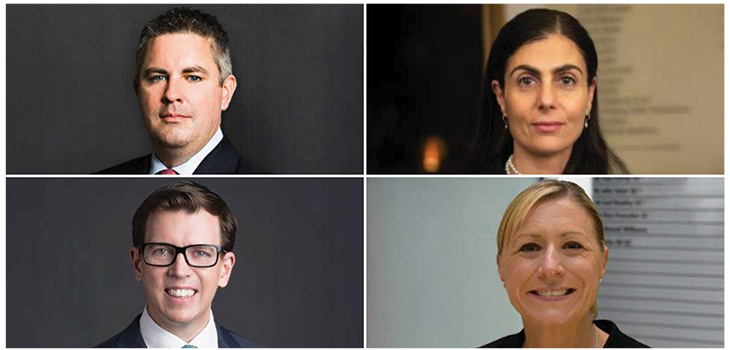
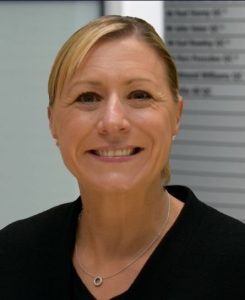
Clockwise from top left: Adam Cloherty KC, Maria Karaiskos KC, Rebecca Wade KC and Mike McClure KC
Meet these recently appointed KCs who represent the increasingly diverse backgrounds and experiences of those taking silk
Adam Cloherty KC
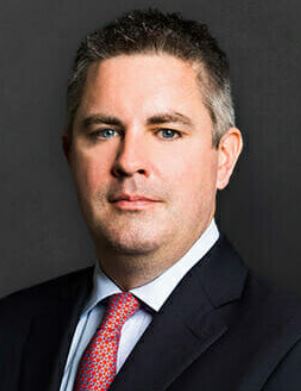
XXIV Old Buildings, London
Adam Cloherty KC, who joined the ranks of silk in 2023, has a broad commercial chancery practice acting in and advising on commercial and private wealth disputes both domestically and internationally. Adam’s cases span this commercial set’s main fields of practice, and draw on his knowledge of equitable, trust and corporate principles.
Adam comes from a working-class background, growing up in West London and attending a local comprehensive school where he had the great good fortune to encounter ‘very dedicated, supportive, amazing teachers’. They recognised and nurtured Adam’s sharp academic ability and encouraged him to aim for Oxbridge or some other Russell Group university. Adam had no family or other connections with the law. In his own words, ‘I was a chippy lad!’ and the cut and thrust of advocacy really appealed to him.
In the upper sixth form, Adam took part in the Bar Council mock trial competition, where he and a school friend had the role of the advocates in the case and were allocated a practising barrister as a mentor. Competing against schools across the whole of the UK including some top public schools, Adam and his friend came second nationally. Without his inspirational and supportive teachers, Adam says, he would not be where he is today – ‘they changed everything’. Some of these very experienced teachers were at the end of their careers and Adam considers that he was extremely lucky to have been in the right place at the right time to benefit from their wisdom and encouragement. He took his M.A. Law at St John’s College, Cambridge where he was a McMahon Scholar. One of his university tutors was qualified as a barrister and opened Adam’s eyes to a career at the Bar.
During his university studies, Adam had initially thought that he would work in public, administrative and constitutional law, but the more that he studied the type of law he now did for a living, he came to greatly enjoy the complexities and challenges of company law, contracts and equity.
Adam’s first job on graduation was as a research assistant at the (then) DTI, an opportunity that came up during his final year at Cambridge, and which was too good to pass over as a means to raise some money towards the early years of advocacy training. Adam found the experience extremely valuable as he found himself working as part of a team drafting the Parliamentary Bill that would become the Companies Act 2006 – and which, of course, is now so central to so much of his work as a Chancery barrister.
Adam obtained a pupillage and a scholarship (as Astbury Scholar, Middle Temple) to fund Bar school, without which it would have been extremely difficult (at least without recourse to a large student loan). Even with the ‘game changing’ scholarship, Adam still had to find funds for his living costs. He recognises that he was extremely fortunate that his chambers were able to fund a generous pupillage award that enabled prospective pupils to draw down a large chunk of those costs in advance. Adam said that the costs of embarking on a career in advocacy remained a serious barrier to those from low-income backgrounds, particularly for those who aspired to work in those areas of public law funded from the public purse.
Adam said he owed a huge debt of gratitude to the eminent colleagues he has had the opportunity to work for and alongside in his ‘medium sized’ chambers (of around 45 barristers) ‘where everyone more or less knows everyone else’. He was able to observe ‘superstar silks’ very closely whilst also working on his own smaller cases as a junior. These mentors provided Adam with invaluable hints and tips and ‘brought you into things’ and ‘introduced you to people’. Adam did a number of incredibly interesting cases as his career developed, increasingly finding himself as senior-junior effectively running some cases, bringing in a leader at later stages.
One ‘flip side’ of working with such inspiring people was that it seemed hard for Adam to imagine ever emulating them and achieving the accolade of silk. It took him a while for ‘the penny to drop’ and realise that many of his mentors had been in silk for perhaps fifteen or twenty years or more. It took time and experience to get that good.
As his career progressed, Adam found himself leading cases as a senior junior, and some ‘incredibly supportive’ colleagues were increasingly suggesting that he should seriously consider applying for silk himself. It was that encouragement that gave Adam the confidence to apply for KC and ‘overcome my excuses!’
Being so busy as a senior junior, it was very difficult to carve out the necessary time for the KC application form. But ‘when the deadline approached, I just had to get on with it.’ Adam felt rather nervous that he had forgone external professional support with the application form – which he suspected many applicants sought, even if they kept quiet about it.
However, his anxiety lessened as he read through the material available on the KCA website. Having been more than a little sceptical, Adam found that this contained all the documentation and guidance that he needed for the application form and to ready him for the interview (if applicable). The detailed description and explanations of what the Panel sought in terms of the competencies, Adam found particularly helpful. The guidance was accessible, comprehensive, and helpful but without being too voluminous. As a lawyer you were in any case well versed in matching evidence/facts to specific tests/requirements, and in that respect the application process for silk was no different. There was nothing which he might have needed to succeed that was not on the KCA website.
Adam said his experience was that the Panel simply wanted you to give of your best so that all those who met the very high bar for silk by demonstrating the necessary evidence of excellence across the competencies – in the application form, assessments and interview – could succeed. Adam did get some help with the interview as he was not experienced in competency-based interviews, that is, ‘sitting on that side of the table’ as opposed to interviewing prospective pupils for chambers. Also, a good friend from university days who worked in the senior civil service – not herself a lawyer – helped Adam prepare for the interview, providing challenge and insights and familiarity with the somewhat alien experience of advocating for himself rather than on behalf of his clients.
At interview, Adam felt more at home talking about the legal competencies (‘about the day job, my cases and the law’) than about the non-legal competencies, Competency C – Working with others, and Competency D – Diversity Action and Understanding. Most barristers, suspected Adam, do not sit down and separately reflect on those aspects of the work, how you lead a team for example, ‘the stuff you do reflexively’. But you do have to think closely about those competencies for the competition – about what you believe, understand and, primarily, what you do. Adam’s Uni friend encouraged him to recall difficult situations and what he had done and how he had made a difference; ‘what you did and why it worked’. The KC application process makes you more reflective, said Adam.
He experienced some interview nerves, ‘as there was a lot riding on it’. It was a ‘bit strange and unfamiliar.’ However, all-in-all, Adam found it a very positive experience. He tells other people thinking about applying for silk that the interview is exactly as it is described in the online KCA guidance. It was ‘refreshingly business-like, and even enjoyable’ with the two Panel members clearly sign-posting the format of the interview and questions. There was no sense of being under attack or any suggestion of trips or tricks. It was your opportunity to give of your best.
Adam was ‘a bit of a grinch’, he said, when it came to the pomp and dressing up of the profession, but he did admit to really enjoying the KC ceremony, as much for his nearest and dearest as anything else. He was amused that the family were far more impressed by the Royal Courts of Justice (for that part of the day) than they were by seeing the Rolls Buildings where Adam actually earns his living!
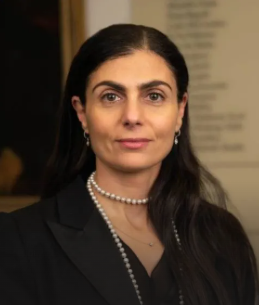
Church Court Chambers
Maria Karaiskos, who was appointed King’s Counsel in 2023, both prosecutes and defends in the most serious, sensitive, and complex criminal offences including murders, historic rapes, child abuse, high-profile sexual offences, road traffic fatalities, multi-handed drug conspiracies and international importations.
As Church Court Chambers’ first female silk and first ‘home-grown silk’, Maria recalls her first day in pupillage in her earliest set of chambers: That evening at after-work drinks, Maria was told by a venerable senior colleague that they had ‘never had a Greek in chambers before.’ Even in this day and age, people did not always bother to learn how to pronounce ‘Karaiskos’ correctly – ‘it wasn’t that difficult!’
Maria’s parents had come to the UK in the 1960s where they met – unimpressed by both the British weather and food, married and had four children.
Maria has two young children, who are the centre of her life and always come first. Motherhood has its challenges, of course, for an extremely busy senior junior, and now silk, but it is doable: It is very much a question of transferrable skills, as any mother of two junior school youngsters knows well, you have to be incredibly well organised and a great time manager. However, being woken up at 3am by a child who has had a bad dream the night before a big criminal case opened, is never much fun!
King’s Counsel had never really been in Maria’s sights. Apart from anything else, she had never felt worthy of the distinction, she said. And even when it seemed like a credible aim, some of her colleagues suggested that it would not be possible for her to combine motherhood with being a silk, and that Maria was too young to apply. Maria’s appointment to KC gives the lie to such views.
There is of course no age bar to silk, nor indeed any other sort of bar based on personal characteristics. KC Appointments (KCA) have funded a good deal of work by the professional bodies to help eradicate barriers to greater diversity in silk and have a major ongoing outreach project underway. If you have the necessary experience and high-level cases of substance as an advocate, you are fully entitled to apply for KC. Fortunately the negative voices were outnumbered by peers and colleagues who provided great encouragement to Maria.
Applying for silk was extremely time-consuming, the application form comprising over 60 pages and you need to ensure that the cases you selected (and the potential assessors in the cases) speak to all the competencies at the necessarily very high level of excellence. Maria printed off the KCA Guidance for Applicants which she found extremely helpful. Maria had not expected to get an interview on her first attempt applying for silk, let alone be ultimately successful. Given her practice area, her cases did not often get her into the most senior courts. She was also concerned that she might not have a sufficient number of cases as during the previous few years there had been other competing demands on her time, not least from being a mother (e.g., needing time off during school holidays) and as she also sat as a Recorder in the Crown Court and a District Judge in the Magistrates’ Court. The Guidance helped greatly in this regard and, evidently, Maria’s cases were sufficient in number and in quality, ticking all the necessary boxes as set out in the competition’s Competency Framework. Frequently, a case – even an ostensibly ‘ordinary’ one – provided evidence of two or more of the competencies at the necessary level of excellence. One such case sparked a very interesting conversation in the interview as it involved an unusual, complex point of law.
Having got an interview, Maria was determined to give it her very best shot. She ensured that she was thoroughly familiar with her application form. A barrister friend in another chambers, a public law specialist and a silk appointed the year before, helped Maria with the application process and in preparing for the interview. Maria found this incredibly supportive and helpful. The interview took place in September 2022. The Panel were engaging, warm and interested in her application from beginning to end. The interview was challenging but enjoyable.
Getting the good news was ‘such an unbelievable feeling’ and Maria was delighted at receiving so many texts, letters and messages from people both within and beyond the profession congratulating her on her elevation to silk.
Being a silk, in a sense, means more of the same as being an extremely busy senior junior, but with the considerable added responsibilities and demands of always being the leader and the person to whom colleagues and the court looked to for the wisest counsel. At first Maria had to overcome a sense of imposter syndrome but she knew that she simply had to let her hard work speak for her. Being an advocate has never been a 9 to 5 job; it is all-consuming and vocational. You endeavour to compartmentalise the work from the rest of your life, but in practice it is not always so easy to put out of mind the traumatic things you hear, see and read about in your cases and on the bench. Maria thinks there is not sufficient support available for the self-employed bar to prepare the lawyers for, and to enable them to healthily process, some extremely difficult and unpleasant material. It is very difficult to ‘live in the moment’ and switch-off as a 24-7 advocate, but you have to try to do so otherwise your mental health can suffer.
Maria had not always wanted to be a barrister. Her first love had been tennis but, she said, ‘I was not quite good enough’. She also had a yearn to be an actor. It is a truism well-known that advocates share many of the skills of the actor: public speaking, engagement with your audience and, not least, having to be ‘believed in’. Maria has always loved the law – she did her LLB at University College, London – and also greatly enjoyed public speaking, so a career at the Bar was a natural choice. She enjoyed studying a wide range of areas of law, from taxation to landlord and tenant, from property law to environmental law, but it was her love for criminal law and criminal evidence that led her to the criminal Bar.
Maria relishes jury trials and she has a massive respect for jurors, especially having undertaken jury service herself. She understands what an important civic responsibility it really is. Similarly, Maria’s professional respect extends to everyone who works in the criminal justice system, from Court room staff, Probation officers, the other advocates, and prison staff – they all worked so extremely hard in what is a challenging system.
Maria considers that she has a responsibility to act as a role model for younger colleagues. She is very proud of the profession’s ethos whereby people put forward the sort of help from which they themselves have benefitted. Alongside the additional demands of being a new silk, Maria intends to continue with voluntary work on a grass-roots level: attending schools to discuss the law, offering work experience assignments, speaking on panels for aspiring pupils, mentoring younger female barristers and sitting on working groups for those less represented in the profession. Maria continues to invite students to shadow her in her positions as a Recorder and Deputy District Judge to ‘see the Court from the front’ and – particularly in the Magistrates’ Court – to witness the law in action at a raw, visceral and unfiltered level. For her own part, Maria finds that sitting as a Judge enriches her work as a silk, adding perspective to the role. For similar reasons, she likes to both prosecute and defend in cases: ‘It gives me balance, as I get to see a trial from every vantage point’.
Maria wished to emphasise how extremely useful she had found all the material available to applicants (and assessors) on the KCA website. This – along with the assistance from friends and her friend in silk – provided all that Maria needed to navigate the competition’s complexities and demands and for her to succeed at her first attempt. She also found the electronic forms to have very high and helpful functionality, significantly better than those available in some other organisations.
Maria’s father (almost 80 years old) saw his daughter take silk at the historic KC ceremony in Westminster Hall, clearly an extremely proud day for him. Sadly, Maria’s had mother died some years ago so that necessarily added a certain poignancy to the day. Maria’s children were allowed a day out of school for the day of the ceremony. Her little boy (then aged 6) told his teacher and classmates ‘I am going to see King Charles!’. The children loved the big posh Rolls Royce which was hired for the ride to Westminster Hall and then the Royal Courts of Justice for the afternoon as part of the day’s celebrations: ‘everybody looked at mummy’s lovely outfit!’ Her daughter was also very up on the protocol, pointing out when some of the new silks bowed the wrong way!

Herbert Smith Freehills
Mike is a solicitor advocate appointed to King’s Counsel in 2023. A partner and global co-chair of Korea Group at Herbert Smith Freehills (HSF) in the City of London, Mike has expertise in arbitration, court, and expert determination proceedings, with particular experience in the energy, construction, infrastructure, and financial services sectors.
Growing up just outside Reading, Mike had no family or professional links with the law but at school he had a great love of debating and mooting, and a career in advocacy felt like a natural choice for him. Mike relished the adversarial aspects of his legal training and had originally considered becoming a barrister rather than a solicitor. But at the time there was no funding available for pupillage and for Bar school whilst, in contrast, the big law firms offered scholarships for law school to suitable candidates. Mike also found that he enjoyed being able to work with clients for the two- or three-year life of a matter and preferred this to just coming into a case at the end as many barristers would do. As a junior solicitor, Mike successfully applied for Higher Rights of Audience, enabling him to combine the long-term client work with opportunities to carry out the oral advocacy himself rather than necessarily instructing a barrister. Mike also had a desire to live and work abroad and so a career in international arbitration was a natural fit.
It can be difficult for solicitor advocates to gain the same sort of advocacy experience ‘on their feet’ as barristers who appear more regularly before the England and Wales highest courts, but Mike emphasised that this should not be deter solicitors from aspiring to silk, especially those practising in international arbitration. KCA’s guidance for applicants made it clear that the process takes account of the full range of work carried out by advocates, including written advocacy. Mike also recognised that he was fortunate in that HSF had a culture that encouraged its senior associates and partners to do their own advocacy – which he greatly enjoyed – and which helped him to build up his experience. As part of this, Mike benefitted greatly from working alongside ‘inspirational role models’ on large and substantial cases – including his current partners Paula Hodges KC, Chris Parker KC, and Simon Chapman KC and former partners Tom Leech KC and Adam Johnson KC (now both judges) and Ian Gatt KC. Mike said it is vital that younger colleagues who seriously aspired to becoming silks should ‘grab every opportunity’ that comes their way to do the advocacy in substantive cases, working alongside the best people in the field, both barristers and solicitor-advocates. This would ‘get you into the rhythm’ of high-level advocacy early on in your career.
As to preparing for the KC competition, Mike said this was a long-term task, building up your ‘flying hours’ so that when you came to apply for silk you had the necessary number of substantive cases in the three-year period to populate your application form. You needed to think very carefully about your cases, in terms of the Competency Framework, especially as a solicitor-advocate. The application form took a good deal of time to complete to a high level and that should be considered when you contemplated applying for silk. Mike said he was very much used to working within and thinking in terms of the team, and the application process required a rather different way of looking at your work, in terms of your own individual accomplishments and approach – ‘not a natural headspace’ for Mike who was used to working as part of a team. He would advise applicants to speak to those who had been through the process, who knew what was involved; in his experience friends and colleagues were extremely happy to assist and provided a very solid support structure during the whole application process, particularly at its key stages. The competition occupied his mind far more than he had imagined, and applicants should expect the competition to be mentally demanding, though overall a worthwhile experience.
Mike carved out some time in his diary for the interview so that he could go over his form thoroughly and ensure that he was across his cases and the evidence required against each of the competencies. He spoke to people who had recently been through the process who were able to give him some helpful tips and identify areas that might crop up. Although in the event none of the areas did crop up, Mike was still grateful for the confidence that this assistance provided and got him in the right frame of mind.
The interview itself was rigorous but not combative and he was given plenty of opportunities to speak about his cases and provide examples relevant to the particular question. Mike was very impressed at how well prepared the two Panel members (one lay, one legal) were for the interview. They were extremely familiar with his application form and his cases. Indeed, the thoroughness of the whole process greatly impressed Mike – it provided great reassurance in the rigour of the KC selection process.
Mike had noticed no real change in how busy he was after obtaining the prestigious two letters after his name – he found he was just as extremely busy as he had always been! But it was the clear that clients across the globe recognised the importance and value of the accolade. Finally, Mike said that he would be extremely willing to help future applicants for KC, especially solicitor-advocates (who continued to be under-represented in silk), passing on the formal and informal mentoring that had been so valuable central to his own career development and been so generously given over the years.
St Philips Chambers, Birmingham
In early 2023, Rebecca Wade KC took silk, becoming one of just three female criminal silks in Birmingham. Rebecca’s practice centres on serious crime, with a particular emphasis on homicide and serious sexual offences, both regionally and nationally. The cases in which she was instructed invariably involved complicated issues of law and fact and the most vulnerable people in society and frequently attracted significant media interest.
The daughter of an English builder and a Brazilian mother, Rebecca’s career was prompted by her father after he saw silks portrayed in dramas. Tragically, Rebecca’s dad died when she was twelve-years old, and her mother became a single-parent – with all the many financial and other struggles which that entailed.
Rebecca got work experience with the CPS which took her to the Birmingham Crown Court, which she also later observed from the gallery when in the sixth form. She was not at all deterred by family members who suggested that an advocacy career was not for ‘people like us with no links to the legal profession’. Rebecca’s legal studies was only possible through large student loans. It was all ‘a bit of a hard slog’, financially, she said.
Rebecca did a mixed common law pupillage, but ‘it was always crime for me.’ She never really aspired to being a silk in the early stages, but in more recent years she found herself increasingly in demand for the most difficult and complex cases. And Rebecca’s colleagues, and the judges which she regularly appeared before, were beginning to suggest that she should think seriously about applying for silk.
Having done her pupillage and begun her tenancy in Northampton, Rebecca found her practice there moving more towards family law. But on moving back to Birmingham she was able to develop into her first love, in criminal cases. There was another reason to move back to her home city – the birth of her nephew. Initially content to work on mainly sexual crimes. Rebecca later sought a wider portfolio of cases and broadened her practice into homicide. Without this development to a 50:50 serious sexual crime/ homicide practice, she would not have been as well placed to apply for silk. An advantage of working in the provinces was that a relatively small number of senior judges got to know your work extremely well. One such important case was a fatal shooting trial where no silk certificate had been issued, meant that she led another barrister defending the client in a legally highly complex case, of just the sort essential for her silk application.
Rebecca devised a three-year plan for her silk application. It was a demanding process, entailing considerable time and expense, and stress. It was essential that you had the right sort of ‘substantial cases’ and the necessary evidence from the relevant time period, she would urge future applicants.
Rebecca intended only applying for KC once – so, she gave it her very best shot. It was a long over two months wait between her interview and learning of the outcome of her KC application, and when Rebecca learned of her success, she was overwhelmed; and added, ‘I am still pinching myself!’
The KC ceremony was a wonderful occasion which Rebecca shared with her closest loved ones. She had a poignant regret and that was that the letters QC – which had been her father’s aspiration for her – would not be the ones she would have after her name. But Rebecca knew that her father would have been just as proud of his daughter on her elevation to one of His Majesty’s Counsel Learned in Law.

Peter is Policy Adviser to the King's Counsel Selection Panel in the KCA Secretariat. He was previously a senior civil servant in DEFRA, freelance consultant on EU issues and a counsellor.
Adam Cloherty KC
XXIV Old Buildings, London
Adam Cloherty KC, who joined the ranks of silk in 2023, has a broad commercial chancery practice acting in and advising on commercial and private wealth disputes both domestically and internationally. Adam’s cases span this commercial set’s main fields of practice, and draw on his knowledge of equitable, trust and corporate principles.
Adam comes from a working-class background, growing up in West London and attending a local comprehensive school where he had the great good fortune to encounter ‘very dedicated, supportive, amazing teachers’. They recognised and nurtured Adam’s sharp academic ability and encouraged him to aim for Oxbridge or some other Russell Group university. Adam had no family or other connections with the law. In his own words, ‘I was a chippy lad!’ and the cut and thrust of advocacy really appealed to him.
In the upper sixth form, Adam took part in the Bar Council mock trial competition, where he and a school friend had the role of the advocates in the case and were allocated a practising barrister as a mentor. Competing against schools across the whole of the UK including some top public schools, Adam and his friend came second nationally. Without his inspirational and supportive teachers, Adam says, he would not be where he is today – ‘they changed everything’. Some of these very experienced teachers were at the end of their careers and Adam considers that he was extremely lucky to have been in the right place at the right time to benefit from their wisdom and encouragement. He took his M.A. Law at St John’s College, Cambridge where he was a McMahon Scholar. One of his university tutors was qualified as a barrister and opened Adam’s eyes to a career at the Bar.
During his university studies, Adam had initially thought that he would work in public, administrative and constitutional law, but the more that he studied the type of law he now did for a living, he came to greatly enjoy the complexities and challenges of company law, contracts and equity.
Adam’s first job on graduation was as a research assistant at the (then) DTI, an opportunity that came up during his final year at Cambridge, and which was too good to pass over as a means to raise some money towards the early years of advocacy training. Adam found the experience extremely valuable as he found himself working as part of a team drafting the Parliamentary Bill that would become the Companies Act 2006 – and which, of course, is now so central to so much of his work as a Chancery barrister.
Adam obtained a pupillage and a scholarship (as Astbury Scholar, Middle Temple) to fund Bar school, without which it would have been extremely difficult (at least without recourse to a large student loan). Even with the ‘game changing’ scholarship, Adam still had to find funds for his living costs. He recognises that he was extremely fortunate that his chambers were able to fund a generous pupillage award that enabled prospective pupils to draw down a large chunk of those costs in advance. Adam said that the costs of embarking on a career in advocacy remained a serious barrier to those from low-income backgrounds, particularly for those who aspired to work in those areas of public law funded from the public purse.
Adam said he owed a huge debt of gratitude to the eminent colleagues he has had the opportunity to work for and alongside in his ‘medium sized’ chambers (of around 45 barristers) ‘where everyone more or less knows everyone else’. He was able to observe ‘superstar silks’ very closely whilst also working on his own smaller cases as a junior. These mentors provided Adam with invaluable hints and tips and ‘brought you into things’ and ‘introduced you to people’. Adam did a number of incredibly interesting cases as his career developed, increasingly finding himself as senior-junior effectively running some cases, bringing in a leader at later stages.
One ‘flip side’ of working with such inspiring people was that it seemed hard for Adam to imagine ever emulating them and achieving the accolade of silk. It took him a while for ‘the penny to drop’ and realise that many of his mentors had been in silk for perhaps fifteen or twenty years or more. It took time and experience to get that good.
As his career progressed, Adam found himself leading cases as a senior junior, and some ‘incredibly supportive’ colleagues were increasingly suggesting that he should seriously consider applying for silk himself. It was that encouragement that gave Adam the confidence to apply for KC and ‘overcome my excuses!’
Being so busy as a senior junior, it was very difficult to carve out the necessary time for the KC application form. But ‘when the deadline approached, I just had to get on with it.’ Adam felt rather nervous that he had forgone external professional support with the application form – which he suspected many applicants sought, even if they kept quiet about it.
However, his anxiety lessened as he read through the material available on the KCA website. Having been more than a little sceptical, Adam found that this contained all the documentation and guidance that he needed for the application form and to ready him for the interview (if applicable). The detailed description and explanations of what the Panel sought in terms of the competencies, Adam found particularly helpful. The guidance was accessible, comprehensive, and helpful but without being too voluminous. As a lawyer you were in any case well versed in matching evidence/facts to specific tests/requirements, and in that respect the application process for silk was no different. There was nothing which he might have needed to succeed that was not on the KCA website.
Adam said his experience was that the Panel simply wanted you to give of your best so that all those who met the very high bar for silk by demonstrating the necessary evidence of excellence across the competencies – in the application form, assessments and interview – could succeed. Adam did get some help with the interview as he was not experienced in competency-based interviews, that is, ‘sitting on that side of the table’ as opposed to interviewing prospective pupils for chambers. Also, a good friend from university days who worked in the senior civil service – not herself a lawyer – helped Adam prepare for the interview, providing challenge and insights and familiarity with the somewhat alien experience of advocating for himself rather than on behalf of his clients.
At interview, Adam felt more at home talking about the legal competencies (‘about the day job, my cases and the law’) than about the non-legal competencies, Competency C – Working with others, and Competency D – Diversity Action and Understanding. Most barristers, suspected Adam, do not sit down and separately reflect on those aspects of the work, how you lead a team for example, ‘the stuff you do reflexively’. But you do have to think closely about those competencies for the competition – about what you believe, understand and, primarily, what you do. Adam’s Uni friend encouraged him to recall difficult situations and what he had done and how he had made a difference; ‘what you did and why it worked’. The KC application process makes you more reflective, said Adam.
He experienced some interview nerves, ‘as there was a lot riding on it’. It was a ‘bit strange and unfamiliar.’ However, all-in-all, Adam found it a very positive experience. He tells other people thinking about applying for silk that the interview is exactly as it is described in the online KCA guidance. It was ‘refreshingly business-like, and even enjoyable’ with the two Panel members clearly sign-posting the format of the interview and questions. There was no sense of being under attack or any suggestion of trips or tricks. It was your opportunity to give of your best.
Adam was ‘a bit of a grinch’, he said, when it came to the pomp and dressing up of the profession, but he did admit to really enjoying the KC ceremony, as much for his nearest and dearest as anything else. He was amused that the family were far more impressed by the Royal Courts of Justice (for that part of the day) than they were by seeing the Rolls Buildings where Adam actually earns his living!
Church Court Chambers
Maria Karaiskos, who was appointed King’s Counsel in 2023, both prosecutes and defends in the most serious, sensitive, and complex criminal offences including murders, historic rapes, child abuse, high-profile sexual offences, road traffic fatalities, multi-handed drug conspiracies and international importations.
As Church Court Chambers’ first female silk and first ‘home-grown silk’, Maria recalls her first day in pupillage in her earliest set of chambers: That evening at after-work drinks, Maria was told by a venerable senior colleague that they had ‘never had a Greek in chambers before.’ Even in this day and age, people did not always bother to learn how to pronounce ‘Karaiskos’ correctly – ‘it wasn’t that difficult!’
Maria’s parents had come to the UK in the 1960s where they met – unimpressed by both the British weather and food, married and had four children.
Maria has two young children, who are the centre of her life and always come first. Motherhood has its challenges, of course, for an extremely busy senior junior, and now silk, but it is doable: It is very much a question of transferrable skills, as any mother of two junior school youngsters knows well, you have to be incredibly well organised and a great time manager. However, being woken up at 3am by a child who has had a bad dream the night before a big criminal case opened, is never much fun!
King’s Counsel had never really been in Maria’s sights. Apart from anything else, she had never felt worthy of the distinction, she said. And even when it seemed like a credible aim, some of her colleagues suggested that it would not be possible for her to combine motherhood with being a silk, and that Maria was too young to apply. Maria’s appointment to KC gives the lie to such views.
There is of course no age bar to silk, nor indeed any other sort of bar based on personal characteristics. KC Appointments (KCA) have funded a good deal of work by the professional bodies to help eradicate barriers to greater diversity in silk and have a major ongoing outreach project underway. If you have the necessary experience and high-level cases of substance as an advocate, you are fully entitled to apply for KC. Fortunately the negative voices were outnumbered by peers and colleagues who provided great encouragement to Maria.
Applying for silk was extremely time-consuming, the application form comprising over 60 pages and you need to ensure that the cases you selected (and the potential assessors in the cases) speak to all the competencies at the necessarily very high level of excellence. Maria printed off the KCA Guidance for Applicants which she found extremely helpful. Maria had not expected to get an interview on her first attempt applying for silk, let alone be ultimately successful. Given her practice area, her cases did not often get her into the most senior courts. She was also concerned that she might not have a sufficient number of cases as during the previous few years there had been other competing demands on her time, not least from being a mother (e.g., needing time off during school holidays) and as she also sat as a Recorder in the Crown Court and a District Judge in the Magistrates’ Court. The Guidance helped greatly in this regard and, evidently, Maria’s cases were sufficient in number and in quality, ticking all the necessary boxes as set out in the competition’s Competency Framework. Frequently, a case – even an ostensibly ‘ordinary’ one – provided evidence of two or more of the competencies at the necessary level of excellence. One such case sparked a very interesting conversation in the interview as it involved an unusual, complex point of law.
Having got an interview, Maria was determined to give it her very best shot. She ensured that she was thoroughly familiar with her application form. A barrister friend in another chambers, a public law specialist and a silk appointed the year before, helped Maria with the application process and in preparing for the interview. Maria found this incredibly supportive and helpful. The interview took place in September 2022. The Panel were engaging, warm and interested in her application from beginning to end. The interview was challenging but enjoyable.
Getting the good news was ‘such an unbelievable feeling’ and Maria was delighted at receiving so many texts, letters and messages from people both within and beyond the profession congratulating her on her elevation to silk.
Being a silk, in a sense, means more of the same as being an extremely busy senior junior, but with the considerable added responsibilities and demands of always being the leader and the person to whom colleagues and the court looked to for the wisest counsel. At first Maria had to overcome a sense of imposter syndrome but she knew that she simply had to let her hard work speak for her. Being an advocate has never been a 9 to 5 job; it is all-consuming and vocational. You endeavour to compartmentalise the work from the rest of your life, but in practice it is not always so easy to put out of mind the traumatic things you hear, see and read about in your cases and on the bench. Maria thinks there is not sufficient support available for the self-employed bar to prepare the lawyers for, and to enable them to healthily process, some extremely difficult and unpleasant material. It is very difficult to ‘live in the moment’ and switch-off as a 24-7 advocate, but you have to try to do so otherwise your mental health can suffer.
Maria had not always wanted to be a barrister. Her first love had been tennis but, she said, ‘I was not quite good enough’. She also had a yearn to be an actor. It is a truism well-known that advocates share many of the skills of the actor: public speaking, engagement with your audience and, not least, having to be ‘believed in’. Maria has always loved the law – she did her LLB at University College, London – and also greatly enjoyed public speaking, so a career at the Bar was a natural choice. She enjoyed studying a wide range of areas of law, from taxation to landlord and tenant, from property law to environmental law, but it was her love for criminal law and criminal evidence that led her to the criminal Bar.
Maria relishes jury trials and she has a massive respect for jurors, especially having undertaken jury service herself. She understands what an important civic responsibility it really is. Similarly, Maria’s professional respect extends to everyone who works in the criminal justice system, from Court room staff, Probation officers, the other advocates, and prison staff – they all worked so extremely hard in what is a challenging system.
Maria considers that she has a responsibility to act as a role model for younger colleagues. She is very proud of the profession’s ethos whereby people put forward the sort of help from which they themselves have benefitted. Alongside the additional demands of being a new silk, Maria intends to continue with voluntary work on a grass-roots level: attending schools to discuss the law, offering work experience assignments, speaking on panels for aspiring pupils, mentoring younger female barristers and sitting on working groups for those less represented in the profession. Maria continues to invite students to shadow her in her positions as a Recorder and Deputy District Judge to ‘see the Court from the front’ and – particularly in the Magistrates’ Court – to witness the law in action at a raw, visceral and unfiltered level. For her own part, Maria finds that sitting as a Judge enriches her work as a silk, adding perspective to the role. For similar reasons, she likes to both prosecute and defend in cases: ‘It gives me balance, as I get to see a trial from every vantage point’.
Maria wished to emphasise how extremely useful she had found all the material available to applicants (and assessors) on the KCA website. This – along with the assistance from friends and her friend in silk – provided all that Maria needed to navigate the competition’s complexities and demands and for her to succeed at her first attempt. She also found the electronic forms to have very high and helpful functionality, significantly better than those available in some other organisations.
Maria’s father (almost 80 years old) saw his daughter take silk at the historic KC ceremony in Westminster Hall, clearly an extremely proud day for him. Sadly, Maria’s had mother died some years ago so that necessarily added a certain poignancy to the day. Maria’s children were allowed a day out of school for the day of the ceremony. Her little boy (then aged 6) told his teacher and classmates ‘I am going to see King Charles!’. The children loved the big posh Rolls Royce which was hired for the ride to Westminster Hall and then the Royal Courts of Justice for the afternoon as part of the day’s celebrations: ‘everybody looked at mummy’s lovely outfit!’ Her daughter was also very up on the protocol, pointing out when some of the new silks bowed the wrong way!
Herbert Smith Freehills
Mike is a solicitor advocate appointed to King’s Counsel in 2023. A partner and global co-chair of Korea Group at Herbert Smith Freehills (HSF) in the City of London, Mike has expertise in arbitration, court, and expert determination proceedings, with particular experience in the energy, construction, infrastructure, and financial services sectors.
Growing up just outside Reading, Mike had no family or professional links with the law but at school he had a great love of debating and mooting, and a career in advocacy felt like a natural choice for him. Mike relished the adversarial aspects of his legal training and had originally considered becoming a barrister rather than a solicitor. But at the time there was no funding available for pupillage and for Bar school whilst, in contrast, the big law firms offered scholarships for law school to suitable candidates. Mike also found that he enjoyed being able to work with clients for the two- or three-year life of a matter and preferred this to just coming into a case at the end as many barristers would do. As a junior solicitor, Mike successfully applied for Higher Rights of Audience, enabling him to combine the long-term client work with opportunities to carry out the oral advocacy himself rather than necessarily instructing a barrister. Mike also had a desire to live and work abroad and so a career in international arbitration was a natural fit.
It can be difficult for solicitor advocates to gain the same sort of advocacy experience ‘on their feet’ as barristers who appear more regularly before the England and Wales highest courts, but Mike emphasised that this should not be deter solicitors from aspiring to silk, especially those practising in international arbitration. KCA’s guidance for applicants made it clear that the process takes account of the full range of work carried out by advocates, including written advocacy. Mike also recognised that he was fortunate in that HSF had a culture that encouraged its senior associates and partners to do their own advocacy – which he greatly enjoyed – and which helped him to build up his experience. As part of this, Mike benefitted greatly from working alongside ‘inspirational role models’ on large and substantial cases – including his current partners Paula Hodges KC, Chris Parker KC, and Simon Chapman KC and former partners Tom Leech KC and Adam Johnson KC (now both judges) and Ian Gatt KC. Mike said it is vital that younger colleagues who seriously aspired to becoming silks should ‘grab every opportunity’ that comes their way to do the advocacy in substantive cases, working alongside the best people in the field, both barristers and solicitor-advocates. This would ‘get you into the rhythm’ of high-level advocacy early on in your career.
As to preparing for the KC competition, Mike said this was a long-term task, building up your ‘flying hours’ so that when you came to apply for silk you had the necessary number of substantive cases in the three-year period to populate your application form. You needed to think very carefully about your cases, in terms of the Competency Framework, especially as a solicitor-advocate. The application form took a good deal of time to complete to a high level and that should be considered when you contemplated applying for silk. Mike said he was very much used to working within and thinking in terms of the team, and the application process required a rather different way of looking at your work, in terms of your own individual accomplishments and approach – ‘not a natural headspace’ for Mike who was used to working as part of a team. He would advise applicants to speak to those who had been through the process, who knew what was involved; in his experience friends and colleagues were extremely happy to assist and provided a very solid support structure during the whole application process, particularly at its key stages. The competition occupied his mind far more than he had imagined, and applicants should expect the competition to be mentally demanding, though overall a worthwhile experience.
Mike carved out some time in his diary for the interview so that he could go over his form thoroughly and ensure that he was across his cases and the evidence required against each of the competencies. He spoke to people who had recently been through the process who were able to give him some helpful tips and identify areas that might crop up. Although in the event none of the areas did crop up, Mike was still grateful for the confidence that this assistance provided and got him in the right frame of mind.
The interview itself was rigorous but not combative and he was given plenty of opportunities to speak about his cases and provide examples relevant to the particular question. Mike was very impressed at how well prepared the two Panel members (one lay, one legal) were for the interview. They were extremely familiar with his application form and his cases. Indeed, the thoroughness of the whole process greatly impressed Mike – it provided great reassurance in the rigour of the KC selection process.
Mike had noticed no real change in how busy he was after obtaining the prestigious two letters after his name – he found he was just as extremely busy as he had always been! But it was the clear that clients across the globe recognised the importance and value of the accolade. Finally, Mike said that he would be extremely willing to help future applicants for KC, especially solicitor-advocates (who continued to be under-represented in silk), passing on the formal and informal mentoring that had been so valuable central to his own career development and been so generously given over the years.
St Philips Chambers, Birmingham
In early 2023, Rebecca Wade KC took silk, becoming one of just three female criminal silks in Birmingham. Rebecca’s practice centres on serious crime, with a particular emphasis on homicide and serious sexual offences, both regionally and nationally. The cases in which she was instructed invariably involved complicated issues of law and fact and the most vulnerable people in society and frequently attracted significant media interest.
The daughter of an English builder and a Brazilian mother, Rebecca’s career was prompted by her father after he saw silks portrayed in dramas. Tragically, Rebecca’s dad died when she was twelve-years old, and her mother became a single-parent – with all the many financial and other struggles which that entailed.
Rebecca got work experience with the CPS which took her to the Birmingham Crown Court, which she also later observed from the gallery when in the sixth form. She was not at all deterred by family members who suggested that an advocacy career was not for ‘people like us with no links to the legal profession’. Rebecca’s legal studies was only possible through large student loans. It was all ‘a bit of a hard slog’, financially, she said.
Rebecca did a mixed common law pupillage, but ‘it was always crime for me.’ She never really aspired to being a silk in the early stages, but in more recent years she found herself increasingly in demand for the most difficult and complex cases. And Rebecca’s colleagues, and the judges which she regularly appeared before, were beginning to suggest that she should think seriously about applying for silk.
Having done her pupillage and begun her tenancy in Northampton, Rebecca found her practice there moving more towards family law. But on moving back to Birmingham she was able to develop into her first love, in criminal cases. There was another reason to move back to her home city – the birth of her nephew. Initially content to work on mainly sexual crimes. Rebecca later sought a wider portfolio of cases and broadened her practice into homicide. Without this development to a 50:50 serious sexual crime/ homicide practice, she would not have been as well placed to apply for silk. An advantage of working in the provinces was that a relatively small number of senior judges got to know your work extremely well. One such important case was a fatal shooting trial where no silk certificate had been issued, meant that she led another barrister defending the client in a legally highly complex case, of just the sort essential for her silk application.
Rebecca devised a three-year plan for her silk application. It was a demanding process, entailing considerable time and expense, and stress. It was essential that you had the right sort of ‘substantial cases’ and the necessary evidence from the relevant time period, she would urge future applicants.
Rebecca intended only applying for KC once – so, she gave it her very best shot. It was a long over two months wait between her interview and learning of the outcome of her KC application, and when Rebecca learned of her success, she was overwhelmed; and added, ‘I am still pinching myself!’
The KC ceremony was a wonderful occasion which Rebecca shared with her closest loved ones. She had a poignant regret and that was that the letters QC – which had been her father’s aspiration for her – would not be the ones she would have after her name. But Rebecca knew that her father would have been just as proud of his daughter on her elevation to one of His Majesty’s Counsel Learned in Law.
Meet these recently appointed KCs who represent the increasingly diverse backgrounds and experiences of those taking silk

The Chair of the Bar reports back
Susie Griffin on the admin that keeps barristers from billable work
Clement Cowley, Partner at The Penny Group, explains how global events can influence the performance of pensions and ISAs, and why taking a long-term approach to investing is often the most effective strategy
Mário Barroso, Head of R&D and Method Development at AlphaBiolabs, discusses what family law professionals need to know about hallucinogens, from the main hallucinogenic drugs encountered in family proceedings, to their effects and the testing options available
Harmony Christian Ministries is the latest charity to benefit from a £500 donation from AlphaBiolabs via the company’s Giving Back initiative
By David Green

At the start of her term, Chair of the Bar 2026 Kirsty Brimelow KC set out a series of priorities for the year ahead. One of those priorities was children in the justice system
As the world becomes more digital, Barbara Vinagre Mota examines international research into the mental health consequences of judges’ exposure to graphic and immersive evidence, highlighting the importance of support systems
In an era of patient-centred care and growing concern over misconduct in medical settings, why do women still lack the right to choose women consultants for examination and treatment? Charles Davey investigates
Reviewed by Daniel Barnett
James McNeill Whistler at Tate Britain until 27 September Rothko in Florence at Palazzo Strozzi until 23 August Reviewed by Stephen Cragg KC