*/
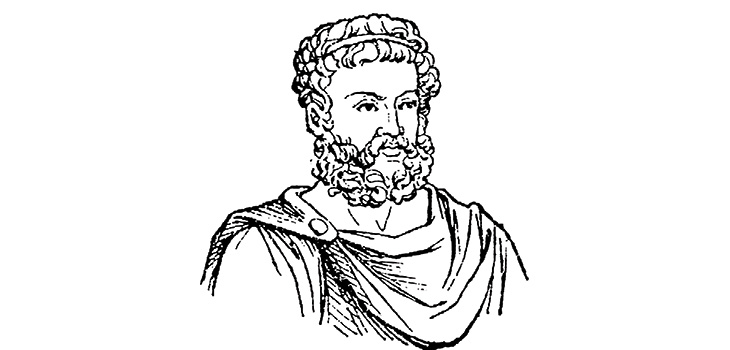
William Byfield summons the past
September 24, 2026 – Pindar
I couldn’t make up my mind what I wanted to read at university. One half of me wanted to study History. It was my favourite subject at school although I was tempted by Law. As a result, on my university application form, known then as UCCA, I applied for History at two universities, one being York, and Law at two others. For the remaining one, my first choice, I put ‘History/Law?’ I am not even sure that this was permitted. I thought I would let fate decide. I had been to York to look around. It had an excellent History department and was a lovely city. I decided that I might well go there if I was accepted. I contacted them, after receiving no response. They apologised and said that they never received my application from UCCA for some bizarre reason. Fate? I was interviewed by my first-choice university (History/Law?) and was interviewed by both the historians and the lawyers. The senior Law don concluded the interview by referring to my dilemma, saying ‘Given your indecisiveness, in the unlikely event that we offer you a place here, would you like us to choose the subject?’ I nodded. Fate’s decision again. A week later it was he who called me and said: ‘Probably unwisely, I am offering you a place to read Jurisprudence.’ And, I suppose, the rest is history.
Historians are taught to examine source material carefully, especially where the original writer had a particular axe to grind. King John had his faults but is generally nowadays considered a better king than he was in the past, if an unlucky one. His chroniclers were mostly clerical, and England suffered a substantial papal Interdict during John’s reign. Richard III had his faults too, but his misfortune was to have his history written under the first king of the dynasty who toppled both him and his House. Tudor bias was transmitted via Thomas More’s biography of him through to Shakespeare and indeed Laurence Olivier’s memorable portrayal. Of course, one can understand that it may not have been politic to depict him in the Tudor era as anything but a psychopathic, usurping monster.
Then there are eyewitnesses. I was cross-examining such a witness a few days ago. I was privately representing a motorist in a collision case where the good offices of two reasonable insurers could not knock any sense into their respective client’s heads and gave up. I nearly always enjoy cross-examining and have rather a soft spot for the difficult witness who fights their corner. My opponent and I never said that each of our clients was equally to blame but Bar-telepathy meant that we both knew our joint thought. Nor did we say that we couldn’t understand why they both didn’t have a couple of first year juniors representing them – we just looked at each other in a certain way.
During my cross-examination of Hyacinth Bucket crossed with Lady Bracknell, she asked me how long my client and I had been friends. I looked shocked, as the judge’s eyes rose to the ceiling. I didn’t say to her that I had only ever done that once, on an even more basic motoring case, when I had told a friend that I could not possibly appear for him. He said to me, ‘Look, if we win, I’ll buy you lunch at The Connaught and if we lose, I’ll buy you lunch at The Connaught.’ We won, quite a triumph in front of the Uxbridge justices of that era and ended up having a very nice lunch at The Connaught. The trial was hysterical and I may record it one day in my diary.
Having a lie-in last Saturday with the weekend rags spread all over my bed, my mind had one of those random flits. The genesis of aristocratic revolt and examining carefully your sources when writing history. The way two drivers in a motoring case cannot see anything beyond their own point of view. The dangers of not being disinterested when examining a controversy, and even though I did break the rule once, the perils of representing a friend or, even worse, oneself. I remembered the golden rule, the need, common to any historian or lawyer, for professional detachment and the difference between telling one’s own story and the professional analysis of someone else’s.
‘Memories,’ I thought, sipping my double espresso, ‘the sum of our lives, but of what use as the sands of time blow away.’ Suddenly, I was pulled up short. What was that on the front pages of the papers about a controversial new book?
William Byfield is the pseudonym of a senior member of the Bar. Gutteridge Chambers, and the events that happen there, are entirely fictitious.
September 24, 2026 – Pindar
I couldn’t make up my mind what I wanted to read at university. One half of me wanted to study History. It was my favourite subject at school although I was tempted by Law. As a result, on my university application form, known then as UCCA, I applied for History at two universities, one being York, and Law at two others. For the remaining one, my first choice, I put ‘History/Law?’ I am not even sure that this was permitted. I thought I would let fate decide. I had been to York to look around. It had an excellent History department and was a lovely city. I decided that I might well go there if I was accepted. I contacted them, after receiving no response. They apologised and said that they never received my application from UCCA for some bizarre reason. Fate? I was interviewed by my first-choice university (History/Law?) and was interviewed by both the historians and the lawyers. The senior Law don concluded the interview by referring to my dilemma, saying ‘Given your indecisiveness, in the unlikely event that we offer you a place here, would you like us to choose the subject?’ I nodded. Fate’s decision again. A week later it was he who called me and said: ‘Probably unwisely, I am offering you a place to read Jurisprudence.’ And, I suppose, the rest is history.
Historians are taught to examine source material carefully, especially where the original writer had a particular axe to grind. King John had his faults but is generally nowadays considered a better king than he was in the past, if an unlucky one. His chroniclers were mostly clerical, and England suffered a substantial papal Interdict during John’s reign. Richard III had his faults too, but his misfortune was to have his history written under the first king of the dynasty who toppled both him and his House. Tudor bias was transmitted via Thomas More’s biography of him through to Shakespeare and indeed Laurence Olivier’s memorable portrayal. Of course, one can understand that it may not have been politic to depict him in the Tudor era as anything but a psychopathic, usurping monster.
Then there are eyewitnesses. I was cross-examining such a witness a few days ago. I was privately representing a motorist in a collision case where the good offices of two reasonable insurers could not knock any sense into their respective client’s heads and gave up. I nearly always enjoy cross-examining and have rather a soft spot for the difficult witness who fights their corner. My opponent and I never said that each of our clients was equally to blame but Bar-telepathy meant that we both knew our joint thought. Nor did we say that we couldn’t understand why they both didn’t have a couple of first year juniors representing them – we just looked at each other in a certain way.
During my cross-examination of Hyacinth Bucket crossed with Lady Bracknell, she asked me how long my client and I had been friends. I looked shocked, as the judge’s eyes rose to the ceiling. I didn’t say to her that I had only ever done that once, on an even more basic motoring case, when I had told a friend that I could not possibly appear for him. He said to me, ‘Look, if we win, I’ll buy you lunch at The Connaught and if we lose, I’ll buy you lunch at The Connaught.’ We won, quite a triumph in front of the Uxbridge justices of that era and ended up having a very nice lunch at The Connaught. The trial was hysterical and I may record it one day in my diary.
Having a lie-in last Saturday with the weekend rags spread all over my bed, my mind had one of those random flits. The genesis of aristocratic revolt and examining carefully your sources when writing history. The way two drivers in a motoring case cannot see anything beyond their own point of view. The dangers of not being disinterested when examining a controversy, and even though I did break the rule once, the perils of representing a friend or, even worse, oneself. I remembered the golden rule, the need, common to any historian or lawyer, for professional detachment and the difference between telling one’s own story and the professional analysis of someone else’s.
‘Memories,’ I thought, sipping my double espresso, ‘the sum of our lives, but of what use as the sands of time blow away.’ Suddenly, I was pulled up short. What was that on the front pages of the papers about a controversial new book?
William Byfield summons the past

The Chair of the Bar reports back
By Kem Kemal, CEO, Henry Dannell
By BSK Financial Planning
Mário Barroso, Head of R&D and Method Development at AlphaBiolabs
Susie Griffin on the admin that keeps barristers from billable work
Clement Cowley, Partner at The Penny Group, explains how global events can influence the performance of pensions and ISAs, and why taking a long-term approach to investing is often the most effective strategy

Kick off your career at the Bar Council’s Pupillage Fair this October – it’s one of the most valuable opportunities for aspiring barristers, says Amelia Clegg
The golden age of advocacy? David Langwallner pays homage to the filmic if contentious barrister Sir Edward Carson and some of his contemporaries
Henry Fingerhut outlines what the Bar Standards Board AI guidance means for early career barristers
The Ministry of Justice will match-fund up to 100 criminal pupillages, with grants available to criminal chambers across England and Wales. Similar to the COIC scheme, the grants will match-fund pupillages additional to those otherwise offered without government funding
Not yet, says Jacob Turner. Regulation, unlike the technology itself, is a domain the legal profession can still control