*/
We are in danger of missing the obvious, warns William Byfield*
April 27, 2026
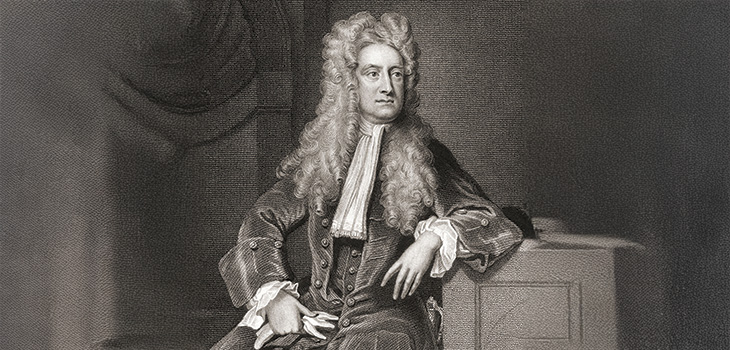
– Isaac Newton
It is easy to remember the past through a mellow tint. My mind was reminded of this truth, after I had dinner with a younger friend of mine who strongly believes that everything eventually reverts to its initial state and constantly repeats itself. Alastair, my dining companion, stressed to me the point that time itself ends at death, drawing a comparison with sleep. Therefore, if his repeating theory is correct, the start of the universe may repeat itself a trillion trillion times or more without us being any the wiser. But, says he, eventually, however long it takes, our existence will be repeated and probably has already been many times before.
At the end of the evening, Alastair looked at me with increased intensity. ‘Would you want to go through a replay?’ he asked. ‘An exact one?’ I asked. ‘That must eventually be one of the permutations,’ he replied. ‘Be rather fun!’ I said.
I woke up in the night. My mind went back to the conversation. Would it be fun? I had remembered the good times, the successes, the sunny holidays. Now, under the eye of Morpheus, it turned to the horrible things: tragedies, disappointments, illness, periods of despair. Would I want to go through all that again? Then, of course, I remembered Alastair’s parting words: ‘Of course, apart from a spot of déjà vu, you wouldn’t realise that you had lived it all before.’
Next day, I presided over a new Chambers’ Committee – The Survival Committee – designed to give dynamic thought to the many current discontents. I have begun to feel a little like Louis XVI after his removal to Paris: presiding over a (just about) polite National Assembly, but with more than one Robespierre lurking in the shadows. Then, bread was the trigger for revolt and revolution; now, it is the systematic destruction of what was once a system with widely appreciated values. Still a little gripped by Alastair’s theories, I thought about what might have happened in an earlier run through of this scenario. Was it fated always to be like this? I stayed for coffee afterwards and listened to the depressing tales of overwork and underpay.
I wondered if, as usual as a species, we are looking at it the wrong way round, trying to solve the problem by the most confusing path instead of the simple one. This often happens when a system is elevated over its intended beneficiaries. I look around some courts, which I remember being opened. They look now sad and neglected. Facilities that were thought necessary then are now either used for another purpose or such that do exist bear all the hallmarks of decline and decay. Some of the examples would not even be believed if I put them in my diary: the leaking ceiling in one courtroom, when we all suddenly realised what was on the floor above us. Eventually, the dire state of the buildings cannot be rectified without massive investment and then it becomes impossible to afford. As Paddy Corkhill once said to me: ‘Don’t you find that on walking into a court centre, whether prosecuting, defending or even judging, your spirit starts sinking and sinking until, before you even get into the courtroom, they are at rock bottom?’
Our masters rushed to the far end of the problem with plans for complex and hugely detrimental changes to the court system, ill thought-out from the start, followed by justifications which even they barely understand. Instead of binging on the introduction of a constant stream of populist new laws which are beyond the capacity of the police to enforce, why doesn’t government start looking at everything in a different way, beginning with committing itself first to raising the morale of those, all those, who work in the courts and bringing self-respect back to the profession and engendering respect from those who engage with the courts. Start to ask the simple questions: why can’t we feed people at court? We used to. Why can’t we get remanded prisoners to court on time? We used to. Why can’t we pay everyone properly? We used to. Why can’t we maintain court buildings properly? Once you accept that something does not have to be done in the modern world, then you can guarantee that it won’t be done.
To think that this might have happened a trillion times before and may happen a trillion times again means that I must have another bite with Alastair to learn about alternate universes and how to join one.
William Byfield is the pseudonym of a senior member of the Bar. Gutteridge Chambers, and the events that happen there, are entirely fictitious.
April 27, 2026
– Isaac Newton
It is easy to remember the past through a mellow tint. My mind was reminded of this truth, after I had dinner with a younger friend of mine who strongly believes that everything eventually reverts to its initial state and constantly repeats itself. Alastair, my dining companion, stressed to me the point that time itself ends at death, drawing a comparison with sleep. Therefore, if his repeating theory is correct, the start of the universe may repeat itself a trillion trillion times or more without us being any the wiser. But, says he, eventually, however long it takes, our existence will be repeated and probably has already been many times before.
At the end of the evening, Alastair looked at me with increased intensity. ‘Would you want to go through a replay?’ he asked. ‘An exact one?’ I asked. ‘That must eventually be one of the permutations,’ he replied. ‘Be rather fun!’ I said.
I woke up in the night. My mind went back to the conversation. Would it be fun? I had remembered the good times, the successes, the sunny holidays. Now, under the eye of Morpheus, it turned to the horrible things: tragedies, disappointments, illness, periods of despair. Would I want to go through all that again? Then, of course, I remembered Alastair’s parting words: ‘Of course, apart from a spot of déjà vu, you wouldn’t realise that you had lived it all before.’
Next day, I presided over a new Chambers’ Committee – The Survival Committee – designed to give dynamic thought to the many current discontents. I have begun to feel a little like Louis XVI after his removal to Paris: presiding over a (just about) polite National Assembly, but with more than one Robespierre lurking in the shadows. Then, bread was the trigger for revolt and revolution; now, it is the systematic destruction of what was once a system with widely appreciated values. Still a little gripped by Alastair’s theories, I thought about what might have happened in an earlier run through of this scenario. Was it fated always to be like this? I stayed for coffee afterwards and listened to the depressing tales of overwork and underpay.
I wondered if, as usual as a species, we are looking at it the wrong way round, trying to solve the problem by the most confusing path instead of the simple one. This often happens when a system is elevated over its intended beneficiaries. I look around some courts, which I remember being opened. They look now sad and neglected. Facilities that were thought necessary then are now either used for another purpose or such that do exist bear all the hallmarks of decline and decay. Some of the examples would not even be believed if I put them in my diary: the leaking ceiling in one courtroom, when we all suddenly realised what was on the floor above us. Eventually, the dire state of the buildings cannot be rectified without massive investment and then it becomes impossible to afford. As Paddy Corkhill once said to me: ‘Don’t you find that on walking into a court centre, whether prosecuting, defending or even judging, your spirit starts sinking and sinking until, before you even get into the courtroom, they are at rock bottom?’
Our masters rushed to the far end of the problem with plans for complex and hugely detrimental changes to the court system, ill thought-out from the start, followed by justifications which even they barely understand. Instead of binging on the introduction of a constant stream of populist new laws which are beyond the capacity of the police to enforce, why doesn’t government start looking at everything in a different way, beginning with committing itself first to raising the morale of those, all those, who work in the courts and bringing self-respect back to the profession and engendering respect from those who engage with the courts. Start to ask the simple questions: why can’t we feed people at court? We used to. Why can’t we get remanded prisoners to court on time? We used to. Why can’t we pay everyone properly? We used to. Why can’t we maintain court buildings properly? Once you accept that something does not have to be done in the modern world, then you can guarantee that it won’t be done.
To think that this might have happened a trillion times before and may happen a trillion times again means that I must have another bite with Alastair to learn about alternate universes and how to join one.
We are in danger of missing the obvious, warns William Byfield*


The Chair of the Bar reports back
Susie Griffin on the admin that keeps barristers from billable work
Clement Cowley, Partner at The Penny Group, explains how global events can influence the performance of pensions and ISAs, and why taking a long-term approach to investing is often the most effective strategy
Mário Barroso, Head of R&D and Method Development at AlphaBiolabs, discusses what family law professionals need to know about hallucinogens, from the main hallucinogenic drugs encountered in family proceedings, to their effects and the testing options available
Harmony Christian Ministries is the latest charity to benefit from a £500 donation from AlphaBiolabs via the company’s Giving Back initiative
By David Green
At the start of her term, Chair of the Bar 2026 Kirsty Brimelow KC set out a series of priorities for the year ahead. One of those priorities was children in the justice system
As the world becomes more digital, Barbara Vinagre Mota examines international research into the mental health consequences of judges’ exposure to graphic and immersive evidence, highlighting the importance of support systems
In an era of patient-centred care and growing concern over misconduct in medical settings, why do women still lack the right to choose women consultants for examination and treatment? Charles Davey investigates
Reviewed by Daniel Barnett
James McNeill Whistler at Tate Britain until 27 September Rothko in Florence at Palazzo Strozzi until 23 August Reviewed by Stephen Cragg KC