*/
Dr Leo Raznovich’s last word to Thomas Roe KC and Andrew O’Kola on their response to his article ‘Privy Council colonialism?’
As a regular contributor to Counsel magazine, I consistently seek to highlight important legal issues and stimulate discussion – ultimately, to foster solutions. I therefore welcome the engagement provoked by my article ‘Privy Council colonialism? Piercing the constitutional veil’ (the ‘Article’) in the October 2025 issue of Counsel.
‘Privy Council ‘colonialism’ – a response’ by Thomas Roe KC and Andrew O’Kola (the ‘Response’), in the April 2026 issue of Counsel, transformed my expression of opinion into an exchange of views. This is a positive development.
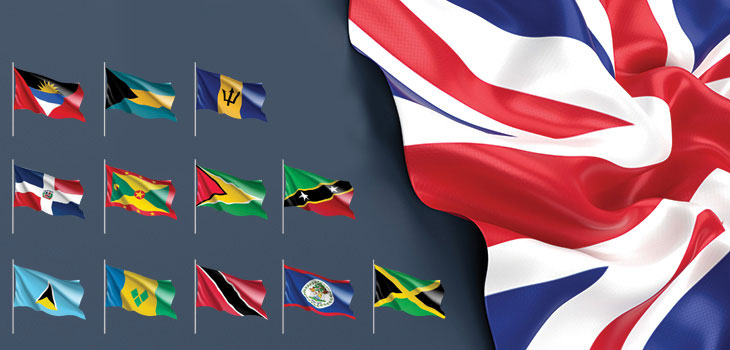
The Response, however, I felt inadequately addressed my principal argument: that the United Kingdom, by allowing retention of the Judicial Committee of the Privy Council (JCPC) by former Caribbean colonies, failed to decolonise properly in accordance with international law. One branch of government – the judiciary – remains under UK influence and control, after political and legislative independence: British judges remain responsible for the construction, interpretation and enforcement of their constitutions and legislation. Consent does not rectify that failure. The decision of the International Court of Justice (in the Chagos Islands case) affirmed that independence and self-determination are inalienable rights. Hence, consent does not negate the right to judicial self-determination, especially when all three branches of government are equal in these written constitutional systems. This retention of the JCPC has resulted in hinderance of human rights protections in the Caribbean, evident from the JCPC’s decisions concerning savings clauses that have shielded colonial-era laws from any judicial scrutiny. Rights protections are worse off after independence than under the UK’s colonial regime when the Colonial Laws Validity Act 1865 provided a backstop rendering inoperative any law ‘repugnant’ to their constitutions.
The purpose of my article was to articulate this issue in a manner suited to the broad readership of Counsel. For those seeking an academic presentation, please see my January 2026 article, ‘Quousque Tandem, Privy Council? Denial of LGBTQI+ Rights in the Caribbean by the British Judiciary’, in Liliana Obregón Tarazona et al (eds), The Oxford Handbook of International Law and the Americas (online edn, OUP Oxford 2026). I welcome that the Response sparked debate – and readers are now better equipped to form their own views on this matter.
Repetition of my name – e.g., ‘Dr Raznovich asserts…’ at least nine times – in the Response was conspicuous and, I would venture, excessive. Epimone often has a function in argumentation, which Daniel F Miller in Rhetoric as an Art of Persuasion: From the Standpoint of a Lawyer (Mills & Company, Iowa: 1880) described thus: ‘Epimone in rhetoric, signifies the pressing upon some particular word or point, and repeating it over and over again, until it is made ridiculous by the repetition.’
Epimone, therefore, can ultimately undermine the point being made and deflect from its substance. And while my arguments are open to debate, it is misleading to suggest that these arguments are solely mine or to imply that I am somehow unsupported in my views. I am, for example, not alone in accusing the JCPC of ‘breaches of the rule of law’. For example, those who had read Matthew [2005] 1 AC 433 would have taken note of the dissenting views of Lords Bingham, Nicholls, Steyn and Walker. Their strong disagreement with Lord Hoffmann, for the majority, reversing Roodal v The State [2005] 1 AC 328 (both cases cited in the Response) could not have stated the same any clearer:
‘We consider the decision of the majority to be unsound in law and productive of grave injustice to a small but important class of people in Trinidad and Tobago. It is in our opinion clear that the interpretation of the 1976 Constitution of Trinidad and Tobago which commends itself to the majority does not ensure the protection of fundamental human rights and freedoms, degrades the dignity of the human person and does not respect the rule of law. With much regret, but without doubt, we dissent from the majority decision.’ (Emphasis added.)
Nor am I alone in asserting that the JCPC holds ‘effective imperial power’ in the Caribbean; the UN Independent Expert on sexual orientation and gender identity, Victor Madrigal-Borloz, when reporting to the UN General Assembly in 2023, quoted the Colours Caribbean's submission referring to the JCPC as ‘the last remnant of British colonialism holding effective imperial power’ (emphasis added - see Report of the Independent Expert, 25 July 2023, UN A/78/227).
I am not alone in asserting that ‘the UK imposed’ on former colonies ‘a constitutional framework, the retention of the JCPC and the ‘savings clause’, with the effect of shielding colonial laws from judicial scrutiny’. W Elliot Bulmer in Constitutional Change in the Commonwealth Caribbean (International IDEA & UNDP 2024) notes that British authorities set the parameters and conditions for independence and ‘typically insisted upon keeping appeals to the JCPC’. Tracy Robinson in 'Gender, Nation and the Common Law Constitution', 28 Oxf. J. Legal Stud. 742 (2008), explains this insistence stemmed from a paternalistic attitude and a distrust of independence leaders and the intention of the British government to preserve the Westminster constitution model and pre-existing laws. Spencer Mawby in Ordering Independence: The End of Empire in the Anglophone Caribbean,1947-69 (Palgrave Macmillan 2012) reveals how British intentions were condescending rather than sincere because ‘the files of the [UK] Colonial Office are replete with references to the callowness and irrationality of the Caribbean’s leading nationalist politicians’.
It is not only me who asserts that Lord Reed acted in an ‘unbefitting manner’ in 2023 by writing a letter to the Gleaner (of Jamaica) in response to its editorial ‘Loitering at the Privy Council’. Lord Reed weighed in on the court’s behalf, promoting its online accessibility and emphasising the honour and privilege of serving the people of Jamaica. Journalists and lawyers of Caribbean countries, including Jamaica and Trinidad and Tobago, commented on this as an interference in a political debate regarding a sovereign decision of Jamaica. In 2025, the outgoing President of the Caribbean Court of Justice, Adrian Saunders, recalled a candid exchange with UK-based Law Lords at the JCPC where he told them: ‘Each and every time you hear an appeal from Jamaica or from Trinidad and Tobago or from St Kitts and Nevis, you are aiding and abetting the breach of a treaty.’
I appreciate the Response and the debate initiated thereby. Nonetheless, serious effort to challenge or dismiss the notion of judicial colonialism – specifically regarding the JCPC – demands a more thorough and detailed approach. The assertion that ‘present-day laws [that are used today to criminalise same-sex intimacy]… of former British territories as "colonial" is often mistaken’ (emphasis added) is particularly puzzling. If this is correct, historians, academics and prominent public figures would all be mistaken, including former Prime Minister Theresa May who, as I mentioned in the Article, made a public apology. In 2018 at the Commonwealth heads of government meeting, May said: ‘I am all too aware that these laws were often put in place by my own country. They were wrong then and they are wrong now. As the United Kingdom’s Prime Minister I deeply regret both the fact that such laws were introduced and the legacy of discrimination, violence and death that persists today.’
In a House of Lords debate on this subject in 2012, Lord Lexden stated (unchallenged) that:
‘… we must also remember where the laws criminalising homosexuals in many countries came from. They came from Britain, …. In India in the 1820s, Thomas Macaulay… devised a legal system which incorporated Britain’s then firm and unbending intolerance of homosexuality. The Indian penal code became the model for the legal systems of Britain’s colonies...’ (House of Lords Debate, 25 October 2012, vol 740, col 377).
Lord Finsbury observed in response: ‘Most laws in these countries have been inherited from us. I believe that that gives us a special responsibility to do whatever we can to help to change things.’ (col 391)
The UK retained the apex court of these countries, so the responsibility falls on British judges serving on the JCPC, who should in matters of human rights adopt purposive and generous readings of constitutions to safeguard rights and uphold human dignity for all.
If British judges believe that constitutional limitations prevent them from advancing these important values foundational to the rule of law, they ought, following the example set in Hong Kong, to consider withdrawing from hearing appeals from jurisdictions such as Trinidad and Tobago. A precedent was set after the enactment of Hong Kong’s National Security Law in 2020, which drastically restricted freedom of expression. On 30 March 2022, Lord Reed issued the following statement: ‘I have concluded, in agreement with the government, that the judges of the Supreme Court cannot continue to sit in Hong Kong without appearing to endorse an administration which has departed from values of political freedom, and freedom of expression, to which the Justices of the Supreme Court are deeply committed.’
Trinidad and Tobago, a nation where the protection of human dignity remains a significant concern, poses a comparable challenge. It is hoped the Justices of the UK Supreme Court are as unwaveringly committed to the values of human dignity as they are to political freedom and freedom of expression.
Dr Leonardo Raznovich is a barrister at Bedlington Chambers, an academic and previous Co-Chair of the Diversity and Inclusion Council of the International Bar Association (2024-26).
As a regular contributor to Counsel magazine, I consistently seek to highlight important legal issues and stimulate discussion – ultimately, to foster solutions. I therefore welcome the engagement provoked by my article ‘Privy Council colonialism? Piercing the constitutional veil’ (the ‘Article’) in the October 2025 issue of Counsel.
‘Privy Council ‘colonialism’ – a response’ by Thomas Roe KC and Andrew O’Kola (the ‘Response’), in the April 2026 issue of Counsel, transformed my expression of opinion into an exchange of views. This is a positive development.
The Response, however, I felt inadequately addressed my principal argument: that the United Kingdom, by allowing retention of the Judicial Committee of the Privy Council (JCPC) by former Caribbean colonies, failed to decolonise properly in accordance with international law. One branch of government – the judiciary – remains under UK influence and control, after political and legislative independence: British judges remain responsible for the construction, interpretation and enforcement of their constitutions and legislation. Consent does not rectify that failure. The decision of the International Court of Justice (in the Chagos Islands case) affirmed that independence and self-determination are inalienable rights. Hence, consent does not negate the right to judicial self-determination, especially when all three branches of government are equal in these written constitutional systems. This retention of the JCPC has resulted in hinderance of human rights protections in the Caribbean, evident from the JCPC’s decisions concerning savings clauses that have shielded colonial-era laws from any judicial scrutiny. Rights protections are worse off after independence than under the UK’s colonial regime when the Colonial Laws Validity Act 1865 provided a backstop rendering inoperative any law ‘repugnant’ to their constitutions.
The purpose of my article was to articulate this issue in a manner suited to the broad readership of Counsel. For those seeking an academic presentation, please see my January 2026 article, ‘Quousque Tandem, Privy Council? Denial of LGBTQI+ Rights in the Caribbean by the British Judiciary’, in Liliana Obregón Tarazona et al (eds), The Oxford Handbook of International Law and the Americas (online edn, OUP Oxford 2026). I welcome that the Response sparked debate – and readers are now better equipped to form their own views on this matter.
Repetition of my name – e.g., ‘Dr Raznovich asserts…’ at least nine times – in the Response was conspicuous and, I would venture, excessive. Epimone often has a function in argumentation, which Daniel F Miller in Rhetoric as an Art of Persuasion: From the Standpoint of a Lawyer (Mills & Company, Iowa: 1880) described thus: ‘Epimone in rhetoric, signifies the pressing upon some particular word or point, and repeating it over and over again, until it is made ridiculous by the repetition.’
Epimone, therefore, can ultimately undermine the point being made and deflect from its substance. And while my arguments are open to debate, it is misleading to suggest that these arguments are solely mine or to imply that I am somehow unsupported in my views. I am, for example, not alone in accusing the JCPC of ‘breaches of the rule of law’. For example, those who had read Matthew [2005] 1 AC 433 would have taken note of the dissenting views of Lords Bingham, Nicholls, Steyn and Walker. Their strong disagreement with Lord Hoffmann, for the majority, reversing Roodal v The State [2005] 1 AC 328 (both cases cited in the Response) could not have stated the same any clearer:
‘We consider the decision of the majority to be unsound in law and productive of grave injustice to a small but important class of people in Trinidad and Tobago. It is in our opinion clear that the interpretation of the 1976 Constitution of Trinidad and Tobago which commends itself to the majority does not ensure the protection of fundamental human rights and freedoms, degrades the dignity of the human person and does not respect the rule of law. With much regret, but without doubt, we dissent from the majority decision.’ (Emphasis added.)
Nor am I alone in asserting that the JCPC holds ‘effective imperial power’ in the Caribbean; the UN Independent Expert on sexual orientation and gender identity, Victor Madrigal-Borloz, when reporting to the UN General Assembly in 2023, quoted the Colours Caribbean's submission referring to the JCPC as ‘the last remnant of British colonialism holding effective imperial power’ (emphasis added - see Report of the Independent Expert, 25 July 2023, UN A/78/227).
I am not alone in asserting that ‘the UK imposed’ on former colonies ‘a constitutional framework, the retention of the JCPC and the ‘savings clause’, with the effect of shielding colonial laws from judicial scrutiny’. W Elliot Bulmer in Constitutional Change in the Commonwealth Caribbean (International IDEA & UNDP 2024) notes that British authorities set the parameters and conditions for independence and ‘typically insisted upon keeping appeals to the JCPC’. Tracy Robinson in 'Gender, Nation and the Common Law Constitution', 28 Oxf. J. Legal Stud. 742 (2008), explains this insistence stemmed from a paternalistic attitude and a distrust of independence leaders and the intention of the British government to preserve the Westminster constitution model and pre-existing laws. Spencer Mawby in Ordering Independence: The End of Empire in the Anglophone Caribbean,1947-69 (Palgrave Macmillan 2012) reveals how British intentions were condescending rather than sincere because ‘the files of the [UK] Colonial Office are replete with references to the callowness and irrationality of the Caribbean’s leading nationalist politicians’.
It is not only me who asserts that Lord Reed acted in an ‘unbefitting manner’ in 2023 by writing a letter to the Gleaner (of Jamaica) in response to its editorial ‘Loitering at the Privy Council’. Lord Reed weighed in on the court’s behalf, promoting its online accessibility and emphasising the honour and privilege of serving the people of Jamaica. Journalists and lawyers of Caribbean countries, including Jamaica and Trinidad and Tobago, commented on this as an interference in a political debate regarding a sovereign decision of Jamaica. In 2025, the outgoing President of the Caribbean Court of Justice, Adrian Saunders, recalled a candid exchange with UK-based Law Lords at the JCPC where he told them: ‘Each and every time you hear an appeal from Jamaica or from Trinidad and Tobago or from St Kitts and Nevis, you are aiding and abetting the breach of a treaty.’
I appreciate the Response and the debate initiated thereby. Nonetheless, serious effort to challenge or dismiss the notion of judicial colonialism – specifically regarding the JCPC – demands a more thorough and detailed approach. The assertion that ‘present-day laws [that are used today to criminalise same-sex intimacy]… of former British territories as "colonial" is often mistaken’ (emphasis added) is particularly puzzling. If this is correct, historians, academics and prominent public figures would all be mistaken, including former Prime Minister Theresa May who, as I mentioned in the Article, made a public apology. In 2018 at the Commonwealth heads of government meeting, May said: ‘I am all too aware that these laws were often put in place by my own country. They were wrong then and they are wrong now. As the United Kingdom’s Prime Minister I deeply regret both the fact that such laws were introduced and the legacy of discrimination, violence and death that persists today.’
In a House of Lords debate on this subject in 2012, Lord Lexden stated (unchallenged) that:
‘… we must also remember where the laws criminalising homosexuals in many countries came from. They came from Britain, …. In India in the 1820s, Thomas Macaulay… devised a legal system which incorporated Britain’s then firm and unbending intolerance of homosexuality. The Indian penal code became the model for the legal systems of Britain’s colonies...’ (House of Lords Debate, 25 October 2012, vol 740, col 377).
Lord Finsbury observed in response: ‘Most laws in these countries have been inherited from us. I believe that that gives us a special responsibility to do whatever we can to help to change things.’ (col 391)
The UK retained the apex court of these countries, so the responsibility falls on British judges serving on the JCPC, who should in matters of human rights adopt purposive and generous readings of constitutions to safeguard rights and uphold human dignity for all.
If British judges believe that constitutional limitations prevent them from advancing these important values foundational to the rule of law, they ought, following the example set in Hong Kong, to consider withdrawing from hearing appeals from jurisdictions such as Trinidad and Tobago. A precedent was set after the enactment of Hong Kong’s National Security Law in 2020, which drastically restricted freedom of expression. On 30 March 2022, Lord Reed issued the following statement: ‘I have concluded, in agreement with the government, that the judges of the Supreme Court cannot continue to sit in Hong Kong without appearing to endorse an administration which has departed from values of political freedom, and freedom of expression, to which the Justices of the Supreme Court are deeply committed.’
Trinidad and Tobago, a nation where the protection of human dignity remains a significant concern, poses a comparable challenge. It is hoped the Justices of the UK Supreme Court are as unwaveringly committed to the values of human dignity as they are to political freedom and freedom of expression.
Dr Leo Raznovich’s last word to Thomas Roe KC and Andrew O’Kola on their response to his article ‘Privy Council colonialism?’

The Chair of the Bar reports back
Susie Griffin on the admin that keeps barristers from billable work
Clement Cowley, Partner at The Penny Group, explains how global events can influence the performance of pensions and ISAs, and why taking a long-term approach to investing is often the most effective strategy
Mário Barroso, Head of R&D and Method Development at AlphaBiolabs, discusses what family law professionals need to know about hallucinogens, from the main hallucinogenic drugs encountered in family proceedings, to their effects and the testing options available
Harmony Christian Ministries is the latest charity to benefit from a £500 donation from AlphaBiolabs via the company’s Giving Back initiative
By David Green

The golden age of advocacy? David Langwallner pays homage to the filmic if contentious barrister Sir Edward Carson and some of his contemporaries
Leah Arthur, a pupil, and her second seat supervisor, John Goss, share their perspectives on building a productive pupil-supervisor relationship
Henry Fingerhut outlines what the Bar Standards Board AI guidance means for early career barristers
The Ministry of Justice will match-fund up to 100 criminal pupillages, with grants available to criminal chambers across England and Wales. Similar to the COIC scheme, the grants will match-fund pupillages additional to those otherwise offered without government funding
Not yet, says Jacob Turner. Regulation, unlike the technology itself, is a domain the legal profession can still control