*/
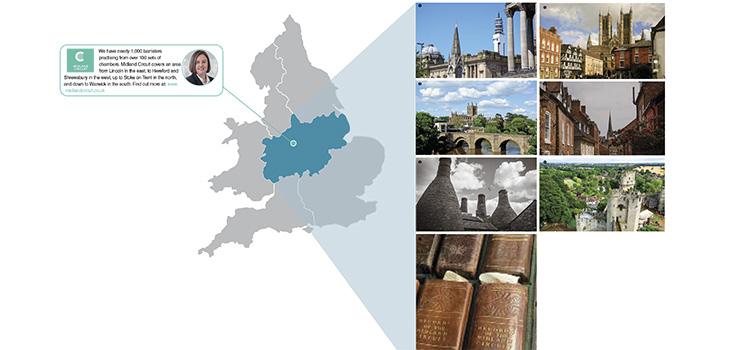
When it came to applying for pupillage I didn’t mind where I went, so long as I got one! Somewhat fortuitously I was offered pupillage at No 5 in Birmingham, and I have been a proud Midland Circuiteer since 2001.
The Circuits were previously referred to, somewhat dismissively, as the Provinces, as if we were somehow a backwater compared with the thrusting legal world of London. However, I soon discovered that we were anything but provincial.
The advantage of Circuit life is that pupils are taken on with a view to becoming tenants. There is no pupillage factory, and the Midland Circuit takes a keen interest in the training and development of its pupils. We hold Circuit pupillage advocacy courses, where all pupils are taught by local barristers and judges. It is a wonderful opportunity to get to know your fellow pupils, and is the start of a professional journey together. I am still very close friends with the Pupils from my 2001/02 training cohort.
Thereafter Circuit life offers greater opportunities to experience good quality work. It helps that there are simply fewer barristers, and thus there is more work to share around. I was in the Crown Court the first day on my feet, and undertaking Crown Court trials within six months.
Each Circuit has developed its own niche areas of practice and the Midland Circuit is very proud of specialist courts which are now well established outside of London, such as the Mercantile Court or the Administrative Court we have in Birmingham. These sit alongside the strong practices in the family, criminal and civil courts across the Circuit.
From a practical point of view there is less travelling. In crime, for example, we focus on our local courts. This also means that you get to know your fellow barristers – and judges – far more quickly. Be warned, though, it is easier to gain a reputation, good or bad, on Circuit simply because everyone knows one another.
The training does not end after pupillage. We then run training course for new practitioners, the vulnerable witness advocacy training course, and ongoing rape and serious sexual offending (RASSO) training.
Life isn’t all work, work, work! Once you are a member of the Midland Circuit you will be encouraged to attend our social events, whether it is the informal new pupil drinks, or the more formal Circuit ball, which is held at different venues across Circuit every year. These social events are a wonderful opportunity to meet not just your contemporaries, but also senior silks, and judges, in a more relaxed setting.
The Midlands is a diverse area and our Bar thankfully reflects that. We have barristers from all races, sexes and social background, and to ensure that progress is made we have a number of different committees working hard to promote diversity and inclusion. Our LGBT + Equality group proudly sends a large delegation to the Birmingham Pride event. Our Social Mobility group goes into local schools and universities to ensure that we attract the best talent, and the Women’s Forum regularly holds events with a range of speakers and topics. We also work closely with the Bar Council’s Race Working Group, supporting their initiatives and achievements.
On the Midland Circuit it doesn’t matter what university or school you went to. What matters is whether you are prepared to put the work in, and try your best in court. You are responsible for your own success or failure, which is why we have produced so many top KCs and judges. Sir Igor Judge, the former Lord Chief Justice was a proud Midlander, and Lady Chief Justice Carr was the Presiding Judge for our Circuit.
So, when you fill out those application forms, considering where you would like to go, as yourself, do you want to hold your destiny in your own hands? If the answer is Yes, then come to the Midlands. We welcome you with open arms.

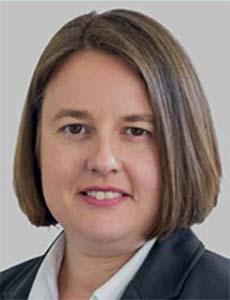
Michelle Heeley KC was Leader of the Midland Circuit from 2021 to 2024. She is a silk at No5 Barrister’s Chambers. Michelle took silk in 2017, at the time the youngest criminal silk in the country. She became Leader of the Midland Circuit in October 2021. Michelle sits as a Recorder and holds a Serious Sexual Offences Certificate. She specialises in crime, criminal fraud and proceeds of crime, misconduct and compliance and regulatory law.
When it came to applying for pupillage I didn’t mind where I went, so long as I got one! Somewhat fortuitously I was offered pupillage at No 5 in Birmingham, and I have been a proud Midland Circuiteer since 2001.
The Circuits were previously referred to, somewhat dismissively, as the Provinces, as if we were somehow a backwater compared with the thrusting legal world of London. However, I soon discovered that we were anything but provincial.
The advantage of Circuit life is that pupils are taken on with a view to becoming tenants. There is no pupillage factory, and the Midland Circuit takes a keen interest in the training and development of its pupils. We hold Circuit pupillage advocacy courses, where all pupils are taught by local barristers and judges. It is a wonderful opportunity to get to know your fellow pupils, and is the start of a professional journey together. I am still very close friends with the Pupils from my 2001/02 training cohort.
Thereafter Circuit life offers greater opportunities to experience good quality work. It helps that there are simply fewer barristers, and thus there is more work to share around. I was in the Crown Court the first day on my feet, and undertaking Crown Court trials within six months.
Each Circuit has developed its own niche areas of practice and the Midland Circuit is very proud of specialist courts which are now well established outside of London, such as the Mercantile Court or the Administrative Court we have in Birmingham. These sit alongside the strong practices in the family, criminal and civil courts across the Circuit.
From a practical point of view there is less travelling. In crime, for example, we focus on our local courts. This also means that you get to know your fellow barristers – and judges – far more quickly. Be warned, though, it is easier to gain a reputation, good or bad, on Circuit simply because everyone knows one another.
The training does not end after pupillage. We then run training course for new practitioners, the vulnerable witness advocacy training course, and ongoing rape and serious sexual offending (RASSO) training.
Life isn’t all work, work, work! Once you are a member of the Midland Circuit you will be encouraged to attend our social events, whether it is the informal new pupil drinks, or the more formal Circuit ball, which is held at different venues across Circuit every year. These social events are a wonderful opportunity to meet not just your contemporaries, but also senior silks, and judges, in a more relaxed setting.
The Midlands is a diverse area and our Bar thankfully reflects that. We have barristers from all races, sexes and social background, and to ensure that progress is made we have a number of different committees working hard to promote diversity and inclusion. Our LGBT + Equality group proudly sends a large delegation to the Birmingham Pride event. Our Social Mobility group goes into local schools and universities to ensure that we attract the best talent, and the Women’s Forum regularly holds events with a range of speakers and topics. We also work closely with the Bar Council’s Race Working Group, supporting their initiatives and achievements.
On the Midland Circuit it doesn’t matter what university or school you went to. What matters is whether you are prepared to put the work in, and try your best in court. You are responsible for your own success or failure, which is why we have produced so many top KCs and judges. Sir Igor Judge, the former Lord Chief Justice was a proud Midlander, and Lady Chief Justice Carr was the Presiding Judge for our Circuit.
So, when you fill out those application forms, considering where you would like to go, as yourself, do you want to hold your destiny in your own hands? If the answer is Yes, then come to the Midlands. We welcome you with open arms.

The Chair of the Bar reports back
Domestic abuse charity Hull Women's Aid is the latest charity to benefit from a £500 donation via AlphaBiolabs' Giving Back initiative
Conner Wright, Legal Case Manager at AlphaBiolabs, answers the most frequently asked questions about SCRAM Continuous Alcohol Monitoring (SCRAM CAM®) posed by family law professionals
Ryan Prins of Philips SpeechLive explains how barristers can boost drafting efficiency with AI-assisted speech recognition – while keeping full oversight
Finding available counsel shouldn’t be complicated, says Kaan Kartal of Brieflink
By Kem Kemal, CEO, Henry Dannell

By His Honour Judge Seán Enright Reviewed by Joanna Hardy-Susskind
For barristers, managing anxiety is a professional discipline as much as a personal one, says Annette Henry KC. This article examines the cues, clues and practical techniques for avoiding overwhelm and regaining calm
After a two-year investigation, Karim Khan KC was removed as ICC Chief Prosecutor in July. With the United States threatening to dismantle the court ‘brick by brick’, what’s next for the beleaguered ICC? asks Chris Stephen
Kick off your career at the Bar Council’s Pupillage Fair this October – it’s one of the most valuable opportunities for aspiring barristers, says Amelia Clegg
Join us on Saturday 21 November 2026 at Leeds Beckett University and see for yourself why the North continues to be an exceptional place to build a career at the Bar