*/

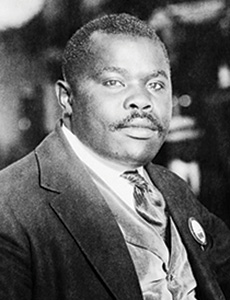
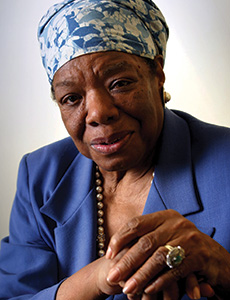
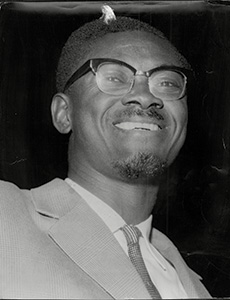
How to keep the edge, and the door open, in this adversarial profession? Building on the wisdom of influential Black figures past and present, Adeo Fraser shares his lessons learnt

Tomorrow’s Bar belongs to those who prepare for it today. After spending years on your quest for the holy grail that is pupillage and tenancy, there is a real temptation to feel like you have reached the mountain top and accomplished your goals. This complacency paradox can rear its head once again as you approach 10 years’ practice.
I have learnt that we are at our best when we stay hungry and keep the energy that enabled us to be called into serving this great profession.
Further, in a profession as old as ours, complacency can result in you losing your edge. A cursory glance at any social media platform will see you swiftly transported into an AI doomsday algorithm. While I have always considered myself to be a hopeless optimist, it is clear that AI is here to stay. Powerful AI tools are revolutionising legal research and the way we do our jobs. It is important to adapt and move with the times, as opposed to fighting against the tide.
You need to have an open mind to technological advancements. During my first mini-pupillage in 2010, the barrister I shadowed drafted court orders by hand on pieces of paper artfully removed from her blue book. At that time, this was the norm. Fast forward 16 years, I cannot imagine many tribunals would be willing to accept a draft order written by hand.
With predictions of many professions becoming increasingly obsolete, and perhaps even redundant in the not-too-distant future, one might reasonably ask whether there is a future at the Bar.
Advocacy is an art form. One that dates back millennia. What I draw from this is despite significant structural, economic and technological changes and advancements, there has always remained a need for skilled advocates in functional societies.
In my humble opinion, the Bar is resilient and it is here to stay. This is not to say that it will always look the same, but that it will always remain.
At the Bar, there are invariably days when you feel like Tyson Fury in the 11th round of his first fight against Deontay Wilder – business as usual. Suddenly, you are hit with a problem that feels like one of the most powerful right hands of all time and you find yourself lying on your back, looking at the heavens, asking yourself the question, ‘How did I get here?’ And yet, you find yourself doing the impossible, picking yourself up against all odds, and finding a way to keep moving forward. This is the very nature of life at the Bar.
There will be challenges. The litmus test is how we respond to said challenges. How we deal with the brief received shortly before a contested hearing, how we manage the difficult client, how we conduct ourselves in front of an unnecessarily testing tribunal.
In an adversarial profession, dealing with adversity is part of the fabric of the profession. Our Code of Conduct reminds us to be ‘fearless’ in the representation of our clients. It strikes me that it was anticipated that there would be times where barristers would find themselves in fear-inducing situations. In the words of Nelson Mandela, a man who dealt with more than his fair share of adversity, ‘Courage [is] not the absence of fear, but the triumph over it.’
I truly believe that to thrive in this profession, you have to have a slightly masochistic disposition and welcome adversity. You must become comfortable with being uncomfortable and adopt the mentality that whatever challenges are thrown in your direction, still you will rise.
It is my belief that to improve in this art form, one must have the capacity to self-reflect and to critically analyse (not in an unduly critical fashion) your own performance on a daily basis. The power lies in the balance. Critical analysis as opposed to criticism-based analysis. There will be great days, and there will be days we would rather forget. The skill is in never getting too high, never getting too low and being able to brush the dirt off your shoulders and move on.

Those of us at the self-employed Bar, which is the overwhelming majority of practising barristers, are businesses. It is easy to forget that when we delegate a large part of the running of our business to chambers and our trusted clerks. In my experience, good businesses employ reliable and competent people to undertake key functions. The importance is knowing which functions are yours, and which you should delegate.
I have learnt that it is crucial to take an active role in the management of your business, to keep an eye on the data, compare performances over a number of years and explore the reasons for fluctuations with your clerks. To that end, it is important to take practice development meetings seriously; not just for the analysis of performance against billing and receipts targets, but to ensure that your practice is developing in the direction and at the pace you want it to.
Doing so enables you to ‘keep the main thing, the main thing’ and focus on the business of being a barrister.
Attempting to balance work life with home life, particularly when you have a young family, can be incredibly challenging. The last thing I want to do after picking my son up from nursery, after a full day at court, is to attend an evening legal event. I am more preoccupied with preparing dinner and reading my papers for the following day!
However, there are few things as rewarding as supporting fledgling barristers in their journey to qualification and seeing them achieve their goals. I have been a committee member of an organisation called ‘Birmingham Black Lawyers’, fondly known as BBL, since 2013. It celebrated its 15th birthday this year. BBL supported me in my quest to qualification and has been such a powerful force for so many students, barristers and solicitors.
Further, the Bar is getting older. According to the Bar Standards Board’s report, Trends in retention and demographics at the Bar: 1990-2020, the proportion of barristers aged over 50 has tripled over the past 30 years. When the old guard decide to hang up their wigs and retire, there will likely be a significant exodus from the Bar in a relatively short period. A great deal of skill and expertise will be lost during this time, which could represent somewhat of an existential crisis for the Bar.
I say this not to fear monger, but to encourage people to make the often difficult decision to find the time to extend a hand, maybe even an arm, to those who will inevitably be the future of the Bar.
My hope is that I am able to assist somebody in their journey, as so many have assisted me in mine.
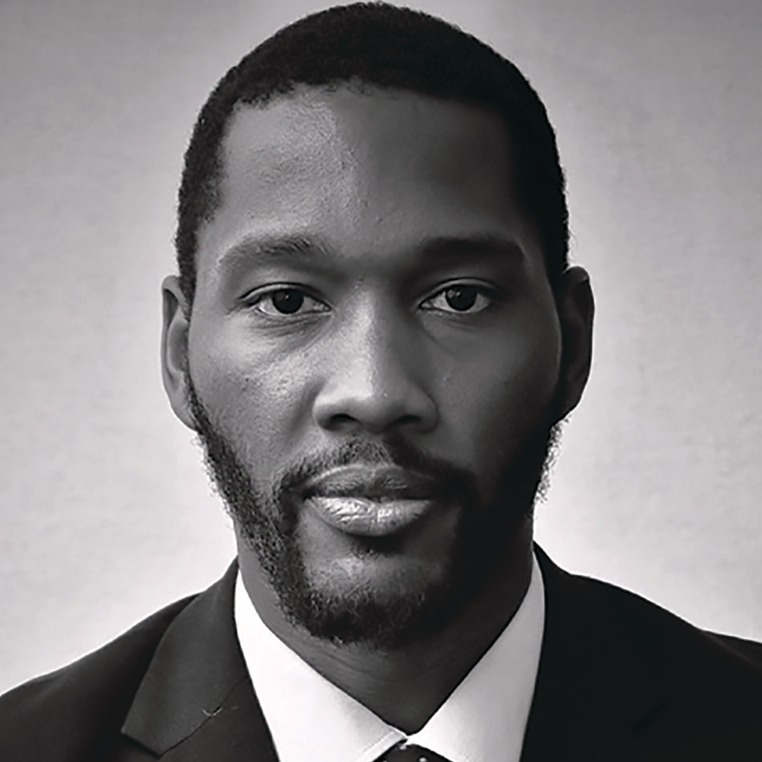
Adeo Fraser is a family law barrister at 3PB Barristers (3 Paper Buildings). He is a committee member of Birmingham Black Lawyers.
Tomorrow’s Bar belongs to those who prepare for it today. After spending years on your quest for the holy grail that is pupillage and tenancy, there is a real temptation to feel like you have reached the mountain top and accomplished your goals. This complacency paradox can rear its head once again as you approach 10 years’ practice.
I have learnt that we are at our best when we stay hungry and keep the energy that enabled us to be called into serving this great profession.
Further, in a profession as old as ours, complacency can result in you losing your edge. A cursory glance at any social media platform will see you swiftly transported into an AI doomsday algorithm. While I have always considered myself to be a hopeless optimist, it is clear that AI is here to stay. Powerful AI tools are revolutionising legal research and the way we do our jobs. It is important to adapt and move with the times, as opposed to fighting against the tide.
You need to have an open mind to technological advancements. During my first mini-pupillage in 2010, the barrister I shadowed drafted court orders by hand on pieces of paper artfully removed from her blue book. At that time, this was the norm. Fast forward 16 years, I cannot imagine many tribunals would be willing to accept a draft order written by hand.
With predictions of many professions becoming increasingly obsolete, and perhaps even redundant in the not-too-distant future, one might reasonably ask whether there is a future at the Bar.
Advocacy is an art form. One that dates back millennia. What I draw from this is despite significant structural, economic and technological changes and advancements, there has always remained a need for skilled advocates in functional societies.
In my humble opinion, the Bar is resilient and it is here to stay. This is not to say that it will always look the same, but that it will always remain.
At the Bar, there are invariably days when you feel like Tyson Fury in the 11th round of his first fight against Deontay Wilder – business as usual. Suddenly, you are hit with a problem that feels like one of the most powerful right hands of all time and you find yourself lying on your back, looking at the heavens, asking yourself the question, ‘How did I get here?’ And yet, you find yourself doing the impossible, picking yourself up against all odds, and finding a way to keep moving forward. This is the very nature of life at the Bar.
There will be challenges. The litmus test is how we respond to said challenges. How we deal with the brief received shortly before a contested hearing, how we manage the difficult client, how we conduct ourselves in front of an unnecessarily testing tribunal.
In an adversarial profession, dealing with adversity is part of the fabric of the profession. Our Code of Conduct reminds us to be ‘fearless’ in the representation of our clients. It strikes me that it was anticipated that there would be times where barristers would find themselves in fear-inducing situations. In the words of Nelson Mandela, a man who dealt with more than his fair share of adversity, ‘Courage [is] not the absence of fear, but the triumph over it.’
I truly believe that to thrive in this profession, you have to have a slightly masochistic disposition and welcome adversity. You must become comfortable with being uncomfortable and adopt the mentality that whatever challenges are thrown in your direction, still you will rise.
It is my belief that to improve in this art form, one must have the capacity to self-reflect and to critically analyse (not in an unduly critical fashion) your own performance on a daily basis. The power lies in the balance. Critical analysis as opposed to criticism-based analysis. There will be great days, and there will be days we would rather forget. The skill is in never getting too high, never getting too low and being able to brush the dirt off your shoulders and move on.
Those of us at the self-employed Bar, which is the overwhelming majority of practising barristers, are businesses. It is easy to forget that when we delegate a large part of the running of our business to chambers and our trusted clerks. In my experience, good businesses employ reliable and competent people to undertake key functions. The importance is knowing which functions are yours, and which you should delegate.
I have learnt that it is crucial to take an active role in the management of your business, to keep an eye on the data, compare performances over a number of years and explore the reasons for fluctuations with your clerks. To that end, it is important to take practice development meetings seriously; not just for the analysis of performance against billing and receipts targets, but to ensure that your practice is developing in the direction and at the pace you want it to.
Doing so enables you to ‘keep the main thing, the main thing’ and focus on the business of being a barrister.
Attempting to balance work life with home life, particularly when you have a young family, can be incredibly challenging. The last thing I want to do after picking my son up from nursery, after a full day at court, is to attend an evening legal event. I am more preoccupied with preparing dinner and reading my papers for the following day!
However, there are few things as rewarding as supporting fledgling barristers in their journey to qualification and seeing them achieve their goals. I have been a committee member of an organisation called ‘Birmingham Black Lawyers’, fondly known as BBL, since 2013. It celebrated its 15th birthday this year. BBL supported me in my quest to qualification and has been such a powerful force for so many students, barristers and solicitors.
Further, the Bar is getting older. According to the Bar Standards Board’s report, Trends in retention and demographics at the Bar: 1990-2020, the proportion of barristers aged over 50 has tripled over the past 30 years. When the old guard decide to hang up their wigs and retire, there will likely be a significant exodus from the Bar in a relatively short period. A great deal of skill and expertise will be lost during this time, which could represent somewhat of an existential crisis for the Bar.
I say this not to fear monger, but to encourage people to make the often difficult decision to find the time to extend a hand, maybe even an arm, to those who will inevitably be the future of the Bar.
My hope is that I am able to assist somebody in their journey, as so many have assisted me in mine.
How to keep the edge, and the door open, in this adversarial profession? Building on the wisdom of influential Black figures past and present, Adeo Fraser shares his lessons learnt

The Chair of the Bar reports back
By Kem Kemal, CEO, Henry Dannell
By BSK Financial Planning
Mário Barroso, Head of R&D and Method Development at AlphaBiolabs
Susie Griffin on the admin that keeps barristers from billable work
Clement Cowley, Partner at The Penny Group, explains how global events can influence the performance of pensions and ISAs, and why taking a long-term approach to investing is often the most effective strategy

Kick off your career at the Bar Council’s Pupillage Fair this October – it’s one of the most valuable opportunities for aspiring barristers, says Amelia Clegg
The golden age of advocacy? David Langwallner pays homage to the filmic if contentious barrister Sir Edward Carson and some of his contemporaries
Henry Fingerhut outlines what the Bar Standards Board AI guidance means for early career barristers
The Ministry of Justice will match-fund up to 100 criminal pupillages, with grants available to criminal chambers across England and Wales. Similar to the COIC scheme, the grants will match-fund pupillages additional to those otherwise offered without government funding
Not yet, says Jacob Turner. Regulation, unlike the technology itself, is a domain the legal profession can still control