*/
At a pivotal time for LGBTQ+ rights, Brie Stevens-Hoare KC and Cameron Stocks introduce the network uniting lawyers across jurisdictions to foster collaboration and learning
The legal profession has long played a central role in advancing equality and the protection of human rights. Lawyers have done so in many ways: through litigation, law reform, academic research, treaty drafting and public advocacy. Across Europe, legal practitioners have helped secure landmark judgments and legislative protections for LGBTQ+ people, including recognition of same-sex relationships, protection from discrimination, legal gender recognition and broader human rights safeguards.
Progress, however, is neither linear nor secure. Laws affecting LGBTQ+ people are particularly dynamic at present. While some jurisdictions continue to strengthen protections, others are seeing renewed challenges to established rights, intensified public debate and, in some instances, significant retrenchment. Although developments in parts of the United States are especially stark, the underlying pattern is by no means confined across the pond.
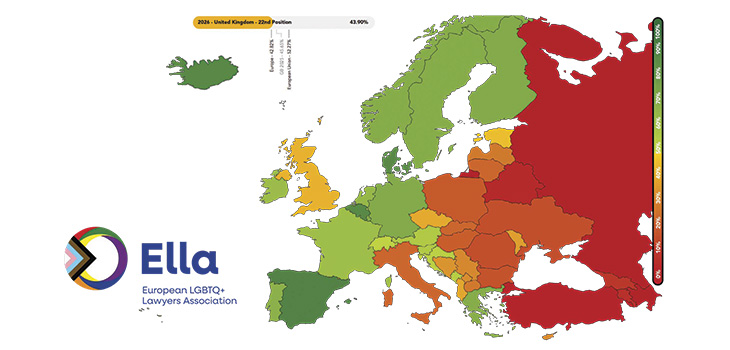
The ILGA Rainbow Map benchmarks the legal and policy practices relating to LGBTI (lesbian, gay, bisexual, trans and intersex) people across 49 European and Central Asian countries. In 2015 the United Kingdom was ranked first on the ILGA Rainbow Map. Over the last 11 years, the UK has dropped to 22nd out of the 49 countries ranked. The UK now ranks behind counties such as Austria, Slovenia, Croatia and Estonia with a score of 44% compared to the current top ranking: Spain at 89%.
These developments are not confined to national borders. Common questions arise across jurisdictions for practitioners, judges, academics and policymakers. For barristers in particular, comparative perspectives matter: many of the issues engaged are shaped by supranational norms, including the European Convention on Human Rights and its incorporation into domestic law through the Human Rights Act 1998.
It is against that backdrop that the European LGBTQ+ Lawyers Association (ELLA) is being established.
ELLA is a new pan-European network bringing together national LGBTQ+ lawyers’ associations, law firms, in-house lawyers, barristers, judges, academics, students and allies committed to equality and inclusion within the profession. ‘Europe’ is used here in the continental sense and, appropriately enough, with a slight Eurovision flavour, given participation extends beyond strict geography and includes Australia. The commitment to establish ELLA was made at a summit of international LGBTQ+ legal organisations during the Canadian Prisme Conference in July 2025.
ELLA will be launched in September and will be based in France. Full membership will consist of national LGBTQ+ lawyer associations and their members, but the model is also intended to engage firms and chambers. Crucially, lawyers in jurisdictions without a national LGBTQ+ association will still be able to join, participate fully and find support for building local networks. ELLA’s purpose is practical: to provide a platform for knowledge-sharing, comparative legal discussion, professional support and collaborative research on the law which is relevant to LGBTQ communities and legal and professional issues affecting LGBTQ+ lawyers.
In less than a year, ELLA’s network has expanded to include representatives from more than 11 countries, demonstrating strong demand for a forum in which legal professionals can share knowledge, exchange best practice and support one another across jurisdictions.
A key milestone will be ELLA’s inaugural conference, at which the association will formally launch. The conference will take place in London from 16 to 18 September; the second is planned for Paris in 2027. The conference will be delivered in English and French and will bring together panellists from a wide range of jurisdictions.
Opening with a reception on 16 September hosted by the Law Society, the substantive programme on 17 and 18 September will be hosted at Lincoln’s Inn and A&O Shearman. Our international colleagues and guests will therefore be able to experience both traditional and modern legal London.
For barristers, solicitors, in-house counsel and academics alike, the programme is intended to combine professional development and networking with serious engagement on legal and policy issues affecting LGBTQ+ communities. Topics will include family rights, data protection and privacy, trans, non-binary and intersex recognition, immigration and the continuing impact of European colonial legacies on LGBTQ+ rights globally. In addition, there will be more general topics relevant to all DEI (diversity, equity and inclusion) professionals such as pro bono work in the LGBTQ+ community, civil society and foreign policy and intersectional identities in the LGBTQ+ community.
The event is intended not simply as a conference but as a forum for building durable professional relationships between individuals and organisations across many jurisdictions. That matters particularly at the Bar, where specialist practice, comparative insight and trusted personal networks often shape both legal argument and law reform. Attendees will have the opportunity to exchange ideas with colleagues from different jurisdictions and professional settings, creating new opportunities for collaboration and mutual support.
Our esteemed keynote speakers include Jean-Marc Berthon, French Ambassador for the Rights of LGBT+ People; Dr Victoria McCloud, former judge of the High Court of Justice of England and Wales; and Dr Katherine Zappone, former Irish Minister for Children and Youth Affairs, alongside leading practitioners, judges, academics and advocates from across Europe and beyond. Alongside them, leading practitioners, judges, academics and advocates will contribute to discussions on the issues shaping the future of LGBTQ+ rights and inclusion.
The conference is supported by sponsors including A&O Shearman, Greenberg Traurig, Freshfields, the Canadian Association of LGBTQ2S+ Lawyers, BCLP, A&L Goodbody, Travers Smith, Gatehouse Chambers and Macfarlanes, reflecting a strong commitment across the profession to inclusion and cross-border collaboration.
The 2026 conference is only the beginning. ELLA’s broader ambition is to build a sustainable international network that supports LGBTQ+ legal professionals, encourages rigorous comparative discussion and contributes to the development of law and policy across jurisdictions. The annual conference is intended to grow with that mission and to provide a regular meeting place for colleagues from Europe and, we hope, from Canada, the United States and beyond.
In an increasingly interconnected profession, the case for collaboration, shared learning and collective legal engagement has rarely been stronger. ELLA aims to provide a home for those conversations and a platform for the next generation of LGBTQ+ legal leadership. We look forward to welcoming colleagues from across Europe and beyond to London this September for the first ELLA Conference and the start of an important new chapter for LGBTQ+ lawyers. To learn more please visit our website: ellaconference.com.
Pictured top: Over the last 11 years, the UK has dropped from first to 22nd place on the ILGA Rainbow Map which benchmarks legal and policy practices across Europe and Central Asia. Find out more at: rainbowmap.ilga-europe.org.
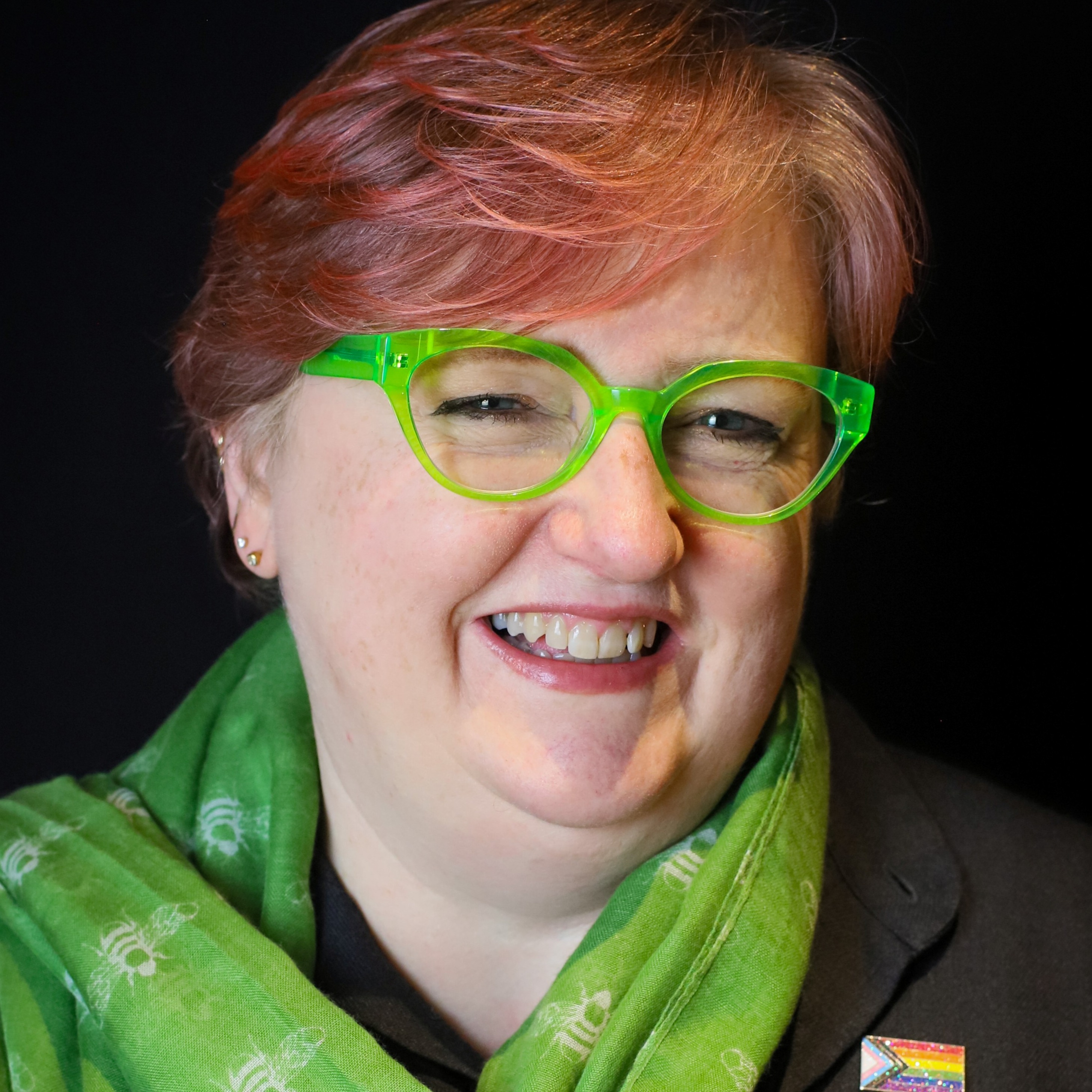
Brie Stevens-Hoare KC has been a self-employed barrister since 1986 and took silk in 2013. She practises from Gatehouse Chambers as a barrister and mediator. She supports the Judicial Appointments Commission’s Targeted Outreach programme in her capacity as a former JAC Commissioner (2018-24). Brie is involved with FreeBar, the LGBTQIA group, and the Inns of Court Women’s Alliance. She is co-author of Beyond Bias (2nd edition, Globe Law and Business: October 2025).

The legal profession has long played a central role in advancing equality and the protection of human rights. Lawyers have done so in many ways: through litigation, law reform, academic research, treaty drafting and public advocacy. Across Europe, legal practitioners have helped secure landmark judgments and legislative protections for LGBTQ+ people, including recognition of same-sex relationships, protection from discrimination, legal gender recognition and broader human rights safeguards.
Progress, however, is neither linear nor secure. Laws affecting LGBTQ+ people are particularly dynamic at present. While some jurisdictions continue to strengthen protections, others are seeing renewed challenges to established rights, intensified public debate and, in some instances, significant retrenchment. Although developments in parts of the United States are especially stark, the underlying pattern is by no means confined across the pond.
The ILGA Rainbow Map benchmarks the legal and policy practices relating to LGBTI (lesbian, gay, bisexual, trans and intersex) people across 49 European and Central Asian countries. In 2015 the United Kingdom was ranked first on the ILGA Rainbow Map. Over the last 11 years, the UK has dropped to 22nd out of the 49 countries ranked. The UK now ranks behind counties such as Austria, Slovenia, Croatia and Estonia with a score of 44% compared to the current top ranking: Spain at 89%.
These developments are not confined to national borders. Common questions arise across jurisdictions for practitioners, judges, academics and policymakers. For barristers in particular, comparative perspectives matter: many of the issues engaged are shaped by supranational norms, including the European Convention on Human Rights and its incorporation into domestic law through the Human Rights Act 1998.
It is against that backdrop that the European LGBTQ+ Lawyers Association (ELLA) is being established.
ELLA is a new pan-European network bringing together national LGBTQ+ lawyers’ associations, law firms, in-house lawyers, barristers, judges, academics, students and allies committed to equality and inclusion within the profession. ‘Europe’ is used here in the continental sense and, appropriately enough, with a slight Eurovision flavour, given participation extends beyond strict geography and includes Australia. The commitment to establish ELLA was made at a summit of international LGBTQ+ legal organisations during the Canadian Prisme Conference in July 2025.
ELLA will be launched in September and will be based in France. Full membership will consist of national LGBTQ+ lawyer associations and their members, but the model is also intended to engage firms and chambers. Crucially, lawyers in jurisdictions without a national LGBTQ+ association will still be able to join, participate fully and find support for building local networks. ELLA’s purpose is practical: to provide a platform for knowledge-sharing, comparative legal discussion, professional support and collaborative research on the law which is relevant to LGBTQ communities and legal and professional issues affecting LGBTQ+ lawyers.
In less than a year, ELLA’s network has expanded to include representatives from more than 11 countries, demonstrating strong demand for a forum in which legal professionals can share knowledge, exchange best practice and support one another across jurisdictions.
A key milestone will be ELLA’s inaugural conference, at which the association will formally launch. The conference will take place in London from 16 to 18 September; the second is planned for Paris in 2027. The conference will be delivered in English and French and will bring together panellists from a wide range of jurisdictions.
Opening with a reception on 16 September hosted by the Law Society, the substantive programme on 17 and 18 September will be hosted at Lincoln’s Inn and A&O Shearman. Our international colleagues and guests will therefore be able to experience both traditional and modern legal London.
For barristers, solicitors, in-house counsel and academics alike, the programme is intended to combine professional development and networking with serious engagement on legal and policy issues affecting LGBTQ+ communities. Topics will include family rights, data protection and privacy, trans, non-binary and intersex recognition, immigration and the continuing impact of European colonial legacies on LGBTQ+ rights globally. In addition, there will be more general topics relevant to all DEI (diversity, equity and inclusion) professionals such as pro bono work in the LGBTQ+ community, civil society and foreign policy and intersectional identities in the LGBTQ+ community.
The event is intended not simply as a conference but as a forum for building durable professional relationships between individuals and organisations across many jurisdictions. That matters particularly at the Bar, where specialist practice, comparative insight and trusted personal networks often shape both legal argument and law reform. Attendees will have the opportunity to exchange ideas with colleagues from different jurisdictions and professional settings, creating new opportunities for collaboration and mutual support.
Our esteemed keynote speakers include Jean-Marc Berthon, French Ambassador for the Rights of LGBT+ People; Dr Victoria McCloud, former judge of the High Court of Justice of England and Wales; and Dr Katherine Zappone, former Irish Minister for Children and Youth Affairs, alongside leading practitioners, judges, academics and advocates from across Europe and beyond. Alongside them, leading practitioners, judges, academics and advocates will contribute to discussions on the issues shaping the future of LGBTQ+ rights and inclusion.
The conference is supported by sponsors including A&O Shearman, Greenberg Traurig, Freshfields, the Canadian Association of LGBTQ2S+ Lawyers, BCLP, A&L Goodbody, Travers Smith, Gatehouse Chambers and Macfarlanes, reflecting a strong commitment across the profession to inclusion and cross-border collaboration.
The 2026 conference is only the beginning. ELLA’s broader ambition is to build a sustainable international network that supports LGBTQ+ legal professionals, encourages rigorous comparative discussion and contributes to the development of law and policy across jurisdictions. The annual conference is intended to grow with that mission and to provide a regular meeting place for colleagues from Europe and, we hope, from Canada, the United States and beyond.
In an increasingly interconnected profession, the case for collaboration, shared learning and collective legal engagement has rarely been stronger. ELLA aims to provide a home for those conversations and a platform for the next generation of LGBTQ+ legal leadership. We look forward to welcoming colleagues from across Europe and beyond to London this September for the first ELLA Conference and the start of an important new chapter for LGBTQ+ lawyers. To learn more please visit our website: ellaconference.com.
Pictured top: Over the last 11 years, the UK has dropped from first to 22nd place on the ILGA Rainbow Map which benchmarks legal and policy practices across Europe and Central Asia. Find out more at: rainbowmap.ilga-europe.org.
At a pivotal time for LGBTQ+ rights, Brie Stevens-Hoare KC and Cameron Stocks introduce the network uniting lawyers across jurisdictions to foster collaboration and learning

The Chair of the Bar reports back
By Kem Kemal, CEO, Henry Dannell
By BSK Financial Planning
Mário Barroso, Head of R&D and Method Development at AlphaBiolabs
Susie Griffin on the admin that keeps barristers from billable work
Clement Cowley, Partner at The Penny Group, explains how global events can influence the performance of pensions and ISAs, and why taking a long-term approach to investing is often the most effective strategy

Kick off your career at the Bar Council’s Pupillage Fair this October – it’s one of the most valuable opportunities for aspiring barristers, says Amelia Clegg
Join us on Saturday 21 November 2026 at Leeds Beckett University and see for yourself why the North continues to be an exceptional place to build a career at the Bar
The golden age of advocacy? David Langwallner pays homage to the filmic if contentious barrister Sir Edward Carson and some of his contemporaries
Henry Fingerhut outlines what the Bar Standards Board AI guidance means for early career barristers
Not yet, says Jacob Turner. Regulation, unlike the technology itself, is a domain the legal profession can still control