*/
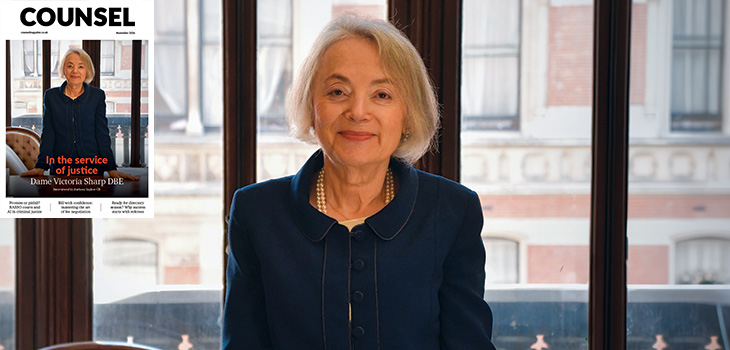
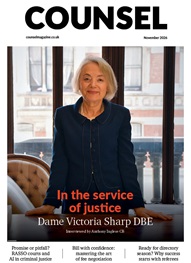
One of the most influential judicial leaders of her generation, the Rt Hon Dame Victoria Sharp DBE has overseen transformative change across the courts. On her retirement as President of the King’s Bench Division, she talks to Anthony Inglese CB about her career, key reforms and the future of justice
‘I wanted to be a barrister from an early age. I had heard it was impossible for people like me, but I have always liked a challenge. I still have a letter my father sent me when I was 13 which said: “I look forward to the time when you become a High Court judge.” I didn’t know what a High Court judge was.’
In 2019, Dame Victoria Sharp was sworn in as President of the King’s Bench Division (PKBD), the third most senior judge in England and Wales. She retired last month. ‘When I was appointed, the then Lord Chief Justice said it was the biggest job in the judiciary. He was right. I felt honoured to be given that responsibility.’ Sharp led a division of 71 High Court judges and over 200 deputies. She was also Deputy Head of Criminal Justice, a major independent role in its own right. Both roles involved discussions with government at the highest level on the most important issues facing the justice system.
‘The job has been energising. I’ve been surrounded by brilliant people, who care about justice.’ Was she conscious of being the first woman in the role? ‘I identify as a judge. I was given an important job to do. That was my principal focus. I know people saw my appointment as important for diversity, and I wanted to do the job well and be seen as doing the job well. When I joined the High Court, the world was so different. There were only about three other women there, and I am delighted to have built bridges for other women to walk over. Sometimes progress can erase struggle but it’s important to recognise that things have changed a great deal since I came into the judiciary, and to celebrate that.’
During her time leading the judiciary she has had to contend with many major issues: protecting the independence of the judiciary, chronic underfunding of the courts and the pandemic, to name but a few; and most recently, the advent of artificial intelligence.
The main part of the PKBD role is still sitting as a judge in the Court of Appeal and the High Court. Sharp has sat on some of the most difficult and high-profile cases of her era. Cases include the Miller litigation involving the prorogation of Parliament, the appeal by those convicted of the manslaughter of PC Harper, the appeal of Wayne Couzens, the Assange extradition case and a landmark decision on the misuse of AI by lawyers.
Sharp was also responsible for the deployment of her judges across the country in the most serious cases: in crime, terrorism, public law, commercial and other cases. She is concerned about the continuing pressure to do more with less: ‘We are handling our expanding caseload with too few judges.’ She also takes her pastoral responsibilities seriously: ‘You must be conscious of the people you work with. They have their lives, and you must show empathy and compassion. This is also true when sitting as a judge.’
What have been her main achievements in the job? Leading through the pandemic (she created and led on the plan that kept the courts functioning); contributing to the preservation of the primacy of the rule of law; the introduction of broadcasting into the courts; maintaining the quality of the work of her division and lower courts in the face of chronic underfunding; dealing with threats to judges? Sharp says it is difficult to pick out one since she has done so many different things. All are important. ‘I have been responsible for making many significant changes in the system. I didn’t set out to do it. If I see something isn’t right, I tackle it.
‘I have spent time travelling round the country engaging with judges at all levels. I think it vital for those in important leadership positions to do so. My view was, and remains, that we need to look, listen and learn. People who come into a job with an agenda might easily miss something. Collaboration is key. Of course you need to be determined in a job like this, but that’s not the same as being bloody-minded.’
A recent major speech – ‘Without Fear or Favour’ – focused on judicial independence and AI, about which she is a thought leader in the judiciary.* Sharp is clear about the risks and opportunities. ‘The doubling of the Crown Court open caseload since 2019 makes it irresponsible for us not to use AI to release time for genuine judicial work. But we must guard against outsourcing the judicial reasoning process to AI. This issue goes wider than the well-publicised problem of false legal material. AI systems are not value neutral. There are other risks such as automation bias and system capture and that in a time of stringency the constitutional function of the judiciary will be subordinated to managerial objectives. I am concerned about evangelists in any field, including in AI, who don’t look at a topic from every angle. We need to harness the benefits and safeguard justice. The two are not mutually exclusive.’
As Sharp retires, her job is being reduced behind her. The Technology and Construction Court and the Commercial Court are being moved from the KBD into an expanded Chancery Division, renamed as the Business and Property Division. These changes, announced in June by the Lady Chief Justice and Lord Chancellor, provoked a reaction among the judiciary, partly for lack of consultation by those conducting the review. Sharp, whose name is not attached to the review, understandably won’t comment. Will she be offering any advice to her successor, Lord Justice Warby? ‘I will give all the assistance I can. Any leadership job is hard. You can’t avoid disappointing people – it goes with the territory.’ Will the new arrangements be better? ‘There will always be a range of views. None of us has a crystal ball. But the reason given for these changes is to make things better.’
Sharp’s first four years of life were spent in a two-up-two-down. ‘We were a close family. Three of my grandparents were born abroad, in Poland/Russia – wherever the borders were at the time. There was no money. It was all very different from what most people would think. I’ve always been conscious that my generation has been fortunate.’ Her father was a businessman who was elevated to the peerage in 1989. But that was all in the future. ‘The atmosphere in the house was one of love and laughter. Our father played the violin. His mother had taken in washing to pay for his lessons when he was a boy. He was a great believer in reading to his children. We all read.’ Favourite book at that time? ‘The Phantom Tollbooth by Norton Juster.’ Of which more later. ‘Our mother would ration our television. We were allowed one programme on Saturday and one on Sunday. That was it.’ Her twin brother went on to become chairman of the BBC.
She reads every day. ‘Not as much fiction as I used to. Nowadays I’m more interested in diaries, memoirs and books about history. History gives us important insights into what is happening today, into our background, our country, our ethics.’ She has a library of many thousands of books.
Sharp attended North London Collegiate School. ‘There was an assumption – unusual for the time – that the girls who went to NLCS would have careers and do something engaging and worthwhile.’ During this time, she spent two years in the United States. ‘This was the time of the Watergate trial. It was the hippy era.’ Was she a hippy? ‘No.’ On return, she took A-levels in English, History and Zoology. An unusual combination? ‘I have always tried to do something interesting.’
Sharp studied law at Bristol University. ‘I absolutely loved the law from day one: the intellectual rigour and the practical application of law to people. I enjoyed crime; less so trusts. I was always intending to practise.’
She was called in 1979. ‘I had no family involvement, no assistance. I had to do it on my own. I looked at options and wrote letters to various chambers. I don’t think the word ‘outreach’ then existed for chambers. You had to be determined, especially if you were female.’ Pupillage followed in Crown Office Row. ‘In my second six I don’t think there was a magistrates’ court in the country that I had not visited. Ot at least it felt like it. There were no wheelie bags, you had to carry all your books everywhere. If your train was delayed, you had no means of getting in touch. It was invaluable experience, extremely tough.’
A third six, at Brick Court, led to a tenancy and a practice in defamation and media law. ‘Defamation is a gateway to a huge range of topics, because people’s reputations are governed by all the different things that they do.’
She was involved in some of the biggest media cases of the times exploring issues in libel and in privacy acting for the major media organisations, and many high-profile figures including in the world of sport and entertainment. Other cases involved events in and around the Second World War. Her practice thrived.
All this while raising four children (had in five years) and married to a junior hospital doctor. The sheer hard work and the resilience required to succeed at the Bar then and now should not be underestimated.
On her career path: ‘I was fortunate enough to be led by some giants of the Bar. In 1998 Gareth Williams QC’ – then a Labour peer and on the way to becoming Attorney General – ‘told me I ought to become an Assistant Recorder. I applied without expectation and was successful. I found myself handling small cases in Maidstone Crown Court. Directing a jury for the first time is quite a thing. One morning I was having breakfast with my children. One of my sons said, “You’re looking worried.” I said, “It’s my first trial today.” He said, “Imagine how the defendants feel.” It is a comment I think about to this day. He was six,’ and the only one of the four who would go into the law.
Sharp took silk in 2001. She became a High Court judge in 2009. ‘Someone telephoned me and said: the competition closes in two days, they need someone with defamation experience, have you thought about applying? I did apply, and to my surprise was successful. When coming out of Temple tube station it took a while for my feet not to take me to Chambers. But I loved it from day one and have done so ever since. I think it is desirable for people who are thinking about a senior judicial appointment to have had some form of experience of judging. They can find out if it’s really for them, and it helps those who have to assess their suitability for a full-time position.’ She moved up to the Court of Appeal four years later. ‘I never planned to get where I am today. When I started at the Bar, I didn’t have an ambition to become a judge. I just wanted to do my best at whatever work I was given for its own sake.’
Sharp says the job of judging is both rewarding and demanding. ‘I have been fortunate in my life to have had many opportunities. As a judge you see into every aspect of people’s lives. Every day is a highlight, every day is different. I would hope that people who are thinking about a judicial career would see this aspect of the privilege of being a judge and of serving the public.’
In her favourite childhood book, a phantom tollbooth mysteriously appears in a boy’s bedroom. He drives his electric car through it and into the Land of Expectations. What awaits Sharp in the next stage of her enjoyable life? ‘Public service, academia, the Arts, young persons, charitable endeavours? Who knows?’
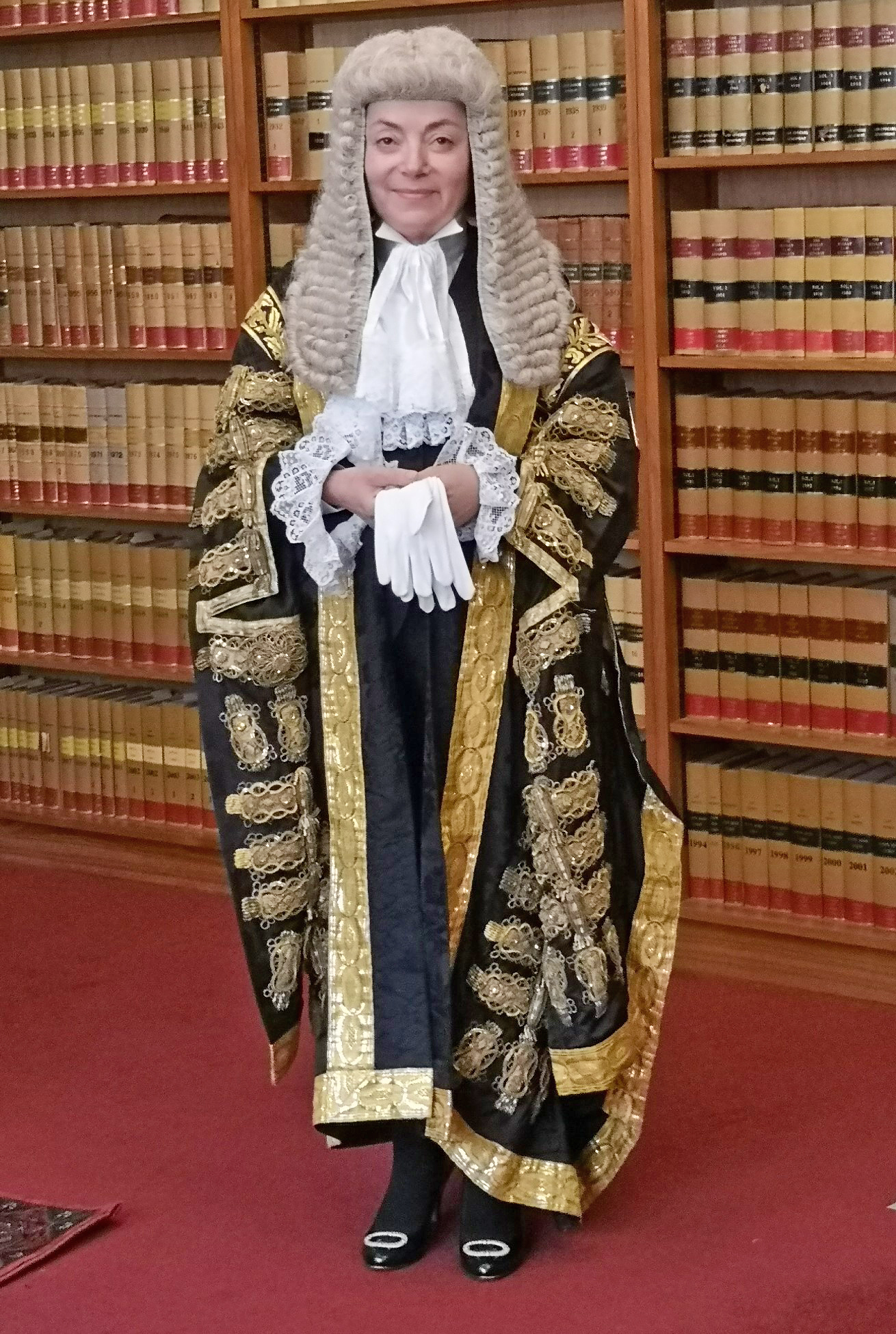
© Judiciary of England and Wales
Dame Victoria Sharp DBE read law at Bristol University, was called to the Bar in 1979 and took silk in 2001. She was appointed as an Assistant Recorder in 1998; a Deputy High Court Judge in 2008; a High Court Judge of the Queen’s Bench Division in 2009; Presiding Judge of the Western Circuit from 2012 to 2013; a Lady Justice of Appeal in 2013; Vice President of the Queen’s Bench Division in 2016; and President of the King’s Bench Division in 2019.
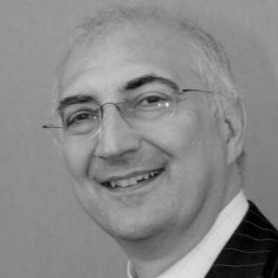
Anthony Inglese CB was head of legal in five Government Legal Departments over a 38-year career, most recently as General Counsel and Solicitor to HM Revenue & Customs. A Bencher of Gray’s Inn, he now trains and mentors lawyers.
‘I wanted to be a barrister from an early age. I had heard it was impossible for people like me, but I have always liked a challenge. I still have a letter my father sent me when I was 13 which said: “I look forward to the time when you become a High Court judge.” I didn’t know what a High Court judge was.’
In 2019, Dame Victoria Sharp was sworn in as President of the King’s Bench Division (PKBD), the third most senior judge in England and Wales. She retired last month. ‘When I was appointed, the then Lord Chief Justice said it was the biggest job in the judiciary. He was right. I felt honoured to be given that responsibility.’ Sharp led a division of 71 High Court judges and over 200 deputies. She was also Deputy Head of Criminal Justice, a major independent role in its own right. Both roles involved discussions with government at the highest level on the most important issues facing the justice system.
‘The job has been energising. I’ve been surrounded by brilliant people, who care about justice.’ Was she conscious of being the first woman in the role? ‘I identify as a judge. I was given an important job to do. That was my principal focus. I know people saw my appointment as important for diversity, and I wanted to do the job well and be seen as doing the job well. When I joined the High Court, the world was so different. There were only about three other women there, and I am delighted to have built bridges for other women to walk over. Sometimes progress can erase struggle but it’s important to recognise that things have changed a great deal since I came into the judiciary, and to celebrate that.’
During her time leading the judiciary she has had to contend with many major issues: protecting the independence of the judiciary, chronic underfunding of the courts and the pandemic, to name but a few; and most recently, the advent of artificial intelligence.
The main part of the PKBD role is still sitting as a judge in the Court of Appeal and the High Court. Sharp has sat on some of the most difficult and high-profile cases of her era. Cases include the Miller litigation involving the prorogation of Parliament, the appeal by those convicted of the manslaughter of PC Harper, the appeal of Wayne Couzens, the Assange extradition case and a landmark decision on the misuse of AI by lawyers.
Sharp was also responsible for the deployment of her judges across the country in the most serious cases: in crime, terrorism, public law, commercial and other cases. She is concerned about the continuing pressure to do more with less: ‘We are handling our expanding caseload with too few judges.’ She also takes her pastoral responsibilities seriously: ‘You must be conscious of the people you work with. They have their lives, and you must show empathy and compassion. This is also true when sitting as a judge.’
What have been her main achievements in the job? Leading through the pandemic (she created and led on the plan that kept the courts functioning); contributing to the preservation of the primacy of the rule of law; the introduction of broadcasting into the courts; maintaining the quality of the work of her division and lower courts in the face of chronic underfunding; dealing with threats to judges? Sharp says it is difficult to pick out one since she has done so many different things. All are important. ‘I have been responsible for making many significant changes in the system. I didn’t set out to do it. If I see something isn’t right, I tackle it.
‘I have spent time travelling round the country engaging with judges at all levels. I think it vital for those in important leadership positions to do so. My view was, and remains, that we need to look, listen and learn. People who come into a job with an agenda might easily miss something. Collaboration is key. Of course you need to be determined in a job like this, but that’s not the same as being bloody-minded.’
A recent major speech – ‘Without Fear or Favour’ – focused on judicial independence and AI, about which she is a thought leader in the judiciary.* Sharp is clear about the risks and opportunities. ‘The doubling of the Crown Court open caseload since 2019 makes it irresponsible for us not to use AI to release time for genuine judicial work. But we must guard against outsourcing the judicial reasoning process to AI. This issue goes wider than the well-publicised problem of false legal material. AI systems are not value neutral. There are other risks such as automation bias and system capture and that in a time of stringency the constitutional function of the judiciary will be subordinated to managerial objectives. I am concerned about evangelists in any field, including in AI, who don’t look at a topic from every angle. We need to harness the benefits and safeguard justice. The two are not mutually exclusive.’
As Sharp retires, her job is being reduced behind her. The Technology and Construction Court and the Commercial Court are being moved from the KBD into an expanded Chancery Division, renamed as the Business and Property Division. These changes, announced in June by the Lady Chief Justice and Lord Chancellor, provoked a reaction among the judiciary, partly for lack of consultation by those conducting the review. Sharp, whose name is not attached to the review, understandably won’t comment. Will she be offering any advice to her successor, Lord Justice Warby? ‘I will give all the assistance I can. Any leadership job is hard. You can’t avoid disappointing people – it goes with the territory.’ Will the new arrangements be better? ‘There will always be a range of views. None of us has a crystal ball. But the reason given for these changes is to make things better.’
Sharp’s first four years of life were spent in a two-up-two-down. ‘We were a close family. Three of my grandparents were born abroad, in Poland/Russia – wherever the borders were at the time. There was no money. It was all very different from what most people would think. I’ve always been conscious that my generation has been fortunate.’ Her father was a businessman who was elevated to the peerage in 1989. But that was all in the future. ‘The atmosphere in the house was one of love and laughter. Our father played the violin. His mother had taken in washing to pay for his lessons when he was a boy. He was a great believer in reading to his children. We all read.’ Favourite book at that time? ‘The Phantom Tollbooth by Norton Juster.’ Of which more later. ‘Our mother would ration our television. We were allowed one programme on Saturday and one on Sunday. That was it.’ Her twin brother went on to become chairman of the BBC.
She reads every day. ‘Not as much fiction as I used to. Nowadays I’m more interested in diaries, memoirs and books about history. History gives us important insights into what is happening today, into our background, our country, our ethics.’ She has a library of many thousands of books.
Sharp attended North London Collegiate School. ‘There was an assumption – unusual for the time – that the girls who went to NLCS would have careers and do something engaging and worthwhile.’ During this time, she spent two years in the United States. ‘This was the time of the Watergate trial. It was the hippy era.’ Was she a hippy? ‘No.’ On return, she took A-levels in English, History and Zoology. An unusual combination? ‘I have always tried to do something interesting.’
Sharp studied law at Bristol University. ‘I absolutely loved the law from day one: the intellectual rigour and the practical application of law to people. I enjoyed crime; less so trusts. I was always intending to practise.’
She was called in 1979. ‘I had no family involvement, no assistance. I had to do it on my own. I looked at options and wrote letters to various chambers. I don’t think the word ‘outreach’ then existed for chambers. You had to be determined, especially if you were female.’ Pupillage followed in Crown Office Row. ‘In my second six I don’t think there was a magistrates’ court in the country that I had not visited. Ot at least it felt like it. There were no wheelie bags, you had to carry all your books everywhere. If your train was delayed, you had no means of getting in touch. It was invaluable experience, extremely tough.’
A third six, at Brick Court, led to a tenancy and a practice in defamation and media law. ‘Defamation is a gateway to a huge range of topics, because people’s reputations are governed by all the different things that they do.’
She was involved in some of the biggest media cases of the times exploring issues in libel and in privacy acting for the major media organisations, and many high-profile figures including in the world of sport and entertainment. Other cases involved events in and around the Second World War. Her practice thrived.
All this while raising four children (had in five years) and married to a junior hospital doctor. The sheer hard work and the resilience required to succeed at the Bar then and now should not be underestimated.
On her career path: ‘I was fortunate enough to be led by some giants of the Bar. In 1998 Gareth Williams QC’ – then a Labour peer and on the way to becoming Attorney General – ‘told me I ought to become an Assistant Recorder. I applied without expectation and was successful. I found myself handling small cases in Maidstone Crown Court. Directing a jury for the first time is quite a thing. One morning I was having breakfast with my children. One of my sons said, “You’re looking worried.” I said, “It’s my first trial today.” He said, “Imagine how the defendants feel.” It is a comment I think about to this day. He was six,’ and the only one of the four who would go into the law.
Sharp took silk in 2001. She became a High Court judge in 2009. ‘Someone telephoned me and said: the competition closes in two days, they need someone with defamation experience, have you thought about applying? I did apply, and to my surprise was successful. When coming out of Temple tube station it took a while for my feet not to take me to Chambers. But I loved it from day one and have done so ever since. I think it is desirable for people who are thinking about a senior judicial appointment to have had some form of experience of judging. They can find out if it’s really for them, and it helps those who have to assess their suitability for a full-time position.’ She moved up to the Court of Appeal four years later. ‘I never planned to get where I am today. When I started at the Bar, I didn’t have an ambition to become a judge. I just wanted to do my best at whatever work I was given for its own sake.’
Sharp says the job of judging is both rewarding and demanding. ‘I have been fortunate in my life to have had many opportunities. As a judge you see into every aspect of people’s lives. Every day is a highlight, every day is different. I would hope that people who are thinking about a judicial career would see this aspect of the privilege of being a judge and of serving the public.’
In her favourite childhood book, a phantom tollbooth mysteriously appears in a boy’s bedroom. He drives his electric car through it and into the Land of Expectations. What awaits Sharp in the next stage of her enjoyable life? ‘Public service, academia, the Arts, young persons, charitable endeavours? Who knows?’
© Judiciary of England and Wales
Dame Victoria Sharp DBE read law at Bristol University, was called to the Bar in 1979 and took silk in 2001. She was appointed as an Assistant Recorder in 1998; a Deputy High Court Judge in 2008; a High Court Judge of the Queen’s Bench Division in 2009; Presiding Judge of the Western Circuit from 2012 to 2013; a Lady Justice of Appeal in 2013; Vice President of the Queen’s Bench Division in 2016; and President of the King’s Bench Division in 2019.
One of the most influential judicial leaders of her generation, the Rt Hon Dame Victoria Sharp DBE has overseen transformative change across the courts. On her retirement as President of the King’s Bench Division, she talks to Anthony Inglese CB about her career, key reforms and the future of justice

The Chair of the Bar reports back
Conner Wright, Legal Case Manager at AlphaBiolabs, answers the most frequently asked questions about SCRAM Continuous Alcohol Monitoring (SCRAM CAM®) posed by family law professionals
Ryan Prins of Philips SpeechLive explains how barristers can boost drafting efficiency with AI-assisted speech recognition – while keeping full oversight
Finding available counsel shouldn’t be complicated, says Kaan Kartal of Brieflink
By Kem Kemal, CEO, Henry Dannell
By BSK Financial Planning

For barristers, managing anxiety is a professional discipline as much as a personal one, says Annette Henry KC. This article examines the cues, clues and practical techniques for avoiding overwhelm and regaining calm
If you’ve never been to the Bar Conference before, this is the year to start. Amelia Clegg previews the profession’s flagship event
After a two-year investigation, Karim Khan KC was removed as ICC Chief Prosecutor in July. With the United States threatening to dismantle the court ‘brick by brick’, what’s next for the beleaguered ICC? asks Chris Stephen
Kick off your career at the Bar Council’s Pupillage Fair this October – it’s one of the most valuable opportunities for aspiring barristers, says Amelia Clegg
Join us on Saturday 21 November 2026 at Leeds Beckett University and see for yourself why the North continues to be an exceptional place to build a career at the Bar