*/
The India AI Impact Summit witnessed exceptional participation from policymakers, industry leaders, researchers and innovators from across the globe. It attracted world leaders, some 250,000-300,000 attendees and, importantly, the Bar Council. Its theme was ‘welfare for all, happiness of all’ (sarvajana hitaya, sarvajana sukhaya), and was structured around the seven core Chakras, covering inclusion for social empowerment and AI for economic growth and social good. Experts scaled climate solutions, traversed healthcare and scanned the democratisation of responsible access to technology.
I had attended the conference after meetings with both the Master of the Rolls, Voss LJ and the Senior President of Tribunals, Dingemans LJ where we exchanged ideas in relation to online dispute platforms, digitisation and online advice outside an AI chatbot.
The Bar jointly hosted a discussion about legal services between our two jurisdictions at the British High Commissioner’s Residence in New Delhi, alongside the Deputy Prime Minister David Lammy MP and the British High Commissioner to India Lindy Cameron CB OBE. The Deputy Prime Minister opened the discussion, which I then chaired alongside David Meyer, Head of the Deputy Prime Minister’s International Unit, with invited attendees including Mr R Venkataramani, the Attorney General for India.
A focus was the ongoing impediments presented to fly-in, fly-out barristers in Indian-seated foreign arbitrations by restrictions under the Rules for Registration and Regulation of Foreign Lawyers and Foreign Law Firms (second edition), together with the benefits of English and Welsh silks acting as a referral advocate instructed by Indian lawyers. Reciprocity was raised and it was agreed that nothing sought by the Bar Council is not already offered to Indian advocates in the English (UK) jurisdiction. The conversation continued over subsequent meetings with the Chair of the Bar Council of India and then with Dr Rajiv Mani, the Secretary of the Ministry of Law and Justice.
The approach of the Bar of England and Wales is supportive of India’s ambition to be an arbitration hub and revising the Rules will benefit both advocates of India and of the UK.
The Delhi High Court Bar Association escorted us through the High Court and discussions ranged from violence against women and girls to listing, backlogs and remote hearings. We shared experiences and I referred to my past work training law students in India, alongside senior advocates and jurists, and we looked to areas of collaboration.
I had to be hurried as I started to linger in the courts and advocates’ rooms, exchanging stories and talking about cases. Ultimately, it felt like home.
During a meeting with the Lord Chancellor and the Courts and Legal Aid Minister, there was a frank discussion about the Bar Council’s opposition to reducing jury trials. Far from being change resistant, I pointed out that the Bar has never been against moving the threshold of cases tried in the magistrates’ courts. Indeed, we had provided a list of offences which should not be in the Crown Court in the Leveson Part 1 Review.
The government disputes the Institute for Government’s (IFG) analysis. I referred to the IFG’s findings that a single-judge trial, as proposed by the government, will save less than 2% of court time (relying on the Ministry of Justice’s estimate of a judge-only trial being 20% quicker). The IFG report splits this judge-only saving from the overall estimate of saving of court time of 7-10%. It is logical that it does so, as legislation for a judge-only trial will not complete Parliament before the end of 2026 and so will only start having an effect, negative or positive, alongside other reforms in 2027/28. In any event, the IFG is clear that there only would be ‘marginal gains’ from a single-judge system.
Further, the IFG’s own subsequent response to a letter from the courts minister to the Justice Select Committee, summarises that ‘the potential benefits from efficiency gains vastly outweigh those from structural reforms’ and that ‘ministerial time and attention, funding, political capital and workforce goodwill will all have their limits and should be focused where they will have greatest impact’.
It is not too late for the government to show that it is listening. Our open letter to the Prime Minister was signed by more than 1,000 legal professionals over one weekend.
My focus on freedom of expression was reflected in the Vienna Bar Presidents’ Conference theme of freedom versus security. I contributed to the debate and also strengthened ties with European Bars. One sight I had not anticipated was Johnny Logan, winner of the Eurovision song contest in the 1980s, at the magnificent Juristenball, singing against a backdrop of a giant Lady Justice. However, it is an image that is sparking ideas for our Bar Conference 2026 on 14 November. Another reminder to clear the diary to attend. After all, what’s another year?

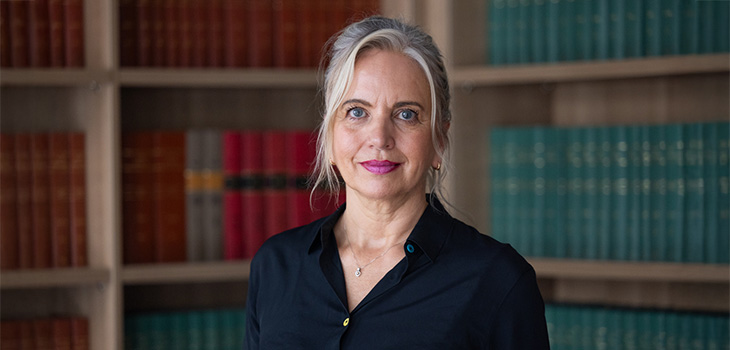
Kirsty Brimelow KC is Chair of the Bar for 2026. She has been a criminal, public law and international human rights barrister for some 30 years, practising from Doughty Street Chambers for over half that time. Kirsty was Chair of the Criminal Bar Association (2022-23) and Chair of the Bar Human Rights Committee (2012-18). She was appointed as a silk in 2011, Deputy High Court Judge in 2021, Recorder in 2022 and is a Bencher of Gray’s Inn.
The India AI Impact Summit witnessed exceptional participation from policymakers, industry leaders, researchers and innovators from across the globe. It attracted world leaders, some 250,000-300,000 attendees and, importantly, the Bar Council. Its theme was ‘welfare for all, happiness of all’ (sarvajana hitaya, sarvajana sukhaya), and was structured around the seven core Chakras, covering inclusion for social empowerment and AI for economic growth and social good. Experts scaled climate solutions, traversed healthcare and scanned the democratisation of responsible access to technology.
I had attended the conference after meetings with both the Master of the Rolls, Voss LJ and the Senior President of Tribunals, Dingemans LJ where we exchanged ideas in relation to online dispute platforms, digitisation and online advice outside an AI chatbot.
The Bar jointly hosted a discussion about legal services between our two jurisdictions at the British High Commissioner’s Residence in New Delhi, alongside the Deputy Prime Minister David Lammy MP and the British High Commissioner to India Lindy Cameron CB OBE. The Deputy Prime Minister opened the discussion, which I then chaired alongside David Meyer, Head of the Deputy Prime Minister’s International Unit, with invited attendees including Mr R Venkataramani, the Attorney General for India.
A focus was the ongoing impediments presented to fly-in, fly-out barristers in Indian-seated foreign arbitrations by restrictions under the Rules for Registration and Regulation of Foreign Lawyers and Foreign Law Firms (second edition), together with the benefits of English and Welsh silks acting as a referral advocate instructed by Indian lawyers. Reciprocity was raised and it was agreed that nothing sought by the Bar Council is not already offered to Indian advocates in the English (UK) jurisdiction. The conversation continued over subsequent meetings with the Chair of the Bar Council of India and then with Dr Rajiv Mani, the Secretary of the Ministry of Law and Justice.
The approach of the Bar of England and Wales is supportive of India’s ambition to be an arbitration hub and revising the Rules will benefit both advocates of India and of the UK.
The Delhi High Court Bar Association escorted us through the High Court and discussions ranged from violence against women and girls to listing, backlogs and remote hearings. We shared experiences and I referred to my past work training law students in India, alongside senior advocates and jurists, and we looked to areas of collaboration.
I had to be hurried as I started to linger in the courts and advocates’ rooms, exchanging stories and talking about cases. Ultimately, it felt like home.
During a meeting with the Lord Chancellor and the Courts and Legal Aid Minister, there was a frank discussion about the Bar Council’s opposition to reducing jury trials. Far from being change resistant, I pointed out that the Bar has never been against moving the threshold of cases tried in the magistrates’ courts. Indeed, we had provided a list of offences which should not be in the Crown Court in the Leveson Part 1 Review.
The government disputes the Institute for Government’s (IFG) analysis. I referred to the IFG’s findings that a single-judge trial, as proposed by the government, will save less than 2% of court time (relying on the Ministry of Justice’s estimate of a judge-only trial being 20% quicker). The IFG report splits this judge-only saving from the overall estimate of saving of court time of 7-10%. It is logical that it does so, as legislation for a judge-only trial will not complete Parliament before the end of 2026 and so will only start having an effect, negative or positive, alongside other reforms in 2027/28. In any event, the IFG is clear that there only would be ‘marginal gains’ from a single-judge system.
Further, the IFG’s own subsequent response to a letter from the courts minister to the Justice Select Committee, summarises that ‘the potential benefits from efficiency gains vastly outweigh those from structural reforms’ and that ‘ministerial time and attention, funding, political capital and workforce goodwill will all have their limits and should be focused where they will have greatest impact’.
It is not too late for the government to show that it is listening. Our open letter to the Prime Minister was signed by more than 1,000 legal professionals over one weekend.
My focus on freedom of expression was reflected in the Vienna Bar Presidents’ Conference theme of freedom versus security. I contributed to the debate and also strengthened ties with European Bars. One sight I had not anticipated was Johnny Logan, winner of the Eurovision song contest in the 1980s, at the magnificent Juristenball, singing against a backdrop of a giant Lady Justice. However, it is an image that is sparking ideas for our Bar Conference 2026 on 14 November. Another reminder to clear the diary to attend. After all, what’s another year?


The Chair of the Bar reports back
Susie Griffin on the admin that keeps barristers from billable work
Clement Cowley, Partner at The Penny Group, explains how global events can influence the performance of pensions and ISAs, and why taking a long-term approach to investing is often the most effective strategy
Mário Barroso, Head of R&D and Method Development at AlphaBiolabs, discusses what family law professionals need to know about hallucinogens, from the main hallucinogenic drugs encountered in family proceedings, to their effects and the testing options available
Harmony Christian Ministries is the latest charity to benefit from a £500 donation from AlphaBiolabs via the company’s Giving Back initiative
By David Green
At the start of her term, Chair of the Bar 2026 Kirsty Brimelow KC set out a series of priorities for the year ahead. One of those priorities was children in the justice system
As the world becomes more digital, Barbara Vinagre Mota examines international research into the mental health consequences of judges’ exposure to graphic and immersive evidence, highlighting the importance of support systems
In an era of patient-centred care and growing concern over misconduct in medical settings, why do women still lack the right to choose women consultants for examination and treatment? Charles Davey investigates
Reviewed by Daniel Barnett
James McNeill Whistler at Tate Britain until 27 September Rothko in Florence at Palazzo Strozzi until 23 August Reviewed by Stephen Cragg KC