*/
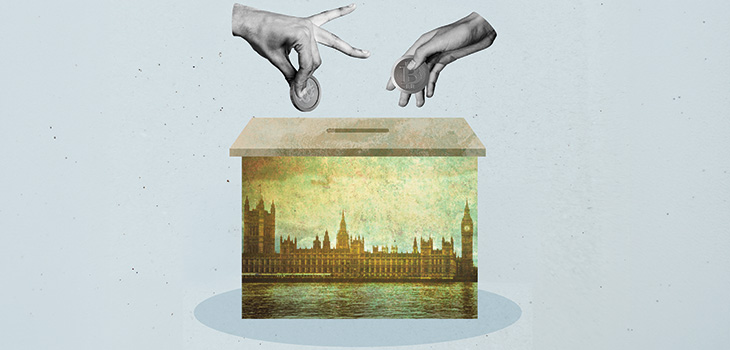
Does the Representation of the People Bill do enough to tackle donor influence in British politics? asks Dr Ben Stanford
Reform UK continues to break records for the largest individual donations ever received by a UK political party. The two donations of £36 million from cryptocurrency billionaires Ben Delo and Christopher Harborne in September broke the previous record for a donation from a living person, when Harborne gave £9 million to the same party in December 2025. Both donors have also lived abroad for extensive periods in recent years, though it is not clear for how long or exactly when they relocated to the United Kingdom. Harborne also gifted £5 million to the party leader Nigel Farage in April 2024, prompting an investigation by the Parliamentary Standards Commissioner. With serious concerns already widely shared about the influence of money and foreign interference in British politics, these recent developments have further amplified the calls for action. The Representation of the People Bill, currently progressing through Parliament, is such an opportunity.
The UK’s electoral laws plainly need major reform to address these issues that challenge the transparency, legitimacy and fairness of the UK’s democracy. Symptomatic of these concerns, turnout at general elections has been suffering from sustained decline in recent decades, painting a picture of widespread disillusionment in UK politics. The 2024 general election recorded a turnout of 59.7% which was the lowest since 2001. In truth, turnout has never returned to the levels seen in the 1992 general election which recorded a 77.7% turnout. As a result, calls are increasing for urgent action to clean up and modernise the UK’s democracy.
The Labour government came to office with a massive Parliamentary majority in July 2024 after 14 years of Conservative Party control, pledging action in this area and to ‘reclaim Britain’s democracy as an aspiration for the rest of the world’. The Representation of the People Bill was introduced in February to reform and modernise many aspects of electoral law. With Andy Burnham replacing Sir Keir Starmer as Prime Minister in July, there was brief uncertainty over its future and whether the Bill would be changed or expanded, but the legislative process resumed in September.
The naming of the proposed legislation – the ‘Representation of the People Bill’ – is highly symbolic and rooted in history. Over the past two centuries, several namesake Acts have modernised the UK’s electoral framework and extended the franchise. Three such Acts were passed in the 19th century to extend the vote to more working men, modernise constituencies and stifle the threat of revolution. The 1918 Act gave the vote to some women for the first time and almost all men, before the 1928 Act finally ensured legal equality between women and men by eliminating all barriers to voting based on sex and property ownership. Further action followed in 1969 when the voting age was reduced to 18.
There are, therefore, lofty expectations for the Representation of the People Bill, edging towards the finish line in the legislative process. Assuming it passes the final hurdles in the House of Lords in the coming weeks, the Bill will extend the vote to 16- and 17-year-olds for UK general elections, Northern Ireland Assembly elections, as well as local elections in both England and Northern Ireland. This will harmonise the voting age across the entire UK. The Bill will also, among other things, make automatic voter registration easier, extend voter ID to include bank cards, remove the government’s control over the Electoral Commission’s strategic priorities and, of course, tighten up the rules on donations to parties. Yet, despite these significant changes, there remains unease and a sense that more could be done.
The Bill will take action to limit donations and loans by banning cryptoassets and introducing an annual cap of £100,000 on donations and loans from overseas British voters. These measures follow on from the Rycroft Review, published in March, which recommended action against foreign interference.
The proposal to apply these new restrictions retrospectively, from March onwards, has generated much controversy, especially considering the recent combined £72 million donated to Reform UK. Applying the law retrospectively is extremely rare in the UK’s various legal systems but it is within the power of Parliament and its inherent sovereignty to do so, while there may also be strong public interest to act in this way. It is deeply problematic, however, when we consider the rule of law. It is a fundamental requirement that laws only apply to future conduct because to do so otherwise can undermine legal certainty and confidence in the law, while also lacking in fairness. As Lord Bingham famously said: ‘All persons and authorities within the state, whether public or private, should be bound by and entitled to the benefit of laws publicly and prospectively promulgated and publicly administered in the courts.’
The move would also open the door to legal challenge, relying on Article 1 of the First Protocol to the European Convention on Human Rights, which guarantees the right to peaceful enjoyment of possessions, or in other words, property rights. Reform UK has already hinted at the prospect of applying to the European Court of Human Rights in this regard, with no hint of irony given their objective to withdraw the UK from that binding legal treaty. Party leader Nigel Farage has already claimed that the donations are ‘100% compliant with the law today’ but could not say if this would be the case should the Representation of the People Bill pass in its current form.
Regardless, the proposed restrictions would only apply to overseas British voters (and those returning to the UK for a short period), leaving UK residents free to donate any amount whatsoever. In other words, the proposed cap would limit the ability of non-residents to influence UK elections, but big money from UK-based donors would remain unrestricted. The introduction of a cap on these donations, even if it was much higher than the £100,000 cap applied to overseas voters, would be a start and demonstrate willingness to restrict the domination of a handful of super rich donors.
Implementing a higher cap for UK-based voters than that applied to overseas voters could surely be justified, as it would need to be legally, by the fact that UK residents have stronger links and commitments to the UK. Another clear dividing point is whether such a cap should apply to all UK-based donors, including not just individual millionaires and billionaires but also collective organisations such as trade unions. Union donations may well be ‘cleaner’ in the sense that they come from workers’ subscriptions and will in theory be used to advance workers’ rights, but treating individual donors and unions differently would look toxic and politically motivated. Also, a future right-wing government would almost certainly retaliate and impose a similar cap on union donations.
While the proposals contained in the Representation of the People Bill have much to be welcomed, further action is needed to address big money, and much bolder action is needed to address the unfairness of the UK’s voting system. This was exposed most obviously by the Labour Party’s ‘loveless landslide’ victory in the 2024 general election. These results, as well as those generally since 1945, demonstrate a clear trend of growing unfairness.
From just 33.7% of the popular vote in 2024, the Labour Party won 63.2% of the seats in the House of Commons. This was the most disproportionate result ever recorded. There has almost always been disparity between the share of votes and seats won by the governing party, but the 2024 result provided the most extreme example. The unfairness of the current system is also reflected by the fact that parties other than the Conservatives and Labour are steadily receiving an increasing share of seats. In other words, the post-war trend shows that the party that wins the general election is receiving more power from fewer votes, while support for the two dominant parties is in decline.
The most radical action would be to abolish the increasingly disproportionate first-past-the-post voting system and implement a form of proportional representation instead. Admittedly, this would require a fundamental rethink of the link between MPs, their constituencies and voters, which remains one of the undeniable strengths of first-past-the-post. However, the traditional arguments for the status quo – that strong governments are elected and that we live in a two-party system – are increasingly undermined in an era of multi-party politics. The single transferable vote system could be the solution, as this would provide for the more equitable distribution of seats while also preserving a system of (albeit larger) constituencies.
The complete transformation of the UK’s various voting systems to proportional representation in the Representation of the People Bill might have been unrealistic given the timeframe and scale of the change, but there were calls for the Bill to include the creation of an independent commission to examine its feasibility. A similar move took place following the Labour Party’s 1997 general election victory, when the Jenkins Commission recommended a mixed system of the alternative vote, combined with top-up seats, but no further action was taken. Several petitions were set up over summer 2026 calling for such a commission, attracting tens of thousands of signatories. Moreover, an amendment to the Bill to consider the feasibility of establishing a National Commission on Electoral Reform attracted the support of nearly 200 MPs, but this was not taken forward by the Chair.
Regardless, at the Labour Party conference in September, the Prime Minister Andy Burnham announced the creation of a National Commission on Electoral Reform. All political parties would be invited to participate, as well as community groups, trade unions, businesses, faith groups and all voters. Going further, the Prime Minister suggested that Labour would contest the next general election with a manifesto commitment to change the electoral system. Clearly, the prospect of electoral reform is now stronger than it has been for many years.
If current opinion polling is to be believed, the UK is heading for a hung Parliament at the next general election, with the support for three parties – Labour, the Conservatives and Reform – all fluctuating between 20-30%. Forming a stable minority government would be virtually impossible in these circumstances, and even forming a stable coalition government of two parties would be challenging. Predicting the outcome of the next election is challenging to say the least. First-past-the-post encourages parties to make undeliverable promises, yet massive compromises will be required for a government to have any chance of survival. A shift to proportional representation would force parties to be more open and honest, as coalition governments would be much more likely and become normalised over time.
The Representation of the People Bill is a great opportunity to address some of the most pressing issues affecting the UK’s democracy and to restore some public confidence. Many aspects of the Bill have been well received, yet it is widely felt that the reforms do not go far enough. Greater efforts could certainly be made to tackle the corrosive impact of big money.

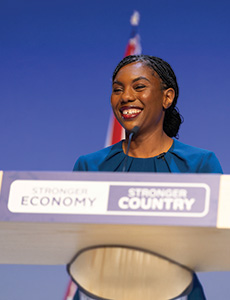

Pictured above
Prime Minister Andy Burnham, Conservative Party leader Kemi Badenoch and Reform UK leader Nigel Farage setting out their stalls at the party conferences this year.
BBC News, ‘Farage Says £72m Donations are Compliant ‘with the Law Today’ (14 September 2026)
Bingham T, The Rule of Law (Penguin Books: 2011)
Garland J, ‘What does an Independent Commission on Electoral Reform need to Succeed?’ (Electoral Reform Society, 6 August 2026)
HM Government, Restoring Trust in our Democracy: Our Strategy for Modern and Secure Elections (17 July 2025)
UK Parliament, Representation of the People Bill 2026
The Report of the Independent Commission on the Voting System (Cm 4090, 1998)
The Rycroft Review: Report of the Independent Review into Countering Foreign Financial Influence and Interference in UK Politics (HC 1787, 25 March 2026)
Sturge G, 2024 General Election: Turnout (House of Commons, 5 September 2024)
Labour, Andy Burnham’s Speech to Labour Party Conference 2026 (29 September 2026)

Dr Ben Stanford is a senior lecturer in law at Liverpool John Moores University. He has researched and published extensively on matters of electoral law, as well as serving as an independent election observer in the UK.
Reform UK continues to break records for the largest individual donations ever received by a UK political party. The two donations of £36 million from cryptocurrency billionaires Ben Delo and Christopher Harborne in September broke the previous record for a donation from a living person, when Harborne gave £9 million to the same party in December 2025. Both donors have also lived abroad for extensive periods in recent years, though it is not clear for how long or exactly when they relocated to the United Kingdom. Harborne also gifted £5 million to the party leader Nigel Farage in April 2024, prompting an investigation by the Parliamentary Standards Commissioner. With serious concerns already widely shared about the influence of money and foreign interference in British politics, these recent developments have further amplified the calls for action. The Representation of the People Bill, currently progressing through Parliament, is such an opportunity.
The UK’s electoral laws plainly need major reform to address these issues that challenge the transparency, legitimacy and fairness of the UK’s democracy. Symptomatic of these concerns, turnout at general elections has been suffering from sustained decline in recent decades, painting a picture of widespread disillusionment in UK politics. The 2024 general election recorded a turnout of 59.7% which was the lowest since 2001. In truth, turnout has never returned to the levels seen in the 1992 general election which recorded a 77.7% turnout. As a result, calls are increasing for urgent action to clean up and modernise the UK’s democracy.
The Labour government came to office with a massive Parliamentary majority in July 2024 after 14 years of Conservative Party control, pledging action in this area and to ‘reclaim Britain’s democracy as an aspiration for the rest of the world’. The Representation of the People Bill was introduced in February to reform and modernise many aspects of electoral law. With Andy Burnham replacing Sir Keir Starmer as Prime Minister in July, there was brief uncertainty over its future and whether the Bill would be changed or expanded, but the legislative process resumed in September.
The naming of the proposed legislation – the ‘Representation of the People Bill’ – is highly symbolic and rooted in history. Over the past two centuries, several namesake Acts have modernised the UK’s electoral framework and extended the franchise. Three such Acts were passed in the 19th century to extend the vote to more working men, modernise constituencies and stifle the threat of revolution. The 1918 Act gave the vote to some women for the first time and almost all men, before the 1928 Act finally ensured legal equality between women and men by eliminating all barriers to voting based on sex and property ownership. Further action followed in 1969 when the voting age was reduced to 18.
There are, therefore, lofty expectations for the Representation of the People Bill, edging towards the finish line in the legislative process. Assuming it passes the final hurdles in the House of Lords in the coming weeks, the Bill will extend the vote to 16- and 17-year-olds for UK general elections, Northern Ireland Assembly elections, as well as local elections in both England and Northern Ireland. This will harmonise the voting age across the entire UK. The Bill will also, among other things, make automatic voter registration easier, extend voter ID to include bank cards, remove the government’s control over the Electoral Commission’s strategic priorities and, of course, tighten up the rules on donations to parties. Yet, despite these significant changes, there remains unease and a sense that more could be done.
The Bill will take action to limit donations and loans by banning cryptoassets and introducing an annual cap of £100,000 on donations and loans from overseas British voters. These measures follow on from the Rycroft Review, published in March, which recommended action against foreign interference.
The proposal to apply these new restrictions retrospectively, from March onwards, has generated much controversy, especially considering the recent combined £72 million donated to Reform UK. Applying the law retrospectively is extremely rare in the UK’s various legal systems but it is within the power of Parliament and its inherent sovereignty to do so, while there may also be strong public interest to act in this way. It is deeply problematic, however, when we consider the rule of law. It is a fundamental requirement that laws only apply to future conduct because to do so otherwise can undermine legal certainty and confidence in the law, while also lacking in fairness. As Lord Bingham famously said: ‘All persons and authorities within the state, whether public or private, should be bound by and entitled to the benefit of laws publicly and prospectively promulgated and publicly administered in the courts.’
The move would also open the door to legal challenge, relying on Article 1 of the First Protocol to the European Convention on Human Rights, which guarantees the right to peaceful enjoyment of possessions, or in other words, property rights. Reform UK has already hinted at the prospect of applying to the European Court of Human Rights in this regard, with no hint of irony given their objective to withdraw the UK from that binding legal treaty. Party leader Nigel Farage has already claimed that the donations are ‘100% compliant with the law today’ but could not say if this would be the case should the Representation of the People Bill pass in its current form.
Regardless, the proposed restrictions would only apply to overseas British voters (and those returning to the UK for a short period), leaving UK residents free to donate any amount whatsoever. In other words, the proposed cap would limit the ability of non-residents to influence UK elections, but big money from UK-based donors would remain unrestricted. The introduction of a cap on these donations, even if it was much higher than the £100,000 cap applied to overseas voters, would be a start and demonstrate willingness to restrict the domination of a handful of super rich donors.
Implementing a higher cap for UK-based voters than that applied to overseas voters could surely be justified, as it would need to be legally, by the fact that UK residents have stronger links and commitments to the UK. Another clear dividing point is whether such a cap should apply to all UK-based donors, including not just individual millionaires and billionaires but also collective organisations such as trade unions. Union donations may well be ‘cleaner’ in the sense that they come from workers’ subscriptions and will in theory be used to advance workers’ rights, but treating individual donors and unions differently would look toxic and politically motivated. Also, a future right-wing government would almost certainly retaliate and impose a similar cap on union donations.
While the proposals contained in the Representation of the People Bill have much to be welcomed, further action is needed to address big money, and much bolder action is needed to address the unfairness of the UK’s voting system. This was exposed most obviously by the Labour Party’s ‘loveless landslide’ victory in the 2024 general election. These results, as well as those generally since 1945, demonstrate a clear trend of growing unfairness.
From just 33.7% of the popular vote in 2024, the Labour Party won 63.2% of the seats in the House of Commons. This was the most disproportionate result ever recorded. There has almost always been disparity between the share of votes and seats won by the governing party, but the 2024 result provided the most extreme example. The unfairness of the current system is also reflected by the fact that parties other than the Conservatives and Labour are steadily receiving an increasing share of seats. In other words, the post-war trend shows that the party that wins the general election is receiving more power from fewer votes, while support for the two dominant parties is in decline.
The most radical action would be to abolish the increasingly disproportionate first-past-the-post voting system and implement a form of proportional representation instead. Admittedly, this would require a fundamental rethink of the link between MPs, their constituencies and voters, which remains one of the undeniable strengths of first-past-the-post. However, the traditional arguments for the status quo – that strong governments are elected and that we live in a two-party system – are increasingly undermined in an era of multi-party politics. The single transferable vote system could be the solution, as this would provide for the more equitable distribution of seats while also preserving a system of (albeit larger) constituencies.
The complete transformation of the UK’s various voting systems to proportional representation in the Representation of the People Bill might have been unrealistic given the timeframe and scale of the change, but there were calls for the Bill to include the creation of an independent commission to examine its feasibility. A similar move took place following the Labour Party’s 1997 general election victory, when the Jenkins Commission recommended a mixed system of the alternative vote, combined with top-up seats, but no further action was taken. Several petitions were set up over summer 2026 calling for such a commission, attracting tens of thousands of signatories. Moreover, an amendment to the Bill to consider the feasibility of establishing a National Commission on Electoral Reform attracted the support of nearly 200 MPs, but this was not taken forward by the Chair.
Regardless, at the Labour Party conference in September, the Prime Minister Andy Burnham announced the creation of a National Commission on Electoral Reform. All political parties would be invited to participate, as well as community groups, trade unions, businesses, faith groups and all voters. Going further, the Prime Minister suggested that Labour would contest the next general election with a manifesto commitment to change the electoral system. Clearly, the prospect of electoral reform is now stronger than it has been for many years.
If current opinion polling is to be believed, the UK is heading for a hung Parliament at the next general election, with the support for three parties – Labour, the Conservatives and Reform – all fluctuating between 20-30%. Forming a stable minority government would be virtually impossible in these circumstances, and even forming a stable coalition government of two parties would be challenging. Predicting the outcome of the next election is challenging to say the least. First-past-the-post encourages parties to make undeliverable promises, yet massive compromises will be required for a government to have any chance of survival. A shift to proportional representation would force parties to be more open and honest, as coalition governments would be much more likely and become normalised over time.
The Representation of the People Bill is a great opportunity to address some of the most pressing issues affecting the UK’s democracy and to restore some public confidence. Many aspects of the Bill have been well received, yet it is widely felt that the reforms do not go far enough. Greater efforts could certainly be made to tackle the corrosive impact of big money.
Pictured above
Prime Minister Andy Burnham, Conservative Party leader Kemi Badenoch and Reform UK leader Nigel Farage setting out their stalls at the party conferences this year.
BBC News, ‘Farage Says £72m Donations are Compliant ‘with the Law Today’ (14 September 2026)
Bingham T, The Rule of Law (Penguin Books: 2011)
Garland J, ‘What does an Independent Commission on Electoral Reform need to Succeed?’ (Electoral Reform Society, 6 August 2026)
HM Government, Restoring Trust in our Democracy: Our Strategy for Modern and Secure Elections (17 July 2025)
UK Parliament, Representation of the People Bill 2026
The Report of the Independent Commission on the Voting System (Cm 4090, 1998)
The Rycroft Review: Report of the Independent Review into Countering Foreign Financial Influence and Interference in UK Politics (HC 1787, 25 March 2026)
Sturge G, 2024 General Election: Turnout (House of Commons, 5 September 2024)
Labour, Andy Burnham’s Speech to Labour Party Conference 2026 (29 September 2026)
Does the Representation of the People Bill do enough to tackle donor influence in British politics? asks Dr Ben Stanford

The Chair of the Bar reports back
Conner Wright, Legal Case Manager at AlphaBiolabs, answers the most frequently asked questions about SCRAM Continuous Alcohol Monitoring (SCRAM CAM®) posed by family law professionals
Ryan Prins of Philips SpeechLive explains how barristers can boost drafting efficiency with AI-assisted speech recognition – while keeping full oversight
Finding available counsel shouldn’t be complicated, says Kaan Kartal of Brieflink
By Kem Kemal, CEO, Henry Dannell
By BSK Financial Planning

For barristers, managing anxiety is a professional discipline as much as a personal one, says Annette Henry KC. This article examines the cues, clues and practical techniques for avoiding overwhelm and regaining calm
If you’ve never been to the Bar Conference before, this is the year to start. Amelia Clegg previews the profession’s flagship event
After a two-year investigation, Karim Khan KC was removed as ICC Chief Prosecutor in July. With the United States threatening to dismantle the court ‘brick by brick’, what’s next for the beleaguered ICC? asks Chris Stephen
Kick off your career at the Bar Council’s Pupillage Fair this October – it’s one of the most valuable opportunities for aspiring barristers, says Amelia Clegg
Join us on Saturday 21 November 2026 at Leeds Beckett University and see for yourself why the North continues to be an exceptional place to build a career at the Bar