*/
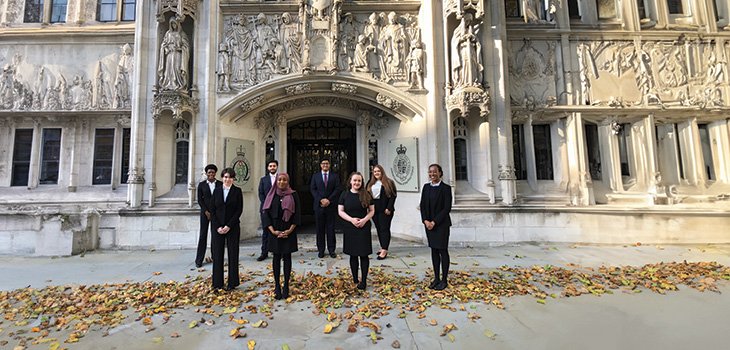
The Bridging the Bar (BTB) Academy allows 100 aspiring barristers from a wide variety of backgrounds to increase their chances of getting pupillage and prepare for life as a barrister. BTB has experienced and listened to the difficulties that many from underrepresented groups at the Bar face in accessing the profession, and the Academy offers every opportunity to develop skills, gain experience and build confidence to help in the pursuit of a successful career as a barrister.
The application process is made up of two stages: a written application and a video application. Successful candidates are chosen based on their ability to demonstrate the requirements and skills in the Academy selection criteria (see bridgingthebar.org).
The BTB team wants to learn as much as possible about applicants and each of the three written questions has a clear purpose – allowing applicants to show their skills and share their experiences. In addition, a one-minute pre-recorded video presentation must be submitted allowing applicants to demonstrate their ability to convey information in a direct and concise manner. This part of the process has no time limit yet its format is considerate of the different commitments applicants may be juggling alongside. I found that I had sufficient time to plan and structure my answers and have a few practice runs at the video before sending in my application.
Once the written application has been completed, applicants are sent a link to a video platform for the next stage of the process – answering two unseen questions.
Question 1 focuses on the applicant’s understanding of the Academy programme and appreciation of their own personal development. Applicants have five minutes in total to plan (up to three minutes) and record (up to two minutes in length) their answer. I felt this was a good amount of time to get a sufficient plan on paper and record my answer. Question 2 is a topical question. The total time for this is 10 minutes: up to eight minutes of thinking time and up to two minutes to record and submit the video answer.
I found the application process to be quite different to any other I have seen. The time limits and focused requirements meant I didn’t spend lots of time in a ‘pit of stress’ worrying about completing the application. Instead, I was able to use my time productively and focus on high-quality answers.
The opportunities and learning experiences available on the Academy ticked so many boxes for me. I did not have to anxiously brace myself for blanket rejections with no hope of feedback. To be able to complete my application, get accepted onto the Academy and submit shorter applications for internships – all within one overarching process – reassured me that the selection to access these opportunities was fair.
A highlight of the Academy for me was the UK Supreme Court Internship. Meeting the Justices and Judicial Assistants and being able to discuss important topics revolving around diversity, equality and inclusion was incredibly rewarding. Other hosts for internships include the Court of Appeal, High Court, Law Commission, Government Legal Department and Advocate (which offers a longer internship in the summer). Candidates are able to develop their analytical, advocacy, written and communication skills and also have the opportunity to network.
Each candidate is paired with a barrister mentor. My mentor has given me a lot of support and encouragement through helpful and frank conversations. He has provided a plethora of advice for the pupillage application season and for a career at the Bar. A barrister who can give you advice based around your CV is one of the many fantastic opportunities the Academy offers.
Small groups of candidates are placed in a group with a PoD leader to discuss other vital topics surrounding personal development. I learnt a lot about fear as well as embracing my personal journey to get where I am today. With all the fierce competition among aspiring barristers and constantly trying to build the CV, it is easy to forget to appreciate your achievements to date. The PoD sessions have really helped me feel calmer, more confident, brave and ready to conquer every opportunity.
The Academy runs a two-part lecture series by barrister Elaine Banton, a fierce advocate for diversity at the Bar. The lectures cover the current statistics at the Bar and give a clear picture of how the Bar currently stands with regard to diversity, equality and inclusion. At times, looking at these statistics can be overwhelming and disappointing to see such little improvement. Attending these lectures meant, as a cohort, we could make comments and ask questions. There is a strong sense of camaraderie among the cohort and this instils even greater drive to play a part in positive change at the Bar.
BTB considers each candidate’s practice areas of interest and pairs them with a chambers to complete a mini-pupillage. There are two cycles, and so an opportunity to complete a maximum of two mini-pupillages (depending on whether the candidate has completed an integrated internship). Mini-pupillages can be incredibly difficult to get. BTB, after considering your application for the Academy, go ahead and pair each successful candidate with a chambers. BTB was able to take away the concept of being lucky or unlucky with mini-pupillage applications and base the opportunity on the content of the candidate’s application, implementing a system of transparency, fairness and objectivity.
I have recently finished my time on the Academy, and feel that I have grown so much as an individual. My drive for a career at the Bar has increased immensely and I know that it is the right profession for me. I have also learnt the value of taking the time to appreciate my achievements and embrace all my experiences.
I have met the most encouraging, supportive and brilliant people on the Academy. Applying for pupillage and pursuing this career can sometimes feel quite isolating among the rabid competitiveness, but not with the Academy where we are all in this together. I have gained a lot of confidence in my abilities and feel comfortable in myself, my skills and my knowledge.
There are no adequate words to express how grateful I am to the Academy. It is the embodiment of exactly what is needed at the Bar to achieve diversity, equality, inclusion, objectivity and fairness.
Find out more about BTB, applying to the Academy and sign up to the mailing list at bridgingthebar.org
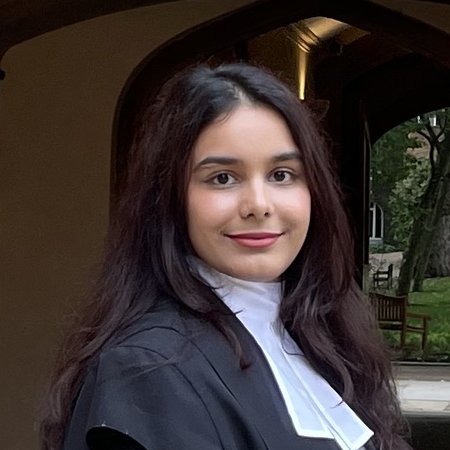
Jaya Sudera graduated from City Law School upon completing her LLB Law (Hons) with Commercial Law in 2022 and graduated from her LLM in Bar Professional Training (with specialism in Corporate Law and Practice) in 2024. Called to the Bar by Lincoln’s Inn in July 2023, Jaya is currently a tribunal advocate within the Civil Service.
The Bridging the Bar (BTB) Academy allows 100 aspiring barristers from a wide variety of backgrounds to increase their chances of getting pupillage and prepare for life as a barrister. BTB has experienced and listened to the difficulties that many from underrepresented groups at the Bar face in accessing the profession, and the Academy offers every opportunity to develop skills, gain experience and build confidence to help in the pursuit of a successful career as a barrister.
The application process is made up of two stages: a written application and a video application. Successful candidates are chosen based on their ability to demonstrate the requirements and skills in the Academy selection criteria (see bridgingthebar.org).
The BTB team wants to learn as much as possible about applicants and each of the three written questions has a clear purpose – allowing applicants to show their skills and share their experiences. In addition, a one-minute pre-recorded video presentation must be submitted allowing applicants to demonstrate their ability to convey information in a direct and concise manner. This part of the process has no time limit yet its format is considerate of the different commitments applicants may be juggling alongside. I found that I had sufficient time to plan and structure my answers and have a few practice runs at the video before sending in my application.
Once the written application has been completed, applicants are sent a link to a video platform for the next stage of the process – answering two unseen questions.
Question 1 focuses on the applicant’s understanding of the Academy programme and appreciation of their own personal development. Applicants have five minutes in total to plan (up to three minutes) and record (up to two minutes in length) their answer. I felt this was a good amount of time to get a sufficient plan on paper and record my answer. Question 2 is a topical question. The total time for this is 10 minutes: up to eight minutes of thinking time and up to two minutes to record and submit the video answer.
I found the application process to be quite different to any other I have seen. The time limits and focused requirements meant I didn’t spend lots of time in a ‘pit of stress’ worrying about completing the application. Instead, I was able to use my time productively and focus on high-quality answers.
The opportunities and learning experiences available on the Academy ticked so many boxes for me. I did not have to anxiously brace myself for blanket rejections with no hope of feedback. To be able to complete my application, get accepted onto the Academy and submit shorter applications for internships – all within one overarching process – reassured me that the selection to access these opportunities was fair.
A highlight of the Academy for me was the UK Supreme Court Internship. Meeting the Justices and Judicial Assistants and being able to discuss important topics revolving around diversity, equality and inclusion was incredibly rewarding. Other hosts for internships include the Court of Appeal, High Court, Law Commission, Government Legal Department and Advocate (which offers a longer internship in the summer). Candidates are able to develop their analytical, advocacy, written and communication skills and also have the opportunity to network.
Each candidate is paired with a barrister mentor. My mentor has given me a lot of support and encouragement through helpful and frank conversations. He has provided a plethora of advice for the pupillage application season and for a career at the Bar. A barrister who can give you advice based around your CV is one of the many fantastic opportunities the Academy offers.
Small groups of candidates are placed in a group with a PoD leader to discuss other vital topics surrounding personal development. I learnt a lot about fear as well as embracing my personal journey to get where I am today. With all the fierce competition among aspiring barristers and constantly trying to build the CV, it is easy to forget to appreciate your achievements to date. The PoD sessions have really helped me feel calmer, more confident, brave and ready to conquer every opportunity.
The Academy runs a two-part lecture series by barrister Elaine Banton, a fierce advocate for diversity at the Bar. The lectures cover the current statistics at the Bar and give a clear picture of how the Bar currently stands with regard to diversity, equality and inclusion. At times, looking at these statistics can be overwhelming and disappointing to see such little improvement. Attending these lectures meant, as a cohort, we could make comments and ask questions. There is a strong sense of camaraderie among the cohort and this instils even greater drive to play a part in positive change at the Bar.
BTB considers each candidate’s practice areas of interest and pairs them with a chambers to complete a mini-pupillage. There are two cycles, and so an opportunity to complete a maximum of two mini-pupillages (depending on whether the candidate has completed an integrated internship). Mini-pupillages can be incredibly difficult to get. BTB, after considering your application for the Academy, go ahead and pair each successful candidate with a chambers. BTB was able to take away the concept of being lucky or unlucky with mini-pupillage applications and base the opportunity on the content of the candidate’s application, implementing a system of transparency, fairness and objectivity.
I have recently finished my time on the Academy, and feel that I have grown so much as an individual. My drive for a career at the Bar has increased immensely and I know that it is the right profession for me. I have also learnt the value of taking the time to appreciate my achievements and embrace all my experiences.
I have met the most encouraging, supportive and brilliant people on the Academy. Applying for pupillage and pursuing this career can sometimes feel quite isolating among the rabid competitiveness, but not with the Academy where we are all in this together. I have gained a lot of confidence in my abilities and feel comfortable in myself, my skills and my knowledge.
There are no adequate words to express how grateful I am to the Academy. It is the embodiment of exactly what is needed at the Bar to achieve diversity, equality, inclusion, objectivity and fairness.
Find out more about BTB, applying to the Academy and sign up to the mailing list at bridgingthebar.org


The Chair of the Bar reports back
Susie Griffin on the admin that keeps barristers from billable work
Clement Cowley, Partner at The Penny Group, explains how global events can influence the performance of pensions and ISAs, and why taking a long-term approach to investing is often the most effective strategy
Mário Barroso, Head of R&D and Method Development at AlphaBiolabs, discusses what family law professionals need to know about hallucinogens, from the main hallucinogenic drugs encountered in family proceedings, to their effects and the testing options available
Harmony Christian Ministries is the latest charity to benefit from a £500 donation from AlphaBiolabs via the company’s Giving Back initiative
By David Green
At the start of her term, Chair of the Bar 2026 Kirsty Brimelow KC set out a series of priorities for the year ahead. One of those priorities was children in the justice system
As the world becomes more digital, Barbara Vinagre Mota examines international research into the mental health consequences of judges’ exposure to graphic and immersive evidence, highlighting the importance of support systems
In an era of patient-centred care and growing concern over misconduct in medical settings, why do women still lack the right to choose women consultants for examination and treatment? Charles Davey investigates
Reviewed by Daniel Barnett
James McNeill Whistler at Tate Britain until 27 September Rothko in Florence at Palazzo Strozzi until 23 August Reviewed by Stephen Cragg KC