*/
Making the argument for contextual literacy in courts, Stephen Cragg KC illustrates how lawyers in freedom of expression cases can benefit from an understanding of art history
From Pussy Riot to the Colston Four, high-profile cases about artistic and political expression reveal an uncomfortable truth: courts do not merely apply rules to culture – they help to make it. When judges meet art, they generate meanings and categories that shape what artists, protesters and citizens think is possible. Recent European case law, together with the Bristol statue litigation, shows why lawyers working on freedom of expression cases can benefit from an understanding of art history.
Legal proceedings that involve controversial art rarely operate as neutral arbiters. Judgments and judges define and use labels such as ‘obscene’, ‘desecration’, ‘hooliganism’ and ‘criminal damage’, and those labels, once applied, guide future behaviour of artists, protestors and law enforcers.
Some case examples illustrate the point. In Müller v Switzerland (1988), Swiss domestic courts confiscated and condemned sexually explicit paintings shown at a public festival. The European Court of Human Rights deferred to the moral assessments of the Swiss authorities which framed the work as ‘obscene’ and found that the interference with the artist’s freedom of expression rights under Article 10 of the European Convention on Human Rights was justified. In doing so, the court helped construct the category of ‘obscene art’ but also created a ‘vulnerable viewer’ in need of protection and a ‘responsible artist’ expected to self-censor, so as not to contravene the sensibilities of others.
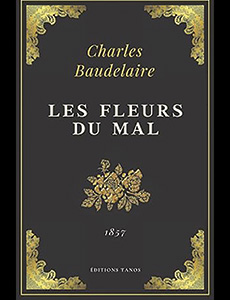
Are judges right to be making these assessments? Judge Spielmann’s dissent in Müller drew a telling comparison: the 1857 conviction of Baudelaire for Les Fleurs du Mal, quashed nearly a century later, demonstrated that moral judgements shift and that deference to domestic ‘morals’ is a dangerously subjective path to tread.
In Sinkova v Ukraine (2018), a majority of the court found no Article 10 violation when an activist fried eggs over an eternal flame as satirical performance art protest, in this case separating the physical act (treated as ‘desecration’) from its message (the wasting of state resources’) and finding that there were plenty of other ways the activist could express themselves. Three dissenting judges warned that this inverted Article 10 by requiring citizens to justify law-breaking rather than obliging the state to justify criminalisation.
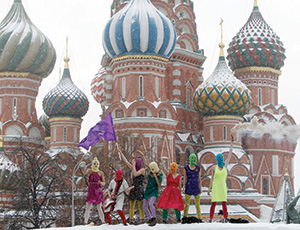
Subsequent cases moved away from Sinkova’s logic. Within a year of Sinkova, Strasbourg found violations of Article 10 for Pussy Riot’s performance of their Punk Prayer in a Moscow cathedral. In Alekhina v Russia (2019), the court criticised Russian domestic courts for treating dress, performance and breach of religious ‘canons’ as proof of religious hatred which justified criminal prosecution, while failing to examine the intentions of the group (protesting about the support of the church for the Putin regime). When commissioned experts found no signs of inciting religious hatred, the Russian authorities simply controlled the narrative and directly appointed experts to produce the opposite conclusion. The trial court refused to hear art historians or contemporary art specialists. Strasbourg condemned that process: art-historical expertise is not a luxury in criminal proceedings about expressive conduct. It is central to a fair assessment of context and meaning.
In the UK, the June 2020 toppling of Bristol’s Edward Colston statue followed decades of failed civic attempts to address a monument whose meaning had shifted. When protesters hauled the bronze into the harbour, the state prosecuted them for criminal damage. At trial, the defendants argued that removing a public celebration of a slaver was a lawful exercise of Article 10 rights in its context and for its message. Cultural historian David Olusoga gave evidence on their behalf. A jury agreed and acquitted them.
The Attorney General then referred questions to the Court of Appeal, which held in September 2022 that, as the damage was perceived as violent and significant, the conduct fell outside Convention protection and interference with Article 10 rights was not an issue for the jury at all. Parliament also increased penalties for damaging monuments under the Police, Crime, Sentencing and Courts Act 2022. The acquittals stood, but the legal framing for future cases was reset.
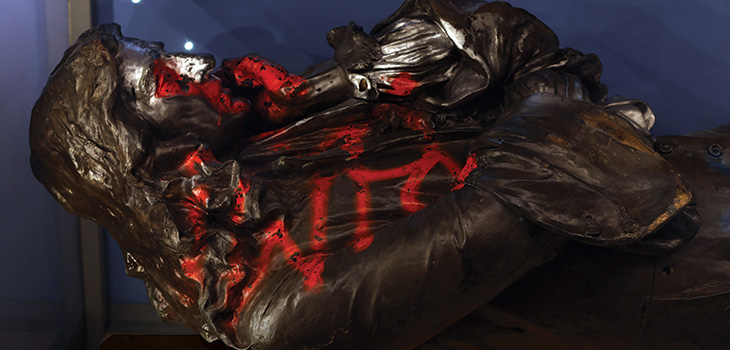
But the legal labels applied by the court do not prevent the cultural meaning moving on. The empty plinth became a site of civic dialogue and artistic debate as to what (if anything) should fill the space. The statue – now shown horizontally in Bristol’s M Shed museum with graffiti intact – invites art historical readings that were impossible while it stood aloft. The graffiti now forms part of the history, the myth-making that once surrounded Colston has been exposed, and the city’s story has changed accordingly. Time will tell whether, as in the case of Baudelaire’s poems, the court’s condemnation of the protestors’ actions can be sustained.
Courts inevitably make judgments about artistic meaning, context and tradition when deciding whether conduct falls within Article 10 and whether restrictions are proportionate. However, without art-historical understanding, those judgments risk repeating past errors. The broader scholarship on monuments reinforces this. Meanings evolve with audiences and settings. Colston’s statue depended on an ‘invented tradition’ of philanthropy that downplayed his role in the slave trade; by 2020 that narrative had become untenable in a changing city. Muller’s paintings, confiscated for eight years in the 1980s, were exhibited without fuss in 2021 and can be seen today on his website.
This is not necessarily an argument for aesthetic deference by courts to art historians, but it is an argument for contextual literacy. Courts that can situate a punk intervention within traditions of subversive performance, or a satirical action within conceptual practice, or the pulling down of a statue within the history of slavery and of iconoclasm, are much better placed to assess whether a restriction on the freedom of expression truly meets a pressing social need so as to justify an interference with Article 10 rights.
Ultimately, cases involving freedom of artistic expression do not simply uncover pre-existing rights. Judges participate in defining what counts as legitimate expression in a given time and place. Art historians recognise that objects and performances do not carry fixed meanings; their significance is produced through institutions, audiences and settings. Even judgments that are permissive and progressive – those that recognise artistic intent, affirm the value of satire, or vindicate a protestor’s expressive conduct – do not simply liberate artistic expression.
Rather, in vindicating a particular act or artwork, courts necessarily draw a boundary. They articulate what falls within protected expression and, by implication, what does not. Those boundaries, however sympathetically drawn, become reference points for future conduct. Artists, performers and activists operating in the shadow of such rulings must interpret where the new line lies, and may err on the side of caution precisely because the limits of their Article 10 rights remain uncertain. The chilling effect is therefore not the exclusive product of repressive decisions; it is an inherent feature of adjudication itself. The caution can extend to those who support artistic expression: museums, galleries, broadcasters and funders.
From a Swiss art gallery to a Bristol harbour to a Moscow cathedral, recent cases show that when art stands trial, culture itself is in the dock – and that courts, consciously or not, are co-authors of what is acceptable and what is not.

From Pussy Riot to the Colston Four, high-profile cases about artistic and political expression reveal an uncomfortable truth: courts do not merely apply rules to culture – they help to make it. When judges meet art, they generate meanings and categories that shape what artists, protesters and citizens think is possible. Recent European case law, together with the Bristol statue litigation, shows why lawyers working on freedom of expression cases can benefit from an understanding of art history.
Legal proceedings that involve controversial art rarely operate as neutral arbiters. Judgments and judges define and use labels such as ‘obscene’, ‘desecration’, ‘hooliganism’ and ‘criminal damage’, and those labels, once applied, guide future behaviour of artists, protestors and law enforcers.
Some case examples illustrate the point. In Müller v Switzerland (1988), Swiss domestic courts confiscated and condemned sexually explicit paintings shown at a public festival. The European Court of Human Rights deferred to the moral assessments of the Swiss authorities which framed the work as ‘obscene’ and found that the interference with the artist’s freedom of expression rights under Article 10 of the European Convention on Human Rights was justified. In doing so, the court helped construct the category of ‘obscene art’ but also created a ‘vulnerable viewer’ in need of protection and a ‘responsible artist’ expected to self-censor, so as not to contravene the sensibilities of others.
Are judges right to be making these assessments? Judge Spielmann’s dissent in Müller drew a telling comparison: the 1857 conviction of Baudelaire for Les Fleurs du Mal, quashed nearly a century later, demonstrated that moral judgements shift and that deference to domestic ‘morals’ is a dangerously subjective path to tread.
In Sinkova v Ukraine (2018), a majority of the court found no Article 10 violation when an activist fried eggs over an eternal flame as satirical performance art protest, in this case separating the physical act (treated as ‘desecration’) from its message (the wasting of state resources’) and finding that there were plenty of other ways the activist could express themselves. Three dissenting judges warned that this inverted Article 10 by requiring citizens to justify law-breaking rather than obliging the state to justify criminalisation.
Subsequent cases moved away from Sinkova’s logic. Within a year of Sinkova, Strasbourg found violations of Article 10 for Pussy Riot’s performance of their Punk Prayer in a Moscow cathedral. In Alekhina v Russia (2019), the court criticised Russian domestic courts for treating dress, performance and breach of religious ‘canons’ as proof of religious hatred which justified criminal prosecution, while failing to examine the intentions of the group (protesting about the support of the church for the Putin regime). When commissioned experts found no signs of inciting religious hatred, the Russian authorities simply controlled the narrative and directly appointed experts to produce the opposite conclusion. The trial court refused to hear art historians or contemporary art specialists. Strasbourg condemned that process: art-historical expertise is not a luxury in criminal proceedings about expressive conduct. It is central to a fair assessment of context and meaning.
In the UK, the June 2020 toppling of Bristol’s Edward Colston statue followed decades of failed civic attempts to address a monument whose meaning had shifted. When protesters hauled the bronze into the harbour, the state prosecuted them for criminal damage. At trial, the defendants argued that removing a public celebration of a slaver was a lawful exercise of Article 10 rights in its context and for its message. Cultural historian David Olusoga gave evidence on their behalf. A jury agreed and acquitted them.
The Attorney General then referred questions to the Court of Appeal, which held in September 2022 that, as the damage was perceived as violent and significant, the conduct fell outside Convention protection and interference with Article 10 rights was not an issue for the jury at all. Parliament also increased penalties for damaging monuments under the Police, Crime, Sentencing and Courts Act 2022. The acquittals stood, but the legal framing for future cases was reset.
But the legal labels applied by the court do not prevent the cultural meaning moving on. The empty plinth became a site of civic dialogue and artistic debate as to what (if anything) should fill the space. The statue – now shown horizontally in Bristol’s M Shed museum with graffiti intact – invites art historical readings that were impossible while it stood aloft. The graffiti now forms part of the history, the myth-making that once surrounded Colston has been exposed, and the city’s story has changed accordingly. Time will tell whether, as in the case of Baudelaire’s poems, the court’s condemnation of the protestors’ actions can be sustained.
Courts inevitably make judgments about artistic meaning, context and tradition when deciding whether conduct falls within Article 10 and whether restrictions are proportionate. However, without art-historical understanding, those judgments risk repeating past errors. The broader scholarship on monuments reinforces this. Meanings evolve with audiences and settings. Colston’s statue depended on an ‘invented tradition’ of philanthropy that downplayed his role in the slave trade; by 2020 that narrative had become untenable in a changing city. Muller’s paintings, confiscated for eight years in the 1980s, were exhibited without fuss in 2021 and can be seen today on his website.
This is not necessarily an argument for aesthetic deference by courts to art historians, but it is an argument for contextual literacy. Courts that can situate a punk intervention within traditions of subversive performance, or a satirical action within conceptual practice, or the pulling down of a statue within the history of slavery and of iconoclasm, are much better placed to assess whether a restriction on the freedom of expression truly meets a pressing social need so as to justify an interference with Article 10 rights.
Ultimately, cases involving freedom of artistic expression do not simply uncover pre-existing rights. Judges participate in defining what counts as legitimate expression in a given time and place. Art historians recognise that objects and performances do not carry fixed meanings; their significance is produced through institutions, audiences and settings. Even judgments that are permissive and progressive – those that recognise artistic intent, affirm the value of satire, or vindicate a protestor’s expressive conduct – do not simply liberate artistic expression.
Rather, in vindicating a particular act or artwork, courts necessarily draw a boundary. They articulate what falls within protected expression and, by implication, what does not. Those boundaries, however sympathetically drawn, become reference points for future conduct. Artists, performers and activists operating in the shadow of such rulings must interpret where the new line lies, and may err on the side of caution precisely because the limits of their Article 10 rights remain uncertain. The chilling effect is therefore not the exclusive product of repressive decisions; it is an inherent feature of adjudication itself. The caution can extend to those who support artistic expression: museums, galleries, broadcasters and funders.
From a Swiss art gallery to a Bristol harbour to a Moscow cathedral, recent cases show that when art stands trial, culture itself is in the dock – and that courts, consciously or not, are co-authors of what is acceptable and what is not.
Making the argument for contextual literacy in courts, Stephen Cragg KC illustrates how lawyers in freedom of expression cases can benefit from an understanding of art history


The Chair of the Bar reports back
Susie Griffin on the admin that keeps barristers from billable work
Clement Cowley, Partner at The Penny Group, explains how global events can influence the performance of pensions and ISAs, and why taking a long-term approach to investing is often the most effective strategy
Mário Barroso, Head of R&D and Method Development at AlphaBiolabs, discusses what family law professionals need to know about hallucinogens, from the main hallucinogenic drugs encountered in family proceedings, to their effects and the testing options available
Harmony Christian Ministries is the latest charity to benefit from a £500 donation from AlphaBiolabs via the company’s Giving Back initiative
By David Green
At the start of her term, Chair of the Bar 2026 Kirsty Brimelow KC set out a series of priorities for the year ahead. One of those priorities was children in the justice system
As the world becomes more digital, Barbara Vinagre Mota examines international research into the mental health consequences of judges’ exposure to graphic and immersive evidence, highlighting the importance of support systems
In an era of patient-centred care and growing concern over misconduct in medical settings, why do women still lack the right to choose women consultants for examination and treatment? Charles Davey investigates
Reviewed by Daniel Barnett
James McNeill Whistler at Tate Britain until 27 September Rothko in Florence at Palazzo Strozzi until 23 August Reviewed by Stephen Cragg KC