*/

With Shakespeare’s birthday upon us, Benet Brandreth KC explores how, four centuries on, the Bard’s mastery of classical rhetoric can still sharpen the tools of modern advocates
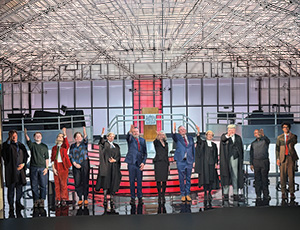
Is Shakespeare funny? In December 2025, at the Criterion Theatre, before Mrs Justice Joanna Smith, after argument from Kate Gallafent KC, Edward Henry KC and Dinah Rose KC, and having heard evidence from such experts as Lee Mack, Professor Emma Smith, Paterson Joseph, Miles Jupp and Richard Ayoade, the question was tried – and affirmed.
The trial was a special event in support of Coram Shakespeare Schools Foundation (CSSF), a charity dedicated to ensuring that all young people, from every background, have the opportunity to learn from the greatest master of the English language that has ever lived. And learn they do: CSSF’s research shows that children given the opportunity to perform Shakespeare’s works improve across every metric of oracy and empathy. This is small surprise to those that know and love Shakespeare. Drama has been a foundation of good advocacy for more than 2,000 years. As the Roman rhetor Quintilian said:
Poets should be read by him who would be an orator… for from the poets is derived animation in relating facts, sublimity in expression, the greatest power in exciting the feelings, and gracefulness in personifying character.
The study and performance of Shakespeare’s works have much to offer the Bar. Whether it is in the practice of delivery that performing gives us. Or in the example his writing provides of the power of language to delight and to move. Or in Shakespeare’s characters who reveal a rich understanding of the measure of mankind; the understanding of which lies at the heart of persuasion.
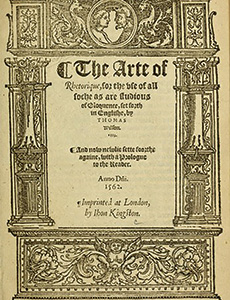
For Shakespeare these things were not just instinctive. He was schooled in classical rhetoric, the study of the power of language. We know it resonated with him. He dramatises his lessons in The Merry Wives of Windsor, he mocks them in Love’s Labour’s Lost and his plays reference textbooks of the time such as Sir Thomas Wilson’s The Arte of Rhetorique.
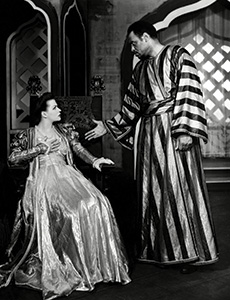
One of the lessons that Shakespeare would have been taught at school was the value of close reading. This process – asking not just, ‘what did Virgil say?’, but ‘why did Virgil say it in these words?’ – was the foundation of a profound understanding of the power of language. So it is with Shakespeare. Take an example from Othello. At the beginning of the play Othello, who has fought many wars for the city of Venice, is accused of seducing Desdemona, the daughter of one of the senators of Venice, by the use of witchcraft. His defence is a conscious display by Shakespeare of all the lessons of classical rhetoric. The opening demonstrates guidance from The Arte of Rhetorique:
The winning of victory rests in three points. First, in apt teaching the hearers what the matter is, next in getting them to give good ear, and thirdly in winning their favour.
The first few lines of Othello’s speech achieve the first and third of these aims by praising those who stand in judgement over him and then by identifying the central issue in dispute, what Cicero called, ‘the status of the case’:
Most potent, grave, and reverend signiors,
My very noble and approved good masters,
That I have ta’en away this old man’s daughter,
It is most true; true, I have married her:
The very head and front of my offending
Hath this extent, no more.
After the flattery, Othello takes the tribunal straight to the heart of his argument. Not whether he is married but whether he has done so through immoral means. This identification of the central point in dispute calls for the defining skill of advocacy, the exercise of judgement – identifying what matters and discarding what does not. Doing so brings credibility before the judge, who sees that we have applied thought to the issues, and lays the foundation for clarity and concision in argument. As it says in The Arte of Rhetorique:
… wise are they that follow Pliny’s advice… and have an eye to the chief title and principal ground of their whole intent…. Yea, the wise and expert men will ask of themselves, how hangs this to the purpose? To what end do I speak it? What makes this for confirmation of my cause? And so by oft questioning, either chide their own folly if they speak amiss, or else be assured they speak to good purpose.
There is many a judge who wishes those before them had taken Pliny’s 2,000-year-old advice, repeated by Wilson and so admirably demonstrated by Shakespeare’s Othello and asked of their submissions – how hangs this to the purpose?
Other examples of the lessons of classical rhetoric abound in Shakespeare’s works. Julius Caesar offers up an example of how to win round a hostile tribunal in the speech of Mark Antony before the mob. The mob fears a tyrant and more than that, they have been stirred up by Brutus, one of the conspirators. How then is Antony to win their good ear? In The Arte of Rhetorique the advice is to proceed by ‘a privy creeping in’. We speak only that which is pleasing to the judge at first. Then:
… when the hearers are somewhat calmed… we may take advantage of some part of our adversary’s tale…. For when the standers by, perceive that the answerer… fears so little the objections of his adversary, …they will think that they themselves, rather gave rash credit…
Antony takes this advice to heart. He does not directly challenge what Brutus has said. Instead, he praises Brutus and repeats his argument. Each time he does, however, he couples it with some matter that appears to contradict it. Antony lets the mob draw its own conclusions:
You all did see that on the Lupercal
I thrice presented him a kingly crown,
Which he did thrice refuse. Was this ambition?
Yet Brutus says he was ambitious,
And sure he is an honorable man.
Great reward comes when we look at Shakespeare’s words and ask, as the Elizabethan schoolboys did, not just what did he say but why did he say it in this particular way?
Take metaphor, as Quintilian explained:
Though images may seem of little importance in establishing a proof by which our arguments are advanced, they make what we say probable and penetrate imperceptibly into the mind of the judge.
… metaphor is designed to move the feelings, give special distinction to things and place them vividly before the eye.
That understanding is on display when we appreciate how Shakespeare turns abstract concepts into sensual reality in Portia’s lines in The Merchant of Venice:
The quality of mercy is not strain’d,
It droppeth as the gentle rain from heaven
It is an understanding of the power of imagery that can work even in the Court of Appeal – TVIS v Howserv [2024] EWCA Civ 1103:
80…The judge appears to have considered that the number of instances of confusion was too small, but as counsel for TVIS graphically submitted:
‘…These were two relatively small ships in a vast ocean, and yet instance after instance of them crashing into each other.’
These examples are but to scratch the surface of the value of reading and performing Shakespeare to the Bar. Its greatest value lies in this, as the schoolchildren helped by CSSF have also found, all his wisdom comes packaged in the sheer delight of his poetry, insight – and as is now conclusively tried and determined – good humour.
Visit www.shakespeareschools.org to learn more about CSSF and book tickets for Shakespeare Schools Festival performances across the UK, running until 14 April 2026.
.jpeg?sfvrsn=9e07af95_2)
Benet Brandreth KC is a barrister specialising in intellectual property. He was one of the Attorney-General’s A Panel Counsel and sat as a Recorder in crime from 2019-23. He is an expert on classical rhetoric and Shakespeare’s use of language, serving as a coach to the RSC. He has written two acclaimed novels that take Shakespeare as their hero. He is an award-winning comedian and his one-man shows were hits at the Edinburgh Festival and in London.
Is Shakespeare funny? In December 2025, at the Criterion Theatre, before Mrs Justice Joanna Smith, after argument from Kate Gallafent KC, Edward Henry KC and Dinah Rose KC, and having heard evidence from such experts as Lee Mack, Professor Emma Smith, Paterson Joseph, Miles Jupp and Richard Ayoade, the question was tried – and affirmed.
The trial was a special event in support of Coram Shakespeare Schools Foundation (CSSF), a charity dedicated to ensuring that all young people, from every background, have the opportunity to learn from the greatest master of the English language that has ever lived. And learn they do: CSSF’s research shows that children given the opportunity to perform Shakespeare’s works improve across every metric of oracy and empathy. This is small surprise to those that know and love Shakespeare. Drama has been a foundation of good advocacy for more than 2,000 years. As the Roman rhetor Quintilian said:
Poets should be read by him who would be an orator… for from the poets is derived animation in relating facts, sublimity in expression, the greatest power in exciting the feelings, and gracefulness in personifying character.
The study and performance of Shakespeare’s works have much to offer the Bar. Whether it is in the practice of delivery that performing gives us. Or in the example his writing provides of the power of language to delight and to move. Or in Shakespeare’s characters who reveal a rich understanding of the measure of mankind; the understanding of which lies at the heart of persuasion.
For Shakespeare these things were not just instinctive. He was schooled in classical rhetoric, the study of the power of language. We know it resonated with him. He dramatises his lessons in The Merry Wives of Windsor, he mocks them in Love’s Labour’s Lost and his plays reference textbooks of the time such as Sir Thomas Wilson’s The Arte of Rhetorique.
One of the lessons that Shakespeare would have been taught at school was the value of close reading. This process – asking not just, ‘what did Virgil say?’, but ‘why did Virgil say it in these words?’ – was the foundation of a profound understanding of the power of language. So it is with Shakespeare. Take an example from Othello. At the beginning of the play Othello, who has fought many wars for the city of Venice, is accused of seducing Desdemona, the daughter of one of the senators of Venice, by the use of witchcraft. His defence is a conscious display by Shakespeare of all the lessons of classical rhetoric. The opening demonstrates guidance from The Arte of Rhetorique:
The winning of victory rests in three points. First, in apt teaching the hearers what the matter is, next in getting them to give good ear, and thirdly in winning their favour.
The first few lines of Othello’s speech achieve the first and third of these aims by praising those who stand in judgement over him and then by identifying the central issue in dispute, what Cicero called, ‘the status of the case’:
Most potent, grave, and reverend signiors,
My very noble and approved good masters,
That I have ta’en away this old man’s daughter,
It is most true; true, I have married her:
The very head and front of my offending
Hath this extent, no more.
After the flattery, Othello takes the tribunal straight to the heart of his argument. Not whether he is married but whether he has done so through immoral means. This identification of the central point in dispute calls for the defining skill of advocacy, the exercise of judgement – identifying what matters and discarding what does not. Doing so brings credibility before the judge, who sees that we have applied thought to the issues, and lays the foundation for clarity and concision in argument. As it says in The Arte of Rhetorique:
… wise are they that follow Pliny’s advice… and have an eye to the chief title and principal ground of their whole intent…. Yea, the wise and expert men will ask of themselves, how hangs this to the purpose? To what end do I speak it? What makes this for confirmation of my cause? And so by oft questioning, either chide their own folly if they speak amiss, or else be assured they speak to good purpose.
There is many a judge who wishes those before them had taken Pliny’s 2,000-year-old advice, repeated by Wilson and so admirably demonstrated by Shakespeare’s Othello and asked of their submissions – how hangs this to the purpose?
Other examples of the lessons of classical rhetoric abound in Shakespeare’s works. Julius Caesar offers up an example of how to win round a hostile tribunal in the speech of Mark Antony before the mob. The mob fears a tyrant and more than that, they have been stirred up by Brutus, one of the conspirators. How then is Antony to win their good ear? In The Arte of Rhetorique the advice is to proceed by ‘a privy creeping in’. We speak only that which is pleasing to the judge at first. Then:
… when the hearers are somewhat calmed… we may take advantage of some part of our adversary’s tale…. For when the standers by, perceive that the answerer… fears so little the objections of his adversary, …they will think that they themselves, rather gave rash credit…
Antony takes this advice to heart. He does not directly challenge what Brutus has said. Instead, he praises Brutus and repeats his argument. Each time he does, however, he couples it with some matter that appears to contradict it. Antony lets the mob draw its own conclusions:
You all did see that on the Lupercal
I thrice presented him a kingly crown,
Which he did thrice refuse. Was this ambition?
Yet Brutus says he was ambitious,
And sure he is an honorable man.
Great reward comes when we look at Shakespeare’s words and ask, as the Elizabethan schoolboys did, not just what did he say but why did he say it in this particular way?
Take metaphor, as Quintilian explained:
Though images may seem of little importance in establishing a proof by which our arguments are advanced, they make what we say probable and penetrate imperceptibly into the mind of the judge.
… metaphor is designed to move the feelings, give special distinction to things and place them vividly before the eye.
That understanding is on display when we appreciate how Shakespeare turns abstract concepts into sensual reality in Portia’s lines in The Merchant of Venice:
The quality of mercy is not strain’d,
It droppeth as the gentle rain from heaven
It is an understanding of the power of imagery that can work even in the Court of Appeal – TVIS v Howserv [2024] EWCA Civ 1103:
80…The judge appears to have considered that the number of instances of confusion was too small, but as counsel for TVIS graphically submitted:
‘…These were two relatively small ships in a vast ocean, and yet instance after instance of them crashing into each other.’
These examples are but to scratch the surface of the value of reading and performing Shakespeare to the Bar. Its greatest value lies in this, as the schoolchildren helped by CSSF have also found, all his wisdom comes packaged in the sheer delight of his poetry, insight – and as is now conclusively tried and determined – good humour.
Visit www.shakespeareschools.org to learn more about CSSF and book tickets for Shakespeare Schools Festival performances across the UK, running until 14 April 2026.
With Shakespeare’s birthday upon us, Benet Brandreth KC explores how, four centuries on, the Bard’s mastery of classical rhetoric can still sharpen the tools of modern advocates


The Chair of the Bar reports back
Susie Griffin on the admin that keeps barristers from billable work
Clement Cowley, Partner at The Penny Group, explains how global events can influence the performance of pensions and ISAs, and why taking a long-term approach to investing is often the most effective strategy
Mário Barroso, Head of R&D and Method Development at AlphaBiolabs, discusses what family law professionals need to know about hallucinogens, from the main hallucinogenic drugs encountered in family proceedings, to their effects and the testing options available
Harmony Christian Ministries is the latest charity to benefit from a £500 donation from AlphaBiolabs via the company’s Giving Back initiative
By David Green
At the start of her term, Chair of the Bar 2026 Kirsty Brimelow KC set out a series of priorities for the year ahead. One of those priorities was children in the justice system
As the world becomes more digital, Barbara Vinagre Mota examines international research into the mental health consequences of judges’ exposure to graphic and immersive evidence, highlighting the importance of support systems
In an era of patient-centred care and growing concern over misconduct in medical settings, why do women still lack the right to choose women consultants for examination and treatment? Charles Davey investigates
Reviewed by Daniel Barnett
James McNeill Whistler at Tate Britain until 27 September Rothko in Florence at Palazzo Strozzi until 23 August Reviewed by Stephen Cragg KC