*/
In The Prince and the Pauper, Mark Twain said ‘Nothing that grieves us can be called little: by the eternal laws of proportion a child’s loss of a doll and a king’s loss of a crown are events of the same size.’ He could have been talking about the little arguments that can land children in courts or how prosecution and detention can break children into pieces labelled criminal. The current minimum age of criminal responsibility (MACR) of 10 is the lowest in Europe. We coincided the launch of the MACR report with the Youth Justice Summit where I outlined our recommendation that the age is increased from 10 years old to 14 years old, with a nod to Victor Hugo: ‘He who opens a school door, closes a prison.’
The government has indicated in its White Paper that it will carefully consider our findings as to whether the MACR remains appropriate. It was last fully debated in Parliament in 1969.
Tackling the gender and race pay gap, we held the first roundtable between Bar Council and Law Society. We are looking upstream at the equitable briefing practices of solicitors, and the discussion was informed by barristers and solicitors from the commercial Bar to in-house counsel to publicly funded barristers and clerks.
We also have launched a new toolkit which supports chambers tackling bullying and harassment behaviour. There also are protocols on reporting, headed by our Commissioner for Conduct and developed between the Bar Council and Bar Standards Board and between the Bar Council and judiciary.
Internationally, I have travelled to some of my favourite countries, without leaving London, through meeting Korean lawyers on the Bar Council placement scheme, finalising and signing a memorandum of understanding with the Ghana Bar Association, joining the Uzbekistan lawyers’ roundtable, and giving talks at online conferences from Kharkiv to the Federation of European Bars.
The Bar Council stands with our Ukraine colleagues, and I spoke alongside the Minister of State for Courts and Legal Services at the UK-Ukraine Law Forum and opened the Bar Council’s excellent Ukraine Law Day. Topics ranged from conflict resolution, dispute resolution in defence and energy, the importance of solar power, civil claims for war-related losses and, crucially, justice and accountability for war crimes. I continue to highlight the utilisation of barristers skilled in mediation and promote women to be invited to the table.
Another key partnership is with the Bars of Northern Ireland, Ireland and the Faculty of Advocates. I joined the annual Four Bars leadership meeting in Belfast to discuss joint issues and challenges, including the ongoing action being taken by the Bar of Northern Ireland to raise legal aid fees.
This year, we increased the Bar Council’s presence at the London International Disputes Week with a focus on mediation and AI. Our ADR Panel stepped up to two events and I also joined an excellent discussion with the Chief Justice of India, Lord Hamblen, and the Vice President of the Law Society. We were hosted by the new High Commissioner of India to the UK at the High Commission of India, which was another first for the Bar Council. I kicked off the week with an event, kindly hosted by the City of London Remembrancer, alongside the President of the Arbitration Bar of India, where I held a fireside chat with the historian William Dalrymple on disputes in antiquity and the lessons from the East India Company, a corporation with its own army.
London Climate Action Week sweltered and the climate crisis attended each event. I opened the superb National Emergency Briefing for Law, organised by Zoë Leventhal KC and Amanda Carpenter, who runs the Bar Sustainability Network (barsustainabilitynetwork.com). Lord Sales moderated and seven experts explained extreme weather, global tipping points, financial markets or national security and nature-focused solutions. I took part in the Law Society’s Climate Change Committee panel where I spoke on how lawyers need to develop the expertise to advise on climate-related legal risk.
June was Pride month and I was proud to support our LGBTQ+ colleagues, speaking alongside the President of the Law Society at Gray’s Inn, which was flying a Pride flag. It was an event fully of energy and hope and brilliance, with lots of joy and sparkles, particularly provided by the entertainment, Pixie Polite.
Finally, a thanks to the hard-working Bar Council teams and barristers and also a call to action: this one is not about juries and legal aid – although that work continues – but to introduce the Bar Council’s Speak for Success materials to your local state school. I went back to my old primary school near Chorley. Maybe there is a child in that classroom who now is thinking about becoming a barrister or, at least, is dreaming a little bit bigger.

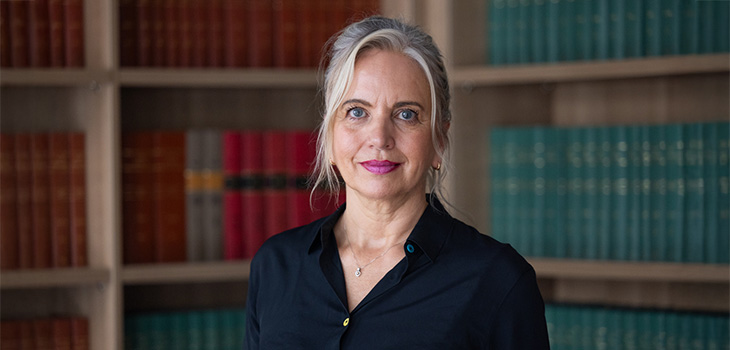
Kirsty Brimelow KC is Chair of the Bar for 2026. She has been a criminal, public law and international human rights barrister for some 30 years, practising from Doughty Street Chambers for over half that time. Kirsty was Chair of the Criminal Bar Association (2022-23) and Chair of the Bar Human Rights Committee (2012-18). She was appointed as a silk in 2011, Deputy High Court Judge in 2021, Recorder in 2022 and is a Bencher of Gray’s Inn.
In The Prince and the Pauper, Mark Twain said ‘Nothing that grieves us can be called little: by the eternal laws of proportion a child’s loss of a doll and a king’s loss of a crown are events of the same size.’ He could have been talking about the little arguments that can land children in courts or how prosecution and detention can break children into pieces labelled criminal. The current minimum age of criminal responsibility (MACR) of 10 is the lowest in Europe. We coincided the launch of the MACR report with the Youth Justice Summit where I outlined our recommendation that the age is increased from 10 years old to 14 years old, with a nod to Victor Hugo: ‘He who opens a school door, closes a prison.’
The government has indicated in its White Paper that it will carefully consider our findings as to whether the MACR remains appropriate. It was last fully debated in Parliament in 1969.
Tackling the gender and race pay gap, we held the first roundtable between Bar Council and Law Society. We are looking upstream at the equitable briefing practices of solicitors, and the discussion was informed by barristers and solicitors from the commercial Bar to in-house counsel to publicly funded barristers and clerks.
We also have launched a new toolkit which supports chambers tackling bullying and harassment behaviour. There also are protocols on reporting, headed by our Commissioner for Conduct and developed between the Bar Council and Bar Standards Board and between the Bar Council and judiciary.
Internationally, I have travelled to some of my favourite countries, without leaving London, through meeting Korean lawyers on the Bar Council placement scheme, finalising and signing a memorandum of understanding with the Ghana Bar Association, joining the Uzbekistan lawyers’ roundtable, and giving talks at online conferences from Kharkiv to the Federation of European Bars.
The Bar Council stands with our Ukraine colleagues, and I spoke alongside the Minister of State for Courts and Legal Services at the UK-Ukraine Law Forum and opened the Bar Council’s excellent Ukraine Law Day. Topics ranged from conflict resolution, dispute resolution in defence and energy, the importance of solar power, civil claims for war-related losses and, crucially, justice and accountability for war crimes. I continue to highlight the utilisation of barristers skilled in mediation and promote women to be invited to the table.
Another key partnership is with the Bars of Northern Ireland, Ireland and the Faculty of Advocates. I joined the annual Four Bars leadership meeting in Belfast to discuss joint issues and challenges, including the ongoing action being taken by the Bar of Northern Ireland to raise legal aid fees.
This year, we increased the Bar Council’s presence at the London International Disputes Week with a focus on mediation and AI. Our ADR Panel stepped up to two events and I also joined an excellent discussion with the Chief Justice of India, Lord Hamblen, and the Vice President of the Law Society. We were hosted by the new High Commissioner of India to the UK at the High Commission of India, which was another first for the Bar Council. I kicked off the week with an event, kindly hosted by the City of London Remembrancer, alongside the President of the Arbitration Bar of India, where I held a fireside chat with the historian William Dalrymple on disputes in antiquity and the lessons from the East India Company, a corporation with its own army.
London Climate Action Week sweltered and the climate crisis attended each event. I opened the superb National Emergency Briefing for Law, organised by Zoë Leventhal KC and Amanda Carpenter, who runs the Bar Sustainability Network (barsustainabilitynetwork.com). Lord Sales moderated and seven experts explained extreme weather, global tipping points, financial markets or national security and nature-focused solutions. I took part in the Law Society’s Climate Change Committee panel where I spoke on how lawyers need to develop the expertise to advise on climate-related legal risk.
June was Pride month and I was proud to support our LGBTQ+ colleagues, speaking alongside the President of the Law Society at Gray’s Inn, which was flying a Pride flag. It was an event fully of energy and hope and brilliance, with lots of joy and sparkles, particularly provided by the entertainment, Pixie Polite.
Finally, a thanks to the hard-working Bar Council teams and barristers and also a call to action: this one is not about juries and legal aid – although that work continues – but to introduce the Bar Council’s Speak for Success materials to your local state school. I went back to my old primary school near Chorley. Maybe there is a child in that classroom who now is thinking about becoming a barrister or, at least, is dreaming a little bit bigger.

The Chair of the Bar reports back
By Kem Kemal, CEO, Henry Dannell
By BSK Financial Planning
Mário Barroso, Head of R&D and Method Development at AlphaBiolabs
Susie Griffin on the admin that keeps barristers from billable work
Clement Cowley, Partner at The Penny Group, explains how global events can influence the performance of pensions and ISAs, and why taking a long-term approach to investing is often the most effective strategy

Kick off your career at the Bar Council’s Pupillage Fair this October – it’s one of the most valuable opportunities for aspiring barristers, says Amelia Clegg
Join us on Saturday 21 November 2026 at Leeds Beckett University and see for yourself why the North continues to be an exceptional place to build a career at the Bar
The golden age of advocacy? David Langwallner pays homage to the filmic if contentious barrister Sir Edward Carson and some of his contemporaries
Henry Fingerhut outlines what the Bar Standards Board AI guidance means for early career barristers
Not yet, says Jacob Turner. Regulation, unlike the technology itself, is a domain the legal profession can still control