*/
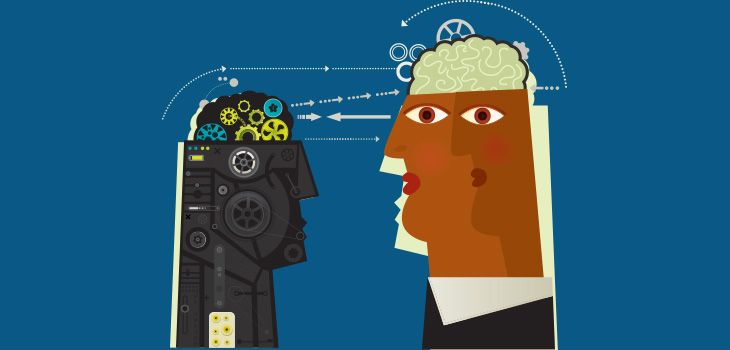
The smarter the machines, the more vital the human advocate. As AI reshapes the profession, Lynda Gibbs KC (Hon) and Wendy Showell Nicholas show why empathy, judgement and persuasion are the barrister’s greatest strengths
Barristers must always have a mastery of the facts. They are taught to have a command of precedent, to draft with precision and concision, and to construct logically watertight arguments. This is not about to change. But something is shifting.
At an alarming pace, traditional foundations are being reshaped by artificial intelligence (AI). What once took hours can now take minutes. And understandably, that raises questions about where the true value of the barrister now lies.
It is abundantly clear that AI excels at processing vast quantities of information quickly and efficiently. While rigorous checking of those outputs remains essential, barristers do not simply present the law, they must interpret, prioritise and deploy it persuasively in a specific human context. To do so requires skill and judgement.
Barristers must decide what matters most and, equally as importantly, what does not matter. That skill is grounded in experience, intuition and context sensitivity. In an AI-enhanced profession, interpretation becomes more valuable than retrieval. Because, however complex the legal issue, the work itself is still human.
Courtroom advocacy is often described in technical terms, but in reality it is something much more nuanced and dynamic. It is a live interaction; human nervous system to human nervous system. It requires a barrister to notice how a judge is responding; when a point is landing (or not), when a witness is becoming overwhelmed, when to press and when to pause. AI can help prepare questions. It cannot decide when to stop asking them.
These skills are highlighted in the Inns of Court College of Advocacy’s trauma-informed approach to advocacy; how a barrister asks a question affects the quality of the answer received. If a witness becomes overwhelmed, memory becomes less reliable, communication becomes less precise and the evidence itself can be compromised. The skill is not simply in asking the question but in setting the right relational conditions and asking it in a way that allows the best evidence to emerge. That requires human judgement and presence. This is a human exchange without the opportunity to rely on automation.
Barristers are trained to listen but, in practice, listening involves the ability to acknowledge the concerns, priorities and emotions that accompany a narrative. Witnesses rarely provide a linear story. They speak quickly, circle back, miss things out or focus on what feels most urgent to them. Listening properly enables a barrister to translate messy narratives into effective legal strategies while at the same time building trust for what will follow.
In court, listening properly allows the barrister to translate complex, often disorganised accounts into something legally coherent – without losing the person in the process. Listening in this context is not passive. It is an interpretive and relational process that goes beyond the literal meaning of words.
Artificial intelligence does not truly listen. Indeed, its tendency towards the sycophantic can result in a misplaced confidence in an incorrect or unhelpful point. AI does not perceive intention, nuance or emotion in the way humans do. It does not recognise the meaning behind what is said – or what is not said. It is often in what is not said that the most important information sits.
The difference is that humans – barristers – do not simply recognise emotions, they experience and respond to them.
Clients increasingly arrive having already engaged with information online. They may have strong views about what should happen, what is possible or what they want to say. This means the barrister needs to spend time carefully unpicking and correcting overly agreeable or inaccurate guidance shaped by AI and other digital interactions.
This requires enhanced skills on the part of a barrister to dismantle unrealistic expectations – softly and reassuringly. This is not a battle of technological superiority. This function requires clarity, empathy and honesty – which AI does not have.
One of the defining skills of a barrister is to explain complex legal issues in an accessible way. This cannot be replicated by AI. A barrister has to secure the confidence of their client without ever overpromising. The human connection between barrister and client is not diminished by technology; it is amplified. As automated systems handle more routine interactions, the moments of true and important human engagement carry greater weight and, in areas of trauma, that may even mitigate some of the impact of trauma.
Advocacy is more than words. It is a combination of tone, pace, presence, posture and human connectivity. Credibility is embodied in the delivery.
In high-stakes situations, when there has been an unexpected development in a case, a calm hand on the tiller is required, and the ability to respond in a measured and unflappable way.
These barrister qualities are developed over time through experience and reflection. They are deeply human attributes, rooted in self-awareness and discipline. While technology can assist in preparation, it cannot replicate the lived experience. The learning acquired through triumphs and failures and the barrister’s capacity to reflect on and learn from those, underpins genuine authority in the courtroom.
None of this suggests that barristers can afford to ignore technological change. Used well, it is a powerful tool. It can save time, improve efficiency, and support preparation. But it works best as a support for thinking – not a substitute for it.
Understanding how AI tools function and, importantly, the ability to assess the quality of AI-produced material, enables more effective and responsible use. Barristers should be able to evaluate outputs critically, integrate them into their workflows and recognise when human judgement must take precedence.
In this sense, digital literacy sits alongside traditional soft skills. And it becomes most effective when paired with the very skills it cannot replicate – judgement, relational awareness and emotional competency. It is only part of a broader professional adaptability, which is the capacity to evolve without losing sight of core values.
As the profession evolves, something important is becoming clearer. The barrister’s role has never been purely technical. It has always involved working with people – often at points of pressure, uncertainty and consequence.
What distinguishes the most effective practitioners is not simply their knowledge of the law, but their ability to apply it in a way that takes account of human experience. That is what allows better instructions, clearer evidence and more effective advocacy. These are not ‘soft skills’. They are the skills that make the rest of the work possible.
The rise of AI does not herald the decline of the barrister. It marks a transition and an opportunity. The very essence of the profession becomes clearer, not clouded.
The barristers of the future will not compete with machines. Instead, they will excel in areas where human capabilities remain unmatched: interpretation, empathy, persuasion, creativity and ethical judgement. These are not ancillary skills. They are the foundation of effective advocacy in an AI world.
In embracing technology, while deepening these human strengths, the profession does not become obsolete. It becomes, in a meaningful sense, more human.


Wendy Showell Nicholas is a BACP accredited psychotherapist, supervising ISW, organisational change consultant and national expert on vicarious trauma and the wellbeing of professionals working with psychologically harmful material. She works with barristers, clerks, judges and frontline professionals across law, health, education, and social care. Wendy co-produced the Inns of Court College of Advocacy’s trauma-informed advocacy training and is a published author and speaker on wellbeing and resilience.
Barristers must always have a mastery of the facts. They are taught to have a command of precedent, to draft with precision and concision, and to construct logically watertight arguments. This is not about to change. But something is shifting.
At an alarming pace, traditional foundations are being reshaped by artificial intelligence (AI). What once took hours can now take minutes. And understandably, that raises questions about where the true value of the barrister now lies.
It is abundantly clear that AI excels at processing vast quantities of information quickly and efficiently. While rigorous checking of those outputs remains essential, barristers do not simply present the law, they must interpret, prioritise and deploy it persuasively in a specific human context. To do so requires skill and judgement.
Barristers must decide what matters most and, equally as importantly, what does not matter. That skill is grounded in experience, intuition and context sensitivity. In an AI-enhanced profession, interpretation becomes more valuable than retrieval. Because, however complex the legal issue, the work itself is still human.
Courtroom advocacy is often described in technical terms, but in reality it is something much more nuanced and dynamic. It is a live interaction; human nervous system to human nervous system. It requires a barrister to notice how a judge is responding; when a point is landing (or not), when a witness is becoming overwhelmed, when to press and when to pause. AI can help prepare questions. It cannot decide when to stop asking them.
These skills are highlighted in the Inns of Court College of Advocacy’s trauma-informed approach to advocacy; how a barrister asks a question affects the quality of the answer received. If a witness becomes overwhelmed, memory becomes less reliable, communication becomes less precise and the evidence itself can be compromised. The skill is not simply in asking the question but in setting the right relational conditions and asking it in a way that allows the best evidence to emerge. That requires human judgement and presence. This is a human exchange without the opportunity to rely on automation.
Barristers are trained to listen but, in practice, listening involves the ability to acknowledge the concerns, priorities and emotions that accompany a narrative. Witnesses rarely provide a linear story. They speak quickly, circle back, miss things out or focus on what feels most urgent to them. Listening properly enables a barrister to translate messy narratives into effective legal strategies while at the same time building trust for what will follow.
In court, listening properly allows the barrister to translate complex, often disorganised accounts into something legally coherent – without losing the person in the process. Listening in this context is not passive. It is an interpretive and relational process that goes beyond the literal meaning of words.
Artificial intelligence does not truly listen. Indeed, its tendency towards the sycophantic can result in a misplaced confidence in an incorrect or unhelpful point. AI does not perceive intention, nuance or emotion in the way humans do. It does not recognise the meaning behind what is said – or what is not said. It is often in what is not said that the most important information sits.
The difference is that humans – barristers – do not simply recognise emotions, they experience and respond to them.
Clients increasingly arrive having already engaged with information online. They may have strong views about what should happen, what is possible or what they want to say. This means the barrister needs to spend time carefully unpicking and correcting overly agreeable or inaccurate guidance shaped by AI and other digital interactions.
This requires enhanced skills on the part of a barrister to dismantle unrealistic expectations – softly and reassuringly. This is not a battle of technological superiority. This function requires clarity, empathy and honesty – which AI does not have.
One of the defining skills of a barrister is to explain complex legal issues in an accessible way. This cannot be replicated by AI. A barrister has to secure the confidence of their client without ever overpromising. The human connection between barrister and client is not diminished by technology; it is amplified. As automated systems handle more routine interactions, the moments of true and important human engagement carry greater weight and, in areas of trauma, that may even mitigate some of the impact of trauma.
Advocacy is more than words. It is a combination of tone, pace, presence, posture and human connectivity. Credibility is embodied in the delivery.
In high-stakes situations, when there has been an unexpected development in a case, a calm hand on the tiller is required, and the ability to respond in a measured and unflappable way.
These barrister qualities are developed over time through experience and reflection. They are deeply human attributes, rooted in self-awareness and discipline. While technology can assist in preparation, it cannot replicate the lived experience. The learning acquired through triumphs and failures and the barrister’s capacity to reflect on and learn from those, underpins genuine authority in the courtroom.
None of this suggests that barristers can afford to ignore technological change. Used well, it is a powerful tool. It can save time, improve efficiency, and support preparation. But it works best as a support for thinking – not a substitute for it.
Understanding how AI tools function and, importantly, the ability to assess the quality of AI-produced material, enables more effective and responsible use. Barristers should be able to evaluate outputs critically, integrate them into their workflows and recognise when human judgement must take precedence.
In this sense, digital literacy sits alongside traditional soft skills. And it becomes most effective when paired with the very skills it cannot replicate – judgement, relational awareness and emotional competency. It is only part of a broader professional adaptability, which is the capacity to evolve without losing sight of core values.
As the profession evolves, something important is becoming clearer. The barrister’s role has never been purely technical. It has always involved working with people – often at points of pressure, uncertainty and consequence.
What distinguishes the most effective practitioners is not simply their knowledge of the law, but their ability to apply it in a way that takes account of human experience. That is what allows better instructions, clearer evidence and more effective advocacy. These are not ‘soft skills’. They are the skills that make the rest of the work possible.
The rise of AI does not herald the decline of the barrister. It marks a transition and an opportunity. The very essence of the profession becomes clearer, not clouded.
The barristers of the future will not compete with machines. Instead, they will excel in areas where human capabilities remain unmatched: interpretation, empathy, persuasion, creativity and ethical judgement. These are not ancillary skills. They are the foundation of effective advocacy in an AI world.
In embracing technology, while deepening these human strengths, the profession does not become obsolete. It becomes, in a meaningful sense, more human.
The smarter the machines, the more vital the human advocate. As AI reshapes the profession, Lynda Gibbs KC (Hon) and Wendy Showell Nicholas show why empathy, judgement and persuasion are the barrister’s greatest strengths


The Chair of the Bar reports back
Susie Griffin on the admin that keeps barristers from billable work
Clement Cowley, Partner at The Penny Group, explains how global events can influence the performance of pensions and ISAs, and why taking a long-term approach to investing is often the most effective strategy
Mário Barroso, Head of R&D and Method Development at AlphaBiolabs, discusses what family law professionals need to know about hallucinogens, from the main hallucinogenic drugs encountered in family proceedings, to their effects and the testing options available
Harmony Christian Ministries is the latest charity to benefit from a £500 donation from AlphaBiolabs via the company’s Giving Back initiative
By David Green
At the start of her term, Chair of the Bar 2026 Kirsty Brimelow KC set out a series of priorities for the year ahead. One of those priorities was children in the justice system
As the world becomes more digital, Barbara Vinagre Mota examines international research into the mental health consequences of judges’ exposure to graphic and immersive evidence, highlighting the importance of support systems
In an era of patient-centred care and growing concern over misconduct in medical settings, why do women still lack the right to choose women consultants for examination and treatment? Charles Davey investigates
Reviewed by Daniel Barnett
James McNeill Whistler at Tate Britain until 27 September Rothko in Florence at Palazzo Strozzi until 23 August Reviewed by Stephen Cragg KC