*/
In part three of her series, Michaela Hardwick discusses the value of actively listening to your client, and why it’s trickier than it seems
Consider your last client conference. Try reconstructing what your client said, in their words, rather than your note of it. Not the issues you extracted. Not the case theory that began forming somewhere around minute four. Their sentences, their emphases, the thing they mentioned twice. Few of us could manage it, and that is no criticism of anyone’s attention. We can produce an accurate summary of the instructions and still miss what the person in front of us was trying to say.
The first article in this series looked inward, at the patterns in your own judgement. The second looked outward, at the pressures that move you and the ones you exert when you advocate. This one sits between them, because judgement cannot be exercised on instructions you have only half received. Everything downstream, the advice, the strategy, the cross examination, rests on what you took in while someone was telling you their case, problem or story. Listening is not the soft preliminary to the legal work. It is the point at which the legal work either acquires a robust foundation or does not.
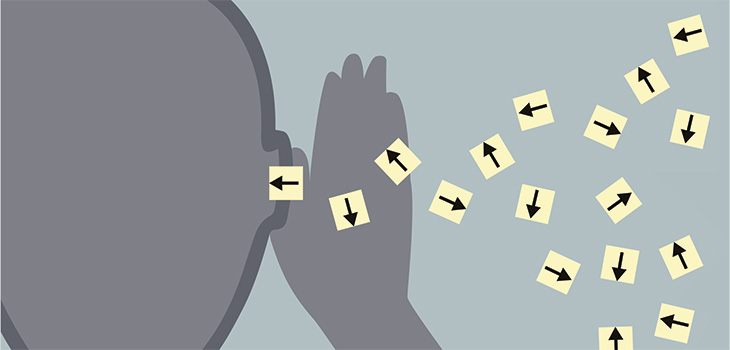
The distinction is easy to state and much harder to actually use. Hearing is involuntary and physical; you are doing it now. Active listening is deliberate, effortful and directed, and it is noticeable to the speaker, usually subconsciously. Hearing is a sieve and active listening is a sponge; both take the water, only one of them still has it afterwards. Most people can name someone they enjoy talking to without being able to explain the appeal. The explanation is generally that the person listens actively, and being genuinely heard is rare enough to register as charm.
The Legal Ombudsman’s complaints data for the year to 31 March 2026 makes the point at scale. Poor communication was the most common complaint type raised in legal services, at 24%, ahead of delay and failure to progress at 22% and failure to advise at 19%. While it is not a statistic solely about the Bar, it is still a statistic about what clients notice, and what they notice is not the quality of the analysis or advocacy.
This is also the part of the work that AI cannot take. Yes, a model will summarise a two-hour conference faster and more completely than you will, and it will not miss the qualification your client buried in a subordinate clause. What it cannot do though is give a person the experience of being understood by someone who will then stand up and speak for them. Clients do not want to be accurately processed. They want to be heard, by a human who then does something about it. That is not sentimentality. It is the part of the service that survives, and it is why clients come back.
The regulator treats this as a technical necessity rather than an optional extra. Competence 1.9 of the BSB’s Professional Statement requires barristers to ‘use appropriate listening and questioning techniques when obtaining information’. Competence 3.3 requires them to recognise and respond effectively to others’ particular needs, objectives, priorities and constraints, and to take reasonable steps to meet the particular needs of clients who are disabled or vulnerable. Those competences sit in the same document, and carry the same weight, as those required on legal analysis.
Four things make it demanding; none are intuitive.
The first is reflecting back in the client’s own words rather than your own. Your paraphrase is never neutral. By the time you have restated ‘he kept turning up at my mother’s house’ as ‘a course of conduct’, you have performed a legal recharacterisation, and the client, hearing their experience translated into something official, will often stop correcting you. Use their language and the raw material and evidence stays available.
The second is silence. A pause you find uncomfortable is frequently the moment before a client says the thing they were not sure they were allowed to say and what may decide the case. Filling it with your next question is the most reliable way to lose it.
The third is open questioning that elicits rather than interrogates. Cross examination is a skill you have spent years sharpening, and the wrong instrument in conference. Questions built to close options down will close them down.
The fourth, and hardest, is listening to understand rather than listening in order to respond. Ask yourself mid conference, honestly, whether you are taking in what is being said or waiting for a gap.
None of this stops at the client. Reading the bench is a form of active listening: the skill lies in noticing what a judge is troubled by before it is put to you as a question, often available in the phrasing of an interruption, or in what the judge has quietly stopped asking about. Listening to opposing counsel is the same discipline; the advocate who has understood the opponent’s best argument, rather than the convenient version of it, is the one who is not surprised. And in chambers, a colleague who says the draft is fine but says it hesitantly has told you something, if you were listening rather than waiting to change the subject.
Listening fails in predictable places. Time pressure is the main one; a conference compressed into 40 minutes with a hearing behind it produces efficient extraction, and the client can tell. Assumption is the second. You have read the papers and seen thirty cases shaped like this one, so the shape is largely settled before your client speaks. Emotional interference is the third, and it bites hardest where the facts are distressing or the client is difficult. None of these leave the client confident they have been heard.
The final test is an uncomfortable one. Amy Edmondson’s work on psychological safety, published in Administrative Science Quarterly in 1999, describes a climate in which people feel able to speak up, ask questions, admit mistakes and offer challenge. Applied narrowly to client relationships, the question becomes this: is your client able to tell you an important fact that complicates the case theory you have already built on reading the papers? If the answer is no, the problem is rarely the client’s confidence. It is that nothing in the way the relationship has been conducted has signaled that correction is welcome or that the client’s facts may be important.
The second article in this series highlighted a disbarment that began in a conference. Cases turn, and occasionally careers, on what a client would have said if they had been asked properly and given room to answer.
Listening well will not make you a better lawyer on its own. It makes you a lawyer working from better material, which comes to much the same thing. And it is the part of practice that becomes more valuable, not less, as the analytical work gets cheaper and easier with AI.
Michaela’s six-part series explores the relational, reflective and resilience skills that define excellence in legal practice, and remain beyond AI’s reach. Catch up with parts 1 and 2 on Counsel online:
‘(1) Your judgement advantage’
‘(2) Using and recognising the weapons of influence’

© Getty images
Hearing is a sieve and active listening is a sponge; both take the water, only one of them still has it afterwards.

Michaela Hardwick is a 25-year qualified solicitor who sits on the Bar Standards Board’s Advisory Pool of Experts. As Director and Founder of Beyond Compliance, her expertise supports chambers and barristers to build sustainable practices with exemplary compliance and competence cultures.
Consider your last client conference. Try reconstructing what your client said, in their words, rather than your note of it. Not the issues you extracted. Not the case theory that began forming somewhere around minute four. Their sentences, their emphases, the thing they mentioned twice. Few of us could manage it, and that is no criticism of anyone’s attention. We can produce an accurate summary of the instructions and still miss what the person in front of us was trying to say.
The first article in this series looked inward, at the patterns in your own judgement. The second looked outward, at the pressures that move you and the ones you exert when you advocate. This one sits between them, because judgement cannot be exercised on instructions you have only half received. Everything downstream, the advice, the strategy, the cross examination, rests on what you took in while someone was telling you their case, problem or story. Listening is not the soft preliminary to the legal work. It is the point at which the legal work either acquires a robust foundation or does not.
The distinction is easy to state and much harder to actually use. Hearing is involuntary and physical; you are doing it now. Active listening is deliberate, effortful and directed, and it is noticeable to the speaker, usually subconsciously. Hearing is a sieve and active listening is a sponge; both take the water, only one of them still has it afterwards. Most people can name someone they enjoy talking to without being able to explain the appeal. The explanation is generally that the person listens actively, and being genuinely heard is rare enough to register as charm.
The Legal Ombudsman’s complaints data for the year to 31 March 2026 makes the point at scale. Poor communication was the most common complaint type raised in legal services, at 24%, ahead of delay and failure to progress at 22% and failure to advise at 19%. While it is not a statistic solely about the Bar, it is still a statistic about what clients notice, and what they notice is not the quality of the analysis or advocacy.
This is also the part of the work that AI cannot take. Yes, a model will summarise a two-hour conference faster and more completely than you will, and it will not miss the qualification your client buried in a subordinate clause. What it cannot do though is give a person the experience of being understood by someone who will then stand up and speak for them. Clients do not want to be accurately processed. They want to be heard, by a human who then does something about it. That is not sentimentality. It is the part of the service that survives, and it is why clients come back.
The regulator treats this as a technical necessity rather than an optional extra. Competence 1.9 of the BSB’s Professional Statement requires barristers to ‘use appropriate listening and questioning techniques when obtaining information’. Competence 3.3 requires them to recognise and respond effectively to others’ particular needs, objectives, priorities and constraints, and to take reasonable steps to meet the particular needs of clients who are disabled or vulnerable. Those competences sit in the same document, and carry the same weight, as those required on legal analysis.
Four things make it demanding; none are intuitive.
The first is reflecting back in the client’s own words rather than your own. Your paraphrase is never neutral. By the time you have restated ‘he kept turning up at my mother’s house’ as ‘a course of conduct’, you have performed a legal recharacterisation, and the client, hearing their experience translated into something official, will often stop correcting you. Use their language and the raw material and evidence stays available.
The second is silence. A pause you find uncomfortable is frequently the moment before a client says the thing they were not sure they were allowed to say and what may decide the case. Filling it with your next question is the most reliable way to lose it.
The third is open questioning that elicits rather than interrogates. Cross examination is a skill you have spent years sharpening, and the wrong instrument in conference. Questions built to close options down will close them down.
The fourth, and hardest, is listening to understand rather than listening in order to respond. Ask yourself mid conference, honestly, whether you are taking in what is being said or waiting for a gap.
None of this stops at the client. Reading the bench is a form of active listening: the skill lies in noticing what a judge is troubled by before it is put to you as a question, often available in the phrasing of an interruption, or in what the judge has quietly stopped asking about. Listening to opposing counsel is the same discipline; the advocate who has understood the opponent’s best argument, rather than the convenient version of it, is the one who is not surprised. And in chambers, a colleague who says the draft is fine but says it hesitantly has told you something, if you were listening rather than waiting to change the subject.
Listening fails in predictable places. Time pressure is the main one; a conference compressed into 40 minutes with a hearing behind it produces efficient extraction, and the client can tell. Assumption is the second. You have read the papers and seen thirty cases shaped like this one, so the shape is largely settled before your client speaks. Emotional interference is the third, and it bites hardest where the facts are distressing or the client is difficult. None of these leave the client confident they have been heard.
The final test is an uncomfortable one. Amy Edmondson’s work on psychological safety, published in Administrative Science Quarterly in 1999, describes a climate in which people feel able to speak up, ask questions, admit mistakes and offer challenge. Applied narrowly to client relationships, the question becomes this: is your client able to tell you an important fact that complicates the case theory you have already built on reading the papers? If the answer is no, the problem is rarely the client’s confidence. It is that nothing in the way the relationship has been conducted has signaled that correction is welcome or that the client’s facts may be important.
The second article in this series highlighted a disbarment that began in a conference. Cases turn, and occasionally careers, on what a client would have said if they had been asked properly and given room to answer.
Listening well will not make you a better lawyer on its own. It makes you a lawyer working from better material, which comes to much the same thing. And it is the part of practice that becomes more valuable, not less, as the analytical work gets cheaper and easier with AI.
Michaela’s six-part series explores the relational, reflective and resilience skills that define excellence in legal practice, and remain beyond AI’s reach. Catch up with parts 1 and 2 on Counsel online:
‘(1) Your judgement advantage’
‘(2) Using and recognising the weapons of influence’
© Getty images
Hearing is a sieve and active listening is a sponge; both take the water, only one of them still has it afterwards.
In part three of her series, Michaela Hardwick discusses the value of actively listening to your client, and why it’s trickier than it seems

The Chair of the Bar reports back
Conner Wright, Legal Case Manager at AlphaBiolabs, answers the most frequently asked questions about SCRAM Continuous Alcohol Monitoring (SCRAM CAM®) posed by family law professionals
Ryan Prins of Philips SpeechLive explains how barristers can boost drafting efficiency with AI-assisted speech recognition – while keeping full oversight
Finding available counsel shouldn’t be complicated, says Kaan Kartal of Brieflink
By Kem Kemal, CEO, Henry Dannell
By BSK Financial Planning

For barristers, managing anxiety is a professional discipline as much as a personal one, says Annette Henry KC. This article examines the cues, clues and practical techniques for avoiding overwhelm and regaining calm
If you’ve never been to the Bar Conference before, this is the year to start. Amelia Clegg previews the profession’s flagship event
After a two-year investigation, Karim Khan KC was removed as ICC Chief Prosecutor in July. With the United States threatening to dismantle the court ‘brick by brick’, what’s next for the beleaguered ICC? asks Chris Stephen
Kick off your career at the Bar Council’s Pupillage Fair this October – it’s one of the most valuable opportunities for aspiring barristers, says Amelia Clegg
Join us on Saturday 21 November 2026 at Leeds Beckett University and see for yourself why the North continues to be an exceptional place to build a career at the Bar