*/
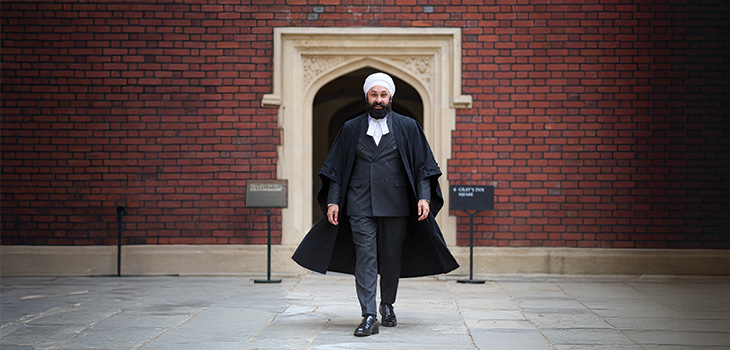
Reflections for South Asian Heritage Month. By Baldip Singh
Recently, I was invited by His Honour Judge Perusko to speak at a diversity event for lawyers and judges. The audience was made up of practitioners at varying stages of their careers: some well-established, some finding their feet, all navigating a profession that is changing, albeit at the measured pace the law tends to favour.
I was asked to speak about the lessons I have learnt over more than a decade at the Bar and, more recently, sitting part-time as a judge.
For context, I am a Walsall lad from a working-class family. I am the child of immigrants. My mother worked in a sewing factory. My father worked shifts in a bread bakery. I attended a comprehensive school. I did not grow up with family connections to the legal profession, nor did I know any barristers or judges. Like many first-generation lawyers, I discovered the profession from the outside looking in.
Today, I have the privilege of appearing before the courts as counsel and sitting on the bench as a judge. To mark South Asian Heritage Month, I thought I would share the ten lessons I offered to those attending the event.
These are not lessons about victimhood. They are lessons about perspective, responsibility and opportunity. The legal profession has changed enormously. It is more diverse than ever before. Yet anyone who has spent time in our courts knows that talent alone does not always explain who progresses and who does not.
The profession likes to think of itself as a meritocracy. It often is. Occasionally, however, it can resemble a school reunion to which some of us never received an invitation.
Many lawyers are taught that if they work hard enough, opportunities will naturally follow. Hard work is essential, but it is not sufficient. You can be the best lawyer in chambers and still be overlooked if nobody knows what you do.
Do excellent work. Then ensure people know about it. Publish articles. Speak at events. Volunteer for committees. Build relationships. Let your work travel beyond the conference room and the courtroom. There is no virtue in being the profession’s best-kept secret.
There is a difference between professionalism and performance. For many lawyers from underrepresented backgrounds, there can be a temptation to soften an accent, avoid discussing personal experiences or carefully edit aspects of identity to fit an unspoken mould.
Professional standards matter. Authenticity matters too. Clients want lawyers they trust. Colleagues value people who are genuine. The energy spent trying to become a version of yourself that feels more acceptable is energy that could be invested in becoming a better advocate.
The profession benefits when people bring different perspectives to the table, not when they conceal them.
The legal profession is full of unwritten rules. Nobody hands you a guide explaining how work is allocated, how sponsorship develops or how influential networks are built. Yet these factors often shape careers as much as legal ability.
Observe carefully. Ask questions. Seek out mentors who will explain what others assume you already know. Understanding the system does not mean accepting every aspect of it. But you cannot change a system you do not understand.
There will be moments in your career when others make assumptions about you based on your age, your accent, your background or your surname.
That is their limitation, not yours. The greater risk is internalising those assumptions yourself.
Confidence should not depend upon external validation. It should rest on preparation, competence and experience.
Over time, I have learned that the most effective advocates are rarely the loudest. As every judge knows, confidence and competence are frequent courtroom companions, but they are not always acquainted.
There will be occasions when you are the only person in the room who looks like you, sounds like you or shares your experiences.
Walk into the room anyway.
Belonging is not something granted by others. It is not conferred by title, background or connection. It comes from recognising that your place in the profession is not conditional upon someone else’s approval.
The Bar needs talented lawyers from every background. So does the bench. The law serves society best when those administering it reflect the society they serve.
In a profession built on trust, reputation is your most valuable asset. Be prepared. Be reliable. Be kind. Meet deadlines. Treat court staff with respect. Value your instructing solicitors. Be courteous to opponents. Support junior colleagues.
The legal world is remarkably small. The pupil you encourage today may become your opponent tomorrow and your judge the day after that.
Also, never underestimate the importance of being known as someone who replies to emails. In some corners of the profession, this alone can set you apart.
The legal profession rightly values resilience. But resilience is not the ability to absorb unlimited pressure without consequence.
Being able to endure something does not mean you should have to.
Challenge inappropriate behaviour. Seek support when you need it. Set boundaries around your time and wellbeing.
Burnout is not a mark of distinction. Exhaustion is not evidence of commitment. No successful career is worth sacrificing your health or your values.
Mentors are important. Sponsors are essential.
Mentors offer guidance. Sponsors create opportunities. Much of professional advancement happens in conversations you will never hear and rooms you have not yet entered.
Build genuine relationships. Be generous with your own time and support. Help others without immediately calculating what you might receive in return. Careers are built through excellence, but they are accelerated through trust.
For many years, success in the legal profession appeared to require conformity. Thankfully, that is changing. You can be an outstanding lawyer without sounding, thinking or behaving exactly like those who came before you. The objective is not to fit in. It is to contribute.
Difference is not a problem to be solved. It is often the source of better judgement, stronger advocacy and deeper understanding.
The legal profession relies on precedent. Consider becoming one. If you have learnt something valuable, share it. If you can create opportunities for others, do so. If you have influence, use it generously.
Success becomes more meaningful when it creates possibilities for those who follow.
For those of us from South Asian backgrounds, representation matters. But representation alone is not enough. Visibility without opportunity changes very little. Our responsibility is not simply to occupy spaces that once seemed inaccessible. It is to ensure those spaces become more accessible for others.
That is how professions change. South Asian Heritage Month provides an opportunity to reflect on how far we have come. It should also prompt us to consider how much further we can go.
The children of factory workers, shopkeepers, taxi drivers and NHS staff should not view the Bar or the bench as places where they are guests. They should see them as places where they belong.
And perhaps, one day, the idea of a diversity event in the legal profession will feel as outdated as sending a fax.
We are not there yet. But we are closer than we were.

South Asian Heritage Month first took place in 2020, created to ensure that the intertwined histories of the UK and South Asia are understood, celebrated and commemorated. From 2026, the month moved from August to July, aligning with the broader global movement. Find out more at southasianheritage.org.uk.

Baldip Singh is an award-winning family law barrister, a Deputy District Judge and one of the youngest ever appointed as a Master of the Bench at Inner Temple. Baldip is the founder and chair of Sikhs in Law.
Recently, I was invited by His Honour Judge Perusko to speak at a diversity event for lawyers and judges. The audience was made up of practitioners at varying stages of their careers: some well-established, some finding their feet, all navigating a profession that is changing, albeit at the measured pace the law tends to favour.
I was asked to speak about the lessons I have learnt over more than a decade at the Bar and, more recently, sitting part-time as a judge.
For context, I am a Walsall lad from a working-class family. I am the child of immigrants. My mother worked in a sewing factory. My father worked shifts in a bread bakery. I attended a comprehensive school. I did not grow up with family connections to the legal profession, nor did I know any barristers or judges. Like many first-generation lawyers, I discovered the profession from the outside looking in.
Today, I have the privilege of appearing before the courts as counsel and sitting on the bench as a judge. To mark South Asian Heritage Month, I thought I would share the ten lessons I offered to those attending the event.
These are not lessons about victimhood. They are lessons about perspective, responsibility and opportunity. The legal profession has changed enormously. It is more diverse than ever before. Yet anyone who has spent time in our courts knows that talent alone does not always explain who progresses and who does not.
The profession likes to think of itself as a meritocracy. It often is. Occasionally, however, it can resemble a school reunion to which some of us never received an invitation.
Many lawyers are taught that if they work hard enough, opportunities will naturally follow. Hard work is essential, but it is not sufficient. You can be the best lawyer in chambers and still be overlooked if nobody knows what you do.
Do excellent work. Then ensure people know about it. Publish articles. Speak at events. Volunteer for committees. Build relationships. Let your work travel beyond the conference room and the courtroom. There is no virtue in being the profession’s best-kept secret.
There is a difference between professionalism and performance. For many lawyers from underrepresented backgrounds, there can be a temptation to soften an accent, avoid discussing personal experiences or carefully edit aspects of identity to fit an unspoken mould.
Professional standards matter. Authenticity matters too. Clients want lawyers they trust. Colleagues value people who are genuine. The energy spent trying to become a version of yourself that feels more acceptable is energy that could be invested in becoming a better advocate.
The profession benefits when people bring different perspectives to the table, not when they conceal them.
The legal profession is full of unwritten rules. Nobody hands you a guide explaining how work is allocated, how sponsorship develops or how influential networks are built. Yet these factors often shape careers as much as legal ability.
Observe carefully. Ask questions. Seek out mentors who will explain what others assume you already know. Understanding the system does not mean accepting every aspect of it. But you cannot change a system you do not understand.
There will be moments in your career when others make assumptions about you based on your age, your accent, your background or your surname.
That is their limitation, not yours. The greater risk is internalising those assumptions yourself.
Confidence should not depend upon external validation. It should rest on preparation, competence and experience.
Over time, I have learned that the most effective advocates are rarely the loudest. As every judge knows, confidence and competence are frequent courtroom companions, but they are not always acquainted.
There will be occasions when you are the only person in the room who looks like you, sounds like you or shares your experiences.
Walk into the room anyway.
Belonging is not something granted by others. It is not conferred by title, background or connection. It comes from recognising that your place in the profession is not conditional upon someone else’s approval.
The Bar needs talented lawyers from every background. So does the bench. The law serves society best when those administering it reflect the society they serve.
In a profession built on trust, reputation is your most valuable asset. Be prepared. Be reliable. Be kind. Meet deadlines. Treat court staff with respect. Value your instructing solicitors. Be courteous to opponents. Support junior colleagues.
The legal world is remarkably small. The pupil you encourage today may become your opponent tomorrow and your judge the day after that.
Also, never underestimate the importance of being known as someone who replies to emails. In some corners of the profession, this alone can set you apart.
The legal profession rightly values resilience. But resilience is not the ability to absorb unlimited pressure without consequence.
Being able to endure something does not mean you should have to.
Challenge inappropriate behaviour. Seek support when you need it. Set boundaries around your time and wellbeing.
Burnout is not a mark of distinction. Exhaustion is not evidence of commitment. No successful career is worth sacrificing your health or your values.
Mentors are important. Sponsors are essential.
Mentors offer guidance. Sponsors create opportunities. Much of professional advancement happens in conversations you will never hear and rooms you have not yet entered.
Build genuine relationships. Be generous with your own time and support. Help others without immediately calculating what you might receive in return. Careers are built through excellence, but they are accelerated through trust.
For many years, success in the legal profession appeared to require conformity. Thankfully, that is changing. You can be an outstanding lawyer without sounding, thinking or behaving exactly like those who came before you. The objective is not to fit in. It is to contribute.
Difference is not a problem to be solved. It is often the source of better judgement, stronger advocacy and deeper understanding.
The legal profession relies on precedent. Consider becoming one. If you have learnt something valuable, share it. If you can create opportunities for others, do so. If you have influence, use it generously.
Success becomes more meaningful when it creates possibilities for those who follow.
For those of us from South Asian backgrounds, representation matters. But representation alone is not enough. Visibility without opportunity changes very little. Our responsibility is not simply to occupy spaces that once seemed inaccessible. It is to ensure those spaces become more accessible for others.
That is how professions change. South Asian Heritage Month provides an opportunity to reflect on how far we have come. It should also prompt us to consider how much further we can go.
The children of factory workers, shopkeepers, taxi drivers and NHS staff should not view the Bar or the bench as places where they are guests. They should see them as places where they belong.
And perhaps, one day, the idea of a diversity event in the legal profession will feel as outdated as sending a fax.
We are not there yet. But we are closer than we were.
South Asian Heritage Month first took place in 2020, created to ensure that the intertwined histories of the UK and South Asia are understood, celebrated and commemorated. From 2026, the month moved from August to July, aligning with the broader global movement. Find out more at southasianheritage.org.uk.
Reflections for South Asian Heritage Month. By Baldip Singh

The Chair of the Bar reports back
Susie Griffin on the admin that keeps barristers from billable work
Clement Cowley, Partner at The Penny Group, explains how global events can influence the performance of pensions and ISAs, and why taking a long-term approach to investing is often the most effective strategy
Mário Barroso, Head of R&D and Method Development at AlphaBiolabs, discusses what family law professionals need to know about hallucinogens, from the main hallucinogenic drugs encountered in family proceedings, to their effects and the testing options available
Harmony Christian Ministries is the latest charity to benefit from a £500 donation from AlphaBiolabs via the company’s Giving Back initiative
By David Green

At the start of her term, Chair of the Bar 2026 Kirsty Brimelow KC set out a series of priorities for the year ahead. One of those priorities was children in the justice system
As the world becomes more digital, Barbara Vinagre Mota examines international research into the mental health consequences of judges’ exposure to graphic and immersive evidence, highlighting the importance of support systems
In an era of patient-centred care and growing concern over misconduct in medical settings, why do women still lack the right to choose women consultants for examination and treatment? Charles Davey investigates
Reviewed by Daniel Barnett
James McNeill Whistler at Tate Britain until 27 September Rothko in Florence at Palazzo Strozzi until 23 August Reviewed by Stephen Cragg KC