*/
The golden age of advocacy? David Langwallner pays homage to the filmic if contentious barrister Sir Edward Carson and some of his contemporaries
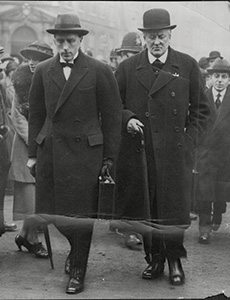
I have recently completed a podcast series on the relationship between law and literature.* Episode four, which deals with advocates and judges in literature, begins with an argument that Sir Edward Carson was the greatest Irish or British advocate of all. In fact, to some increasingly representative elements of Southern and Northern Ireland, writing about his greatness as an advocate is a form of high treason which I now willingly commit. Carson is, of course, the inspiration behind Ulster Unionism and the architect of Northern Ireland.
Carson, like the American lawyer Clarence Darrow (of whom more later), but unlike many of his golden-age British contemporaries, benefitted from high-profile cases which are filmic and have transcended the ages.
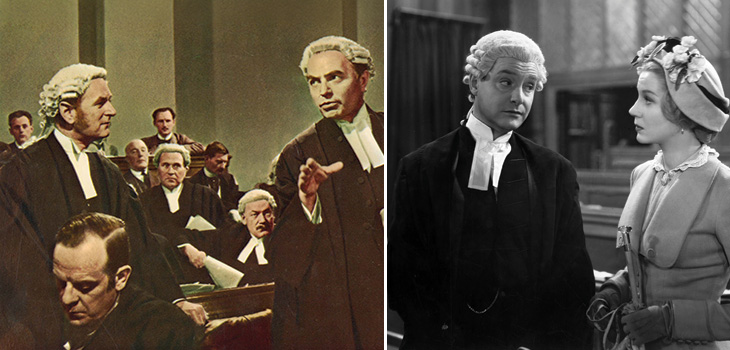
The core films are Ken Hughes’ The Trials of Oscar Wilde (1960) with James Mason as Carson taking on his Trinity College contemporary in the deeply malicious libel case, and Anthony Asquith’s The Winslow Boy (1948, also filmed by David Mamet in 1999), with the great if ailing Robert Donat as Sir Robert Morton (i.e. Carson).
Mason, with his light and dark side (think Lolita, 1961) seems more apt casting than Donat. Carson was far from all good or, indeed, all bad. In fact, Mason played another morally ambiguous lawyer in Sidney Lumet’s The Verdict (1982) with smooth, satanic, corporate polish seeking to undermine Paul Newman’s Frank Galvin, a down-at-heel alcoholic Boston lawyer in a medical negligence suit confronting the diocese.
The full transcript of the Wilde v Queensbury trial is worth reading and is faithfully reproduced in the film. Wilde (played by Peter Finch) sued the Marquess of Queensbury (Lionel Jeffries), father of Lord Alfred Douglas (John Fraser), for libel for leaving a calling card at Wilde’s club addressed: ‘For Oscar Wilde, posing as a sodomite (sic).’ Wilde initially destroyed Carson with a flow of witticisms about his innocent relationship with boys until, with an advocate’s persistence, Carson asked him about one Grainger, and ‘had he kissed him’? Wilde fell for the trap, responding, ‘oh no, he was far too ugly,’ and, ultimately, Old Reading Gaol beckoned.
This is the perfect invocation of the surprise question, a deadly weapon in cross-examination. Another notable example is Norman Birkett’s famous undermining of a fire expert in a murder case. ‘What is the co-efficient of brass?’ he asked, to which there was no real answer and the witness crumbled. The Wilde case also shows that a witness box is the last place to send a performer or anyone who plays to the gallery or is overconfident.
After Carson took the brief, Wilde is reputed to have said: ‘I trust he will conduct his cross-examination with all the added bitterness of an old friend.’ Though recent evidence indicates that Carson thoroughly disapproved of Wilde’s lifestyle, he did not take the criminal brief, indicating ‘the poor man had suffered enough’. The damage done, though.
The Winslow Boy (1948) portrays Carson in an entirely different light, sedulous in his defence of a navy cadet, George Archer-Shee, falsely accused of theft of a five-shilling postal order in 1908. The case was transmogrified via a play by Terence Rattigan (1946) with significant artistic licence, replicated also in the film.
The historical ledger indicates that Carson insisted the case came to trial, so convinced was he of the boy’s innocence. On the fourth day of trial Carson lobbied the then Lord Chief Justice Sir Rufus Isaacs KC – almost as great an advocate as he – for a dismissal, and it worked.
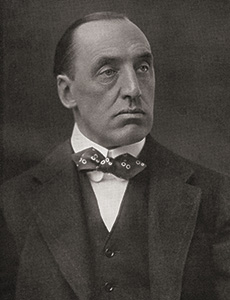
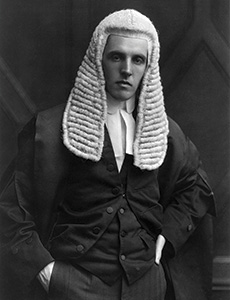
Referencing, as we were earlier, high treason, Issacs presided over the 1916 trial of Sir Roger Casement. The great painting by John Lavery of that trial sits in The King’s Inns in Dublin and I walked past it for 16 years, with the other great advocate of the era, F E Smith (aka the Earl of Birkenhead) – one of the signatories of the Treaty – with his prematurely choleric face clear for all to see.
Carson could be very sharp. Frustrated by the proceedings of a tribunal presided over by a judge who claimed he was not acting in his judicial capacity, he responded: ‘Any fool can see that,’ and walked out. Smith’s brutalism could be even sharper: ‘Judge: ‘What do you suppose I am on the bench for Mr Smith? F E Smith: ‘It is not for me your honour to attempt to fathom the inscrutable workings of providence.’
Carson was also the master of what has been characterised as the poisonous question. In one case: ‘When did you stop loving your wife?’ And, in the 1909 Cadbury Libel Case following a press report that Cadbury’s chocolate was made from slave-grown cocoa, he asked of William Cadbury at the closing of his cross-examination: ‘Have you formed any estimate of the number of slaves who lost their lives in preparing your cocoa from 1901 to 1908?’ Cadbury could only muster a weak: ‘No, no, no,’ and the jury awarded Cadbury contemptuous damages of one farthing.
Advocacy, thus, is an ambivalent art form and Carson’s career immortalised in cinema indicates same. Smith gets less cinematic coverage and was inaccurately represented as the Lord Birkenhead figure in Chariots of Fire (1980).
Isaacs gets no film action to my knowledge, though one of his trials did make the West End in Rodney Ackland’s 1957 A Dead Secret (later, an ITV Play of the Week!), loosely based on the 1912 Frederick Seddon murder trial. Someone should make a film of this: Issacs’ cross-examination was devastating as he probed Seddon who buried a woman he had profited from in a pauper’s grave, asking ‘whether he liked her’. An unanswerable and utterly barbed question in context, to which there was no answer: if he did like her, then why a pauper’s funeral; if he did not, a motive for murder?
Isaacs’ opponent was Sir Edward Marshall Hall; the only British advocate to rival Carson. Marshall Hall did his best to save Seddon from the noose, not least by entreating with him not to give evidence, and did save an Austrian prostitute accused of murder with the incredible closing line: ‘God did not give her a chance, why don’t you?’ Marshall Hall has just one BBC miniseries, Shadow of the Noose (1989) by Richard Cooper, in which he is played by Jonathan Hyde.
So, Carson fares best of all in cinema. But he was not a patch on Darrow, either as an advocate or a human being. Those who doubt this conclusion should read Darrow’s cross-examination of William Jennings Bryan in the famous Scopes ‘Monkey’ Trial (1925) or the greatest plea in mitigation to save murderers Leopold and Loeb from the hangman’s noose, whose 1924 trial also served as inspiration for a number of dramatic works.**
Writing this piece has, at times, felt like an exhumation similar to Jurassic Park but frankly, the art of oratory is in short supply today. Let us remember and shamelessly borrow from those who did it best. We are, as the late great Czech novelist Milan Kundera noted, living in a forgetful age. It was a golden age, with advocacy as high theatre.
* Law and Literature podcast, Episode 4, ‘Great advocates: Carson, Darrow, Marshall Hall, McEntee, Hardiman’
** ‘Lawyers in film: Compulsion (1959)’, David Langwallner, Counsel August 2023

David Langwallner is a graduate of the Harvard Law School and the London School of Economics. He is a barrister at 1MCB and was 2015 Irish Lawyer of the Year for his work as director of the Irish Innocence Project.
I have recently completed a podcast series on the relationship between law and literature.* Episode four, which deals with advocates and judges in literature, begins with an argument that Sir Edward Carson was the greatest Irish or British advocate of all. In fact, to some increasingly representative elements of Southern and Northern Ireland, writing about his greatness as an advocate is a form of high treason which I now willingly commit. Carson is, of course, the inspiration behind Ulster Unionism and the architect of Northern Ireland.
Carson, like the American lawyer Clarence Darrow (of whom more later), but unlike many of his golden-age British contemporaries, benefitted from high-profile cases which are filmic and have transcended the ages.
The core films are Ken Hughes’ The Trials of Oscar Wilde (1960) with James Mason as Carson taking on his Trinity College contemporary in the deeply malicious libel case, and Anthony Asquith’s The Winslow Boy (1948, also filmed by David Mamet in 1999), with the great if ailing Robert Donat as Sir Robert Morton (i.e. Carson).
Mason, with his light and dark side (think Lolita, 1961) seems more apt casting than Donat. Carson was far from all good or, indeed, all bad. In fact, Mason played another morally ambiguous lawyer in Sidney Lumet’s The Verdict (1982) with smooth, satanic, corporate polish seeking to undermine Paul Newman’s Frank Galvin, a down-at-heel alcoholic Boston lawyer in a medical negligence suit confronting the diocese.
The full transcript of the Wilde v Queensbury trial is worth reading and is faithfully reproduced in the film. Wilde (played by Peter Finch) sued the Marquess of Queensbury (Lionel Jeffries), father of Lord Alfred Douglas (John Fraser), for libel for leaving a calling card at Wilde’s club addressed: ‘For Oscar Wilde, posing as a sodomite (sic).’ Wilde initially destroyed Carson with a flow of witticisms about his innocent relationship with boys until, with an advocate’s persistence, Carson asked him about one Grainger, and ‘had he kissed him’? Wilde fell for the trap, responding, ‘oh no, he was far too ugly,’ and, ultimately, Old Reading Gaol beckoned.
This is the perfect invocation of the surprise question, a deadly weapon in cross-examination. Another notable example is Norman Birkett’s famous undermining of a fire expert in a murder case. ‘What is the co-efficient of brass?’ he asked, to which there was no real answer and the witness crumbled. The Wilde case also shows that a witness box is the last place to send a performer or anyone who plays to the gallery or is overconfident.
After Carson took the brief, Wilde is reputed to have said: ‘I trust he will conduct his cross-examination with all the added bitterness of an old friend.’ Though recent evidence indicates that Carson thoroughly disapproved of Wilde’s lifestyle, he did not take the criminal brief, indicating ‘the poor man had suffered enough’. The damage done, though.
The Winslow Boy (1948) portrays Carson in an entirely different light, sedulous in his defence of a navy cadet, George Archer-Shee, falsely accused of theft of a five-shilling postal order in 1908. The case was transmogrified via a play by Terence Rattigan (1946) with significant artistic licence, replicated also in the film.
The historical ledger indicates that Carson insisted the case came to trial, so convinced was he of the boy’s innocence. On the fourth day of trial Carson lobbied the then Lord Chief Justice Sir Rufus Isaacs KC – almost as great an advocate as he – for a dismissal, and it worked.
Referencing, as we were earlier, high treason, Issacs presided over the 1916 trial of Sir Roger Casement. The great painting by John Lavery of that trial sits in The King’s Inns in Dublin and I walked past it for 16 years, with the other great advocate of the era, F E Smith (aka the Earl of Birkenhead) – one of the signatories of the Treaty – with his prematurely choleric face clear for all to see.
Carson could be very sharp. Frustrated by the proceedings of a tribunal presided over by a judge who claimed he was not acting in his judicial capacity, he responded: ‘Any fool can see that,’ and walked out. Smith’s brutalism could be even sharper: ‘Judge: ‘What do you suppose I am on the bench for Mr Smith? F E Smith: ‘It is not for me your honour to attempt to fathom the inscrutable workings of providence.’
Carson was also the master of what has been characterised as the poisonous question. In one case: ‘When did you stop loving your wife?’ And, in the 1909 Cadbury Libel Case following a press report that Cadbury’s chocolate was made from slave-grown cocoa, he asked of William Cadbury at the closing of his cross-examination: ‘Have you formed any estimate of the number of slaves who lost their lives in preparing your cocoa from 1901 to 1908?’ Cadbury could only muster a weak: ‘No, no, no,’ and the jury awarded Cadbury contemptuous damages of one farthing.
Advocacy, thus, is an ambivalent art form and Carson’s career immortalised in cinema indicates same. Smith gets less cinematic coverage and was inaccurately represented as the Lord Birkenhead figure in Chariots of Fire (1980).
Isaacs gets no film action to my knowledge, though one of his trials did make the West End in Rodney Ackland’s 1957 A Dead Secret (later, an ITV Play of the Week!), loosely based on the 1912 Frederick Seddon murder trial. Someone should make a film of this: Issacs’ cross-examination was devastating as he probed Seddon who buried a woman he had profited from in a pauper’s grave, asking ‘whether he liked her’. An unanswerable and utterly barbed question in context, to which there was no answer: if he did like her, then why a pauper’s funeral; if he did not, a motive for murder?
Isaacs’ opponent was Sir Edward Marshall Hall; the only British advocate to rival Carson. Marshall Hall did his best to save Seddon from the noose, not least by entreating with him not to give evidence, and did save an Austrian prostitute accused of murder with the incredible closing line: ‘God did not give her a chance, why don’t you?’ Marshall Hall has just one BBC miniseries, Shadow of the Noose (1989) by Richard Cooper, in which he is played by Jonathan Hyde.
So, Carson fares best of all in cinema. But he was not a patch on Darrow, either as an advocate or a human being. Those who doubt this conclusion should read Darrow’s cross-examination of William Jennings Bryan in the famous Scopes ‘Monkey’ Trial (1925) or the greatest plea in mitigation to save murderers Leopold and Loeb from the hangman’s noose, whose 1924 trial also served as inspiration for a number of dramatic works.**
Writing this piece has, at times, felt like an exhumation similar to Jurassic Park but frankly, the art of oratory is in short supply today. Let us remember and shamelessly borrow from those who did it best. We are, as the late great Czech novelist Milan Kundera noted, living in a forgetful age. It was a golden age, with advocacy as high theatre.
* Law and Literature podcast, Episode 4, ‘Great advocates: Carson, Darrow, Marshall Hall, McEntee, Hardiman’
** ‘Lawyers in film: Compulsion (1959)’, David Langwallner, Counsel August 2023
The golden age of advocacy? David Langwallner pays homage to the filmic if contentious barrister Sir Edward Carson and some of his contemporaries

The Chair of the Bar reports back
By Kem Kemal, CEO, Henry Dannell
By BSK Financial Planning
Mário Barroso, Head of R&D and Method Development at AlphaBiolabs
Susie Griffin on the admin that keeps barristers from billable work
Clement Cowley, Partner at The Penny Group, explains how global events can influence the performance of pensions and ISAs, and why taking a long-term approach to investing is often the most effective strategy

Kick off your career at the Bar Council’s Pupillage Fair this October – it’s one of the most valuable opportunities for aspiring barristers, says Amelia Clegg
Join us on Saturday 21 November 2026 at Leeds Beckett University and see for yourself why the North continues to be an exceptional place to build a career at the Bar
The golden age of advocacy? David Langwallner pays homage to the filmic if contentious barrister Sir Edward Carson and some of his contemporaries
Henry Fingerhut outlines what the Bar Standards Board AI guidance means for early career barristers
Not yet, says Jacob Turner. Regulation, unlike the technology itself, is a domain the legal profession can still control