*/
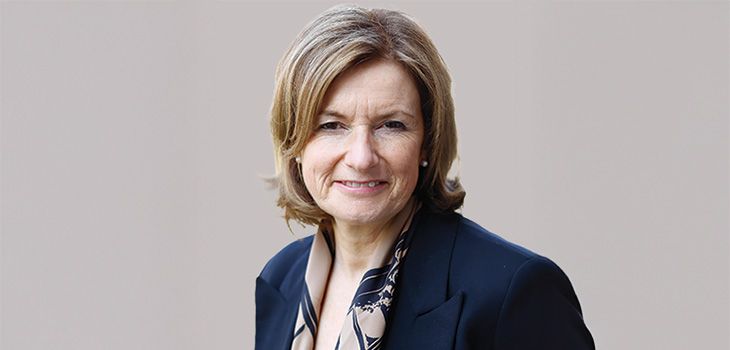
What qualities does a modern-day barrister need? Caroline Goodwin KC, Leader of the North Eastern Circuit, and former Chair of the Criminal Bar Association, shares her lessons learnt
‘Fasten your seatbelts, it’s going to be a bumpy night!’ A line from a film which, for me, epitomises being a member of this, the best profession. If you ask, ‘Do I still love my job?’ my answer is a resounding ‘Yes.’ It remains a privilege to be a barrister and I plan to be here for a little bit longer.
Anything I have achieved, I owe to so many, who have backed, guided and supported me throughout. We have had tough conversations and I have tried to take from those the lessons which, I hope, have played a part in my professional life. Those key players set an example and that is why I want to be able to put something back and ensure that we remain, as a profession, the best at what we do. Quality advocacy, together with high standards, professional courtesy, honesty and integrity – these are the key ingredients in our daily lives.
Life at the Bar is chaotic, dynamic, challenging. We have to evolve with it. Big cases, small cases, difficult clients, challenging judges all make for a job which is never dull. Yet despite all of that, we go back, we persevere and we always do what is needed and more.
For those starting out, there will be days where you feel sick to your stomach, where you are constantly evaluating and asking yourself, ‘Is that the right question?’, ‘Is that the right approach?’ and ‘Is that the correct tactical decision?’ You will leave court and as you go home those questions will tick over in your mind. Not for you an evening off. No, you will inevitably sit down and prepare for the next day’s onslaught. Even when you have closed your laptop, that particular case(s) will leap into your mind. The enquiring mind, in my experience, never switches off.
When I was asked to write this piece, I thought, ‘What can I possibly say that is of value? What qualities does a modern-day barrister need?’ Here are just a few:
Tenacity – life at the Bar is tough. Do not give up. Have a goal and ‘go for it’. If you get knocked back from an application, just ask yourself ’What went wrong?’, ‘How can I improve?’ and ‘What can I change?’. Remember that not all disasters are your fault! I hate to say it, but you have to embrace failure, no matter how sore or uncomfortable it feels. The nosedives are inevitable, but you will get through them and come out the other side a better barrister who is better equipped to deal with the problems. What was previously an issue becomes part of life’s rich pattern and is absorbed into your way of thinking. The reason you see senior practitioners, with years under their belt, gliding through what looks and feels like hell is because they have ‘experience’. That does not come overnight. So, stick with it and embrace the challenge.
Go round obstacles. Sometimes in front of us may be a person or a set of circumstances that is difficult to change. Go round that problem. This is not a weakness. It’s pragmatic. Move on. Think of a different strategy and that way you will remain on your forward trajectory. Keep thinking outside the box. Take the initiative.
Do not be afraid to ask. And I need say no more on that!
Take time for yourself. It is all too easy to become weighed down by the expectations of the client, the intense timetabling and all that is expected of us, to the extent that there are just not enough hours in the day. Take time and do something else outside of the job. Manage your diary.
Get a supportive network. This is invaluable. Along your journey you will meet the most energetic and dynamic of people, with great ideas, who have focus and, above all, whom you can trust with your life. You, too, will reciprocate. The bonus is that they will become great friends.
To illustrate the point, in my new role as Leader of the North Eastern Circuit, I have around me an incredible team of individuals who are super supportive. Without them the job would not be possible. We aim to ensure that Circuit goes from strength to strength. They are from across Circuit and all areas of practice. To emphasise how important this type of network is on Circuit we are developing a new initiative called ‘NEC Elevate’ as part of our mentoring programme. This will provide that network I speak of, for younger practitioners, and will supplement the strong chambers’ ethos which epitomises the North Eastern Circuit. My pupil masters are still invaluable in my practice.
I had a horrendous case quite recently. The pressure was extraordinary and at such a level that I thought it would finish me off! There came a tricky moment where I really needed advice on a professional Ievel. I was lucky as I was able to draw on my network of those whom I trusted. I sent a text to a very senior member of the Bar that simply said, ‘I desperately need to speak, it is urgent.’ That person left what was an incredibly important meeting and rang me back. We talked through the issue and when I returned to court I had a strategy in place. I am indebted to them. How many professions can give you that, and at the same time bring along with it great friends with whom you can have a laugh about things later?
When I became Chair of the Criminal Bar Association, I was met with the social and economic turmoil brought by the pandemic. The country came to a standstill. We had to get the Bar back into courts safely. People were worried about health and finance. I was involved in remote meetings every day to address igniting the vast machinery that goes to make up the courts and drove (with permission) to court centres across the country to see how we could do this safely. This, as we all recall, was a serious episode in our lives. One day I was standing in a courtroom in central London with a High Court judge measuring out the physical distance that we needed for screens, shifting court furniture and discussing the ventilation system (you can test me on that). The next, I was discussing finance packages for the Bar with government ministers. Again, a strong team with a clear agenda was vital. It was, to say the least, an incredible insight into the amount of unnecessary red tape and prepared me for my present role as Leader of Circuit and the challenges we still face.
As a criminal practitioner, the Leveson/Lammy proposals are live. There is much to commend the review recognising the abject failings that have accumulated. What we need is joined-up thinking at the most basic of levels and investment. The crude removal of juries will not prevent system failure. As Leader of Circuit there are other issues: the crisis at the family Bar regarding remuneration; ensuring that civil practitioners have a voice; and that education at the Bar and delivered on Circuit is of the highest quality. The challenges remain. Would I do it all again? Of course I would…

‘Fasten your seatbelts, it’s going to be a bumpy night!’ A line from a film which, for me, epitomises being a member of this, the best profession. If you ask, ‘Do I still love my job?’ my answer is a resounding ‘Yes.’ It remains a privilege to be a barrister and I plan to be here for a little bit longer.
Anything I have achieved, I owe to so many, who have backed, guided and supported me throughout. We have had tough conversations and I have tried to take from those the lessons which, I hope, have played a part in my professional life. Those key players set an example and that is why I want to be able to put something back and ensure that we remain, as a profession, the best at what we do. Quality advocacy, together with high standards, professional courtesy, honesty and integrity – these are the key ingredients in our daily lives.
Life at the Bar is chaotic, dynamic, challenging. We have to evolve with it. Big cases, small cases, difficult clients, challenging judges all make for a job which is never dull. Yet despite all of that, we go back, we persevere and we always do what is needed and more.
For those starting out, there will be days where you feel sick to your stomach, where you are constantly evaluating and asking yourself, ‘Is that the right question?’, ‘Is that the right approach?’ and ‘Is that the correct tactical decision?’ You will leave court and as you go home those questions will tick over in your mind. Not for you an evening off. No, you will inevitably sit down and prepare for the next day’s onslaught. Even when you have closed your laptop, that particular case(s) will leap into your mind. The enquiring mind, in my experience, never switches off.
When I was asked to write this piece, I thought, ‘What can I possibly say that is of value? What qualities does a modern-day barrister need?’ Here are just a few:
Tenacity – life at the Bar is tough. Do not give up. Have a goal and ‘go for it’. If you get knocked back from an application, just ask yourself ’What went wrong?’, ‘How can I improve?’ and ‘What can I change?’. Remember that not all disasters are your fault! I hate to say it, but you have to embrace failure, no matter how sore or uncomfortable it feels. The nosedives are inevitable, but you will get through them and come out the other side a better barrister who is better equipped to deal with the problems. What was previously an issue becomes part of life’s rich pattern and is absorbed into your way of thinking. The reason you see senior practitioners, with years under their belt, gliding through what looks and feels like hell is because they have ‘experience’. That does not come overnight. So, stick with it and embrace the challenge.
Go round obstacles. Sometimes in front of us may be a person or a set of circumstances that is difficult to change. Go round that problem. This is not a weakness. It’s pragmatic. Move on. Think of a different strategy and that way you will remain on your forward trajectory. Keep thinking outside the box. Take the initiative.
Do not be afraid to ask. And I need say no more on that!
Take time for yourself. It is all too easy to become weighed down by the expectations of the client, the intense timetabling and all that is expected of us, to the extent that there are just not enough hours in the day. Take time and do something else outside of the job. Manage your diary.
Get a supportive network. This is invaluable. Along your journey you will meet the most energetic and dynamic of people, with great ideas, who have focus and, above all, whom you can trust with your life. You, too, will reciprocate. The bonus is that they will become great friends.
To illustrate the point, in my new role as Leader of the North Eastern Circuit, I have around me an incredible team of individuals who are super supportive. Without them the job would not be possible. We aim to ensure that Circuit goes from strength to strength. They are from across Circuit and all areas of practice. To emphasise how important this type of network is on Circuit we are developing a new initiative called ‘NEC Elevate’ as part of our mentoring programme. This will provide that network I speak of, for younger practitioners, and will supplement the strong chambers’ ethos which epitomises the North Eastern Circuit. My pupil masters are still invaluable in my practice.
I had a horrendous case quite recently. The pressure was extraordinary and at such a level that I thought it would finish me off! There came a tricky moment where I really needed advice on a professional Ievel. I was lucky as I was able to draw on my network of those whom I trusted. I sent a text to a very senior member of the Bar that simply said, ‘I desperately need to speak, it is urgent.’ That person left what was an incredibly important meeting and rang me back. We talked through the issue and when I returned to court I had a strategy in place. I am indebted to them. How many professions can give you that, and at the same time bring along with it great friends with whom you can have a laugh about things later?
When I became Chair of the Criminal Bar Association, I was met with the social and economic turmoil brought by the pandemic. The country came to a standstill. We had to get the Bar back into courts safely. People were worried about health and finance. I was involved in remote meetings every day to address igniting the vast machinery that goes to make up the courts and drove (with permission) to court centres across the country to see how we could do this safely. This, as we all recall, was a serious episode in our lives. One day I was standing in a courtroom in central London with a High Court judge measuring out the physical distance that we needed for screens, shifting court furniture and discussing the ventilation system (you can test me on that). The next, I was discussing finance packages for the Bar with government ministers. Again, a strong team with a clear agenda was vital. It was, to say the least, an incredible insight into the amount of unnecessary red tape and prepared me for my present role as Leader of Circuit and the challenges we still face.
As a criminal practitioner, the Leveson/Lammy proposals are live. There is much to commend the review recognising the abject failings that have accumulated. What we need is joined-up thinking at the most basic of levels and investment. The crude removal of juries will not prevent system failure. As Leader of Circuit there are other issues: the crisis at the family Bar regarding remuneration; ensuring that civil practitioners have a voice; and that education at the Bar and delivered on Circuit is of the highest quality. The challenges remain. Would I do it all again? Of course I would…
What qualities does a modern-day barrister need? Caroline Goodwin KC, Leader of the North Eastern Circuit, and former Chair of the Criminal Bar Association, shares her lessons learnt


The Chair of the Bar reports back
Susie Griffin on the admin that keeps barristers from billable work
Clement Cowley, Partner at The Penny Group, explains how global events can influence the performance of pensions and ISAs, and why taking a long-term approach to investing is often the most effective strategy
Mário Barroso, Head of R&D and Method Development at AlphaBiolabs, discusses what family law professionals need to know about hallucinogens, from the main hallucinogenic drugs encountered in family proceedings, to their effects and the testing options available
Harmony Christian Ministries is the latest charity to benefit from a £500 donation from AlphaBiolabs via the company’s Giving Back initiative
By David Green
At the start of her term, Chair of the Bar 2026 Kirsty Brimelow KC set out a series of priorities for the year ahead. One of those priorities was children in the justice system
As the world becomes more digital, Barbara Vinagre Mota examines international research into the mental health consequences of judges’ exposure to graphic and immersive evidence, highlighting the importance of support systems
In an era of patient-centred care and growing concern over misconduct in medical settings, why do women still lack the right to choose women consultants for examination and treatment? Charles Davey investigates
Reviewed by Daniel Barnett
James McNeill Whistler at Tate Britain until 27 September Rothko in Florence at Palazzo Strozzi until 23 August Reviewed by Stephen Cragg KC