*/
Government plans to remove the right to trial by jury for either-way sexual offences advanced at alarming pace over the past year before being dropped last month. In September, the government announced its intention to set up specialist courtrooms for rape and serious sex offences (RASSO) in every Crown Court in England and Wales over the next two years, better support for complainants and a new Rape Justice Taskforce ‘to tackle the rising rate of postponed rape trials and confront the myths that cause victims to withdraw from their own cases’. This all comes at a time when public confidence in the justice system, including the trial process, is arguably at an all-time low for RASSO prosecutions.
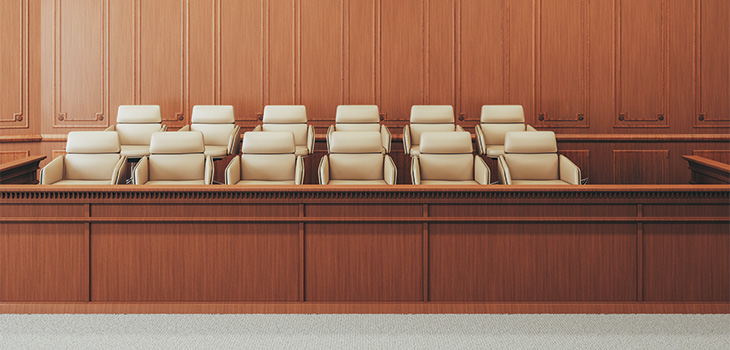
A combination of these issues highlighted the urgent need to understand more about jury decision-making. The continuing legal restrictions on juries means that mock jury trials represent the most realistic option for gaining insights into juror decision-making and jury deliberation processes.
Funded by the Economic and Social Research Council, our research team carried out the most realistic mock jury trial research conducted to date in relation to male RASSO complainants. Existing research has used similar methodologies, but focused on female rape complainants.
The mock trials involved a RASSO-ticketed judge, prosecution and defence counsel, actors playing the complainant, defendant, ushers, court clerk, and a security guard. The two cases on trial were developed in partnership with Avon and Somerset Constabulary, the Crown Prosecution Service, and We Are Survivors. One case involved two counts of rape – one oral and one anal – under s 1 Sexual Offences Act 2003 (SOA 2003), with both the complainant and defendant being male. The other case involved a ‘forced-to-penetrate’ case under s 4 SOA 2003 (causing a person to engage in sexual activity without consent), and involved a female defendant and male complainant. The mock trials were conducted ‘live’ in Lancaster University Law School’s mock courtroom and lasted for approximately three hours each, with evidence from the complainant and defendant delivered without special measures. All expected judicial directions – both oral and written – were given to jurors.
To maximise the verisimilitude of the research, jurors were members of the public who were largely recruited from the open electoral register, with some supplementation from those who had heard about the research and wanted to be involved. Jurors were randomly allocated to a jury panel on the day of trial, with three jury panels simultaneously watching each trial but deliberating separately. Jury deliberations were audio recorded, transcribed and analysed.
Of the 12 jury panels, only one returned a guilty verdict on both counts in the male rape case, with three hung juries and eight not guilty verdicts on both counts. In the s 4 case, three of the 12 jury panels returned guilty verdicts, four were hung, and five returned not guilty verdicts. While reflecting the challenges often associated with securing guilty verdicts in RASSO cases, the three guilty verdicts delivered in the s 4 case also highlighted the possibility of securing convictions in cases involving a female defendant and male complainant. This is important because there is often reticence from those across the criminal justice system to proceed with these sorts of cases due to perceptions around the inability to secure a guilty verdict, something which this research did not support.
Across all 24 jury panels in both cases, there was evidence of rape myths and gender and sex role stereotypes being introduced within deliberations.
In the male rape case, many of these related to the complainant’s sexuality, despite him being clear during his evidence that he was a heterosexual man with no interest in, or experience of intimacy with, men. Jurors were concerned that the complainant may have been ‘secretly gay’; ‘It might be because he was gay and wanted to try it out.’
Other jurors believed that the complainant had consented to having sex with the defendant and then changed his mind afterwards; ‘He might have been so disgusted with what he had done, that he wanted somehow to get even with [defendant].’
Across both cases, jurors raised concerns that the complainants were making false allegations; ‘You do keep saying victim, but he could potentially be… a little liar… a liar’ and ‘For me, a lot of people lie about rape…’
In the s 4 case, there was a perception by some jurors that it was impossible for a man to be forced to have non-consensual sex with, and by, a woman and thus the offence could not have taken place as alleged: ‘Men can’t possibly be raped by a woman. That just wouldn’t happen…’ There were also examples of minimisation of the seriousness of the allegations being made by the complainant: ‘That’s what made me think it was generally a misunderstanding.’
While there was some evidence of other jurors questioning and countering myths and stereotypes when they emerged, the extent to which this was effective was difficult to judge within the deliberations.
As noted above, jurors were provided with the standard judicial directions – both oral and written – that would be expected in the two cases on trial. They were also provided with a route to verdict document to assist deliberations.
In several of the jury panels across both cases there was very little reference to the judicial directions provided. Despite being given written directions to take into the deliberation room, these were sometimes not used at all, or jurors preferred to recall the oral directions given to them in court, rather than read from the written directions in their ‘jury packs’. Consequently, sometimes oral directions were recalled inaccurately, or there was debate about what the judge had actually said.
Similarly, the route to verdict document was not used at all, or towards the end of deliberations in several jury panels. Juries who did utilise the route to verdict document did so to varying extents and with varying levels of understanding. Indeed, comment was made by jurors in deliberations about difficulties they had understanding both the judicial directions and the route to verdict document.
For example, in the s 4 case, the following is an extract of a conversation between jurors:
‘Are you sure that the defendant believed he was consenting as defined in the written direction? If you are sure that the defendant did not believe he was consenting then guilty. If you conclude that the defendant did believe or may have believed that he was consenting, then proceed to question 4… So I’m a bit confused about this question if I’m honest… Yeah, me too… So could somebody help me kind of unpick what it means?’
Within the context of policy reform, it is tempting to suggest that these findings indicate that jurors should be removed from all RASSO trials. If, as the evidence presented above suggests, they continue to invoke rape myths and stereotypes within their deliberations, and struggle to understand and effectively utilise judicial directions and the route to verdict document, why should they continue to be used in RASSO cases? It’s a reasonable question.
However, one obvious intervention based on the above findings would be the reformulating of judicial direction to improve clarity and accessibility to jurors, enabling them to be more effectively used in deliberations. Similarly, the route to verdict document could be reviewed to see how best it could be reframed to enable effective use by jurors and to support their deliberations.
Before further court reforms, particularly in relation to RASSO cases, are rolled out, consideration should be given to changes that strengthen the functioning of juries and support and enhance their decision-making.
Dr Siobhan Weare is a Reader in Law at Lancaster University. Her research expertise centres around criminal justice and socio-legal responses to sexual offences, particularly involving male sexual victimisation.

Dr Dominic Willmott is a Reader in Legal Psychology at Loughborough University. His research examines bias within criminal legal systems, investigating the existence and impact of rape myths upon jury decision-making.

Dr Madeleine Millar is an Assistant Professor at the University of Warwick. Her research focuses on understanding how jurors make decisions, and biases in cognition which may undermine decision-making.
Government plans to remove the right to trial by jury for either-way sexual offences advanced at alarming pace over the past year before being dropped last month. In September, the government announced its intention to set up specialist courtrooms for rape and serious sex offences (RASSO) in every Crown Court in England and Wales over the next two years, better support for complainants and a new Rape Justice Taskforce ‘to tackle the rising rate of postponed rape trials and confront the myths that cause victims to withdraw from their own cases’. This all comes at a time when public confidence in the justice system, including the trial process, is arguably at an all-time low for RASSO prosecutions.
A combination of these issues highlighted the urgent need to understand more about jury decision-making. The continuing legal restrictions on juries means that mock jury trials represent the most realistic option for gaining insights into juror decision-making and jury deliberation processes.
Funded by the Economic and Social Research Council, our research team carried out the most realistic mock jury trial research conducted to date in relation to male RASSO complainants. Existing research has used similar methodologies, but focused on female rape complainants.
The mock trials involved a RASSO-ticketed judge, prosecution and defence counsel, actors playing the complainant, defendant, ushers, court clerk, and a security guard. The two cases on trial were developed in partnership with Avon and Somerset Constabulary, the Crown Prosecution Service, and We Are Survivors. One case involved two counts of rape – one oral and one anal – under s 1 Sexual Offences Act 2003 (SOA 2003), with both the complainant and defendant being male. The other case involved a ‘forced-to-penetrate’ case under s 4 SOA 2003 (causing a person to engage in sexual activity without consent), and involved a female defendant and male complainant. The mock trials were conducted ‘live’ in Lancaster University Law School’s mock courtroom and lasted for approximately three hours each, with evidence from the complainant and defendant delivered without special measures. All expected judicial directions – both oral and written – were given to jurors.
To maximise the verisimilitude of the research, jurors were members of the public who were largely recruited from the open electoral register, with some supplementation from those who had heard about the research and wanted to be involved. Jurors were randomly allocated to a jury panel on the day of trial, with three jury panels simultaneously watching each trial but deliberating separately. Jury deliberations were audio recorded, transcribed and analysed.
Of the 12 jury panels, only one returned a guilty verdict on both counts in the male rape case, with three hung juries and eight not guilty verdicts on both counts. In the s 4 case, three of the 12 jury panels returned guilty verdicts, four were hung, and five returned not guilty verdicts. While reflecting the challenges often associated with securing guilty verdicts in RASSO cases, the three guilty verdicts delivered in the s 4 case also highlighted the possibility of securing convictions in cases involving a female defendant and male complainant. This is important because there is often reticence from those across the criminal justice system to proceed with these sorts of cases due to perceptions around the inability to secure a guilty verdict, something which this research did not support.
Across all 24 jury panels in both cases, there was evidence of rape myths and gender and sex role stereotypes being introduced within deliberations.
In the male rape case, many of these related to the complainant’s sexuality, despite him being clear during his evidence that he was a heterosexual man with no interest in, or experience of intimacy with, men. Jurors were concerned that the complainant may have been ‘secretly gay’; ‘It might be because he was gay and wanted to try it out.’
Other jurors believed that the complainant had consented to having sex with the defendant and then changed his mind afterwards; ‘He might have been so disgusted with what he had done, that he wanted somehow to get even with [defendant].’
Across both cases, jurors raised concerns that the complainants were making false allegations; ‘You do keep saying victim, but he could potentially be… a little liar… a liar’ and ‘For me, a lot of people lie about rape…’
In the s 4 case, there was a perception by some jurors that it was impossible for a man to be forced to have non-consensual sex with, and by, a woman and thus the offence could not have taken place as alleged: ‘Men can’t possibly be raped by a woman. That just wouldn’t happen…’ There were also examples of minimisation of the seriousness of the allegations being made by the complainant: ‘That’s what made me think it was generally a misunderstanding.’
While there was some evidence of other jurors questioning and countering myths and stereotypes when they emerged, the extent to which this was effective was difficult to judge within the deliberations.
As noted above, jurors were provided with the standard judicial directions – both oral and written – that would be expected in the two cases on trial. They were also provided with a route to verdict document to assist deliberations.
In several of the jury panels across both cases there was very little reference to the judicial directions provided. Despite being given written directions to take into the deliberation room, these were sometimes not used at all, or jurors preferred to recall the oral directions given to them in court, rather than read from the written directions in their ‘jury packs’. Consequently, sometimes oral directions were recalled inaccurately, or there was debate about what the judge had actually said.
Similarly, the route to verdict document was not used at all, or towards the end of deliberations in several jury panels. Juries who did utilise the route to verdict document did so to varying extents and with varying levels of understanding. Indeed, comment was made by jurors in deliberations about difficulties they had understanding both the judicial directions and the route to verdict document.
For example, in the s 4 case, the following is an extract of a conversation between jurors:
‘Are you sure that the defendant believed he was consenting as defined in the written direction? If you are sure that the defendant did not believe he was consenting then guilty. If you conclude that the defendant did believe or may have believed that he was consenting, then proceed to question 4… So I’m a bit confused about this question if I’m honest… Yeah, me too… So could somebody help me kind of unpick what it means?’
Within the context of policy reform, it is tempting to suggest that these findings indicate that jurors should be removed from all RASSO trials. If, as the evidence presented above suggests, they continue to invoke rape myths and stereotypes within their deliberations, and struggle to understand and effectively utilise judicial directions and the route to verdict document, why should they continue to be used in RASSO cases? It’s a reasonable question.
However, one obvious intervention based on the above findings would be the reformulating of judicial direction to improve clarity and accessibility to jurors, enabling them to be more effectively used in deliberations. Similarly, the route to verdict document could be reviewed to see how best it could be reframed to enable effective use by jurors and to support their deliberations.
Before further court reforms, particularly in relation to RASSO cases, are rolled out, consideration should be given to changes that strengthen the functioning of juries and support and enhance their decision-making.

The Chair of the Bar reports back
Conner Wright, Legal Case Manager at AlphaBiolabs, answers the most frequently asked questions about SCRAM Continuous Alcohol Monitoring (SCRAM CAM®) posed by family law professionals
Ryan Prins of Philips SpeechLive explains how barristers can boost drafting efficiency with AI-assisted speech recognition – while keeping full oversight
Finding available counsel shouldn’t be complicated, says Kaan Kartal of Brieflink
By Kem Kemal, CEO, Henry Dannell
By BSK Financial Planning

For barristers, managing anxiety is a professional discipline as much as a personal one, says Annette Henry KC. This article examines the cues, clues and practical techniques for avoiding overwhelm and regaining calm
If you’ve never been to the Bar Conference before, this is the year to start. Amelia Clegg previews the profession’s flagship event
After a two-year investigation, Karim Khan KC was removed as ICC Chief Prosecutor in July. With the United States threatening to dismantle the court ‘brick by brick’, what’s next for the beleaguered ICC? asks Chris Stephen
Kick off your career at the Bar Council’s Pupillage Fair this October – it’s one of the most valuable opportunities for aspiring barristers, says Amelia Clegg
Join us on Saturday 21 November 2026 at Leeds Beckett University and see for yourself why the North continues to be an exceptional place to build a career at the Bar