*/
By Ross Cranston
Reviewed by Nikki Singla KC
The subject of judging fascinates. Who are our judges? What part of society do they come from? What are their values? Do those values impact their judgments? I recall reading Professor JAG Griffith’s answers in his powerful book The Politics of the Judiciary (1977). Years after its publication, his critique of the closed world from which judges came, and which formed in them a deep prejudice against less privileged groups, carried impact.
But how relevant or applicable is his thesis today? Think back to the Conservative Party conference in 2025, when the then Shadow Secretary of State for Justice, holding a judge’s long bottomed wig, and, to applause, blasted ‘activist judges’ who had ‘broadcast their ‘open borders views’ on social media’. The party promised that if elected, they would abolish the Judicial Appointments Commission in a bid to boost the transparency and independence of judicial appointments.
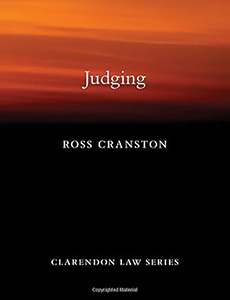
Judging is Ross Cranston’s latest work. Like Professor Griffith before him, he is a Professor of the LSE. But there the similarity ends. This book takes a very different approach. Gone are the polemic and the noisy arguments about right and left. Instead, you have the author’s thoughtful and researched account which examines the underlying values of judging (Part I), and what judges actually do in practice (Part II). The book is written dispassionately and with insight: the author served as a High Court judge for a decade. The book is compact, approximately 300 pages, readable and not littered with references and footnotes. Its appeal is not just the author’s experience but his extensive research of English and international materials. In an extended bibliograph are sources and references relevant to particular chapters of the book.
What do we mean by judging? The author starts with the proposition that judging is the impartial resolution of disputes and the maintenance of the rule of law, performed by judges. Then he selects fundamental values that judges set for themselves and examines them closely, both as concepts and in practice. The author distils these values to three, a more manageable number than Sir Matthew Hale’s renowned list of ‘Things Necessary to be Continually had in Remembrance’. The first value is judicial independence so that judges can decide cases in accordance with their legal merits, free from improper pressures and inducements within and without the judiciary. The second is impartiality, which protects against decisions based on the biases of the judge and the identity of the parties. In the modern world, the author rightly acknowledges the relevance of a judge’s interests, associations and opinions, and the perils of judges speaking to the media or using social media on matters of politics. The third value is integrity, which he says connotes adherence to the content of ‘judicial virtue’. This last value, the author states, is one that not only requires judges to be held to high standards of conduct at work but also requires judges to accept considerable restrictions on their activities away from the bench.
In Part II, the author considers the practice of judging. This includes how judges are appointed, the skills required for judging – ‘judgecraft’, and his thoughts on the factors that can affect an individual judge in the process of coming to a decision, such as his or her social relations and beliefs and even the conception of the task (merits-based v minimalist) of judgment writing.
This is an important and clearly expressed resource on a subject that is often misinformed in public discourse. It is written not just for those in the legal profession. Indeed, they should keep a copy at the Ministry of Justice.

Nikki Singla KC is a commercial and chancery barrister practising from Wilberforce Chambers.
The subject of judging fascinates. Who are our judges? What part of society do they come from? What are their values? Do those values impact their judgments? I recall reading Professor JAG Griffith’s answers in his powerful book The Politics of the Judiciary (1977). Years after its publication, his critique of the closed world from which judges came, and which formed in them a deep prejudice against less privileged groups, carried impact.
But how relevant or applicable is his thesis today? Think back to the Conservative Party conference in 2025, when the then Shadow Secretary of State for Justice, holding a judge’s long bottomed wig, and, to applause, blasted ‘activist judges’ who had ‘broadcast their ‘open borders views’ on social media’. The party promised that if elected, they would abolish the Judicial Appointments Commission in a bid to boost the transparency and independence of judicial appointments.
Judging is Ross Cranston’s latest work. Like Professor Griffith before him, he is a Professor of the LSE. But there the similarity ends. This book takes a very different approach. Gone are the polemic and the noisy arguments about right and left. Instead, you have the author’s thoughtful and researched account which examines the underlying values of judging (Part I), and what judges actually do in practice (Part II). The book is written dispassionately and with insight: the author served as a High Court judge for a decade. The book is compact, approximately 300 pages, readable and not littered with references and footnotes. Its appeal is not just the author’s experience but his extensive research of English and international materials. In an extended bibliograph are sources and references relevant to particular chapters of the book.
What do we mean by judging? The author starts with the proposition that judging is the impartial resolution of disputes and the maintenance of the rule of law, performed by judges. Then he selects fundamental values that judges set for themselves and examines them closely, both as concepts and in practice. The author distils these values to three, a more manageable number than Sir Matthew Hale’s renowned list of ‘Things Necessary to be Continually had in Remembrance’. The first value is judicial independence so that judges can decide cases in accordance with their legal merits, free from improper pressures and inducements within and without the judiciary. The second is impartiality, which protects against decisions based on the biases of the judge and the identity of the parties. In the modern world, the author rightly acknowledges the relevance of a judge’s interests, associations and opinions, and the perils of judges speaking to the media or using social media on matters of politics. The third value is integrity, which he says connotes adherence to the content of ‘judicial virtue’. This last value, the author states, is one that not only requires judges to be held to high standards of conduct at work but also requires judges to accept considerable restrictions on their activities away from the bench.
In Part II, the author considers the practice of judging. This includes how judges are appointed, the skills required for judging – ‘judgecraft’, and his thoughts on the factors that can affect an individual judge in the process of coming to a decision, such as his or her social relations and beliefs and even the conception of the task (merits-based v minimalist) of judgment writing.
This is an important and clearly expressed resource on a subject that is often misinformed in public discourse. It is written not just for those in the legal profession. Indeed, they should keep a copy at the Ministry of Justice.
By Ross Cranston
Reviewed by Nikki Singla KC


The Chair of the Bar reports back
Susie Griffin on the admin that keeps barristers from billable work
Clement Cowley, Partner at The Penny Group, explains how global events can influence the performance of pensions and ISAs, and why taking a long-term approach to investing is often the most effective strategy
Mário Barroso, Head of R&D and Method Development at AlphaBiolabs, discusses what family law professionals need to know about hallucinogens, from the main hallucinogenic drugs encountered in family proceedings, to their effects and the testing options available
Harmony Christian Ministries is the latest charity to benefit from a £500 donation from AlphaBiolabs via the company’s Giving Back initiative
By David Green
At the start of her term, Chair of the Bar 2026 Kirsty Brimelow KC set out a series of priorities for the year ahead. One of those priorities was children in the justice system
As the world becomes more digital, Barbara Vinagre Mota examines international research into the mental health consequences of judges’ exposure to graphic and immersive evidence, highlighting the importance of support systems
In an era of patient-centred care and growing concern over misconduct in medical settings, why do women still lack the right to choose women consultants for examination and treatment? Charles Davey investigates
Reviewed by Daniel Barnett
James McNeill Whistler at Tate Britain until 27 September Rothko in Florence at Palazzo Strozzi until 23 August Reviewed by Stephen Cragg KC