*/
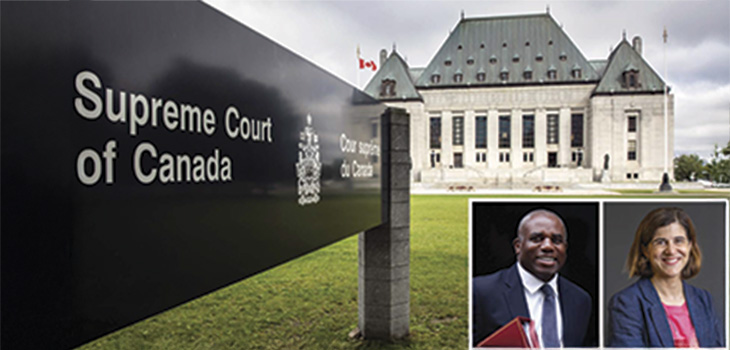
A tutorial for the Lord Chancellor and Minister for Courts on the Canadian criminal justice system. By Professor Laura Hoyano and Sandra Kimberg
To hear the Lord Chancellor and the Minister for Courts extol the benefits of Canadian-style courts in Parliament and interviews, to support their radical reform proposals arising from the first Leveson Inquiry Report (while materially departing from its recommendations), one might think that the ‘modernising’ model in the Courts and Tribunals Bill (‘the Bill’) mirrors the Canadian criminal justice system (‘CJS’). But the Lord Chancellor’s proposals are not just on a different continent, but on a different planet, than Canada’s CJS.
First and foremost: UK ministers could not be more wrong in suggesting that Canadians do not care about jury trial. In July 2025, the Supreme Court of Canada reiterated that jury trial is ‘flourishing’ in Canada (R v Varennes [2025] SCC 22 [166]). Jury verdicts always must be unanimous; proposals to move to a majority-type model as in England and Wales (‘E&W’) were definitively rejected as undermining juries’ integrity. In Varennes, the SCC asserted that the ‘great strength and virtue’ of the jury verdict rest upon ‘members of the community having come together’ and ‘reasoned together … to reach their unanimous verdict. It is truly a magnificent system for reaching difficult decisions in criminal cases. It has proven itself in the centuries past and continues to do so today.’
The following describes just some of the foundations of the Canadian CJS which are not present in either the current CJS in E&W or what would emerge if the Bill were enacted in its current form. (For more detailed analysis, see Laura Hoyano’s briefing papers (CTB0129) requested by the Justice Select Committee at tinyurl.com/4cu7u3a8.)
For some of the reasons why a defendant might prefer trial by judge alone, see ‘Judge-alone trials can deliver justice – but only if defendants choose them’, Laura Hoyano, Counsel, May 2020: tinyurl.com/5b54rfes.
Judge-alone trials are typically significantly shorter than jury trials, due to three categories of factors: (i) procedural, (ii) practical and (iii) evidentiary.
Obviously, jury trials require procedures that are unnecessary where the judge sits alone. These include jury selection, challenges for cause (including any argument for leave to challenge for cause), swearing-in, introductory and mid-trial instructions/corrections, mid-trial applications on admissibility of evidence or permissibility of questions, pre-charge conferences between the trial judge and counsel, mapping routes to verdict, the charge to the jury and questions from jurors.
Other time savings come from the practical benefit of not involving 12 additional people, in a setting that is foreign territory for them. That means 12 fewer chances for someone to be late or absent. Twelve fewer people to shuffle in and out at every break or every objection. If a witness is delayed or unavailable, other matters in the trial can be dealt with in the meantime. The court can sit earlier or later if need be to finish a witness, without having to be concerned about jurors’ personal schedules. The pace of the trial is generally much quicker.
Court time is used more efficiently, crucially eliminating the knock-on effects of trials overrunning their listing. A continuation (adjournment) can be set for a later date convenient to all parties. Counsel and the judge do not have to continue the trial, derailing waiting scheduled cases, thereby avoiding the endemic listing problems in E&W where even fixtures fall off the list repeatedly just before, or even on, the trial date, inducing complainant withdrawal. Conversely, the listing office need not build in a buffer to provide for the possibility of overrunning. There is more flexibility to respond to court and witness time constraints such as written submissions, sitting longer days, and postponing rulings to more convenient times.
Evidentiary factors also contribute to reducing trial time. When the trier of law is also the trier of fact, it is not strictly necessary to hold a voir dire to determine the admissibility of evidence, as these can be blended with the trial proper, thus avoiding duplication of evidence and witnesses having to reattend. This does not mean that a voir dire is never permitted or necessary when proceeding by judge alone; the evidence on the voir dire can be applied to the trial proper.
Finally, jury trials often require a different, more cautious approach to evidence and in speeches, which lengthen the proceeding. A trial judge may indicate that she has got the point, or request clarification of a party’s position, whereas a jury is a mute and usually unreadable audience for advocates. Cell-site or medical evidence are examples where an expert’s oral evidence can be much briefer, as methodology and terminology do not require explanation to educate the jury.
In Canada the accused can re-elect judge-alone up to 60 days before the trial date without the Crown’s consent, and thereafter with the Crown’s consent until the trial commences; consent is usually automatic given the resource savings involved. In Ontario, if re-election is possible, counsel at a case management conference provide two time estimates, for both modes of trial. These factors result in judge-alone estimates which are commonly around 50%, or even briefer, than a jury trial for the same case. The difference is especially pronounced in less complex cases; jury trials are likely to be set for a minimum of 5-7 days, whereas the same case before a judge alone could run 1-3 days. A jury trial would never conclude in a single day. For a worked example of what would be charged here as rape, with trial by judge alone being 2-3 days, and by jury 1-2 weeks, see ‘Why Is a Jury Trial so Much Longer Than a Trial Without a Jury?’, David Amber: tinyurl.com/35uuuhxu.
Counsel’s trial estimates (and those given by ministers to the Justice Select Committee) do not include the time to write judgments. Trial judges are usually allocated judgment-writing days; judicial assistants are available for research and editing, abridging the judge’s time commitment to writing.
Judge-alone trials are highly valued by the criminal Bar and the public across Canada because the system is predicated on defence choice and confidence in the fairness and competence of the professional bench. It is one of the two decisions only defendants make, the second being how to plead. Usually, they will defer to their advocates’ advice, but they may nevertheless feel strongly that they wish to be tried by their peers. Provided the Crown is proceeding by indictment, no one – not their counsel, not the Crown and not the court – can override their decision. This is not regarded as ‘gaming the system’ as Sarah Sackman MP has called it in Westminster, but rather the defence exercising a fundamental right. Canadians accept this as fair. The right of election is well-known as it is usually noted by the media reporting on trials.
Many efficiency benefits would be lost through the introduction of otiose procedural hurdles, such as a judicial process to predict a likely sentence before any evidence is heard and tested, as the Bill proposes. Simplicity, where everyone involved knows the rules from the outset, is key to Canadian trial efficiency and efficacy.
England and Wales can learn a great deal from the Canadian CJS. But it is not a pick-and-mix sweet shop to be browsed by UK justice ministers. It is a complex, carefully designed, interlocking adversarial system, grounded on a profound respect for express, enforceable, constitutional and statutory rights for defendants and complainants. More profound, and fairer, changes are required here to achieve the results of the Canadian CJS, which respect those rights – especially the right to, but not the requirement of, trial by jury.
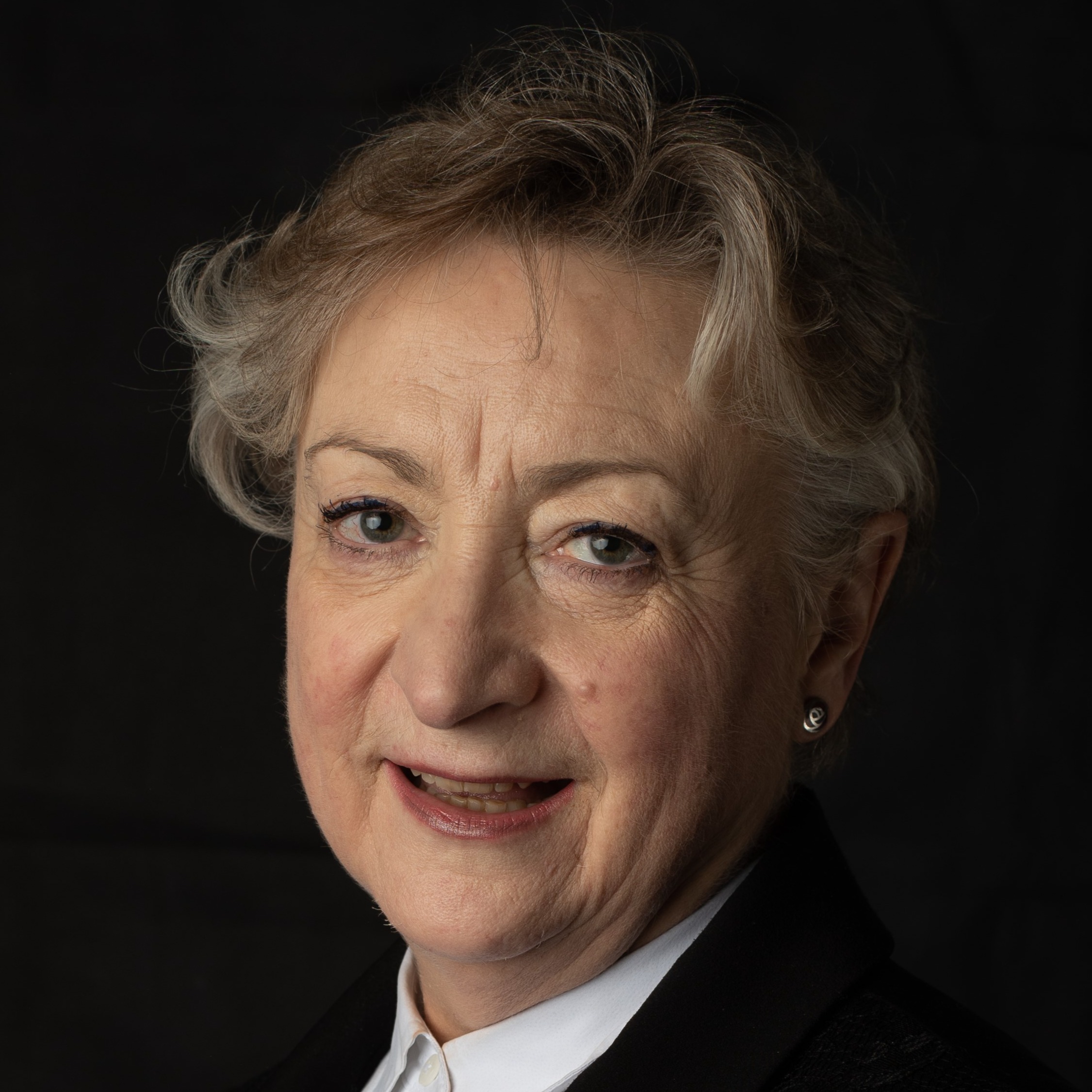
Laura Hoyano is dual-qualified at the Bars of Alberta (1983) and England & Wales (2015), and a tenant at Red Lion Chambers. She is Emeritus Professor of Law at the University of Oxford and Emeritus Fellow at Wadham College, Oxford. Her academic research focuses on comparative models of adversarial justice systems.
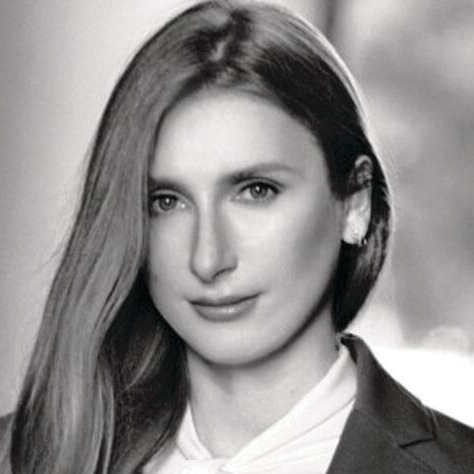
Sandra Kimberg is a criminal defence trial and appeal lawyer in Toronto, Canada. She obtained her law degree from the University of Oxford, Wadham College, with First Class Honours.
To hear the Lord Chancellor and the Minister for Courts extol the benefits of Canadian-style courts in Parliament and interviews, to support their radical reform proposals arising from the first Leveson Inquiry Report (while materially departing from its recommendations), one might think that the ‘modernising’ model in the Courts and Tribunals Bill (‘the Bill’) mirrors the Canadian criminal justice system (‘CJS’). But the Lord Chancellor’s proposals are not just on a different continent, but on a different planet, than Canada’s CJS.
First and foremost: UK ministers could not be more wrong in suggesting that Canadians do not care about jury trial. In July 2025, the Supreme Court of Canada reiterated that jury trial is ‘flourishing’ in Canada (R v Varennes [2025] SCC 22 [166]). Jury verdicts always must be unanimous; proposals to move to a majority-type model as in England and Wales (‘E&W’) were definitively rejected as undermining juries’ integrity. In Varennes, the SCC asserted that the ‘great strength and virtue’ of the jury verdict rest upon ‘members of the community having come together’ and ‘reasoned together … to reach their unanimous verdict. It is truly a magnificent system for reaching difficult decisions in criminal cases. It has proven itself in the centuries past and continues to do so today.’
The following describes just some of the foundations of the Canadian CJS which are not present in either the current CJS in E&W or what would emerge if the Bill were enacted in its current form. (For more detailed analysis, see Laura Hoyano’s briefing papers (CTB0129) requested by the Justice Select Committee at tinyurl.com/4cu7u3a8.)
For some of the reasons why a defendant might prefer trial by judge alone, see ‘Judge-alone trials can deliver justice – but only if defendants choose them’, Laura Hoyano, Counsel, May 2020: tinyurl.com/5b54rfes.
Judge-alone trials are typically significantly shorter than jury trials, due to three categories of factors: (i) procedural, (ii) practical and (iii) evidentiary.
Obviously, jury trials require procedures that are unnecessary where the judge sits alone. These include jury selection, challenges for cause (including any argument for leave to challenge for cause), swearing-in, introductory and mid-trial instructions/corrections, mid-trial applications on admissibility of evidence or permissibility of questions, pre-charge conferences between the trial judge and counsel, mapping routes to verdict, the charge to the jury and questions from jurors.
Other time savings come from the practical benefit of not involving 12 additional people, in a setting that is foreign territory for them. That means 12 fewer chances for someone to be late or absent. Twelve fewer people to shuffle in and out at every break or every objection. If a witness is delayed or unavailable, other matters in the trial can be dealt with in the meantime. The court can sit earlier or later if need be to finish a witness, without having to be concerned about jurors’ personal schedules. The pace of the trial is generally much quicker.
Court time is used more efficiently, crucially eliminating the knock-on effects of trials overrunning their listing. A continuation (adjournment) can be set for a later date convenient to all parties. Counsel and the judge do not have to continue the trial, derailing waiting scheduled cases, thereby avoiding the endemic listing problems in E&W where even fixtures fall off the list repeatedly just before, or even on, the trial date, inducing complainant withdrawal. Conversely, the listing office need not build in a buffer to provide for the possibility of overrunning. There is more flexibility to respond to court and witness time constraints such as written submissions, sitting longer days, and postponing rulings to more convenient times.
Evidentiary factors also contribute to reducing trial time. When the trier of law is also the trier of fact, it is not strictly necessary to hold a voir dire to determine the admissibility of evidence, as these can be blended with the trial proper, thus avoiding duplication of evidence and witnesses having to reattend. This does not mean that a voir dire is never permitted or necessary when proceeding by judge alone; the evidence on the voir dire can be applied to the trial proper.
Finally, jury trials often require a different, more cautious approach to evidence and in speeches, which lengthen the proceeding. A trial judge may indicate that she has got the point, or request clarification of a party’s position, whereas a jury is a mute and usually unreadable audience for advocates. Cell-site or medical evidence are examples where an expert’s oral evidence can be much briefer, as methodology and terminology do not require explanation to educate the jury.
In Canada the accused can re-elect judge-alone up to 60 days before the trial date without the Crown’s consent, and thereafter with the Crown’s consent until the trial commences; consent is usually automatic given the resource savings involved. In Ontario, if re-election is possible, counsel at a case management conference provide two time estimates, for both modes of trial. These factors result in judge-alone estimates which are commonly around 50%, or even briefer, than a jury trial for the same case. The difference is especially pronounced in less complex cases; jury trials are likely to be set for a minimum of 5-7 days, whereas the same case before a judge alone could run 1-3 days. A jury trial would never conclude in a single day. For a worked example of what would be charged here as rape, with trial by judge alone being 2-3 days, and by jury 1-2 weeks, see ‘Why Is a Jury Trial so Much Longer Than a Trial Without a Jury?’, David Amber: tinyurl.com/35uuuhxu.
Counsel’s trial estimates (and those given by ministers to the Justice Select Committee) do not include the time to write judgments. Trial judges are usually allocated judgment-writing days; judicial assistants are available for research and editing, abridging the judge’s time commitment to writing.
Judge-alone trials are highly valued by the criminal Bar and the public across Canada because the system is predicated on defence choice and confidence in the fairness and competence of the professional bench. It is one of the two decisions only defendants make, the second being how to plead. Usually, they will defer to their advocates’ advice, but they may nevertheless feel strongly that they wish to be tried by their peers. Provided the Crown is proceeding by indictment, no one – not their counsel, not the Crown and not the court – can override their decision. This is not regarded as ‘gaming the system’ as Sarah Sackman MP has called it in Westminster, but rather the defence exercising a fundamental right. Canadians accept this as fair. The right of election is well-known as it is usually noted by the media reporting on trials.
Many efficiency benefits would be lost through the introduction of otiose procedural hurdles, such as a judicial process to predict a likely sentence before any evidence is heard and tested, as the Bill proposes. Simplicity, where everyone involved knows the rules from the outset, is key to Canadian trial efficiency and efficacy.
England and Wales can learn a great deal from the Canadian CJS. But it is not a pick-and-mix sweet shop to be browsed by UK justice ministers. It is a complex, carefully designed, interlocking adversarial system, grounded on a profound respect for express, enforceable, constitutional and statutory rights for defendants and complainants. More profound, and fairer, changes are required here to achieve the results of the Canadian CJS, which respect those rights – especially the right to, but not the requirement of, trial by jury.
A tutorial for the Lord Chancellor and Minister for Courts on the Canadian criminal justice system. By Professor Laura Hoyano and Sandra Kimberg

The Chair of the Bar reports back
Susie Griffin on the admin that keeps barristers from billable work
Clement Cowley, Partner at The Penny Group, explains how global events can influence the performance of pensions and ISAs, and why taking a long-term approach to investing is often the most effective strategy
Mário Barroso, Head of R&D and Method Development at AlphaBiolabs, discusses what family law professionals need to know about hallucinogens, from the main hallucinogenic drugs encountered in family proceedings, to their effects and the testing options available
Harmony Christian Ministries is the latest charity to benefit from a £500 donation from AlphaBiolabs via the company’s Giving Back initiative
By David Green
At the start of her term, Chair of the Bar 2026 Kirsty Brimelow KC set out a series of priorities for the year ahead. One of those priorities was children in the justice system
As the world becomes more digital, Barbara Vinagre Mota examines international research into the mental health consequences of judges’ exposure to graphic and immersive evidence, highlighting the importance of support systems
In an era of patient-centred care and growing concern over misconduct in medical settings, why do women still lack the right to choose women consultants for examination and treatment? Charles Davey investigates
Reviewed by Daniel Barnett
James McNeill Whistler at Tate Britain until 27 September Rothko in Florence at Palazzo Strozzi until 23 August Reviewed by Stephen Cragg KC