*/

By Louise Crush of Westgate Wealth Management sets out the key steps to your dream property
Mortgages can be difficult to navigate at the self-employed Bar, where you experience fluctuating income and aged debt. Alongside this, the mortgage market will be impacted by changes in government and fiscal policies, the regular Bank of England interest rate announcements and moveable inflation rates.
Buying your first home will be one of the biggest financial decisions you make in the early part of your life. Getting the right advice before you set off looking for the right property will help to make sure you don’t go over budget and have everything ready to proceed at the point you want to make an offer, giving you the best chance of having your offer accepted.
Your first mortgage will no doubt have an incentive deal which typically expires after 2 to 5 years. At that point – if you don’t take action – lenders will move you on to their standard variable rate, which can mean a significant increase in your monthly payments. Reviewing this six months before the end of your current deal allows time to get everything lined up for you to switch product or lender to make sure you avoid this jump in your payments by moving to a better deal in the market.
Looking to purchase a home can add a lot of additional administrative work to your schedule, when you are already time poor. It’s not quite as easy as 1, 2, 3; but if you follow our step-by-step guide, it can help you navigate what might otherwise feel an overwhelming task:
Being able to search quickly and efficiently from some of the best deals available in the market isn’t just a case of finding the best rate. Getting professional guidance allows you to benefit from advice around fixed or tracker rates, product terms and mortgage length.
Barristers may also benefit from bespoke underwriting, so lenders will understand how and when you are paid and what you can expect to earn in the coming years. Using an intermediary who knows the right lenders to speak to can help save you money and could make the difference between getting the property you want or not.
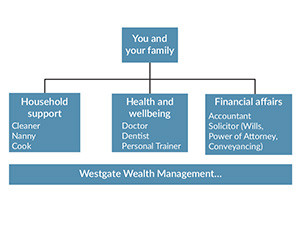
Your personal power team are there to help you make life easy. They are the ‘who’ for your ‘how’ tasks and have your best interests in mind, so you can make the most of an opportunity when it comes along.
Is Westgate on your personal power team? When you are ready to take your next step on the property ladder or review your existing mortgage and protection, book a no-obligation meeting with us, using the details below:

Louise Crush is a Chartered Financial Adviser at Westgate Wealth Management, Senior Partner Practice of St. James’s Place. Called to the Bar in 2015, Louise has built a specialist practice advising members of the Bar nationally and provides financial education services for chambers.
Westgate Wealth Management Limited is an Appointed Representative of and represents only St. James’s Place Wealth Management plc (which is authorised and regulated by the Financial Conduct Authority) for the purpose of advising solely on the group’s wealth management products and services, more details of which are set out on the group’s website www.sjp.co.uk/products. The St. James’s Place Partnership and the titles ‘Partner’ and ‘Partner Practice’ are marketing terms used to describe St. James’s Place representatives.
Mortgages can be difficult to navigate at the self-employed Bar, where you experience fluctuating income and aged debt. Alongside this, the mortgage market will be impacted by changes in government and fiscal policies, the regular Bank of England interest rate announcements and moveable inflation rates.
Buying your first home will be one of the biggest financial decisions you make in the early part of your life. Getting the right advice before you set off looking for the right property will help to make sure you don’t go over budget and have everything ready to proceed at the point you want to make an offer, giving you the best chance of having your offer accepted.
Your first mortgage will no doubt have an incentive deal which typically expires after 2 to 5 years. At that point – if you don’t take action – lenders will move you on to their standard variable rate, which can mean a significant increase in your monthly payments. Reviewing this six months before the end of your current deal allows time to get everything lined up for you to switch product or lender to make sure you avoid this jump in your payments by moving to a better deal in the market.
Looking to purchase a home can add a lot of additional administrative work to your schedule, when you are already time poor. It’s not quite as easy as 1, 2, 3; but if you follow our step-by-step guide, it can help you navigate what might otherwise feel an overwhelming task:
Being able to search quickly and efficiently from some of the best deals available in the market isn’t just a case of finding the best rate. Getting professional guidance allows you to benefit from advice around fixed or tracker rates, product terms and mortgage length.
Barristers may also benefit from bespoke underwriting, so lenders will understand how and when you are paid and what you can expect to earn in the coming years. Using an intermediary who knows the right lenders to speak to can help save you money and could make the difference between getting the property you want or not.
Your personal power team are there to help you make life easy. They are the ‘who’ for your ‘how’ tasks and have your best interests in mind, so you can make the most of an opportunity when it comes along.
Is Westgate on your personal power team? When you are ready to take your next step on the property ladder or review your existing mortgage and protection, book a no-obligation meeting with us, using the details below:
By Louise Crush of Westgate Wealth Management sets out the key steps to your dream property

The Chair of the Bar reports back
By Kem Kemal, CEO, Henry Dannell
By BSK Financial Planning
Mário Barroso, Head of R&D and Method Development at AlphaBiolabs
Susie Griffin on the admin that keeps barristers from billable work
Clement Cowley, Partner at The Penny Group, explains how global events can influence the performance of pensions and ISAs, and why taking a long-term approach to investing is often the most effective strategy

Kick off your career at the Bar Council’s Pupillage Fair this October – it’s one of the most valuable opportunities for aspiring barristers, says Amelia Clegg
Join us on Saturday 21 November 2026 at Leeds Beckett University and see for yourself why the North continues to be an exceptional place to build a career at the Bar
The golden age of advocacy? David Langwallner pays homage to the filmic if contentious barrister Sir Edward Carson and some of his contemporaries
Henry Fingerhut outlines what the Bar Standards Board AI guidance means for early career barristers
Not yet, says Jacob Turner. Regulation, unlike the technology itself, is a domain the legal profession can still control