*/

As criminal barristers swap the courtroom for the crime shelf, does their fiction offer more than thrills? Andrew Otchie explores how these insider voices reflect contemporary practice and shape public understanding
Three recent novels by members of the criminal Bar combine gripping storytelling with sharp insights into the justice system and contemporary legal practice. Read together, they explore issues of bias, disclosure and multi-defendant trial tactics, as well as the strains of a system grappling with record backlogs, yet still find grounds for faith in due process.
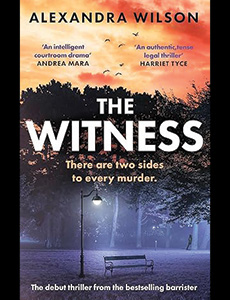
Sphere June 2025
Paperback 384 pages
ISBN 978-0751583380
A White man is stabbed in a London park. Two bystanders (a mother and a teacher) insist they saw a young Black man, Emmett, standing over the body with a knife. At first glance, it looks open-and-shut. But for Rosa, an up-and-coming defence barrister on her first murder brief, certainty looks like prejudice. Wilson, criminal barrister and author of the memoir In Black and White, a Young Barrister’s Story of Race and Class in a Broken Justice System (Endeavour: 2020), builds a propulsive narrative around the work that really counts, testing the state’s story until the truth, or at least reasonable doubt, comes into view.
Its feel for the criminal practitioner’s day is commendable: the hunt for a duty conference room, the early start before the legal day truly begins and the long wait for legal aid to trickle through. The Royal Coat of Arms that hangs above every judge in a courtroom is described as an almost theatrical backdrop, because there is nothing magical about the criminal justice system. Rosa’s perspective catches small, cumulative abrasions, such as the moment she is mistaken for a defendant at court security while her instructing solicitor is waved through. The result is not just pacey fiction, it’s a primer in credibility: who is believed, what is disclosed and whose story gets told first.
Wilson also makes a quiet but forceful argument for the value of diversity. Rosa hears what others miss. She knows the term ‘bro’ is a versatile noun and is wary it could be used by the prosecutor to misrepresent Emmett. Her proximity to Emmett’s world is not a disadvantage; it is a competence. She can demonstrate by her empathy what a diverse Bar can offer. In terms of the broader picture, we have made progress, but representation still narrows at the top. As the Bar Standards Board’s Diversity at the Bar 2025 report records, women are 41.9% of the practising Bar yet 21.5% of KCs, while barristers from minority ethnic backgrounds are 17.7% of the Bar and 11.3% of KCs.

Penguin: August 2026 (pre-order)
Paperback 288 pages
ISBN 978-0241995655
When Maple Court Chambers’ head clerk Tom Mannion is found dead in an alley, Lee Mitchell, Williams’ resilient protagonist, takes on the defence brief for junior clerk Dean Carter, a working-class lad who ‘seems like the type’. The plot hums with recognisable London textures and chambers politics; Williams (criminal barrister, Recorder, former Service Complaints Ombudsman for the Armed Forces and author of Without Prejudice, 2021 and Until Proven Innocent, 2024) writes the dynamics of opportunity and exclusion with the authority of experience.
Two currents make the book especially resonant. First, the forensic portrayal of who gets the premium work, how a chambers diary can surface inconvenient truths and why an ostensibly collegiate corridor can feel very different depending on one’s background. The themes mirror the profession’s diversity data – that disparity exists all the way up to silk level – without ever reading like a lecture.
Second, the system-under-strain backdrop: disclosure drift, institutional inertia and the pressure to ‘keep the list moving’. Mitchell’s method – to pin disclosure down early, narrow issues, resist drift – reads like practice guidance disguised as fiction. The context is real: by Q4 2025, the Crown Court open caseload reached a record 80,203, and cases open for a year or more topped 21,000, with median charge-to-completion times continuing to rise – numbers that haunt every tactical decision.
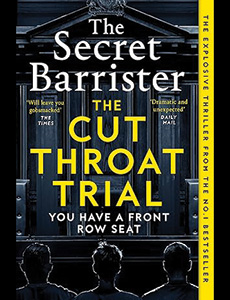
Picador: June 2026
Paperback 432 pages
ISBN 978-1035046706
In The Cut Throat Trial, anonymous legal commentator The Secret Barrister (writing as SJ Fleet in earlier editions) delivers a gripping and highly authentic account of a murder trial. The focus is the brutal killing of Bernard Hooper, a 74-year-old retired teacher stabbed to death on New Year’s Eve, and the three 17-year-old boys charged with his murder. Set in dreary Ableford Crown Court, the book captures many recognisable experiences, as well as some useful learning points. It shifts between the various characters to emphasise that no one knows the whole truth. We gain a deep understanding of the defendants’ disadvantaged backgrounds; they are youthful, with reckless tendencies, but strive for our sympathy.
On the Bench is HHJ Letts, cynical and judgemental of both the defendants and advocates before him. For the Crown is Aliyah Arshad KC, a newly minted silk keen to put past (disclosure) mistakes behind her and to secure convictions. Tom Wyatt KC, for Criag Mervyn-Scott, is theatrical and tactically aggressive, using a cut-throat defence to detract from his client’s potential culpability. Meanwhile, Bob Evans KC, for Aaron Freeman, is invariably polite, but a man of steel underneath. Jennifer Rennie struggles to connect with her client, Jamal Lowton, adding a further human dimension to the portrait of the criminal justice system through her own significant personal difficulties, which affect her professional judgement.
As with a live trial, anything can happen; witnesses say the unexpected, or nothing at all. The narrative also touches on the systemic delays that occur when prisoners are not produced on time and the court is forced to run behind schedule. The delays caused by inefficient contractors, and the resulting reputational damage to HMCTS, exasperates the judge and if financial penalties apply, they do not seem to be effective. However, instead of letting a late start ruin the day, the novel reminds us that the advocate who uses time strategically may gain a great advantage. Counter-intuitive as it may seem, best practice demands writing a closing speech well in advance; a living document, which may be tailored as the evidence shifts or a witness underperforms.
Moreover, there are lessons to be gleaned on effective advocacy and tactics in trials with numerous defendants (the ‘multi-hander’) where cut-throat issues may arise. The disciplined, surgical approach requires only cross-examination that advances a specific case theory, gratuitous attacks on a co-defendant or unnecessary aggression often backfire when the judge sums up the case to the jury. (In any event, HHJ Letts admits jurors will rarely be reminded of criticisms made of the police by the defence.) In practice, a cut-throat defence should be detailed in the defence case statement to ensure that the Crown discloses supporting evidence, such as a co-accused’s antecedents. Judges typically warn juries to evaluate such testimony with caution, acknowledging that each defendant has their own interests to protect.
Wilson’s ear for the ordinary meaning of language, Williams’ insistence on momentum, the Secret Barrister’s disciplined cut-throat advocacy – all show that fairness can be constructed on a case-by-case basis through counsel’s professional judgement and experience.
What’s more, the novels showcase the skills required to run an effective defence before a jury. Good advocacy deserves deep respect and has a role in all criminal trials, not just those involving murder. In my view, this is another argument for the right to trial by jury in the real world, and that is not one which should be done away with lightly.
Legal fiction is not legal education, and none of these books should be mistaken for a practitioner’s text. But Wilson, Williams and The Secret Barrister offer something different and valuable. They make the reader feel the rhythms and risks of practice, adversarial ethics at their best and systemic challenges at their worst. And they do so with an authenticity that only comes from time on one’s feet. The dramatic conclusion of The Cut Throat Trial, for example, warns that truth may be lost in the battle to win, when performance beats justice. However, even if our courts are a bleak story of backlog and delay, these novels still offer a flicker of hope that the system may not be entirely broken, and show there is still much to be admired in our profession.

Andrew Otchie is a barrister at 12 Old Square Chambers (the Chambers of Mrs Charlotte Boaitey) where he enjoys a broad practice. He frequently appears on behalf of appellants in immigration cases and undertakes pro-bono work under the auspices of ELAAS. Andrew was awarded an MPhil degree from the University of Hull and has passed the New York State Bar Exam.
Three recent novels by members of the criminal Bar combine gripping storytelling with sharp insights into the justice system and contemporary legal practice. Read together, they explore issues of bias, disclosure and multi-defendant trial tactics, as well as the strains of a system grappling with record backlogs, yet still find grounds for faith in due process.
Sphere June 2025
Paperback 384 pages
ISBN 978-0751583380
A White man is stabbed in a London park. Two bystanders (a mother and a teacher) insist they saw a young Black man, Emmett, standing over the body with a knife. At first glance, it looks open-and-shut. But for Rosa, an up-and-coming defence barrister on her first murder brief, certainty looks like prejudice. Wilson, criminal barrister and author of the memoir In Black and White, a Young Barrister’s Story of Race and Class in a Broken Justice System (Endeavour: 2020), builds a propulsive narrative around the work that really counts, testing the state’s story until the truth, or at least reasonable doubt, comes into view.
Its feel for the criminal practitioner’s day is commendable: the hunt for a duty conference room, the early start before the legal day truly begins and the long wait for legal aid to trickle through. The Royal Coat of Arms that hangs above every judge in a courtroom is described as an almost theatrical backdrop, because there is nothing magical about the criminal justice system. Rosa’s perspective catches small, cumulative abrasions, such as the moment she is mistaken for a defendant at court security while her instructing solicitor is waved through. The result is not just pacey fiction, it’s a primer in credibility: who is believed, what is disclosed and whose story gets told first.
Wilson also makes a quiet but forceful argument for the value of diversity. Rosa hears what others miss. She knows the term ‘bro’ is a versatile noun and is wary it could be used by the prosecutor to misrepresent Emmett. Her proximity to Emmett’s world is not a disadvantage; it is a competence. She can demonstrate by her empathy what a diverse Bar can offer. In terms of the broader picture, we have made progress, but representation still narrows at the top. As the Bar Standards Board’s Diversity at the Bar 2025 report records, women are 41.9% of the practising Bar yet 21.5% of KCs, while barristers from minority ethnic backgrounds are 17.7% of the Bar and 11.3% of KCs.
Penguin: August 2026 (pre-order)
Paperback 288 pages
ISBN 978-0241995655
When Maple Court Chambers’ head clerk Tom Mannion is found dead in an alley, Lee Mitchell, Williams’ resilient protagonist, takes on the defence brief for junior clerk Dean Carter, a working-class lad who ‘seems like the type’. The plot hums with recognisable London textures and chambers politics; Williams (criminal barrister, Recorder, former Service Complaints Ombudsman for the Armed Forces and author of Without Prejudice, 2021 and Until Proven Innocent, 2024) writes the dynamics of opportunity and exclusion with the authority of experience.
Two currents make the book especially resonant. First, the forensic portrayal of who gets the premium work, how a chambers diary can surface inconvenient truths and why an ostensibly collegiate corridor can feel very different depending on one’s background. The themes mirror the profession’s diversity data – that disparity exists all the way up to silk level – without ever reading like a lecture.
Second, the system-under-strain backdrop: disclosure drift, institutional inertia and the pressure to ‘keep the list moving’. Mitchell’s method – to pin disclosure down early, narrow issues, resist drift – reads like practice guidance disguised as fiction. The context is real: by Q4 2025, the Crown Court open caseload reached a record 80,203, and cases open for a year or more topped 21,000, with median charge-to-completion times continuing to rise – numbers that haunt every tactical decision.
Picador: June 2026
Paperback 432 pages
ISBN 978-1035046706
In The Cut Throat Trial, anonymous legal commentator The Secret Barrister (writing as SJ Fleet in earlier editions) delivers a gripping and highly authentic account of a murder trial. The focus is the brutal killing of Bernard Hooper, a 74-year-old retired teacher stabbed to death on New Year’s Eve, and the three 17-year-old boys charged with his murder. Set in dreary Ableford Crown Court, the book captures many recognisable experiences, as well as some useful learning points. It shifts between the various characters to emphasise that no one knows the whole truth. We gain a deep understanding of the defendants’ disadvantaged backgrounds; they are youthful, with reckless tendencies, but strive for our sympathy.
On the Bench is HHJ Letts, cynical and judgemental of both the defendants and advocates before him. For the Crown is Aliyah Arshad KC, a newly minted silk keen to put past (disclosure) mistakes behind her and to secure convictions. Tom Wyatt KC, for Criag Mervyn-Scott, is theatrical and tactically aggressive, using a cut-throat defence to detract from his client’s potential culpability. Meanwhile, Bob Evans KC, for Aaron Freeman, is invariably polite, but a man of steel underneath. Jennifer Rennie struggles to connect with her client, Jamal Lowton, adding a further human dimension to the portrait of the criminal justice system through her own significant personal difficulties, which affect her professional judgement.
As with a live trial, anything can happen; witnesses say the unexpected, or nothing at all. The narrative also touches on the systemic delays that occur when prisoners are not produced on time and the court is forced to run behind schedule. The delays caused by inefficient contractors, and the resulting reputational damage to HMCTS, exasperates the judge and if financial penalties apply, they do not seem to be effective. However, instead of letting a late start ruin the day, the novel reminds us that the advocate who uses time strategically may gain a great advantage. Counter-intuitive as it may seem, best practice demands writing a closing speech well in advance; a living document, which may be tailored as the evidence shifts or a witness underperforms.
Moreover, there are lessons to be gleaned on effective advocacy and tactics in trials with numerous defendants (the ‘multi-hander’) where cut-throat issues may arise. The disciplined, surgical approach requires only cross-examination that advances a specific case theory, gratuitous attacks on a co-defendant or unnecessary aggression often backfire when the judge sums up the case to the jury. (In any event, HHJ Letts admits jurors will rarely be reminded of criticisms made of the police by the defence.) In practice, a cut-throat defence should be detailed in the defence case statement to ensure that the Crown discloses supporting evidence, such as a co-accused’s antecedents. Judges typically warn juries to evaluate such testimony with caution, acknowledging that each defendant has their own interests to protect.
Wilson’s ear for the ordinary meaning of language, Williams’ insistence on momentum, the Secret Barrister’s disciplined cut-throat advocacy – all show that fairness can be constructed on a case-by-case basis through counsel’s professional judgement and experience.
What’s more, the novels showcase the skills required to run an effective defence before a jury. Good advocacy deserves deep respect and has a role in all criminal trials, not just those involving murder. In my view, this is another argument for the right to trial by jury in the real world, and that is not one which should be done away with lightly.
Legal fiction is not legal education, and none of these books should be mistaken for a practitioner’s text. But Wilson, Williams and The Secret Barrister offer something different and valuable. They make the reader feel the rhythms and risks of practice, adversarial ethics at their best and systemic challenges at their worst. And they do so with an authenticity that only comes from time on one’s feet. The dramatic conclusion of The Cut Throat Trial, for example, warns that truth may be lost in the battle to win, when performance beats justice. However, even if our courts are a bleak story of backlog and delay, these novels still offer a flicker of hope that the system may not be entirely broken, and show there is still much to be admired in our profession.
As criminal barristers swap the courtroom for the crime shelf, does their fiction offer more than thrills? Andrew Otchie explores how these insider voices reflect contemporary practice and shape public understanding


The Chair of the Bar reports back
Susie Griffin on the admin that keeps barristers from billable work
Clement Cowley, Partner at The Penny Group, explains how global events can influence the performance of pensions and ISAs, and why taking a long-term approach to investing is often the most effective strategy
Mário Barroso, Head of R&D and Method Development at AlphaBiolabs, discusses what family law professionals need to know about hallucinogens, from the main hallucinogenic drugs encountered in family proceedings, to their effects and the testing options available
Harmony Christian Ministries is the latest charity to benefit from a £500 donation from AlphaBiolabs via the company’s Giving Back initiative
By David Green
At the start of her term, Chair of the Bar 2026 Kirsty Brimelow KC set out a series of priorities for the year ahead. One of those priorities was children in the justice system
As the world becomes more digital, Barbara Vinagre Mota examines international research into the mental health consequences of judges’ exposure to graphic and immersive evidence, highlighting the importance of support systems
In an era of patient-centred care and growing concern over misconduct in medical settings, why do women still lack the right to choose women consultants for examination and treatment? Charles Davey investigates
Reviewed by Daniel Barnett
James McNeill Whistler at Tate Britain until 27 September Rothko in Florence at Palazzo Strozzi until 23 August Reviewed by Stephen Cragg KC